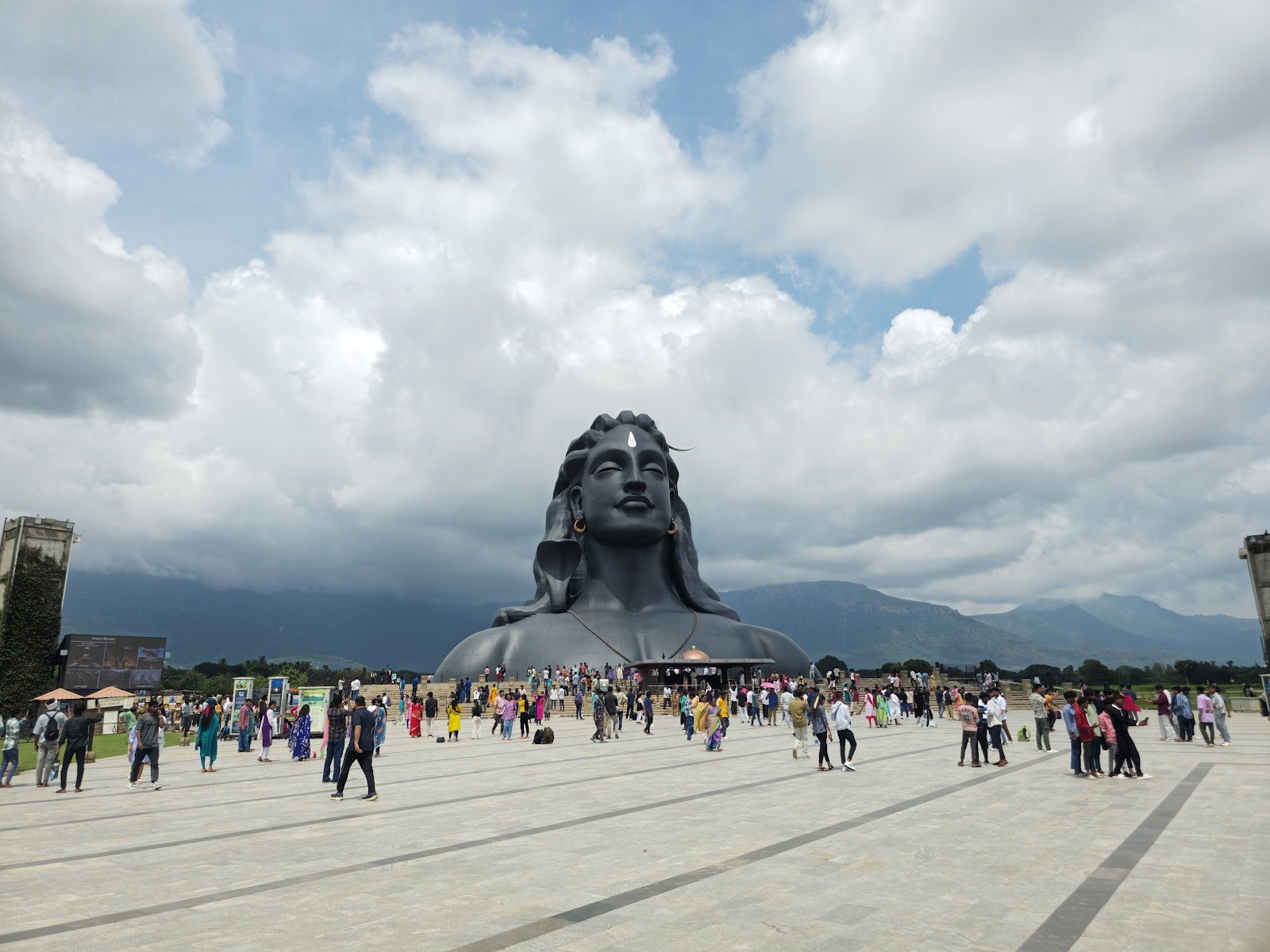
A journey to Adiyogi brings you to the quiet edge where rural plains meet the green wall of the Western Ghats. Set in Semmedu near Coimbatore, this monumental face of Shiva looks out across a wide stone plaza toward the Velliangiri hills. For travellers starting out from Pondicherry, it marks a shift from the warm Bay of Bengal coast to the upland breezes and dramatic mountain shadows of western Tamil Nadu.
People come here for many reasons. Some arrive out of spiritual devotion, some out of curiosity about yoga and meditation, and others simply to stand before one of the most striking contemporary sculptures in South India. The open grounds welcome visitors of every background without ceremony or gatekeeping, making it an easy and peaceful excursion.
At a glance
| Best time of day | Late afternoon through twilight |
|---|---|
| Allow | 2 to 3 hours |
| Dress | Modest clothing covering shoulders and knees |
| Photography | Allowed on the grounds; check signage near shrines |
| From Pondicherry | roughly 380 km by road (about 7 to 8 hours) |
The idea and meaning behind the sculpture
In yogic tradition, Shiva is remembered not only as a divine figure, but as the first yogi, or Adiyogi. Tradition holds that he transmitted the inner sciences of yoga to his first seven disciples, offering tools for human transformation rather than religious dogma. The immense face on the grounds at Semmedu was built to honour that lineage and remind visitors of the possibility of inner balance.
Unlike ancient temple sanctums carved from granite behind enclosed stone corridors, this monument stands entirely under the sky. It does not belong to an ancient dynastic era. Instead, it was conceived in the modern period as an inclusive public symbol. You do not need to follow any particular philosophy to walk up to the statue, sit on the paving stones, or simply watch the clouds drift over the ridgeline behind it.
What you will see at the site
As you walk toward the grounds, the dark profile of the sculpture rises high above the treeline. The face is cast with smooth, flowing lines in dark steel, showing calm features, partially closed eyes, and long locks of hair crowned with a crescent crescent moon. The contrast between the dark metal and the pale green of the surrounding hills creates a striking visual presence at any hour of the day.
Directly in front of the sculpture lies an open meditation area and a dedicated water and fire space known as the Yogeshwar Linga. Small oil lamps flicker near the consecrated stone, and volunteers in simple cotton clothing assist visitors who wish to offer water or flowers. A wide perimeter of stone paving extends around the entire installation, giving plenty of room for large numbers of people to walk, sit, and rest without feeling crowded.
Depending on the time of your visit, you may also see small bullock carts moving along the approach road, carrying elderly visitors or families from the main entry paths. The air carries the scent of burning camphor, crushed flowers, and the earthy dampness that drifts down from the mountain slopes after rain.
How a visit works in practice
Arriving at the site is straightforward and organised. After stepping off your transport, you follow wide paved walkways that lead toward the main plaza. Entry to the outdoor grounds around the sculpture does not require a formal entry ticket, though specific programs or audio shows held in the evenings may have their own procedures.
Here is what you can expect during your walk through the area:
- Arrival and security check: Security staff conduct quick bag checks at the entry gates along the approach road.
- Shoe drop counters: If you plan to step onto the raised platforms directly before the linga or visit nearby meditation spaces, free footwear counters are available to leave your sandals.
- Walking the plaza: You can walk freely around the sculpture, take photographs, or sit down on the floor to meditate or rest.
- Optional offerings: Visitors who want to participate in simple offerings at the Yogeshwar Linga can collect oil or flowers at nearby volunteer stalls for a modest fee.
- Evening projections: On select evenings, a light and sound show is projected directly onto the face of the statue, narrating the origins of yoga through music and visual art.
Local tip: If you attend the evening light show, carry a light shawl or sweater. Winds dropping off the Velliangiri peaks can turn surprisingly cool as soon as darkness falls.
Etiquette, dress code, and local rules
While the grounds are open and welcoming to travellers from around the world, this is treated as a sacred space. Maintaining a respectful demeanour helps preserve the calm environment that people travel many miles to experience.
Keep the following guidelines in mind while packing and planning your day:
- Clothing: Wear modest clothing that covers both your shoulders and your knees. Loose cotton trousers, long skirts, kurtas, or salwar kameez are comfortable and practical in the heat.
- Footwear: You may wear shoes on the broad exterior pathways, but you will need to remove them before stepping onto consecrated stone platforms or entering adjacent meditation halls.
- Cameras and phones: Casual personal photography with mobile phones is generally permitted around the main open plaza. Be mindful not to photograph individuals who are sitting with closed eyes in quiet meditation.
- Quiet atmosphere: Keep your phone on silent or vibrate mode, and avoid loud conversations or running on the stone terraces.
- Cleanliness: Littering is strictly discouraged. Keep any plastic waste or water bottles inside your day bag until you reach the recycling bins near the main exits.
Best time to visit and planning your day
Because the sculpture sits in an expansive open field with very little overhead shade, mid-day can be hot. The dark stone paving absorbs the sun quickly between late morning and mid-afternoon. If you arrive in the heat of noon, walking without shoes becomes uncomfortable very fast.
The ideal window is from roughly four in the afternoon until dusk. During these hours, the fierce sun sinks behind the peaks of the Western Ghats, casting long cool shadows across the plaza. The sky turns soft shades of amber and rose behind the statue, and the breeze off the forest brings welcome relief. Early mornings around sunrise offer a similar freshness, with few visitors and birds calling from the nearby scrub.
The table below compares the main seasons so you can plan according to the weather:
| Season | Conditions | Visitor Tip |
|---|---|---|
| October to February | Pleasant daytime temperatures, cool evenings, clear mountain views | Carry a light wrap for morning and dusk |
| March to May | Hot days with intense sun on open stone surfaces | Plan your visit strictly for early morning or after 4:30 PM |
| June to September | Monsoon showers, misty cloud cover over the hills, green surroundings | Carry an umbrella and watch for damp paving stones |
Getting there from Pondicherry and where to stay
Reaching Semmedu from Pondicherry takes you across the breadth of Tamil Nadu, moving from east coast to west. The distance is roughly 380 kilometres by road. Driving by car or hired taxi takes about seven to eight hours along the national highway network through Tindivanam, Salem, and Erode to Coimbatore. From Coimbatore city centre, Semmedu is an additional thirty kilometres west into the foothills, typically taking about an hour by taxi or public bus.
If you prefer public transit, overnight trains run regularly from nearby Villupuram Junction (about forty kilometres from Pondicherry) directly to Coimbatore Junction. Boarding a sleeper train in the evening allows you to wake up rested in Coimbatore early the next morning. From the railway station, you can take city bus route 14D straight out to the foothills or hire a prepaid auto or taxi.
For accommodation, you have two clear choices. You can stay in Coimbatore city, where there are dozens of business hotels, family lodges, and local dining options to suit every budget. Alternatively, you can book guest accommodation in and around Semmedu or the surrounding rural villages if you wish to stay within walking distance of the grounds and wake up close to the hills.
What to combine with your excursion
A trip out to Semmedu can easily be expanded into a rewarding full-day experience in the Coimbatore countryside. Just a short walk from the sculpture stands the broader campus of the Isha Yoga Center, including the Dhyanalinga dome and the cool underground waters of the consecrated Suryakund and Chandrakund tanks, where visitors can bathe before quiet contemplation.
Along the roadside leading back toward Coimbatore, small tea stalls serve steaming cups of fresh ginger chai alongside plates of hot vadai. Further into the valley, you can explore scenic rural roads lined with coconut groves, or head south toward the Siruvani river foothills, famous throughout Tamil Nadu for producing exceptionally sweet mineral water.
Before you leave western Tamil Nadu to return to the Coromandel coast, stop in Coimbatore city for a classic regional meal. The local cuisine, known as Kongu Nadu food, relies on aromatic, home-ground spice pastes and native millet preparations that offer a distinct change from the French-influenced bakeries and coastal curries you find back home in Pondicherry.
What recent visitors say
A quick, honest snapshot from recent Google reviews, so you know what to expect before you go.
What people loved
★★★★★ BHAGAVANT · 2 months ago
“If you’re asking about the Adiyogi Shiva statue at the Isha Yoga Center in Coimbatore, it is one of the highest-rated attractions in Tamil Nadu. Overall rating: ⭐ 4.6/5 (based on hundreds of traveler reviews). What visitors like The…”
★★★★★ Harikrishnan · 2 months ago
“A truly unforgettable experience and one of the finest places to visit near Coimbatore. The majestic Adiyogi statue against the breathtaking backdrop of the Velliangiri Hills creates a peaceful and awe-inspiring atmosphere. No photograph…”
★★★★★ Bhuvan · 3 months ago
“Visiting the Adiyogi Shiva Statue in Coimbatore was a truly unforgettable experience. The 112-foot statue is magnificent, and the peaceful atmosphere at the foothills of the Velliangiri Mountains makes the place even more special. The…”
Reviews via Google Maps. Opinions are those of their authors.
Frequently asked questions
Is there an entry fee to see Adiyogi?
No, walking onto the open grounds to view the statue is free of charge. Modest charges may apply only for special offerings or specific evening presentations.
Can people of any religion or background visit?
Yes, the monument is open to everyone regardless of faith, nationality, or spiritual belief. Visitors are asked only to dress modestly and respect the calm atmosphere.
How much time should I set aside for the visit?
Plan for about two to three hours. That provides comfortable time to walk up to the statue, sit for a quiet spell, take photos, and look around the grounds without rushing.
Are food and drinking water available on the premises?
Yes, clean drinking water points and simple vegetarian food courts serving South Indian snacks, tea, and meals are located within short walking distance of the main plaza.
Find it
Address: Mahashivaratri Grounds, Ishana Vihar, Velliangiri Foothills, Coimbatore, Semmedu, Tamil Nadu 641114, India