The Mamallapuram Dance Festival brings classical and folk performing arts to an open-air stage against some of the oldest stone sculptures in South India. For several weeks each winter, dancers, musicians, and spectators gather on the lawns beside the ocean as dusk settles over the historic Pallava port.
Living down the coast in Pondicherry, taking a late afternoon drive up the coastal highway to sit on the cool grass before the floodlit carvings is one of the quiet pleasures of the season. The setting is direct, welcoming, and relaxed, making it an ideal way to see India’s classical traditions in their element.
At a glance
| When | Margazhi and Thai (late December to January, occasionally early February) |
|---|---|
| Duration | 3 to 4 weeks (about 20 to 30 days) |
| Where | Arjuna’s Penance and Shore Temple lawns, Mamallapuram |
| Highlight | Classical and folk recitals before 7th-century rock reliefs |
| Dress | Modest casual clothing with a light evening shawl |
| From Pondicherry | Roughly 95 to 100 km north by road |
What the festival celebrates
The festival was started in 1992 by the Department of Tourism, Government of Tamil Nadu, under the title of the Indian Dance Festival. Its goal was simple yet ambitious: to preserve, celebrate, and present India’s classical and folk performing arts against the town’s seventh-century Pallava monuments.
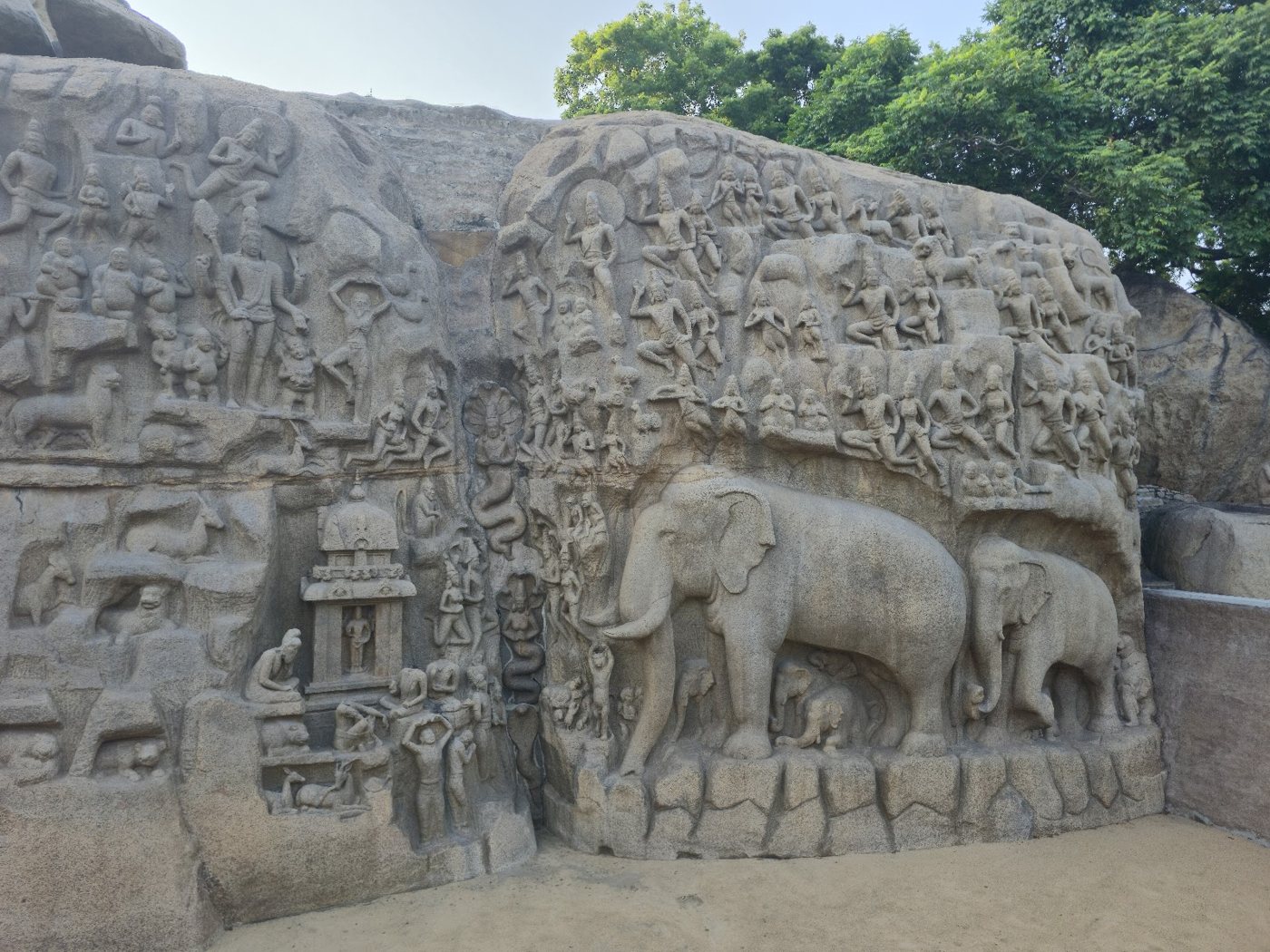
Unlike traditional temple chariot festivals, this is an open cultural showcase rather than a temple ritual. The primary backdrop is Arjuna’s Penance, a colossal relief carved out of two massive granite boulders. The carving is also interpreted by scholars as the Descent of the Ganga, narrating the penance performed to bring the celestial river down to earth or Arjuna’s austerities to gain a divine weapon from Lord Shiva.
Seeing these ancient narrative carvings lit against the night sky while living dancers perform the same timeless stories creates a bridge across thirteen centuries of art.
When it takes place
The festival falls across the Tamil months of Margazhi and Thai, which corresponds to late December through January, and at times extends into early February. Because it is organized as a cultural season rather than an ancient temple feast, it aligns with the winter tourism window on the Gregorian calendar rather than specific lunar tithis.
The entire event spans roughly three to four weeks, delivering around twenty to thirty continuous evenings of performances. Exact start and finish dates are confirmed locally each year by the Tamil Nadu Tourism Development Corporation, so it is best to check official announcements a few weeks before travelling.
| Time Period | What to Expect |
|---|---|
| Late December | Opening week, featuring classical debuts and pleasant coastal breezes. |
| Mid-January (Pongal) | Peak holiday crowds, prominent dance masters, and lively folk ensembles. |
| Late January to Early February | Calmer weekday evenings and grand finale programs. |

What you will see
Each evening presents a balanced blend of classical dance and traditional Tamil folk arts. The classical segments showcase major dance disciplines from across India, giving you an opportunity to experience multiple traditions in a single visit:
- Bharatanatyam, the classical dance of Tamil Nadu, known for crisp footwork and expressive abhinaya
- Kathakali from Kerala, with its elaborate face painting, towering headgear, and dramatic storytelling
- Kuchipudi from Andhra Pradesh and Odissi from the eastern coast, noted for fluid torso movements and lyrical grace
- Mohiniyattam and Kathak, bringing subtle expressions and rhythmic footwork to the stage
Folk troupes take the stage alongside the classical artists. You can watch Karagattam dancers balance decorated brass pots on their heads with remarkable poise, Kavadiattam devotees balancing arched wooden frames, and dancers in peacock costume performing Mayilattam. Rhythmic drumming groups perform Thappattam and Oyilattam, filling the night air with deep, resonant beats.
Live acoustic accompaniments accompany most classical recitals, where the sounds of the mridangam, nadaswaram, bamboo flute, and bronze cymbals carry across the open lawns. Along the perimeter of the venue, local stone sculptors exhibit their handiwork, while vendors offer coastal Tamil snacks and fresh seafood.
Where to watch and how to plan the day
The principal stage sits directly in front of the massive bas-relief of Arjuna’s Penance, using the natural amphitheater of the surrounding park. On some occasions, auxiliary stages or select recitals are hosted on the grassy lawns near the Shore Temple complex facing the Bay of Bengal.
Performances typically run from 5:30 PM to 8:30 PM. The ideal time to arrive is around 5:00 PM, just as the afternoon heat softens and daylight gives way to the golden hour. This gives you time to stroll through the monuments before taking a seat.
Local tip: For the best view, aim for the middle rows of the central seating block. From there, you get a balanced view of the dancers’ footwork along with the full panorama of the floodlit stone carvings behind them.
Weekends and the Pongal festival holidays in mid-January draw heavy traffic from Chennai. If you prefer a quieter experience with less crowded seating, plan your visit for a Tuesday, Wednesday, or Thursday evening.

Etiquette, what to wear and photography
The festival is a non-sectarian cultural gathering. Entry has historically been free or minimally ticketed, and visitors of all backgrounds and nationalities are warmly received. Because it takes place in a protected heritage area and showcases serious classical arts, spectators are expected to maintain an attentive, considerate atmosphere.
- Wear comfortable, modest casual clothes covering shoulders and knees out of respect for local customs.
- Bring a light shawl, cotton jacket, or scarf, as winds blowing in from the Bay of Bengal can feel cool after sunset.
- Choose flat shoes or walking sandals, since you will navigate patches of grass, gravel paths, and sandy ground.
- Photography is generally allowed from your seat, but strictly avoid flash photography, which blinds dancers during complex turns.
- Keep mobile phones on silent mode during recitals, and avoid standing in aisles with bulky camera tripods that block other viewers.
Safety and practical tips
Mamallapuram is generally a relaxed coastal town to navigate on foot, but attending an outdoor evening event in a heritage precinct calls for a little forethought. Following a few practical precautions helps ensure an easy, comfortable outing for everyone in your travelling group.
- Water and hydration: Although January evenings are mild, daytime sightseeing can be warm. Carry a reusable water bottle during the afternoon.
- Moving around at night: The park pathways are lit, but walking areas around the town perimeter can be dim. Keep a pocket torch or your phone light handy.
- Personal belongings: Crowds build up quickly near entry gates and snack stalls when performances end. Keep wallets and phones zipped inside your bags.
- Children: The open lawns offer plenty of space for families, but keep small children close by, especially near road exits and around the stone monuments after dark.

Getting there and where to stay
Mamallapuram is situated along the coast of northern Tamil Nadu, making it simple to reach from nearby transit hubs:
- From Pondicherry: Mamallapuram is roughly 95 to 100 km north along the East Coast Road. The drive takes about two hours by car or regular coastal bus.
- From Chennai: The town is about 55 to 60 km south via the East Coast Road, with frequent state buses and taxis.
- By air: Chennai International Airport (MAA) is roughly 55 km away, offering the most direct flight connections.
- By train: Chengalpattu Junction is roughly 29 km to the west, while Chennai Central and Chennai Egmore sit about 60 km to the north.
Where to stay: Mamallapuram features a variety of beachfront resorts, heritage stays, and small guesthouses. Hotels fill up rapidly over weekends in January and especially during the week of Pongal, so reserve your accommodation several weeks in advance.
Nice to combine with
Because the festival stages come alive in the late afternoon, your mornings and early afternoons are free to explore the surrounding coastal heritage. You can spend the morning admiring the Pancha Rathas monolithic shrines and Krishna’s Butterball, or wander through the workshops where modern sculptors carve granite using age-old chisels.
If you are visiting in late December, you can pair this open-air festival with the Chennai December Music Season, which offers classical Carnatic concerts in auditoriums just an hour to the north. A seafood lunch along the fishing beach followed by an evening of Kathakali under the stars makes for a memorable coastal day.
What recent visitors say
A quick, honest snapshot from recent Google reviews, so you know what to expect before you go.
What people loved
“Superb place. Hardly anyone will spend time more than 1hr.”
“Beautiful hand crafted rocks. Must see in mahabalipuram for the art work. Its a free entry. Directly on road. Near butter ball”
“Very beautiful place… 💛⭐⭐⭐⭐⭐🌷”
Reviews via Google Maps. Opinions are those of their authors.
Frequently asked questions
When are the dates announced for the next Mamallapuram Dance Festival?
The Tamil Nadu Tourism Department announces precise dates annually in late autumn. The festival typically runs from late December through January, and dates are confirmed locally each year on the official tourism portal.
Is there an entry ticket required for the dance festival?
Access to the open-air performances has traditionally been free or minimally ticketed, making it accessible to all travellers. Standard entry fees may still apply to the heritage park during regular monument opening hours before evening recitals begin.
Can I visit the festival as an evening trip from Pondicherry?
Yes, Mamallapuram is roughly 95 to 100 km north of Pondicherry along the East Coast Road. You can leave Pondicherry around 3:00 PM, watch the performances until 8:30 PM, and return the same night by car.
Is seating provided at the festival grounds?
Yes, chairs and floor seating mats are arranged on the lawns directly in front of the floodlit Arjuna’s Penance stage. Seats are available on a first-come, first-served basis, so arriving around 5:00 PM is recommended.
Find it
Address: J59V+43J, W Raja St, Mahabalipuram, Tamil Nadu 603104, India
You might also like
- Where to stay in Pondicherry
- Festivals of Pondicherry and Tamil Nadu
- Amity Sky Pondicherry: Rooftop Cocktails and Dance Nights
- A Night at Hoppers Bar Pondicherry: Music, Dance and Drinks
- BricZ Resto Bar Pondicherry: Music, Drinks, and Dance
- Things to do in Pondicherry
- Celebrating Christmas in Pondicherry: A Holiday Guide
- Vaikunta Ekadasi Srirangam Guide: Rituals, Dates and Tips
- Guide to Arudra Darshan Chidambaram: Rituals and Tips