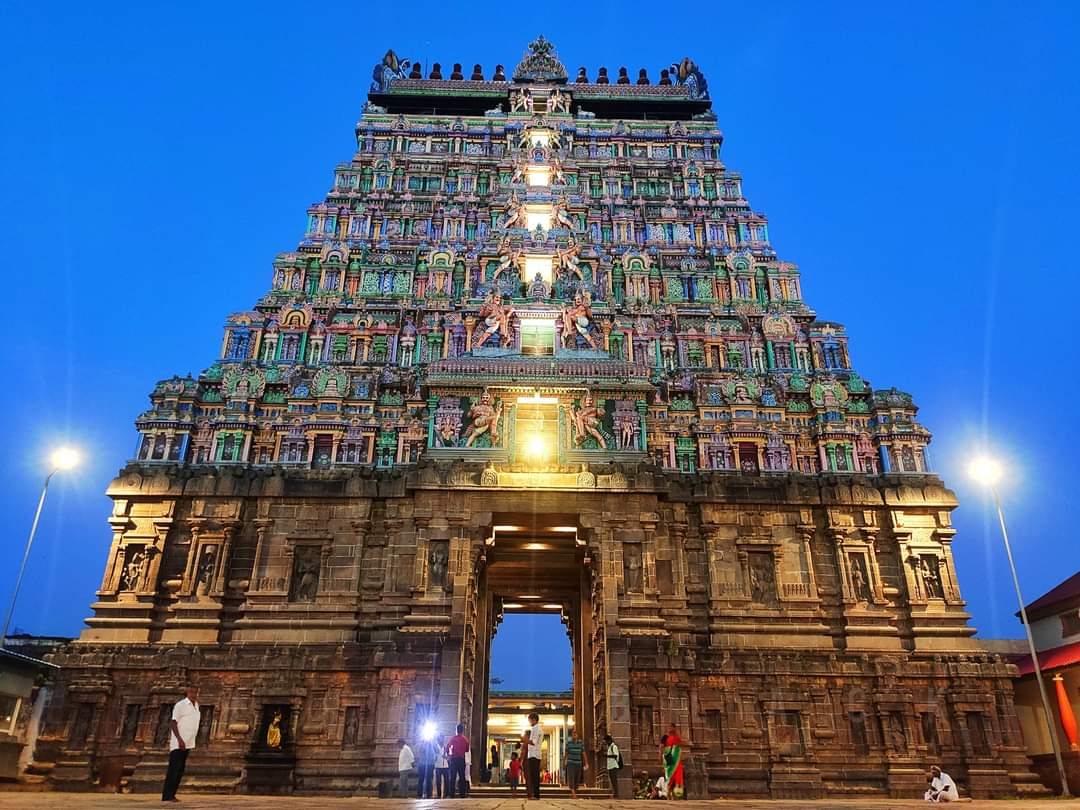
Experiencing Arudra Darshan Chidambaram allows you to witness one of the most sacred Shaivite celebrations in southern India. Held at the historic Thillai Nataraja Temple, this annual festival draws pilgrims from across the region to celebrate Lord Shiva as the cosmic dancer.
The festival unfolds over ten days during the Tamil month of Margazhi, culminating in an extraordinary sequence of pre-dawn ablutions and rhythmic deity processions. If you are staying in Pondicherry, Chidambaram is an easy journey south, offering a profound glimpse into centuries-old temple traditions.
At a glance
| When | Margazhi month (late December or early January) |
|---|---|
| Duration | 10 days (Margazhi Brahmotsavam) |
| Where | Thillai Nataraja Temple, Chidambaram |
| Highlight | Pre-dawn Maha Abhishekam and deity dance procession |
| Dress | Traditional attire (dhoti or trousers, sarees or churidars) |
| From Pondicherry | Roughly 65 km south by road |
The Significance and Story of the Festival
Arudra Darshan commemorates the Ananda Tandava, the dance of cosmic bliss performed by Lord Shiva in the sacred mangrove forest of Tillai. According to local lore, Shiva performed this dance to reveal his cosmic nature to two revered hermits, Patanjali and Vyaghrapada, who had meditated deeply to behold his grace.
The dance itself carries deep theological meaning, demonstrating Shiva’s five cosmic activities known as Panchakritya. These continuous actions are creation, preservation, destruction, embodiment through illusion, and the grant of salvation through grace. For devotees, seeing the deity during this festival represents a moment of supreme spiritual release.
The festival is also tied to Sendanar, a humble devotee of modest means. The legend recounts that Sendanar had nothing to offer an ascetic visitor, who was Shiva in disguise, except a plain sweet porridge made from coarse rice flour and jaggery. Shiva accepted the meal with gratitude, and the next morning, temple priests discovered traces of the porridge on the sanctum deity. This event instituted the sacred tradition of preparing Thiruvathirai Kali during the festival, an offering that remains central to home and temple kitchens today.
When the Celebrations Take Place
The dates for Arudra Darshan follow the traditional Tamil solar-lunar calendar. The festival reaches its high point on the full moon day of the month of Margazhi, coinciding with the Arudra asterism, known in Tamil as Thiruvathirai. In the Gregorian calendar, this falls between late December and early January, aligning with the longest nights of the winter solstice cycle.
The entire event spans ten days as the Margazhi Brahmotsavam. Temple authorities confirm the precise ceremonial timetable locally each year based on astronomical calculations. For travelers planning far ahead, the upcoming edition takes place on December 24, 2026, though you should always confirm specific service hours closer to the date.
| Festival Day | Ritual Event | Significance |
|---|---|---|
| Day 1 | Dhwajarohanam | Ceremonial flag hoisting signaling the start of the ten-day festival. |
| Day 9 | Therottam | Grand chariot procession moving through the four perimeter streets. |
| Day 10 | Arudra Darshan | Pre-dawn ablutions followed by the midday cosmic dance procession. |

What You Will See and Experience
The culmination of the festival begins during the late hours of the ninth night and extends into the tenth morning. Devotees gather inside the temple halls for the Maha Abhishekam, an elaborate ceremonial bathing of the processional bronze figures of Lord Nataraja and Goddess Sivakami Sundari. Over several hours, the Deekshithar priests pour sanctified offerings over the bronzes, including milk, fresh curd, honey, ghee, fragrant rosewater, tender coconut water, and sacred ash.
Music forms the continuous pulse of the ceremonies. Melodies from the nagaswaram mingle with the deep rolls of thavil drums and temple horns. Throughout the complex, devotees chant Saint Manikkavasagar’s sacred hymns from the Thiruvempavai and Thiruvasagam, filling the courtyards with measured verse.
In the afternoon, the processional deity of Nataraja is carried back toward the sanctum. The hereditary Deekshithar priests shoulder the palanquin, moving in a deliberate, swaying rhythm that mimics the cosmic dance itself. As the deity glides through the courtyards, thousands of voices rise together in celebration.
Food plays an important communal role. Pilgrims receive portions of Thiruvathirai Kali, the sweet porridge of rice flour and melted jaggery, traditionally paired with Ezhu Kari Kootu, a hearty stew cooked with seven seasonal country vegetables. The combination of sweet and savory flavors represents the simple sustenance honored in the legend of Sendanar.
Where to Watch and How to Plan Your Day
Knowing where to stand makes a major difference, as the grounds fill with tens of thousands of worshippers. The festival takes place across specific courtyards and the roads encircling the complex.
- Raja Sabha: The grand thousand-pillar hall serves as the main venue for observing the pre-dawn Maha Abhishekam. To secure a spot inside or along the outer colonnades, you need to arrive several hours before daybreak.
- Four Car Streets: Known as the Mada Streets, these wide avenues surround the temple perimeter and offer the best vantage point for Day 9. You can watch the massive wooden chariots moving along the roads, pulled by teams of devotees.
- Chit Sabha Courtyard: The central inner courtyard offers views of the deity’s dancing return into the golden sanctum in the afternoon of the tenth day. Expect dense gatherings here as the procession enters.
Local tip: If you want to view the pre-dawn ablutions in the Raja Sabha, arrive by 2:00 AM. The early morning air can be brisk, so carry a light shawl that complies with traditional attire.

Temple Etiquette and Photography Rules
Thillai Nataraja Temple is an active center of worship, and following local customs is essential. Dress conservatively to show respect to the resident priests and fellow pilgrims.
Men entering the inner courtyards are generally required to wear traditional dhotis or plain trousers, and must remove their shirts before stepping inside the sanctum precincts. Women should wear sarees, half-sarees, or modest churidars. Avoid casual clothing such as shorts, sleeveless tops, or western beachwear.
Photography is strictly forbidden inside the inner mandapams, the Raja Sabha during rituals, and anywhere near the sanctum sanctorum. Keep cameras and mobile phones securely packed away inside your bag while moving through these zones. Photography is usually permitted in the open outer streets during the public chariot procession on Day 9.
Access rules reflect long-standing religious customs. While visitors of all backgrounds can freely explore the outer courtyards, see the temple towers, and watch the public street processions, entry into the innermost sanctums during peak ritual moments is generally reserved for practicing Hindus.
Crowd Safety and Practical Advice
The scale of the gathering requires careful physical preparation. Winter days in Tamil Nadu bring pleasant mornings, but midday temperatures rise quickly, and the courtyards retain heat under the afternoon sun.
- Footwear: Shoes and sandals are not permitted inside the complex. Use the designated shoe deposit stalls located outside the massive entrance towers (gopurams), or leave your footwear in your vehicle to avoid searching for it later among thousands of pairs.
- Hydration: Carry a refillable water bottle. Staying hydrated is important when standing for long stretches in packed enclosures.
- Valuables: Keep your wallet, phone, and identification in a zipped interior pocket or a secure pouch worn under your clothes to deter opportunistic pickpockets.
- Children and Elders: Crowds move in sudden surges during the deity processions. If you are traveling with young children or elderly family members, stay toward the open margins of the courtyards rather than near the front barricades.

Getting to Chidambaram and Where to Stay
Chidambaram sits in the Cuddalore district of Tamil Nadu. If you are starting from Pondicherry, the journey is straightforward. The town is located roughly 65 km south, and the drive along National Highway 32 takes about two hours by taxi or public bus. State transport buses run frequently between the two towns throughout the day.
The town has its own railway station, Chidambaram Railway Station (code: CDM), with regular services connecting to Chennai, Tiruchirappalli, and Kumbakonam. For those arriving by air, Tiruchirappalli International Airport is approximately 160 km away, while Chennai International Airport is about 235 km north.
Accommodation in Chidambaram ranges from modest pilgrim lodges to simple family-run hotels. Because tens of thousands arrive for the final two days of the Brahmotsavam, rooms near the temple fill up weeks in advance. Reserve your lodging as early as possible. Alternatively, you can use Pondicherry as your base and hire a private car for an early morning departure.
Combining Your Visit with the Margazhi Season
Because Arudra Darshan occurs in the heart of Margazhi, it pairs naturally with other cultural journeys across the region. Travelers interested in classical arts can easily link a morning in Chidambaram with the Chennai December Music Season, which runs throughout the same month and showcases renowned Carnatic vocalists and instrumentalists.
The season also aligns with major temple events such as Vaikunta Ekadasi, celebrated with great devotion across Tamil Nadu’s Vishnu temples. Combining these celebrations gives you a broad perspective on the architectural heritage, music, and seasonal culinary specialties of the Coromandel coast during the mild winter months.
What recent visitors say
A quick, honest snapshot from recent Google reviews, so you know what to expect before you go.
What people loved
“You must visit this place.. Beautifully designed worship place.. One of the biggest temples in India.. Lord Nataraj temple, lord Venkateshwara temple, goddess Lakshmi Temple, Kartik swami temple and many more in one campus.. Sit with your…”
“I visited Thillai Nataraja Temple in Chidambaram and had a truly enriching spiritual experience. The temple is renowned for its magnificent architecture, rich history, and deep religious significance. The intricate carvings, towering…”
“Thillai Nataraja Temple in Chidambaram is one of the most revered temples dedicated to Lord Shiva in his cosmic dancer form, Nataraja. The temple is renowned for its magnificent Dravidian architecture and rich spiritual heritage. Thousands…”
Reviews via Google Maps. Opinions are those of their authors.
Frequently asked questions
When is the next Arudra Darshan in Chidambaram?
The festival occurs annually in the Tamil month of Margazhi, which spans late December and early January. The upcoming edition takes place on December 24, 2026, though specific ritual timings are confirmed locally by temple priests each year.
Can non-Hindus attend Arudra Darshan?
Non-Hindus are welcome to experience the outer courtyards and watch the grand chariot festival along the surrounding Mada streets. However, entry into the inner sanctum spaces during the major ritual hours is generally restricted to practicing Hindus.
What special food is served during the festival?
The primary festival offering is Thiruvathirai Kali, a sweet porridge made from roasted rice flour and jaggery. It is served with Ezhu Kari Kootu, a traditional stew prepared using seven country vegetables.
How far is Chidambaram from Pondicherry?
Chidambaram is roughly 65 km south of Pondicherry. The road trip takes about two hours via National Highway 32, making it accessible by car, bus, or taxi.
Find it
Address: Chidambaram, Tamil Nadu 608001, India