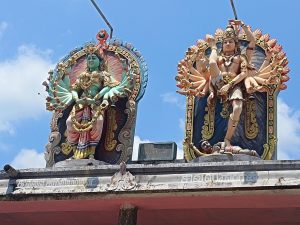
The Sri Ranganatha Swamy Temple in Srirangam is one of the most revered and expansive places of worship in southern India. Located on an island formed by the Kaveri and Kollidam rivers just north of Tiruchirappalli, this immense complex serves as a living temple town where daily worship, music, and quiet neighborhood life have unfolded together across generations.
For anyone based in Pondicherry, making the journey inland to Srirangam opens up a completely different perspective on Tamil temple heritage. You leave the coastal air behind, head across the plains of the river basin, and step inside a historic sanctuary whose walls enclose an entire community.
At a glance
| Best time of day | Early morning around 6:00 AM or late afternoon |
|---|---|
| Allow | 3 to 4 hours |
| Dress | Strict traditional attire: dhotis or pyjamas for men; sarees or salwars for women |
| Photography | Prohibited in inner sanctum; outer areas require local permits |
| From Pondicherry | roughly 200 km (about 4 to 4.5 hours) by road |
Understanding the temple and its past
Sri Ranganatha Swamy Temple stands as the foremost of the 108 Divya Desams, the sacred shrines celebrated by the Alvar poet-saints in their devotional canon, the Naalayira Divya Prabhandham. Often described in sacred literature as Bhooloka Vaikuntam, or heaven on earth, the temple adheres to the Thenkalai tradition of Sri Vaishnavism under the guidance of the Pancharatra Agama. It is dedicated to Ranganatha, a reclining form of Vishnu resting upon the serpent Adisesha, alongside his consort Ranganayaki.
The complex ranks as the largest functioning religious complex in the world with an unbroken tradition of worship. Its lineage includes foundational teachers of Sri Vaishnavism such as Nathamuni, Yamunacharya, and the eleventh-century philosopher Sri Ramanuja, whose preserved mortal body remains enshrined within these precincts. The temple is also part of the traditional Tri Ranga darshana, a pilgrimage covering three sacred island temples along the Kaveri course alongside Adi Ranga and Madhya Ranga.
Because of its island setting between the Kaveri and Kollidam rivers, the site experienced both natural floods and strategic military campaigns over the centuries. Early in the fourteenth century, armies of the Delhi Sultanate plundered the complex during raids across the Pandyan kingdom. Rebuilt in the late fourteenth century, the fortifications and towers expanded significantly through the patronage of the Chola, Pandya, Hoysala, and Vijayanagara rulers. In 2017, the temple received the UNESCO Asia-Pacific Award of Merit for cultural heritage conservation, marking a proud moment for Tamil Nadu.
Ancient texts, including regional Puranic works such as the Sriranga Mahatmyam, recount that the central shrine vimanam originally emerged from the churning of the cosmic ocean. Passed down to King Ikshvaku of Ayodhya and later gifted by Rama to King Vibhishana of Lanka, the sanctuary became permanently rooted on this river island. In honour of Vibhishana, the reclining deity faces south toward Sri Lanka, positioned along an east-west axis.
Towers, halls, and painted corridors
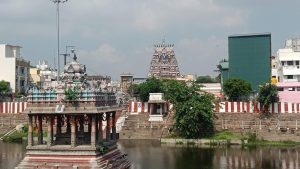
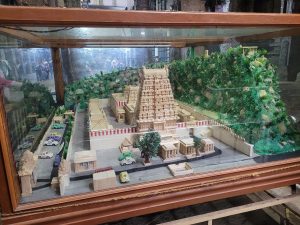
Covering roughly 156 acres (63 hectares), the layout follows the classic Sapta-Prakaram design with seven concentric rectangular enclosures. The outer two enclosures blend seamlessly into everyday civic life, housing residential streets, local shops, and neighborhood services. The inner five enclosures protect the sacred core, containing 81 shrines, 39 pavilions, and historic stone tanks.
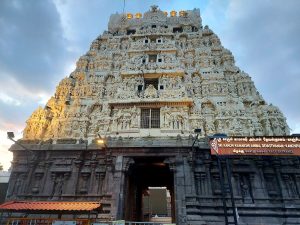
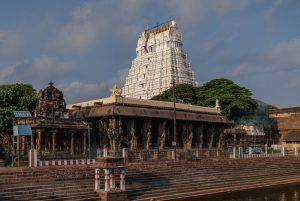
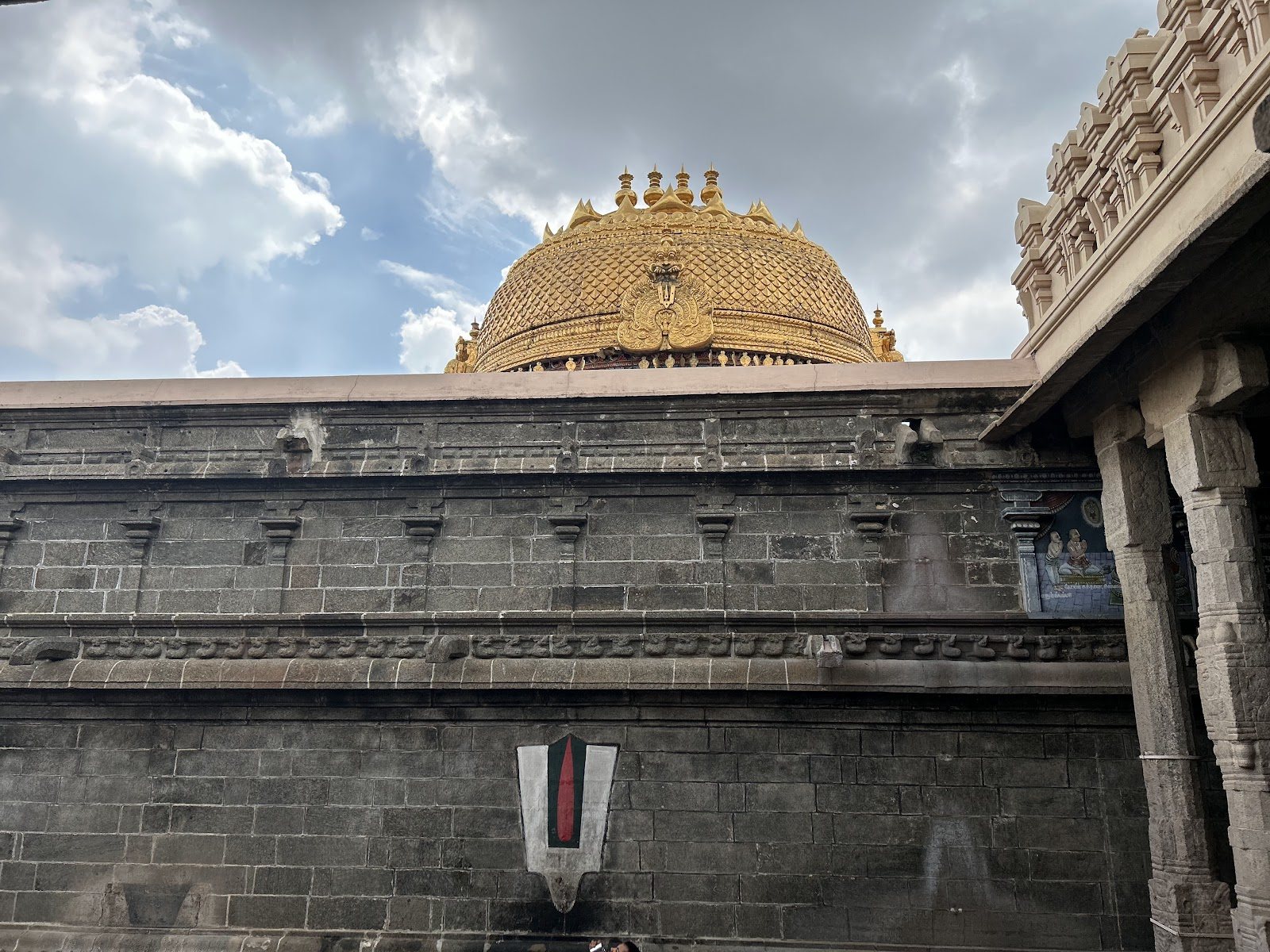
A total of 21 carved gateway towers rise above the island skyline. The southern Rajagopuram, completed in 1987 with assistance from the Ahobila Mutt, reaches roughly 72 meters (about 236 feet) across 13 tiers, forming an imposing landmark visible from miles away. Within the inner complex, the Ranga Vimana shines above the primary sanctum with its gold-plated dome.
- The Rajagopuram: A towering 13-tiered southern entrance gate that welcomes pilgrims onto the island.
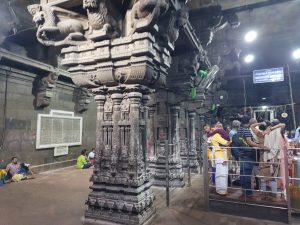
- Sesharayar Mandapam: A stone pavilion renowned for intricate, life-sized carvings of rearing horses and armed warriors.
- Hall of 1,000 Pillars: An expansive granite hall utilized for community assemblies and special celebrations during major festivals.
- Ranga Vimana: The sacred circular gold dome resting directly above the central chamber.
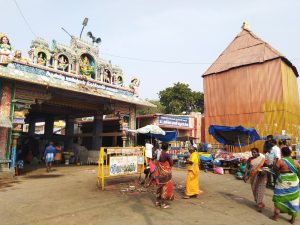
As you walk deeper through each concentric enclosure, the atmosphere shifts from market chatter to steady quiet. The high stone walls mute city sounds, leaving only the rhythm of temple bells, chanting, and footsteps along the granite walkways.
Walking through a temple day
A typical day at Srirangam begins around 6:00 AM with the viswaroopa seva, the opening ritual of the morning. The complex generally remains open until around 9:00 PM, though inner shrines close periodically during scheduled pooja rituals and food offerings. Because ceremony times can adjust during festivals, checking the schedule boards near the ticket offices helps you plan your steps.
General entry to the temple is free, allowing you to walk through the outer corridors and join the general queue. Special darshan tickets and quick-darshan passes are sold at designated counters inside the main courtyards if you wish to shorten your waiting time in line.
Local tip: Keep a small amount of cash on hand. Paid queue counters, shoe storage stands, and temple token desks generally operate with cash rather than electronic cards.
While non-Hindu visitors are welcome to explore the outer courtyards, pillared halls, and secondary corridors, entry into the innermost sanctum (garbhagriha) is strictly reserved for Hindu worshippers. Even without entering the sanctum, wandering the stone enclosures offers a deep appreciation for the living heritage and ritual life of the community.
Dress codes and temple manners
Because Srirangam is an active center of worship, traditional clothing guidelines are enforced at the interior checkpoints. Wearing proper attire ensures you can move through all accessible areas without hindrance.
- Men: Dhotis or pyjamas paired with a traditional shirt or kurta. Western trousers, jeans, lungis, and shorts are strictly disallowed.
- Women: Sarees, half-sarees, or salwar kameez / churidars accompanied by a dupatta. Jeans, skirts, and western tops are not permitted.
- Footwear: Must be left at the designated shoe deposit counters outside the entrance towers before entering the inner precincts.
- Photography: Cameras and mobile photography are strictly forbidden inside the sanctum. Outer photography may require a nominal token fee from the temple desk.
Walk calmly through the halls and keep conversations low. Devotees often sit quietly along the pillared verandas after their prayers to absorb the peaceful setting before stepping back into the town.
Best time to go and how long to stay
Plan to spend between 3 and 4 hours inside the complex. The sheer distance involved in walking through the seven enclosures means you will cover several kilometers on foot, especially if you explore the various mandapams and subsidiary shrines.
The cooler months from November through February provide the most comfortable walking weather across open stone courtyards. During December and January, the temple observes Vaikunta Ekadasi, an intensive 21-day festival in the Tamil month of Margazhi. This event draws up to one million pilgrims who gather for the opening of the Paramapada Vasal, the ceremonial gateway to heaven. The temple also marks the Chithirai Car Festival in April or May and the Panguni Uthiram chariot festival in early spring.
Arriving early in the morning around 6:00 AM or late in the afternoon after 4:30 PM allows you to avoid the midday heat when the granite flags underfoot can become quite warm.
Traveling from Pondicherry and staying over
Reaching Srirangam from Pondicherry is straightforward by road. The distance is roughly 200 km, which usually takes about 4 to 4.5 hours driving via National Highway 38 through Villupuram and Ulundurpet. Taxis can be hired easily in Pondicherry for a comfortable round trip, or you can take a direct Tamil Nadu State Transport bus heading toward Tiruchirappalli.
Srirangam has its own railway station about 1 km away, while Tiruchirappalli Junction sits roughly 9 km south with regular connections across Tamil Nadu. Tiruchirappalli International Airport is about 15 km from the temple gates.
If you plan to stay overnight, modest guesthouses and pilgrim lodges line the streets immediately surrounding the outer towers in Srirangam. For larger business hotels and family stays, the city center of Tiruchirappalli offers a broad selection of clean accommodations just a short auto-rickshaw ride away across the river bridges.
Exploring the neighbourhood
Srirangam and Tiruchirappalli offer several memorable sites nearby that you can easily combine into your travel day:
- Jambukeshwarar Temple: Situated about 2.5 km away in Thiruvanaikaval, this revered Shiva temple honors the water element and features calm, tree-shaded stone courtyards.
- Tiruchirappalli Rockfort: Positioned about 4.5 km south, this ancient rock formation features the Ucchi Pillayar Temple at its summit, offering sweeping views across the river basin.
- Kallanai Dam: Located roughly 18 km downstream, this historic diversion dam, also known as the Grand Anicut, was built across the Kaveri centuries ago and remains in active use.
Before you leave Srirangam, pause at one of the traditional vegetarian mess halls along the outer temple streets. You will find freshly prepared idlis, crispy dosas, and fragrant south Indian filter coffee served in stainless steel tumblers, providing a simple, satisfying close to your morning.
What recent visitors say
A quick, honest snapshot from recent Google reviews, so you know what to expect before you go.
What people loved
★★★★★ srawan · a month ago
“visited on 29 Aug 2026.. see temple timings before visit as there is break after every 2 hrs etc ..100 rupees special-entry tickets are available for faster darshan…. Basic facilities such as drinking water, toilets, cloakroom and…”
★★★★★ Kamalakanta · 3 months ago
“⭐⭐⭐⭐⭐ Sri Ranganatha Swamy Temple is a magnificent and spiritually uplifting place that every devotee should visit. The temple is beautifully maintained, and its grand architecture, intricate carvings, and vast premises reflect the rich…”
★★★★★ Lensory · 4 months ago
“Sri Ranganatha Swamy Temple in Srirangam is an extraordinary and truly vast temple complex, widely regarded as the largest functioning Hindu temple in the world. The scale of the temple, its towering gopurams, long corridors, and countless…”
Reviews via Google Maps. Opinions are those of their authors.
Frequently asked questions
Can non-Hindu travelers enter the temple?
Yes, non-Hindu visitors are welcome to explore the outer courtyards, mandapams, and perimeter corridors. However, access into the innermost sanctum housing the main deity is strictly reserved for Hindu devotees.
What is the recommended dress code for visitors?
Visitors must wear traditional attire. Men are required to wear dhotis or pyjamas with a shirt or kurta, while women should wear sarees, half-sarees, or churidars with a dupatta. Western garments such as jeans, shorts, and t-shirts are not permitted.
How far is Srirangam from Pondicherry?
Srirangam is located roughly 200 km southwest of Pondicherry. The drive takes about 4 to 4.5 hours by private car or scheduled bus along Highway 38 via Villupuram.
Are cameras permitted inside the complex?
Photography is strictly forbidden within the inner sanctum. For the outer courtyards and architectural halls, cameras are generally permitted upon obtaining a nominal token at the entrance desk.
Find it
Address: Srirangam, Tiruchirappalli, Tamil Nadu 620006, India
You might also like
- Where to stay in Pondicherry
- Churches, temples, mosques and ashrams in Pondicherry
- Saneeswarar Temple
- Sri Aurobindo Ashram
- Sacred Heart of Jesus Church
- Things to do in Pondicherry
- Vadapalani Murugan Temple: Practical Guide for Visitors
- Sri Ramanathaswamy Temple: A Visitor Guide to Rameswaram
- Samayapuram Mariamman Temple: A Pilgrim Guide