Visiting the Vadapalani Murugan Temple gives you a direct look into the spiritual heart of western Chennai. Built originally in the late nineteenth century, the temple sits right along Palani Andavar Koil Street, welcoming steady lines of worshippers from sunrise to nightfall. It carries an intimate history, starting from an unpretentious thatched hut before growing into one of the most frequented Murugan shrines in northern Tamil Nadu.
If you are based in Pondicherry, making the journey up to Chennai allows you to connect the distinct architectural and spiritual threads of Tamil Nadu. If you come to witness the daily prayers, observe the unique wedding ceremonies, or simply spend an hour in quiet contemplation, here is everything you need to know before stepping through its towering gateway.
At a glance
| Best time of day | Early morning (5:00 AM to 7:00 AM) or after 5:00 PM |
|---|---|
| Allow | 1 to 2 hours |
| Dress | Modest traditional clothing covering shoulders and knees |
| Photography | Permitted in outer areas; strictly forbidden in the inner sanctum |
| From Pondicherry | Roughly 150 km, about 3 to 4 hours by road |
The story behind the shrine
The history of the temple began around 1865 with an ordinary man named Annaswami Nayakar. A staunch devotee of Lord Murugan, he endured a severe stomach ailment while making pilgrimages on foot across Tamil Nadu, facing harsh weather and roadside bandits along the way. Tradition recounts that a sage appeared in his dream, assuring him that Murugan was present within his own home. Following instructions from a holy man in Palani, Nayakar offered his tongue at the Thiruttani shrine, after which his chronic illness left him completely.
Nayakar later visited the famous hill temple of Palani in southern Tamil Nadu. As he walked down the steps, a painted portrait of Murugan caught his eye, though he lacked the money to buy it. The following morning, the shopkeeper arrived at his lodging to present him with the painting, explaining that Murugan had appeared to him in a dream asking him to gift it. Nayakar brought this painting back to Chennai, built a small thatched hut on this very ground, and relocated his household to dedicate himself entirely to worship.
Soon after, people observed Nayakar delivering prophecies known as Arul Vaakku while in a deep spiritual trance. Devotees gathered seeking answers to domestic struggles, unemployment, illnesses, and failures in school examinations. After his passing, his disciple Rathinasamy Chettiyar continued these divine utterances and oversaw the commissioning of a stone idol, formally naming the shrine Vadapalani, which translates to Northern Palani. A later devotee named Bagyalingam took on the duties, and by the 1920s, the shrine was renovated and expanded into the stone complex seen today, with patronage from local film personalities further increasing its reach.
What you will see inside the temple
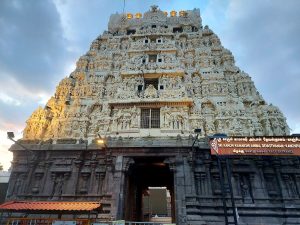
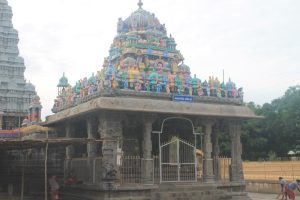
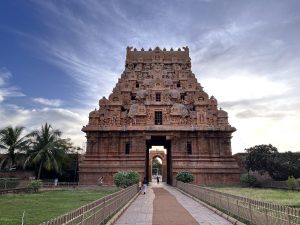
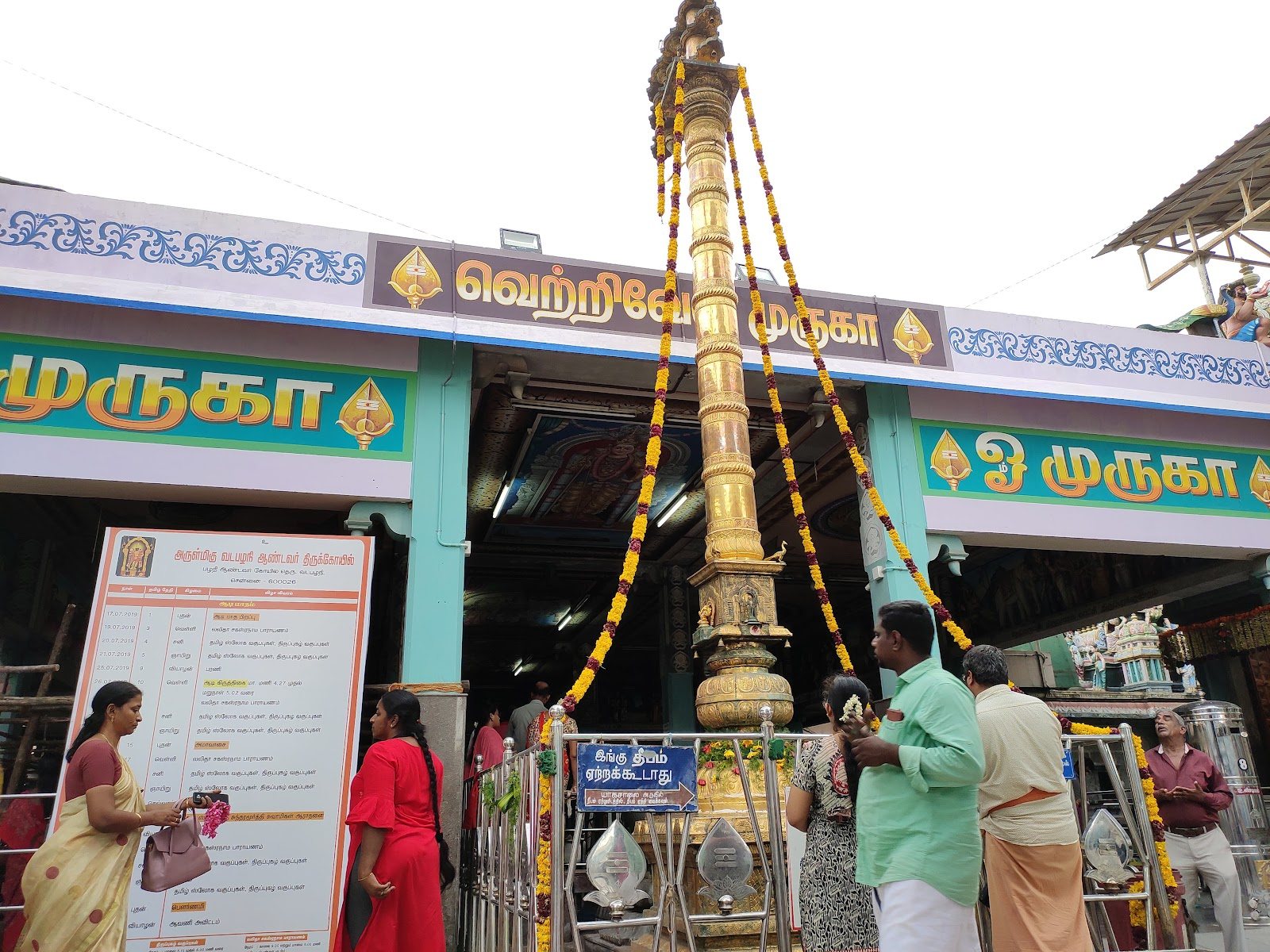
As you turn onto the street, the primary entrance presents a grand eastern Rajagopuram that rises 40.8 metres into the Chennai skyline. The exterior surface of this gateway tower is covered in detailed stucco carvings that tell stories from the Skanda Purana, alongside sculptural panels illustrating the 108 classical karanas, or dance postures, of Bharatanatyam. In front of the temple complex lies the temple tank, known locally as the teppam.
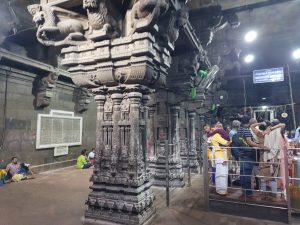
Inside, the sanctuary is organised around traditional South Indian lines. The central idol of Murugan, worshipped as Palani Andavar, stands upright in a posture matching the deity at the ancient Palani hill shrine. Notably, this is the only temple where Murugan is represented wearing footwear, which symbolises the shedding of arrogance before god. His left foot is positioned slightly forward, an intentional posture meant to show that he is ready to hasten to the aid of his devotees.
The inner courtyard holds several dedicated shrines worth visiting slowly:
- Varasiddhi Vinayaka, placed near the entrance for initial prayers.
- Chokkanathar (an aspect of Shiva) and Meenakshi Amman.
- Shanmuga flanked by his consorts Valli and Deivanai.
- Shrines for Kali and Bhairava situated in the perimeter corridor.
- Inner wall niches honouring Dakshinamurthy, Chandikeshwar, and Mahalakshmi.
- A dedicated planetary shrine for Angaaran (Mars), whose ruling deity is Murugan.
Near the courtyard stands the sacred tree of the temple, a fig tree known as the Thala Vriksham. Couples wishing for children often come here to tie small wooden or cloth swings to its lower branches. The grounds also house a golden chariot used during special temple processions.
How a visit works in practice
The rhythm of the day revolves around traditional offerings and prayers. General admission to the temple is free, and you can join the main queue to pass directly before the sanctum. If you visit during peak morning or evening hours, the temple operates paid special darshan queues that can shorten your waiting time.
Inside the main hall, you will hear the ring of brass bells, the chant of priests, and the rhythmic beat of percussion. Devotees present a range of personal offerings in fulfilment of prayers. You may witness pilgrims carrying Paalkavadi (milk pots balanced on wooden arches) or Pushpakavadi (flower arches), while others offer silver, gold, or new sarees. Some devotees tonsure their heads, have their ears pierced, or carry small symbolic spears through their tongues in honour of Lord Murugan.
Another constant activity here is matrimony. Vadapalani is regarded as an exceptionally propitious place for weddings, hosting around 7,000 marriage ceremonies each year. On auspicious calendar days, the spacious community hall is filled with families in bright silk attire exchanging garlands and sharing sweets.
Etiquette, dress code, and temple rules
The Vadapalani temple is an active place of daily faith, administered by the Hindu Religious and Charitable Endowments Department of the Government of Tamil Nadu. Respectful behaviour is expected of everyone who walks in.
- Leave your footwear outside: Shoes and sandals must be left at the managed shoe counter near the entrance gate for a nominal fee before entering the stone courtyard.
- Dress appropriately: Conservative attire is required. Men should wear full trousers or traditional dhotis with shirts. Women should wear sarees, salwar suits, or churidars. Shorts, knee-length skirts, and sleeveless shirts are not permitted.
- Respect photography restrictions: Taking pictures or recording video inside the sanctum sanctorum is strictly forbidden. You may photograph the towering Rajagopuram from the street and courtyard areas, but keep your camera packed away inside the inner corridors.
- Inner sanctum access: While non-Hindu visitors are welcome to explore the outer courtyards and enjoy the architecture, access to the immediate inner sanctum area may be restricted during certain rites.
Local tip: The granite floor tiles in the courtyard absorb heat rapidly after midday. If you visit in the morning or late afternoon, the stones remain cool enough to walk on comfortably barefoot.
Timings, festivals, and planning your day
The temple doors open early in the morning and close for a few hours in the middle of the day. Routine operating hours are from 5:00 AM to 12:30 PM, reopening in the afternoon from 4:00 PM until 9:00 PM. A standard tour of the premises takes between one and two hours, though festival periods will require additional time due to large gatherings.
| Festival | Tamil Calendar Period | Significance |
|---|---|---|
| Thaipusam | January to February | Major festival drawing thousands with kavadi processions |
| Panguni Uthiram | March to April | Celebration of celestial weddings and heavy attendance |
| Vaikasi Brahmotsavam | April to May | Annual multi-day temple car and chariot festival |
| Skanda Sashti | October to November | Six days of fasting and rituals dedicated to Murugan |
Getting there from Pondicherry and where to stay
If you are travelling from Pondicherry, the journey to Vadapalani covers roughly 150 km. Taking a private taxi or driving via the East Coast Road (ECR) or Grand Southern Trunk Road (GST Road) takes about 3 to 4 hours, depending on city traffic as you enter Chennai. Long-distance buses run frequently between the Pondicherry central bus stand and Chennai.
For local transport within Chennai, the Vadapalani Metro Station is less than one kilometre from the temple gate, making it simple to reach from Chennai Central or Chennai Egmore railway stations. Kodambakkam Railway Station is about 2 km away, while Chennai International Airport sits roughly 10 to 12 km to the south.
For accommodation, the Vadapalani district offers practical business hotels right along Inner Ring Road and Arcot Road. If you prefer to stay closer to historic areas, the neighbouring hubs of T. Nagar and Mylapore offer pleasant guesthouses within short driving distance.
What to combine with your visit
Because Vadapalani is centrally positioned in Chennai, you can comfortably combine morning prayers at the temple with a few significant cultural stops nearby before returning along the coast. The local neighbourhood provides an easy base to sample traditional filter coffee and simple tiffin meals between your travels across the city.
- Kapaleeshwarar Temple: Travel east into Mylapore to see this ancient Shiva shrine, renowned for its Dravidian architecture and serene temple tank.
- Valluvar Kottam: Located a short drive away in Nungambakkam, this monument honours the classical Tamil poet-philosopher Thiruvalluvar with a massive stone chariot auditorium.
- Nexus Vijaya Mall: Located practically next door to the temple, this large shopping complex provides air-conditioned dining, South Indian coffee outlets, and clean rest areas.
- Marina Beach: Finish your afternoon by the seaside along Kamarajar Promenade, watching local life against the Bay of Bengal.
What recent visitors say
A quick, honest snapshot from recent Google reviews, so you know what to expect before you go.
What people loved
★★★★★ RUDRA · 2 months ago
“One of the most spiritual and powerful temple in Chennai. while we enter the campus , we feel more positive vibes and peaceful soul inside.. Our problems wil went off easily after visiting this temple.. Thanks to LORD MURUGA for your…”
★★★★★ Prakash · 2 months ago
“A truly beautiful and peaceful experience! 🙏✨ This was my first time visiting a Murugan Temple in South India, and I absolutely loved it. The temple’s architecture is breathtaking, with every sculpture and carving showcasing incredible…”
★★★★★ Yj · 3 months ago
“One of the most famous Murugan temples in Chennai and a place I visit at least once every month, either at the beginning or the end of the month. This temple always gives me peace of mind. If possible, visit around 5:00 AM. The temple is…”
Reviews via Google Maps. Opinions are those of their authors.
Frequently asked questions
Is there an entrance fee for Vadapalani Murugan Temple?
General entry to the temple is free for all visitors. The temple administration also operates optional paid darshan queues at varying charges for those wanting a quicker entry during peak hours.
Can foreign tourists and non-Hindus enter the temple?
Yes, visitors of all backgrounds are welcome to walk around the outer courtyards and view the traditional architecture. Access directly inside the primary sanctum may be limited to practicing Hindus, particularly during certain rituals.
What is the best way to get there using public transit?
The Vadapalani Metro Station on Chennai’s Green Line is the most convenient option, situated less than one kilometre from the entrance. You can easily walk or take a short auto-rickshaw ride from the station.
Find it
Address: Palani Andavar Koil St, Vadapalani, Chennai, Tamil Nadu 600026, India
You might also like
- Where to stay in Pondicherry
- Churches, temples, mosques and ashrams in Pondicherry
- Saneeswarar Temple
- Sri Aurobindo Ashram
- Sacred Heart of Jesus Church
- Things to do in Pondicherry
- Visiting the Vellore Golden Temple: A Complete Guide
- Visiting Marudhamalai Temple: A Helpful Practical Guide
- Visiting the Kamakshi Amman Temple in Kanchipuram