A journey to Ramanathaswamy Temple takes you to the far southern reaches of Tamil Nadu, out across the sea to Pamban Island. If you are travelling down from Pondicherry, you will feel the air change from the coastal breezes of the Coromandel coast to the drier, wind-swept shores of the Gulf of Mannar. This is one of the most revered pilgrimage destinations in India, drawing devotees from across the country every single day.
The temple complex is immense and grand, renowned for its towering perimeter walls, soaring gateways, and stone hallways that seem to stretch into infinity. Whether you make the journey across Tamil Nadu for personal faith or an appreciation of historic Dravidian architecture, spending a quiet morning along these ancient stone corridors leaves a lasting impression.
At a glance
| Best time of day | Early morning around 5:30 AM or late afternoon from 4:30 PM |
|---|---|
| Allow | 3 to 4 hours (longer if taking the 22-theertham bath) |
| Dress | Traditional attire strictly required (dhoti/kurta for men, sari/salwar for women) |
| Photography | Strictly prohibited inside the temple premises; phones must be stored |
| From Pondicherry | roughly 370 kilometres by road (about 7 to 8 hours) |
Why this place matters
Ramanathaswamy Temple holds a sacred position across several traditions of Hinduism, revered equally by Shaivites, Vaishnavites, and Smartas. It is recognised as one of the twelve Jyotirlinga shrines dedicated to Lord Shiva, as well as one of the four cardinal Char Dham pilgrimage points that define the spiritual map of India. Tamil sacred literature honours it as one of the 276 Paadal Petra Sthalams, celebrated in verse by the Shaivite poet-saints Appar, Sundarar, and Sambandar.
The central story of the temple connects directly to the epic Ramayana. According to tradition, Rama arrived here on the island of Rameswaram after his journey south. Before building Rama Setu to cross to Lanka, he established and worshipped a lingam on this shore. The Shiva Purana recounts that Rama propitiated Shiva through chanting, meditation, and dance, praying for victory over Ravana. Pleased by his devotion, Shiva granted the boon of victory and consented to dwell permanently on the island as Ramanathaswamy, offering grace and absolution to all seekers.
The structure you see today evolved over many centuries from a simple thatched shrine. During the twelfth century, the Pandya dynasty and Sri Lankan monarchs, including Parakrama Bahu and Nissanka Malla, supported the expansion of the sanctum sanctorum. Later, King Jeyaveera Cinkaiariyan and King Gunaveera Cinkaiariyan of the Jaffna kingdom shipped stone blocks from the Koneswaram temple in Trincomalee to renovate the inner shrine. The great expansion continued under the Sethupathi rulers of Ramanathapuram in the seventeenth and eighteenth centuries, when leaders like King Kizhavan Sethupathi, King Muthuramalinga Sethupathy, and prime minister Muthirulappa Pillai financed the massive stone corridors and halls that shelter pilgrims today.
What you will see
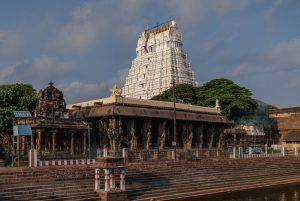
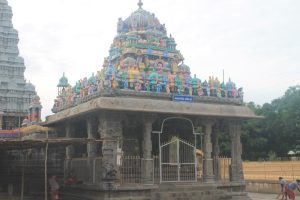
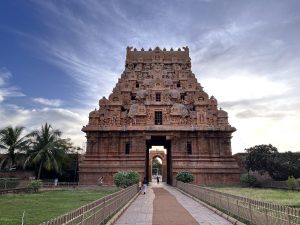
As you approach East Car Street, the temple presents itself behind high stone compound walls measuring roughly 865 feet on the east-west axis and 657 feet north-south. High gateway towers rise into the sky, led by the eastern rajagopuram which reaches an impressive height of 53 metres.
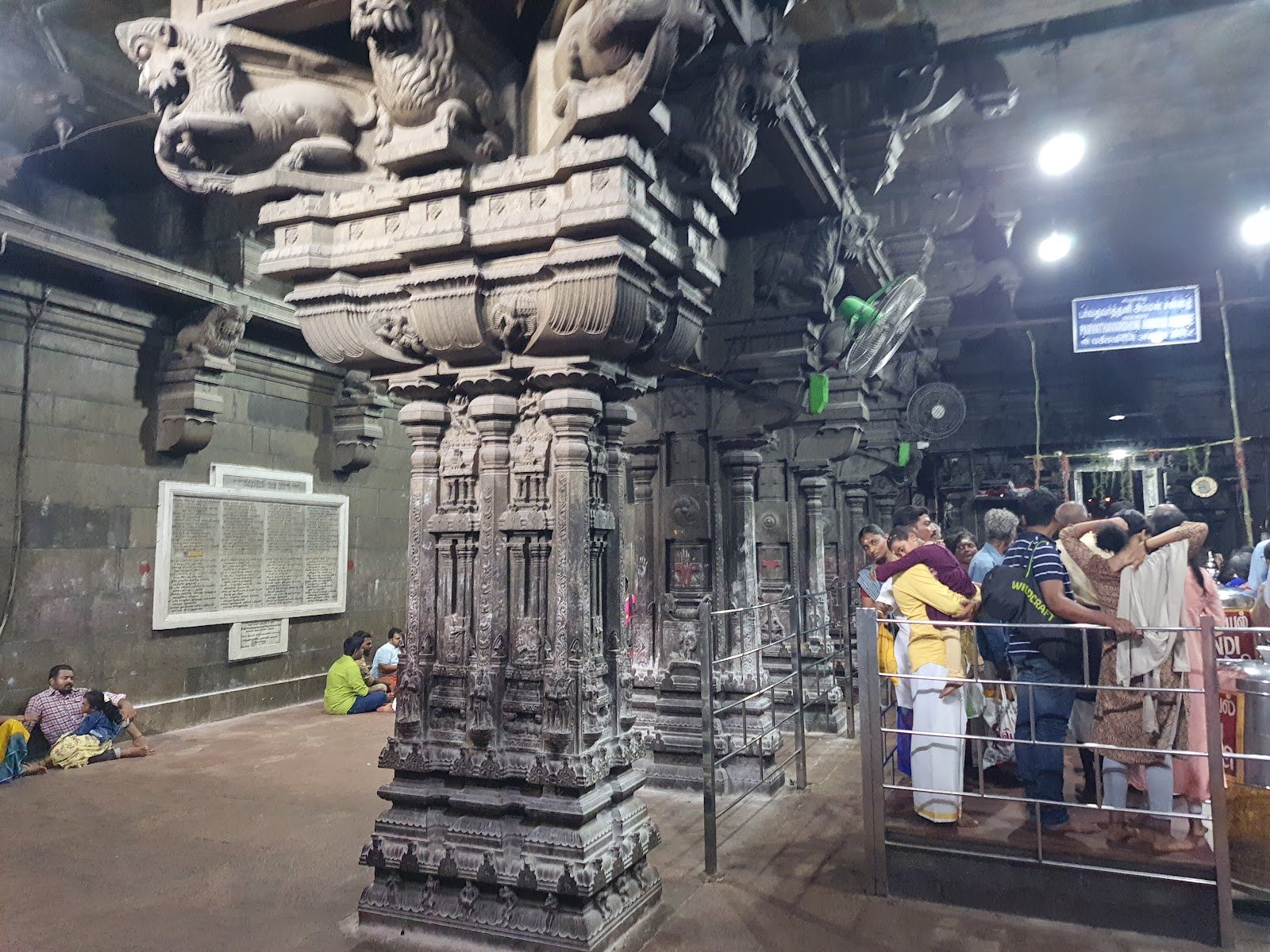
Inside, you walk through the longest pillared corridors in the world. The grand outer corridor measures approximately 400 feet along its east and west flanks and 640 feet along the north and south sides, combining for a total length of 3,850 feet. More than 1,200 individual sculpted granite pillars rise to meet flat stone beams thirty feet overhead. Each pillar features detailed carvings, creating an extraordinary sense of symmetry and perspective as shadows drift across the flagstones.
A notable architectural feature is the Chokkattan Madapam, an intricately laid courtyard where stone walkways cross in the layout of a traditional Indian board game. During festival periods, ceremonial bronze images of the deities are adorned and seated here. Within the central sanctum, there are two distinct lingams: the Ramalingam, fashioned from sand, and the Vishwalingam, which Hanuman is said to have brought from Mount Kailash. Rama decreed that the Vishwalingam is worshipped first, and temple priests maintain that exact sequence today. Adjacent to the main shrine stands the dedicated sanctum of the goddess Parvathavardhini.
How a visit works
For many Hindu pilgrims, a traditional visit follows an exact ritual sequence that begins outside the temple gates at the shore of the Bay of Bengal, known locally as Agni Theertham. Pilgrims take an initial dip in the ocean waters before entering through the eastern temple gate to complete the bath at the twenty-two holy theerthams.
- Take a ceremonial dip at Agni Theertham beach directly east of the temple.
- Deposit footwear, mobile phones, and bags at the managed cloaking counters outside the entrance.
- Purchase an official ticket for the twenty-two theertham baths at the inner counter if you plan to bathe.
- Walk with the temple attendants who draw fresh water from each of the numbered stone wells and pour a bucket over your head.
- Change into dry, clean clothing in the designated changing areas before approaching the sanctum for worship.
- Join either the general complimentary darshan line or purchase a special queue ticket for faster access to the shrines.
Local tip: If you do the twenty-two theertham bath, bring a change of dry traditional clothes and a plastic bag for wet garments. Temple guidelines do not permit walking into the inner sanctum while dripping wet.
Etiquette and what to wear
Ramanathaswamy Temple is an active, intensely sacred space with formal customs overseen by temple trustees and administrators. Maintaining modest conduct and respectful silence is expected throughout the courtyards and halls.
- Men must wear a traditional dhoti or veshti paired with a shirt or kurta-pyjama. Jeans, western trousers, shorts, and sleeveless vests are not permitted.
- Women must wear a sari, half-sari, or a salwar-kameez or churidar suit paired with a proper dupatta covering the chest. Western dresses, tights, and skirts are not allowed.
- Remove all footwear before passing through the outer gates. Counters are available outside where shoes can be checked for a nominal fee.
- Mobile phones, still cameras, and video cameras are strictly prohibited inside the complex. Leave them in your hotel room or deposit them in the official lockers outside.
- Non-Hindus are permitted to enter the outer courtyards and walk along the famous pillared corridors, but entry beyond the inner flagpole (kodimaram) into the sanctum sanctorum is reserved exclusively for practicing Hindus.
Best time to go and how long to stay
The temple opens daily in two sessions, running from roughly 5:00 AM to 1:00 PM, and reopening from 3:00 PM until about 9:00 PM. These hours can adjust during major festivals or special temple rites. The best time for a serene walk along the outer corridors is right after opening at 5:00 AM, before the main queues form, or in the evening around 5:30 PM when the stone floors cool down and oil lamps light the passages.
Plan on spending at least three to four hours if you intend to participate in the theertham bathing ritual and join the darshan lines. If you are visiting purely to view the architecture and outer corridors, two hours will give you time to admire the stonework without rushing.
| Temple Aspect | Typical Schedule & Details |
|---|---|
| Morning Hours | 5:00 AM to 1:00 PM |
| Evening Hours | 3:00 PM to 9:00 PM |
| General Entry | Free of cost |
| Special Darshan Queues | Nominal counter fee for express lines |
| Major Festivals | Maha Shivaratri (Feb/Mar) and Thirukalyanam (July/Aug) |
Getting there from Pondicherry and where to stay nearby
Travelling from Pondicherry to Rameswaram means heading south across the state, covering roughly 370 kilometres by road. Driving by hired car or private taxi takes about seven to eight hours along National Highway 32, passing through Chidambaram, Karaikkudi, and Ramanathapuram. If you prefer rail travel, long-distance express trains connect through nearby junctions like Villupuram, running straight down to Rameswaram Railway Station, which sits about 1.5 to 2 kilometres from the temple gates. Madurai Airport is the nearest regional airport, roughly 175 kilometres away by highway.
For accommodation, the area surrounding the temple and East Car Street contains numerous modest guesthouses and traditional pilgrim inns. The Maratha kings of Thanjavur originally established rest houses across this corridor between 1745 and 1837 CE, a tradition of hospitality that continues in the town. For quieter, full-service hotels with modern amenities, look along the main highway leading into Rameswaram or near the railway station.
Nice to combine with
Because Rameswaram is situated on an island, it is easy to combine your morning visit to Ramanathaswamy Temple with a few other historic and geographic sights nearby before heading back towards the mainland.
- Agni Theertham: The sacred shore right beside the eastern temple gateway, where you can observe early morning rituals as dawn breaks over the sea.
- Pamban Bridge: The historic rail bridge and parallel highway bridge connecting the island to mainland Tamil Nadu across open ocean waters.
- Dhanushkodi: The historic ghost town at the windswept southern tip of the island, where the Bay of Bengal meets the Indian Ocean.
- Dr. A.P.J. Abdul Kalam Memorial: An informative memorial museum dedicated to India’s former president, located a short drive outside town.
What recent visitors say
A quick, honest snapshot from recent Google reviews, so you know what to expect before you go.
What people loved
★★★★★ Vivek · in the last week
“One of the famous jotarlinga which is located near indian ocean.. 🙏🛕🇮🇳”
★★★★★ Sai · 2 months ago
“I went to the temple in July 2026, and I really loved the place and the spiritual atmosphere. It truly makes you feel the divine presence. My experience at the temple and in the queue was good. When I visited, it was super crowded and…”
★★★★★ Sourabh · 5 months ago
“Visiting Ramanathaswamy Temple was a deeply spiritual and memorable experience for me. As I entered the temple premises, I was immediately struck by the grandeur of its architecture. The long, beautifully carved corridors seemed endless…”
What some found difficult
★★☆☆☆ Divya · in the last week
“The darshan of Ramnathswamy is divine, but the maintenance inside and outside is extremely poor. No proper cleaning and the place is full of touts and agents. Even after a quick darshan ticket, you’ve to be in the queue. Tough for those…”
★★★☆☆ Genuine · 9 months ago
“I visited Shri Arulmigu Subramaniya Swami Temple at 4:00 AM for Spadika Linga Darshan. The darshan was very peaceful and spiritually powerful. Early morning time gives a calm and divine feeling. The temple inside is clean and well…”
Reviews via Google Maps. Opinions are those of their authors.
Frequently asked questions
Can non-Hindus enter Sri Ramanathaswamy Temple?
Yes, non-Hindu visitors are welcome to enter the outer grounds and walk through the historic pillared corridors. However, entry past the inner flagpole (kodimaram) and into the main sanctum is strictly reserved for practicing Hindus.
Can I bring my mobile phone inside the temple?
No, mobile phones and cameras of all kinds are completely prohibited inside the temple walls. You must leave your phone in your vehicle, at your hotel, or deposit it at the electronic cloakrooms near the entrance.
What is the procedure for the twenty-two theerthams?
Pilgrims first take an ocean dip at Agni Theertham, then enter the temple compound to receive water drawn from twenty-two sacred wells by temple staff. Afterwards, you change into dry traditional attire before entering the sanctum queues.
How long is the drive from Pondicherry to Rameswaram?
The journey covers roughly 370 kilometres by road. Depending on traffic and meal stops along the highway, the drive generally takes about seven to eight hours.
Find it
Address: E Car St, Rameswaram, Tamil Nadu 623526, India
You might also like
- Where to stay in Pondicherry
- Churches, temples, mosques and ashrams in Pondicherry
- Saneeswarar Temple
- Sri Aurobindo Ashram
- Sacred Heart of Jesus Church
- Things to do in Pondicherry
- Visiting Marudhamalai Temple: A Helpful Practical Guide
- Visiting the Kamakshi Amman Temple in Kanchipuram
- Vadapalani Murugan Temple: Practical Guide for Visitors