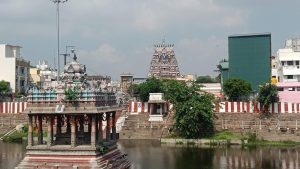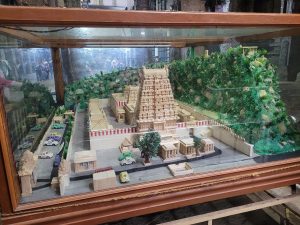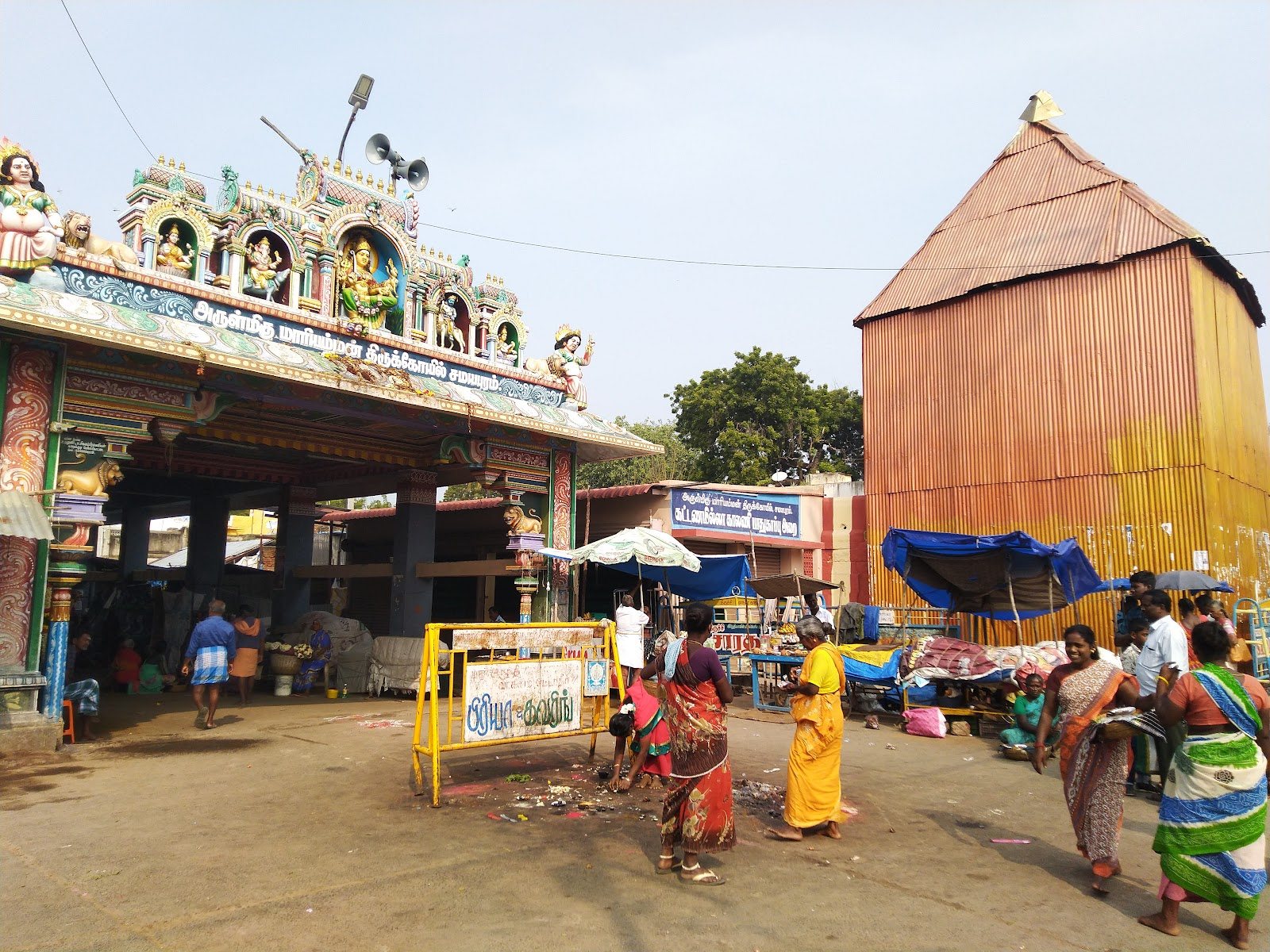
The Samayapuram Mariamman Temple stands in the settlement of S. Kannanur West, just north of the city of Tiruchirappalli. Revered throughout Tamil Nadu as an ancient centre of healing and protection, this temple welcomes an immense stream of pilgrims who arrive to honour the mother goddess, offer prayers for recovery from illness, and carry out personal vows.
If you are journeying inland from Pondicherry toward the temple towns of the Cauvery delta, setting aside half a day here reveals a deeply moving side of regional devotional life. The atmosphere is grounded in centuries of rural devotion, distinct folk rituals, and an enduring sense of community faith.
At a glance
| Best time of day | Early morning around 6:00 AM or late afternoon after 4:30 PM |
|---|---|
| Allow | 1.5 to 2.5 hours, depending on queue lengths |
| Dress | Modest traditional attire; shoulders and knees fully covered |
| Photography | Strictly prohibited inside the sanctum and inner shrines |
| From Pondicherry | Roughly 185 km by road, about 3.5 to 4 hours |
The story and significance of the goddess
Samayapuram Mariamman is worshipped as an incarnation of Adi Parashakti, embodying protective and healing energies. A local legend recounts that the deity originally resided within the grand Sri Ranganathaswamy Temple at nearby Srirangam. When one of the chief priests believed the intense power of the figure contributed to illness, the image was moved outside the island town. Passersby subsequently discovered the idol and established a dedicated shrine in Kannanur, which grew into the present place of worship.
During the seventeenth century, when the Vijayanagara Empire maintained a military encampment in this region, commanders prayed here for victory in conflict and subsequently expanded the shrine. The present structural form of the temple was built in the early eighteenth century by King Vijayaraya Chakravarti II. Today, the complex is administered by the Hindu Religious and Charitable Endowments Department of the Government of Tamil Nadu and ranks as the second wealthiest temple in the state in terms of cash flows, following Palani.
The goddess is widely sought after by people seeking relief from physical afflictions, especially skin conditions such as measles and chickenpox, as well as eye complaints. Devotees whose prayers have been answered often return to present miniature metal replicas of affected limbs or organs, expressing gratitude for restored health.
What to look for in the temple complex
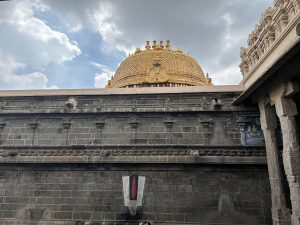
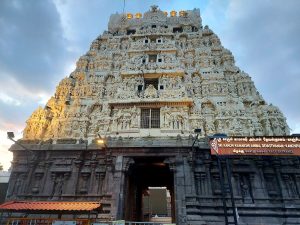
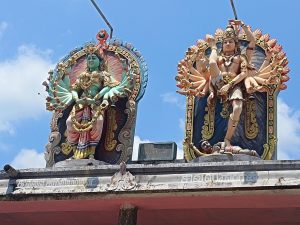
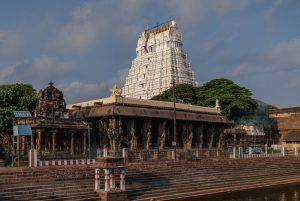
The temple follows traditional Dravidian architectural lines, marked by high perimeter walls, expansive stone corridors, and a multi-tiered eastern Rajagopuram that rises over the entrance. Above the main sanctum rests a gold-plated vimana, catching the morning sunlight above the stone roofline.
Inside the inner sanctum, the primary idol presents a remarkable and unusual feature. Unlike the carved granite sculptures typical of South Indian temples, this figure of the goddess is sculpted entirely from sand and clay combined with an extraction of medicinal herbs. She is depicted seated with her left leg folded and her right leg resting downward, holding traditional weapons in her hands.
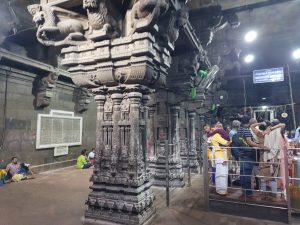
Because her clay and herb composition is delicate, sacred ablutions or abhishekams are never poured directly onto the main deity. Instead, priests perform these ritual washings on a smaller stone idol placed directly in front of her. In the outer courtyards, you will also notice a venerated neem tree associated with prayers for fertility, a sacred water tank, and spacious pillared mandapams where pilgrims gather to rest.
How a visit works in practice
Before walking through the eastern gateway, you will leave your footwear at the designated shoe counters outside. The temple grounds are active from before dawn, filled with the aroma of crushed neem leaves, camphor, and sweet jaggery.
Visitors have two choices for entering the inner sanctum: a free general darshan queue and paid special darshan ticket lines. The ticket lines move considerably faster during peak hours. As you move forward through the covered barricades, you can observe several distinctive ritual offerings carried by families:
- Preparation of mavilakku, a sweet paste crafted from rice flour, jaggery, and pure ghee, hollowed in the centre to hold a lit wick.
- Offerings of fresh neem leaves and coarse raw salt, placed before the goddess by rural devotees seeking protection or healing.
- Votive gifts of small embossed metal sheets representing eyes, arms, or legs, placed into temple collection boxes after illnesses have passed.
Local tip: If you wish to offer a mavilakku lamp, ingredients and small clay bases can be bought from authorized vendors along the temple approach road.
Etiquette and dress code
The temple warmly accepts visitors from all backgrounds and faiths, provided you observe the rules of conduct. This is an active centre of prayer, and maintaining quiet reverence throughout your visit shows respect to the community.
Traditional and modest attire is compulsory. Men should wear dhotis, cotton trousers, or pyjamas paired with shirts. Women are expected to wear sarees, salwar kameez, or churidars with a dupatta. Shorts, skirts ending above the ankles, and sleeveless shirts are not allowed inside.
Cameras and mobile phone photography are strictly barred inside the inner mandapams and sanctum. Keep your phone silenced and tucked into a pocket or bag once you pass the outer gateway. Always walk clockwise around the inner courtyards when moving past subsidiary shrines.
Best time to visit and festival calendar
The temple doors generally remain open daily from 5:00 AM until 9:00 PM, though hours can vary and are often extended continuously through the night during major festival periods. Everyday crowds tend to be lighter on Mondays, Wednesdays, Thursdays, and Saturdays. Sundays, Tuesdays, and Fridays are sacred to the goddess and bring tens of thousands of pilgrims from across the region.
A number of important festivals mark the temple year, bringing intense devotion and traditional rituals:
- The Poochorithal Vizha, occurring in the Tamil month of Masi (February to March), is a twenty-eight-day flower-showering festival where the goddess undertakes an ascetic fast and devotees offer cartloads of fresh blossoms.
- The Chithirai Car Festival in April or May features the procession of the massive wooden temple chariot and lake processions known as teppams.
- Thai Poosam, celebrated in the Tamil month of Thai (January to February), brings walking pilgrim groups carrying milk pots and vows.
During major festival periods, devotees may undertake vows of physical austerity, such as crossing beds of glowing charcoal or carrying pots of burning coal. You may also witness samiyattam, an intense spiritual trance state where individuals channel the blessing of the goddess.
Travelling from Pondicherry and where to stay
Reaching Samayapuram from Pondicherry is straightforward by road. The route covers roughly 185 kilometres, following the national highway toward Ulundurpet and continuing south toward Tiruchirappalli. By private car or taxi, the journey takes about 3.5 to 4 hours under regular traffic conditions. Alternatively, regular express buses connect Pondicherry to Tiruchirappalli Central Bus Stand, from where frequent local town buses run north toward Samayapuram and S. Kannanur.
Because Samayapuram is a compact temple settlement, most visitors prefer to stay in Tiruchirappalli or on the island of Srirangam, located about 11 to 18 kilometres to the south. Both areas offer a wide selection of family-run guest houses and comfortable modern hotels, along with quiet vegetarian dining rooms.
Places to see in the surrounding area
Since Samayapuram is situated just outside Trichy, combining your excursion with nearby architectural landmarks makes for a rich full-day circuit:
- Sri Ranganathaswamy Temple, Srirangam: Roughly 11 kilometres south, this monumental temple island spans seven concentric courtyards and stands as one of the largest functioning religious complexes in the world.
- Jambukeswarar Temple, Thiruvanaikaval: Located about 13 kilometres away, this ancient Shiva shrine represents the water element, featuring a natural underground spring inside the inner sanctum.
- Tiruchirappalli Rockfort and Ucchi Pillayar Temple: Positioned roughly 16 kilometres south, this granite outcrop towers above the city and provides sweeping views across the Cauvery basin from its summit.
Between stops, pause at one of the traditional tiffin rooms in Srirangam or Trichy for hot steamed idlis, crispy dosas, and freshly brewed South Indian filter coffee.
What recent visitors say
A quick, honest snapshot from recent Google reviews, so you know what to expect before you go.
What people loved
★★★★★ banu · 3 months ago
“A very peaceful and divine temple with a truly devotional atmosphere. The temple is well maintained, clean, and neatly organized. The deity gives a powerful and serene feeling, making the visit spiritually fulfilling. The temple management…”
★★★★★ Kattrali_by_Ram · 4 months ago
“Samayapuram Mariamman Temple. 1. The Core History & Legends The Srirangam Exile: Originally housed inside the Srirangam temple, the idol’s intense Ugra (fierce energy) was believed to cause illness. She was moved outside, where locals…”
★★★★★ Kannan · 5 months ago
“Arulmigu Samayapuram Mariamman Temple is a very powerful and sacred temple with a deeply divine atmosphere. The blessings of Goddess Mariamman bring peace, hope, and positivity to every devotee. The temple is always vibrant with devotion…”
Reviews via Google Maps. Opinions are those of their authors.
Frequently asked questions
Can non-Hindus enter the temple?
Yes, visitors of all backgrounds are permitted to enter the temple courtyards. You are expected to remove your shoes, dress in modest traditional attire, and follow the quiet decorum of the premises.
Why is sacred water not poured over the main deity?
The primary moolavar idol is sculpted from sand and clay blended with medicinal herb extracts rather than hard granite. To protect this delicate sacred composition, daily abishekams are performed on a smaller stone idol placed just in front of it.
What is the best way to avoid long lines at the shrine?
Plan your visit for an early weekday morning, specifically on a Monday, Wednesday, or Thursday around 6:00 AM. Avoid peak Tuesdays, Fridays, and Sundays, and consider purchasing a special darshan pass at the entrance counter if queues are long.
How far is the temple from the nearest train station and airport?
Srirangam Railway Station is roughly 11 kilometres away, while Tiruchirappalli Junction is about 19 kilometres away. Tiruchirappalli International Airport sits roughly 20 to 22 kilometres to the south.
Find it
Address: S.Kannanur West, Tamil Nadu 621112, India
You might also like
- Where to stay in Pondicherry
- Churches, temples, mosques and ashrams in Pondicherry
- Saneeswarar Temple
- Sri Aurobindo Ashram
- Sacred Heart of Jesus Church
- Things to do in Pondicherry
- Visiting the Kamakshi Amman Temple in Kanchipuram
- Vadapalani Murugan Temple: Practical Guide for Visitors
- Sri Ramanathaswamy Temple: A Visitor Guide to Rameswaram