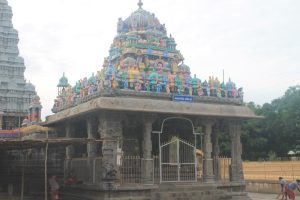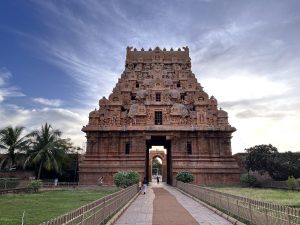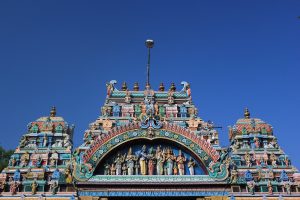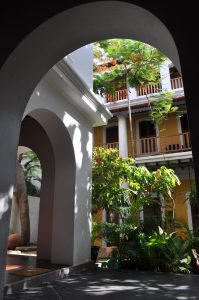
The Varadaraja Perumal Temple stands as one of the most sacred places of worship in Kanchipuram. Dedicated to Lord Vishnu, this sprawling complex forms an essential cornerstone of South Indian heritage. Pilgrims and travellers come here throughout the year to walk along stone corridors, admire extraordinary medieval stonecraft, and pause before the elevated central shrine.
If you are travelling up from Pondicherry for a morning excursion or staying overnight in Kanchipuram, having a clear understanding of the site makes your journey smooth. This guide shares the practical details you need before setting out, from opening hours and etiquette to the specific architectural features that make this shrine so significant.
At a glance
| Best time of day | Early morning between 6:00 AM and 8:00 AM, or late afternoon |
|---|---|
| Allow | 2 to 3 hours |
| Dress | Traditional modest attire covering shoulders and knees |
| Photography | Permitted in open areas; strictly prohibited in sanctums |
| From Pondicherry | Roughly 115 km, about 3 hours by road |
Why this place matters
The temple holds an exalted status in Sri Vaishnavism, where it is reverently referred to simply as Perumal Koil. Within this tradition, it shares supreme importance alongside the great shrines of Srirangam, known as Koil, and Tirupati, known as Malai. It is also celebrated as one of the 108 Divya Desams, the sacred earthly abodes of Lord Vishnu praised in the verses of the Alvar poet-saints. Early saints including Peyalwar, Bhoothathalwar, and Thirumangai Alvar sang hymns in devotion to the deity here.
The complex also holds a deep connection to Sri Ramanuja, the influential philosopher and theologian of Vishishtadvaita Vedanta, who lived and performed daily service within these walls. Beyond its philosophical weight, the temple serves as an open archive of regional history. Around 350 stone inscriptions cover its walls, recording generous gifts, land grants, and civic endowments from multiple dynasties, including the Chola, Pandya, Hoysala, Kakatiya, and Vijayanagara rulers. Major historical renovations began in the eleventh century under the Cholas and expanded dramatically during the Vijayanagara period.
What you will see inside the complex
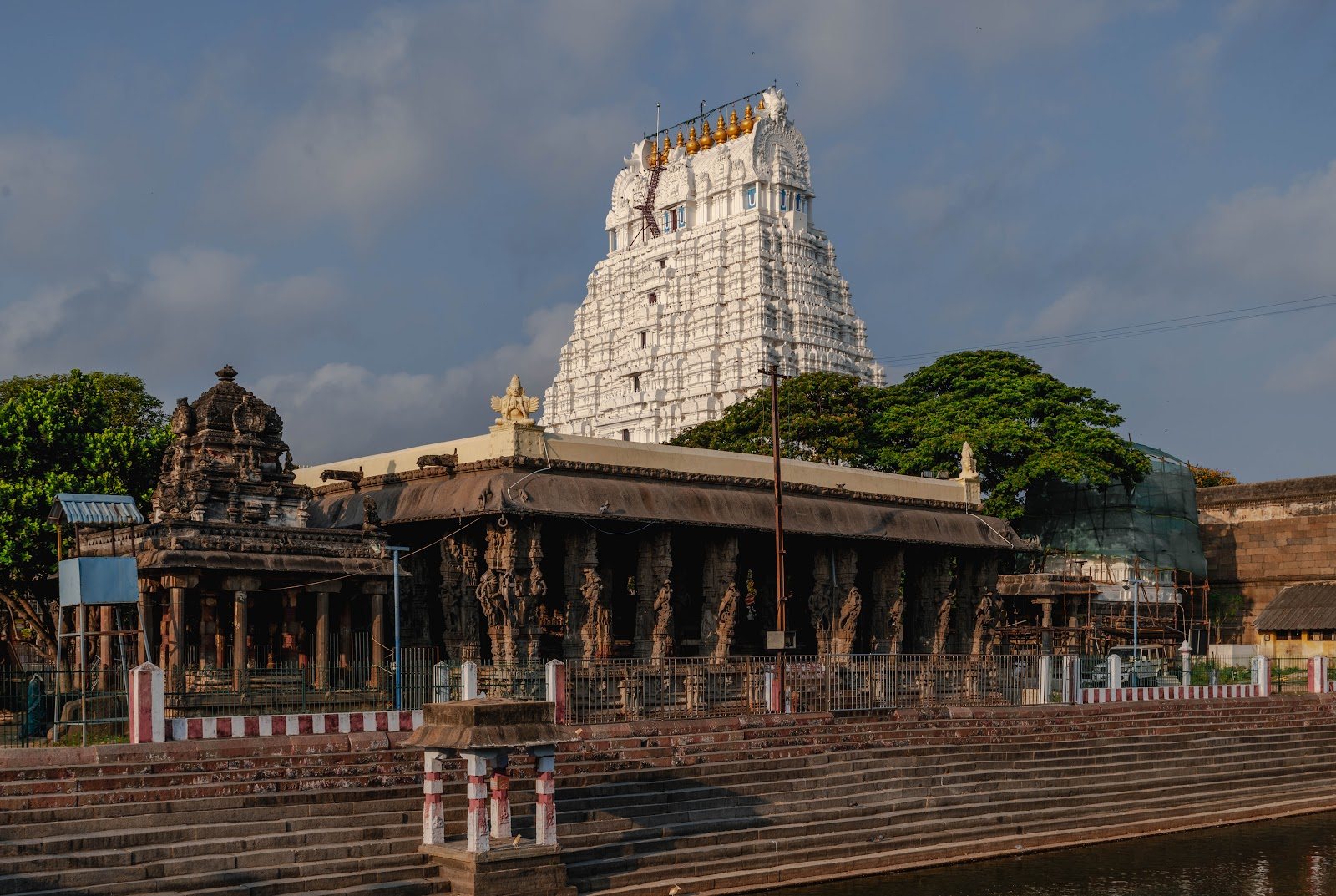
The temple layout contains remarkable architectural features spread across its vast courtyards. The central sanctum sits upon Hastagiri, an elevated stone mound shaped like an elephant. You reach the sanctum by climbing twenty-four stone steps, which lead you directly to the presence of Lord Varadaraja Perumal, depicted in a standing posture beneath the Punyakoti Vimanam. In a separate shrine within the complex, you can offer prayers to Goddess Perundevi Thayar, the consort of Perumal. Another prominent shrine is dedicated to Sri Chakrathazhwar, who is represented with sixteen arms.
Near the entrance stands the 100-Pillared Mandapam, an open pavilion built during the Vijayanagara era. Each column is carved from single blocks of granite, showcasing detailed sculptures of mythological yalis, warriors mounted on rearing horses, and delicate chains carved from a single piece of stone that hang freely from the eaves. In one of the upper corridors, pilgrims queue to view and touch gilded figures of a golden lizard and a silver lizard fixed to the ceiling, an act believed to bring relief from past misfortunes.
Towards the outer perimeter of the complex lies Anantha Saras, the sacred temple tank. Hidden beneath its waters is an underwater stone chamber that preserves the ancient wooden image of Athi Varadar, sculpted from fig tree wood. The idol remains submerged for decades, emerging only for special public veneration.
Local tip: Take a few extra minutes in the 100-Pillared Mandapam to inspect the hanging stone rings closely. The craftsmanship required to carve linked, moving chains out of solid granite is astonishing to see in person.
How a visit works
Before you enter the tall gopuram towers, you will find a dedicated shoe stand outside where you must leave your footwear. You then pass through security and enter the open outer courtyard. General entry into the temple is completely free. If the temple is busy, you can purchase special darshan tickets at the official counter inside the complex to join a shorter queue for viewing the main sanctum.
The visit follows a natural circular route. Most devotees first offer prayers at the auxiliary shrines before ascending the steps to Hastagiri. Inside the inner sanctum, priests perform continuous arati services, waving camphor flames before the deity and offering holy water and sacred basil leaves to worshippers. The atmosphere is solemn and moving, accompanied by the quiet murmur of chants and the ringing of brass bells.
| Darshan Type | Ticket Requirement | Queue Experience |
|---|---|---|
| General Darshan | Free of cost | Standard queue, can take longer during peak hours |
| Special Darshan | Paid ticket at counter | Shorter queue for viewing the central sanctum |
| Lizard Shrine | Nominal counter token | Separate queue leading to the ceiling walkway |
Etiquette and what to wear
Because this is an active and sacred house of worship, modest dress is required for all visitors. The temple administration strictly enforces traditional clothing standards at the main doorway:
- Men should wear dhotis, traditional veshtis, or full-length trousers paired with a shirt or kurta.
- Women should wear sarees, half-sarees, or salwar kameez suits with a dupatta or upper cloth.
- Shorts, mini-skirts, sleeveless tops, and revealing clothes are not permitted inside.
- Leather belts and large bags may need to be deposited outside, so carry minimal items with you.
Shoes and socks must be removed before entering the temple grounds. Photography and videography are strictly forbidden inside the inner sanctum and all individual shrine chambers. You are welcome to take quiet photographs of the stone pillars and towers in the outer open courtyards, provided you do not disturb worshippers.
Best time to go and how long to stay
The temple follows regular daily hours, opening in the morning from 6:00 AM to 12:30 PM, and reopening in the afternoon from 3:30 PM to 8:30 PM. These hours can alter during major festival periods. Arriving right at 6:00 AM allows you to enjoy the cool morning air and watch the early rituals before the sun warms the stone flagstones. Late afternoon, around 4:00 PM, is another comfortable time to visit.
Plan to spend between 2 and 3 hours here. This gives you enough time to wait in the sanctum line, visit the Thayar and Chakrathazhwar shrines, view the golden lizards, and spend unhurried time admiring the carvings in the mandapams. If you visit during festivals, expect larger crowds and allow half a day.
Major celebrations bring extraordinary pageantry to the temple. The Vaikasi Brahmotsavam is celebrated over ten days in early summer, featuring the grand Garuda Seva procession where the deity is carried through the town. Purattasi Navaratri and Vaikunta Ekadasi also draw substantial gatherings. Every forty years, the Athi Varadar Utsavam takes place, during which the wooden deity is brought out from the temple tank for forty-eight days of public worship, an event last held in 2019.
Getting there from Pondicherry and where to stay
Kanchipuram is situated roughly 115 km north-west of Pondicherry. By private taxi or car, the drive takes about 3 hours, moving inland via Tindivanam and Vandavasi. It makes a very manageable day trip if you start early in the morning. Alternatively, direct government buses run regularly between Pondicherry and Kanchipuram from the central bus stand.
If you are arriving by train from other parts of Tamil Nadu, the nearest station is Kanchipuram Railway Station, located approximately 4 to 5 km from the temple entrance. Chennai International Airport sits about 70 km away by road. For accommodation, Kanchipuram has several modest, clean lodges and heritage hotels near the temple streets. If you prefer a coastal base, you can return to the Coromandel coast in the evening to rest at seaside spots like Dune Eco Village Resort and Spa or St James Court Beach Resort.
Nice to combine with your visit
Kanchipuram is known as the city of a thousand temples, split historically between Shiva Kanchi and Vishnu Kanchi. While you are in the area, you can easily combine your temple visit with other great landmarks situated just a short auto-rickshaw ride away:
- Ekambareswarar Temple, famous for its towering gateway and sacred mango tree.
- Kamakshi Amman Temple, one of the central Shakti shrines of South India.
- Kailasanathar Temple, the oldest structural stone temple in the city, celebrated for its intricate Pallava-era sandstone panels.
- Ulagalandha Perumal Temple, dedicated to the Vamana avatar of Lord Vishnu.
After exploring the shrines, take a walk along Sannidhi Street outside the temple gates. It is lined with shops selling freshly made South Indian snacks, traditional filter coffee, and genuine handwoven Kanchipuram silk sarees from local weaver cooperatives.
What recent visitors say
A quick, honest snapshot from recent Google reviews, so you know what to expect before you go.
What people loved
★★★★★ Tarakaram · in the last week
“Varadaraja perumal is a big temple. where there are lot of shrines we can see. This is a place where the golden lizard including sun moon and silver lizards are there. Devotees can touch them and pass by. It’s always crowded”
★★★★★ Dibakar · 2 months ago
“Varadharaja Perumal Temple is one of the most magnificent and revered temples in Kanchipuram, dedicated to Lord Vishnu. Recognized as one of the 108 Divya Desams, this ancient temple is a masterpiece of Dravidian architecture and a…”
★★★★★ Murugan · 3 months ago
“My visit to Arulmigu Sri Varadhara was truly wonderful! 🙏 The temple’s atmosphere is incredibly serene, offering a peaceful spiritual experience. The intricate artwork and beautiful deities are simply breathtaking. ✨ I felt a profound…”
What some found difficult
★★★☆☆ Unnati · in the last week
“The Varadharaja Perumal Temple is an absolute architectural and spiritual marvel, but the rush can be overwhelming. The temple was extremely crowded during our visit, and we had to wait for over 2 hours in the queue. Note that you have to…”
Reviews via Google Maps. Opinions are those of their authors.
Frequently asked questions
Can non-Hindus enter Varadaraja Perumal Temple?
Non-Hindu visitors are welcome to explore the outer courtyards and admire the historic pillared mandapams. Entry into the innermost sanctum sanctorum may be restricted to practicing Hindus depending on priest protocols, so follow local signage or ask attendants on duty.
What is the story behind the wooden Athi Varadar idol?
The Athi Varadar idol was carved from fig tree wood and served as an ancient deity of the shrine. It is stored inside a stone chamber under the waters of the Anantha Saras temple tank and brought out for public worship only once every forty years.
Are mobile phones and cameras allowed inside?
You may carry your mobile phone into the outer courtyards, but photography is strictly prohibited inside the inner sanctum and individual shrines. Always keep your phone silenced while walking through worship areas.
Is the temple wheelchair accessible?
The outer courtyards are relatively flat, though the stone flooring can be uneven. The main sanctum sits atop the Hastagiri mound and requires climbing twenty-four steep stone steps, which presents difficulty for visitors with limited mobility.
Find it
Address: RP9F+PWJ West Mada Street, Sannidhi St, Nethaji Nagar, Kanchipuram, Nattapettai, Tamil Nadu 631501, India