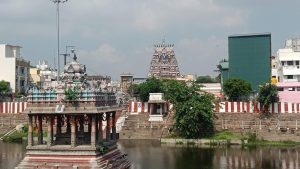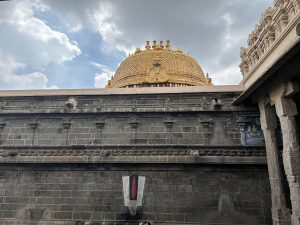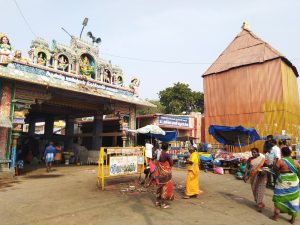
Azhagar Temple stands in the quiet forested foothills of the Alagar Hills, just outside Madurai in southern Tamil Nadu. Known traditionally as Thirumaliruncholai or Alagar Kovil, this ancient place of worship honors Lord Vishnu under the beloved local name of Kallazhagar. It is a major pilgrimage center with roots that reach back over two thousand years, yet the mood in its stone corridors remains calm, prayerful, and deeply rooted in everyday Tamil life.
If you are traveling down from Pondicherry to explore the temple culture of the Pandyan heartland, this temple makes for a deeply rewarding trip. Away from the dense traffic of central Madurai, the hill air feels cooler and the temple complex unfolds across wide stone courtyards enclosed by centuries of royal history. Here is everything you need to know to plan a smooth, respectful visit.
At a glance
| Best time of day | Early morning between 6:30 AM and 8:30 AM, or late afternoon |
|---|---|
| Allow | 2 to 3 hours for the temple and hill grounds |
| Dress | Strict traditional attire; shoulders and legs must be covered |
| Photography | Strictly prohibited inside the sanctum and main halls |
| From Pondicherry | Roughly 330 km, about 6 to 7 hours by road |
Why this place matters
Azhagar Temple is one of the 108 Divya Desams, the canonical holy abodes of Lord Vishnu praised by the Alvar poet-saints between the sixth and ninth centuries. Long before those hymns were sung, classical Sangam works like the Silappathikaram celebrated Thirumaliruncholai as a sanctuary of great spiritual weight. The great saints Periyalvar, Andal, Nammalvar, and Tirumangai Alvar all sang verses dedicated to the deity residing beneath these hills.
Over the centuries, the shrine enjoyed the patronage of the Early and Later Pandya kings. Later, during the sixteenth and seventeenth centuries, the Vijayanagara Empire and the Nayak rulers of Madurai added monumental stone halls, gateway towers, and defensive battlements. The temple is also closely linked with the legendary history of Madurai city itself, serving as the starting point for one of southern India’s most celebrated religious gatherings.
What you will see within the complex
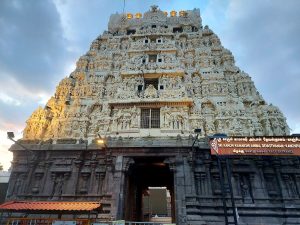
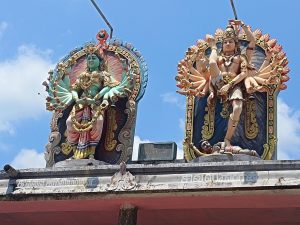
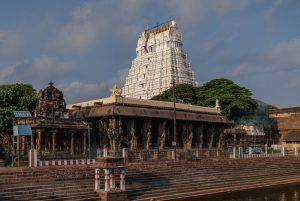
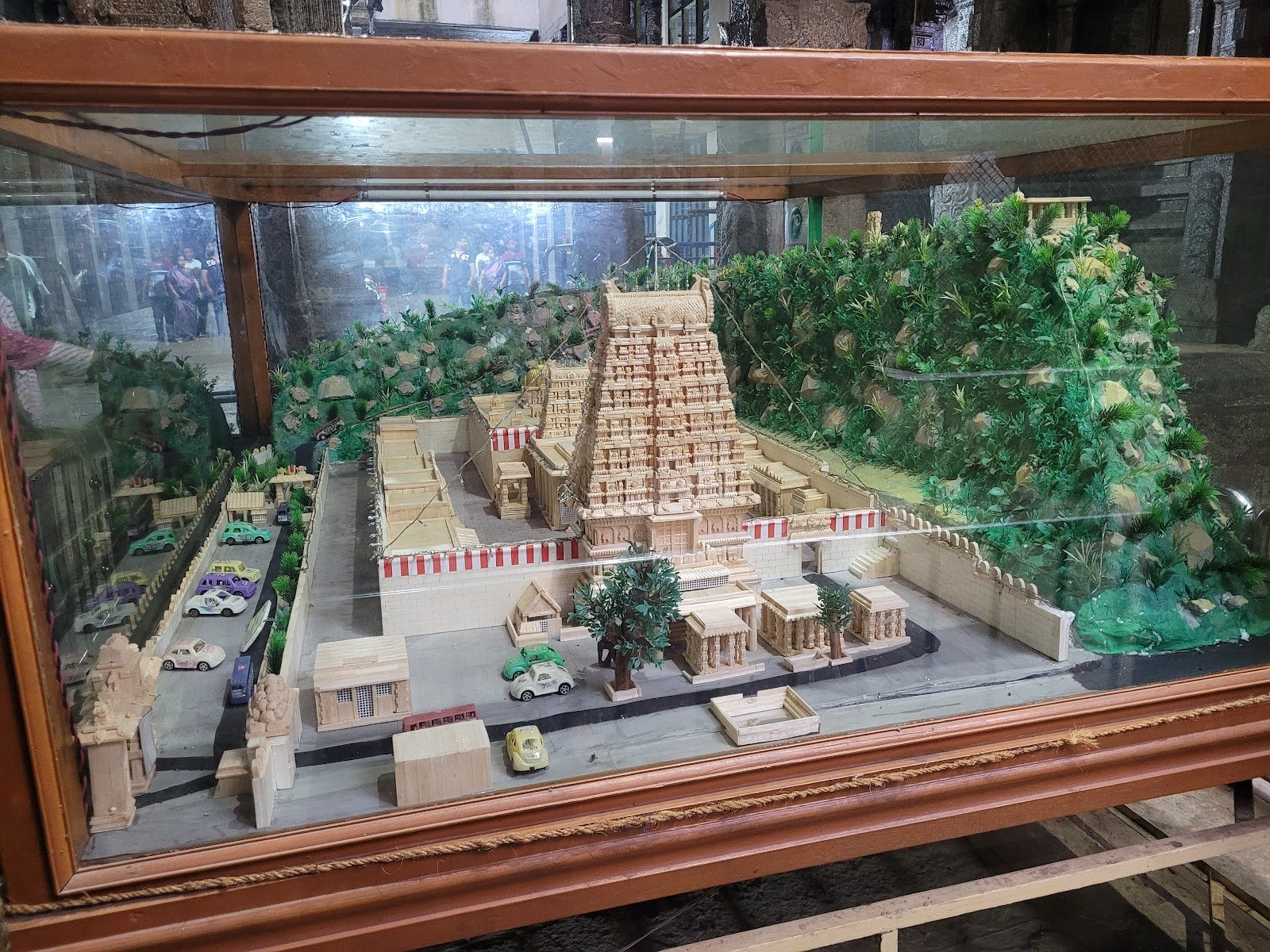
As you approach the complex along Alagar Kovil Main Road, the wooded ridges of the Solaimalai hills rise behind the temple. You first encounter the remains of historic stone ramparts known as Azhagapuri and Hiranyapuri, built to guard the sanctuary during turbulent regional wars. The main gateway is crowned by an imposing seven-tiered rajagopuram filled with detailed plaster sculptures depicting classic episodes from sacred lore.
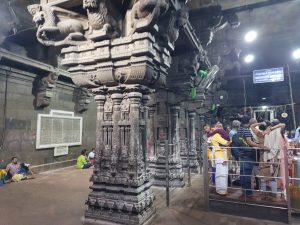
Once inside, the scale of Nayak-era stonework becomes apparent. The temple halls feature towering monolithic pillars carved with remarkable precision:
- The Kalyana Mandapam, filled with tall pillars showing life-size figures of celestial beings, musicians, and guardian riders.
- The Thirumalai Nayakar Mandapam and Anna Vahana Mandapam, which preserve fine stone carvings of Narasimha, Krishna, and Garuda.
- The sanctum of Sundararajar (Kallazhagar), where the main deity stands in black stone, holding the Sudarshana Chakra, accompanied by Sridevi and Bhudevi.
- Separate dedicated shrines for his divine consort Sundaravalli Thayar (Kalyana Sundaravalli), Andal, and the Vaishnava saints.
- The revered shrine of Pathinettampadi Karuppasamy, the village guardian deity stationed at the massive closed wooden doors set above eighteen stone steps.
The atmosphere blends grand courtly architecture with intense grassroots devotion. The sight of local families praying before the eighteen steps of Karuppasamy is just as central to this temple’s life as the ancient classical rituals performed within the innermost sanctum.
How a visit works
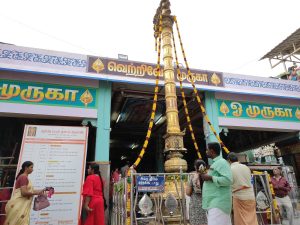
A visit here follows the traditional pattern of Tamil Vaishnava temples. You will leave your footwear at the designated counter outside the outer gopuram. From there, you pass beneath the towering gateway and enter the stone perimeter corridors. Worshipers usually stop first near the flagstaff to offer initial prayers before proceeding toward the central sanctum.
General entrance to the temple is free, allowing you to join the main queue for darshan of Lord Kallazhagar. On busy festival days or auspicious weekends, special direct darshan queues are often operated for a small ticket fee that you can buy at the temple counters. Inside the sanctum, priests offer camphor arati, distribute sacred tulsi leaves, and place the satari (the silver crown representing the feet of the Lord) upon your head as a blessing.
Local tip: Monkeys frequent the outer courtyards and the hill path leading up from the temple. Keep food items, coconut offerings, and water bottles tucked inside a shoulder bag so you can walk comfortably without unwanted attention.
Etiquette and what to wear
Azhagar Temple is managed by the Hindu Religious and Charitable Endowments (HR&CE) Department of the Government of Tamil Nadu, which strictly enforces a traditional dress code for all visitors. Modesty and decorum are expected throughout the entire precinct.
- Men should wear a traditional dhoti with a shirt or upper cloth, or plain formal trousers with a shirt. Shorts, lungis, and sleeveless tops are not permitted.
- Women should wear a saree, a dhavani (half-saree), or a salwar kameez with a properly draped dupatta. Leggings without an upper drape and western shorts are prohibited.
- Remove shoes and socks outside the perimeter walls. Walking barefoot on the stone floors is part of the temple tradition.
- Photography and videography are strictly prohibited inside the inner mandapams and sanctum. Keep your phone on silent and stored away in your bag.
- Entry regulations for the inner sanctum follow traditional customs. Non-Hindu visitors can generally move freely through the outer courtyards and admire the historic pillared halls, but you should always respect any signage and staff directions near the inner doorways.
Best time to go and how long to stay
The temple generally opens its doors daily from 6:00 AM to 12:30 PM, then closes for the afternoon break before reopening from 3:30 PM to roughly 7:30 or 8:00 PM. Arriving between 6:30 AM and 8:00 AM is ideal. The hill breeze is refreshing, the stone flagstones are cool beneath your bare feet, and morning pujas proceed without the midday heat.
| Major Festival | Tamil / Solar Month | Key Feature |
|---|---|---|
| Chithirai Thiruvizha | April to May | Grand journey of Kallazhagar to the Vaigai River in Madurai |
| Aadi Brahmotsavam | July to August | Thirteen-day festival where the sacred eighteen-step doors open |
| Vaikunta Ekadashi | December to January | Special morning passage through the inner gates of heaven |
The Chithirai Thiruvizha is the defining annual celebration. During this festival, hundreds of thousands of pilgrims gather as the deity is taken on a glorious golden horse vehicle across the plains to enter the Vaigai River in Madurai. While that period offers an extraordinary cultural spectacle, regular travelers may find the crowds overwhelming. For a peaceful architectural visit, choose an ordinary weekday outside major festival windows and set aside roughly two hours.
Getting there from Pondicherry and where to stay
Reaching Azhagar Temple from Pondicherry takes you across the central plains of Tamil Nadu. The road distance is roughly 330 km. If you drive or hire a taxi, the journey takes about six to seven hours via the National Highway through Villupuram, Tiruchirappalli, and Melur before branching toward the Alagar hills. It is a long drive for a single day, so combining it with an overnight stay in Madurai makes the trip far more relaxed.
For public transit, you can board an express train or direct state bus from Pondicherry or nearby Villupuram Junction to Madurai Junction railway station. From Madurai, the temple is approximately 21 km northeast. Frequent local city buses depart from Madurai’s Periyar bus stand and Mattuthavani integrated bus terminal straight to Alagar Kovil. Taxis and auto-rickshaws are also readily available.
Because Valaiyapatti and Alagar Kovil are quiet rural areas with very few lodging choices, it is best to base yourself in Madurai city. The neighborhood around the central railway station and West Perumal Maistry Street offers dozens of clean, comfortable hotels across all budgets, putting you within easy reach of both this hill temple and the city center.
Nice to combine with
Because the temple sits at the base of the Solaimalai hills, you can easily combine your visit with a couple of lovely spots located just a short distance further up the hillside road:
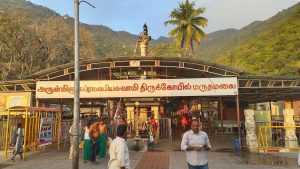
- Pazhamudircholai Murugan Temple: Perched roughly four kilometers up the hill, this peaceful shrine is celebrated as one of the six sacred abodes (Arupadai Veedu) of Lord Murugan.
- Nupura Gangai: A natural, perennial sacred hill spring located near the Rakkayi Amman Temple above Pazhamudircholai, where pilgrims stop to bathe in the cool mountain water.
- Madurai City Sights: Return to town for lunch and spend the afternoon visiting Thirumalai Nayakkar Palace, the ancient Koodal Azhagar Temple in the town center, or the towering gateways of Meenakshi Sundareswarar Temple.
Along the road back to Madurai, small village tea stalls serve fresh banana fritters and strong filter coffee, providing an easy pause before you head back into the city.
What recent visitors say
A quick, honest snapshot from recent Google reviews, so you know what to expect before you go.
What people loved
★★★★★ Debasis · 2 months ago
“A Blissful Visit to Alagar Kovil Alagar Kovil is a breathtaking temple nestled amidst the lush green hills near Madurai. Dedicated to Lord Kallazhagar (a form of Lord Vishnu), the temple beautifully blends spirituality, nature, and ancient…”
★★★★★ Nanban · 3 months ago
“Well mantained Temple. Usually 7to 7.45 Morning alangaram happening. So devotees not allowed between 7 to 7.45 a.m. plan accordingly.”
★★★★★ #beardless_tripy · 4 months ago
“Old beautiful and peaceful temple surrounded by hills and greenery. the atmosphere is calm and filled with positive energy. the holy ganga water is special and refreshing. there is good parking space and small shops nearby. overall it is a…”
Reviews via Google Maps. Opinions are those of their authors.
Frequently asked questions
What is the entry fee for Azhagar Temple?
General admission into the temple grounds is free. If you wish to use the special darshan queue during weekends or festivals to reduce waiting times, tickets are available at the entrance counter for a nominal fee.
Are non-Hindus allowed inside Azhagar Temple?
Non-Hindu visitors can enter the outer courtyard, view the historic pillared mandapams, and appreciate the architecture. Access into the innermost sanctum sanctorum is generally reserved for practicing Hindus, in line with HR&CE guidelines.
Can I reach Pazhamudircholai from Azhagar Temple on foot?
A winding uphill road connects Azhagar Temple to Pazhamudircholai over about four kilometers. You can walk if you are fit and start early, but local shuttle vans, autos, and private cars run up and down the hill continuously throughout the day.
What should I do with my shoes before entering?
Footwear is not permitted inside any part of the temple. You should leave your sandals or shoes at the official shoe deposit counter located outside the main rajagopuram for a small standard token fee.
Find it
Address: Alagar Kovil Main Rd, Alagar Nagar, Ramavarma Nagar, K.Pudur, Valaiyapatti, Tamil Nadu 625301, India
You might also like
- Where to stay in Pondicherry
- Churches, temples, mosques and ashrams in Pondicherry
- Saneeswarar Temple
- Sri Aurobindo Ashram
- Sacred Heart of Jesus Church
- Things to do in Pondicherry
- Samayapuram Mariamman Temple: A Pilgrim Guide
- Sri Ramanathaswamy Temple: A Visitor Guide to Rameswaram
- Guide to Sri Ranganatha Swamy Temple in Srirangam