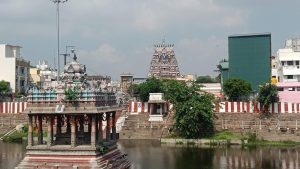
Jambukeswarar Temple stands on the island plain between the Cauvery and Coleroon rivers, just across from the temple town of Srirangam. It is an ancient place of worship dedicated to Lord Shiva, known across South India for its deep connection to the natural element of water. As you step through the outer gates, the sound of the nearby town fades into the murmur of temple bells, the scent of burning camphor, and the cool shade of massive stone corridors.
If you are traveling through central Tamil Nadu from Pondicherry, this temple offers a direct encounter with living Chola heritage. Daily rituals here have continued without interruption across centuries, carried out in quiet granite halls that feel distinct from the grand Vaishnavite shrines nearby.
At a glance
| Best time of day | Early morning around 6:00 AM or late afternoon around 4:30 PM |
|---|---|
| Allow | 1.5 to 2.5 hours |
| Dress | Strict traditional attire; shoulders and legs fully covered |
| Photography | Prohibited inside the inner corridors and sanctum |
| From Pondicherry | Roughly 200 km, about 4 hours by road |
The history and sacred water of Thiruvanaikoil
The foundation of this shrine reaches back roughly 1,800 years to the early Chola ruler Kochengat Cholan. In later centuries, monarchs from the Chola, Pandya, and Hoysala dynasties expanded the halls, raised outer walls, and endowed lands to keep worship active. The temple holds a revered place in Shaivite tradition as one of the 275 Paadal Petra Sthalams, celebrated in the seventh-century Tevaram verses composed by the Nayanar poet-saints.
Among Shiva shrines, it is uniquely honoured as one of the five Pancha Bhoota Sthalams, each representing an essential element of the cosmos. Here, worship centres on water, known as Neer or Appu. In the innermost sanctum, Lord Shiva is venerated as an Appu Lingam, where a perennial underground natural spring wells up constantly from the earth to submerge the base of the stone deity.
The name Thiruvanaikoil comes from an ancient local story involving an elephant, called aanai in Tamil, and a spider that both offered daily devotion to the Shiva Lingam. The elephant washed the stone with river water carried in its trunk, while the spider wove a silken web above to shade it from falling dry leaves. The town has carried their memory through its name ever since.
Inside the stone courtyards and shrines
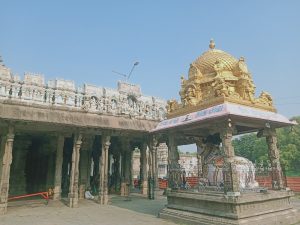
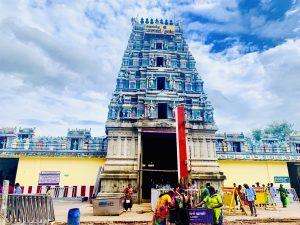
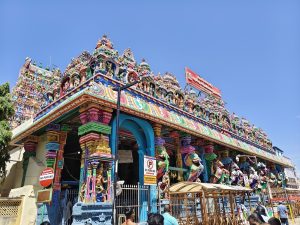
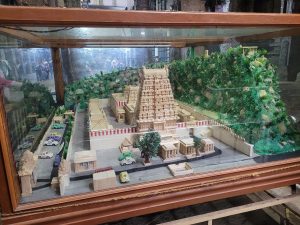
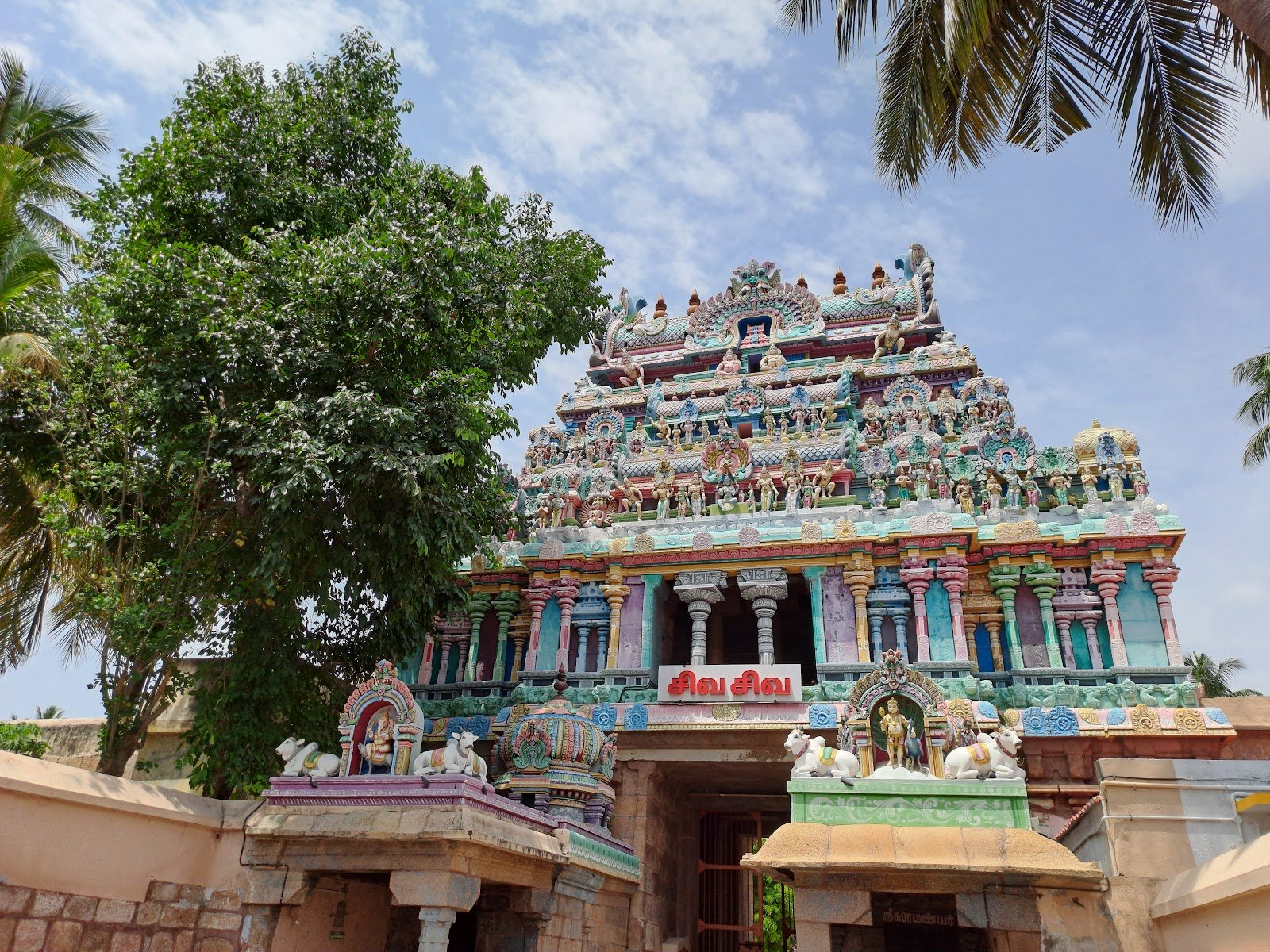
The temple covers roughly 18 acres and follows classic Dravidian layout, planned as five concentric walled enclosures called prakarams. Towering multi-tiered gopurams stand over the gateways, their carved stucco figures looking down onto the residential streets outside.
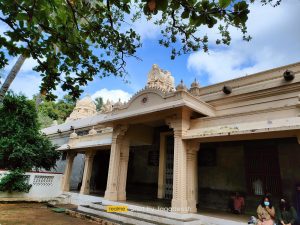
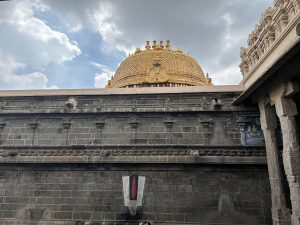
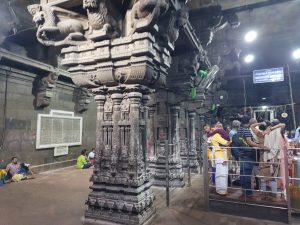
The outermost enclosure is defined by the Vibhuti Prakaram, an imposing stone wall that reaches over 25 feet high and runs for several hundred meters. Walking along these corridors, you pass rows of finely chiselled granite pillars, quiet stone courtyards, and a historic thousand-pillared hall that shows the immense masonry skill of Tamil artisans.
Inside the inner precinct grows the sacred Venn Naaval tree, also called the White Jambu tree, which serves as the sthala vriksham or temple tree. Sage Jambu is said to have carried out intense penance beneath its branches. Close by stands the independent shrine of Goddess Parvati, who is worshipped here as Akilandeswari. Her shrine faces east, aligned so that she perpetually faces Lord Jambukeswarar as his student.
Darshan, daily worship, and the noon ritual
A standard visit involves walking through the concentric stone gateways toward the central sanctum. General entry into the main lines is free, though the temple administration often provides paid special darshan tickets at counters near the entrance during busy hours to help reduce queue times.
One of the most distinctive moments of the day takes place during the noon prayer service, known as the Uchikala Pooja. In this service, the chief temple priest drapes himself in an elaborate silk saree and wears a crown to conduct the rites, reenacting Goddess Akilandeswari’s original penance before Lord Shiva. Watching this ritual offers a rare glimpse into devotional traditions that have been practiced identically for generations.
Another focal point of the shrine is connected to the philosopher Adi Shankaracharya. Long ago, Goddess Akilandeswari was believed to embody fierce, fiery power. To calm her presence into maternal grace, Adi Shankaracharya installed energized ear ornaments, called Thadangas, which still adorn the image of the goddess today.
Local tip: If you wish to witness the noon Uchikala Pooja, arrive at the Akilandeswari shrine by 11:30 AM to secure a clear spot before the service begins around midday.
Temple etiquette, dress code, and local rules
Because this is an active religious sanctuary, visitors are expected to observe traditional rules of conduct and modesty. Showing patience and moving quietly through the lines helps maintain the peaceful atmosphere of worship.
- Dress code: Men should wear a traditional dhoti, a veshti, a kurta, or formal trousers with a collared shirt. Women should wear a saree, half-saree, or salwar-kameez with a dupatta. Shorts, bermudas, lungis, and sleeveless tops are strictly prohibited.
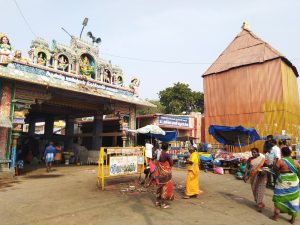
- Footwear: All shoes and sandals must be left at the designated footwear deposit counters outside the entrance towers before you pass into the stone gateway.
- Photography: Taking photographs or filming videos is prohibited inside the inner corridors and around the sanctum sanctorum. You may take photos of the outer gopurams from the street, but keep your camera tucked away once inside.
- Non-Hindu visitors: Non-Hindus are permitted to explore the outer courtyards and stone halls, though entry into the inner sanctum area around the lingam may be restricted. Look for posted signage or check with temple staff.
Best time to go and how long to stay
The temple generally opens its doors twice a day, first from around 5:30 AM or 6:00 AM until 1:00 PM, and again from around 3:00 PM or 4:00 PM until 8:30 PM or 9:00 PM. Exact closing times can shift on special holy days, so planning your arrival for the middle of each session is sensible.
The winter months between November and February offer the most pleasant weather for walking barefoot on stone flagstones, which get quite hot under the midday sun during the summer. Major religious festivals draw thousands of pilgrims from across the region, notably Panguni Brahmotsavam in March or April, Maha Shivaratri in February or March, Navaratri in autumn, as well as Aadi Pooram and Thai Poosam. If you visit during these festivals, expect longer lines and a busy atmosphere.
Allow between 1.5 to 2.5 hours for a normal visit. This provides sufficient time to leave your footwear, walk through the outer courtyards, join the queue for darshan at both the Jambukeswarar and Akilandeswari shrines, and spend a few quiet moments in the pillared corridors.
Getting there from Pondicherry and where to stay nearby
Reaching Tiruchirappalli from Pondicherry is straightforward. The driving distance is roughly 200 km, taking about 4 hours along the national highway network through Villupuram and Perambalur. You can easily hire a private taxi from Pondicherry for a weekend excursion or take one of the regular state express buses heading toward Trichy.
For travelers arriving by rail or air, the temple is exceptionally well situated within the city area:
| Transport Hub | Approximate Distance | Typical Travel Time |
|---|---|---|
| Srirangam Railway Station | 2 to 3 km | 10 minutes by auto-rickshaw |
| Tiruchirappalli Junction (TPJ) | 8 km | 25 minutes by taxi or auto |
| Tiruchirappalli International Airport (TRZ) | 10 to 12 km | 30 to 35 minutes by car |
For accommodation, you will find clean guesthouses and pilgrim hotels scattered around the car streets of Thiruvanaikoil and adjacent Srirangam. If you prefer larger business-class hotels with on-site dining and secure parking, look around the Tiruchirappalli Junction railway station area or along the Cantonment district.
Nice to combine with
A visit to Thiruvanaikoil pairs naturally with other notable historical sights in the immediate neighbourhood. Since the temple sits right on the edge of Srirangam island, you can easily spend a full day exploring the heritage of the Cauvery delta.
- Sri Ranganathaswamy Temple, Srirangam: Located roughly 2.5 to 3 km west, this is one of the largest functioning Hindu temple complexes on earth, dedicated to Lord Vishnu and famous for its monumental Rajagopuram.
- Tiruchirappalli Rockfort (Ucchi Pillayar Temple): Situated roughly 6 km south across the river, this ancient rock fortress rises abruptly from the plain and requires climbing over 400 stone steps to reach a shrine with wide views of the city.
- Kallanai Dam (Grand Anicut): Built originally during the early Chola period across the Cauvery roughly 14 km east, this remarkable ancient stone water diversion dam continues to direct irrigation water through the delta.
- Local refreshments: In the car streets just outside the temple gates, stop at a traditional mess for hot filter coffee, crisp medu vadas, or a simple banana leaf lunch served with regional vegetarian curries.
What recent visitors say
A quick, honest snapshot from recent Google reviews, so you know what to expect before you go.
What people loved
★★★★★ Konathala · 2 months ago
“Arulmigu Jambukeswara Temple is such an underrated temple where many people do not know about this. This is such a powerful temple where you can find the JALA LINGAM OF lord Shiva. The temple is always peaceful and you find very less crowd…”
★★★★★ Surya · 3 months ago
“Visiting Jambukeswarar Temple was a truly divine and spiritual experience. The temple’s ancient architecture, peaceful atmosphere, and sacred presence of Lord Jambukeswarar filled me with a deep sense of calm and devotion. The positive…”
★★★★★ Kamalakanta · 3 months ago
“⭐⭐⭐⭐⭐ Arulmigu Jambukeswarar Temple, Thiruvanaikaval, is a truly divine and peaceful place with immense spiritual significance. The temple’s magnificent architecture, beautifully carved pillars, and serene atmosphere make it a memorable…”
Reviews via Google Maps. Opinions are those of their authors.
Frequently asked questions
Is the underground spring water visible inside the sanctum?
Yes, during darshan visitors can observe water pooling around the Appu Lingam in the sanctum floor. Priests regularly bail out or channel the natural spring water to maintain the daily ceremonies.
Why does the temple priest dress like a woman at noon?
During the midday Uchikala Pooja, the chief priest wears a saree to reenact the penance of Goddess Akilandeswari, who is believed to have worshipped Lord Shiva here in that posture.
Can tourists take photographs inside Jambukeswarar Temple?
Photography is strictly prohibited inside the inner corridors, pillared halls, and near the sanctums. You may only take photographs of the exterior towers and street views from outside the temple complex.
Are non-Hindu visitors allowed to enter?
Non-Hindus are permitted inside the outer courtyards and large pradakshina pathways of the temple complex. However, entry into the inner sanctum housing the lingam is generally reserved for practicing Hindus.
Find it
Address: VP34+GCW, N Car St, Srirangam, Thiruvanaikoil, Tiruchirappalli, Tamil Nadu 620005, India
You might also like
- Where to stay in Pondicherry
- Churches, temples, mosques and ashrams in Pondicherry
- Saneeswarar Temple
- Sri Aurobindo Ashram
- Sacred Heart of Jesus Church
- Things to do in Pondicherry
- Visiting Sri Ramanasramam in Tiruvannamalai: A Guide
- Masani Amman Temple Guide: Visiting Anaimalai
- Guide to Ekambaranathar Temple in Kanchipuram