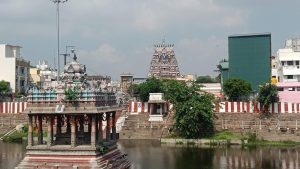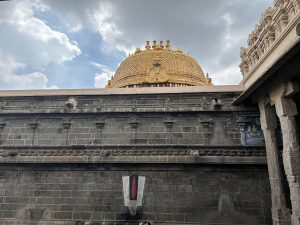
Masani Amman Temple is one of the most distinctive places of worship in western Tamil Nadu, set against the plains near the Anaimalai Hills. Situated in the town of Anaimalai, roughly 14 to 24 kilometers southwest of Pollachi, the temple stands near the natural junction where the Aliyar River meets the Uppar stream. Devotees travel here from across the state to offer prayers for health, seek resolution in difficult personal disputes, and pay respect to a protective family deity.
Unlike the towering stone shrines found in eastern coastal cities like Pondicherry, this sanctuary preserves an earthy, village-centered spiritual tradition. You will notice its peaceful open courtyards, ancient stone fixtures, and a singular central sanctum where the presiding goddess lies recumbent across the earth rather than seated upon a stone pedestal. It is an extraordinary place to encounter living regional worship.
At a glance
| Best time of day | Early morning between 6:00 AM and 8:30 AM |
|---|---|
| Allow | 1 to 2 hours on regular weekdays |
| Dress | Modest traditional attire (dhoti, kurta, saree, or salwar) |
| Photography | Strictly prohibited inside the complex and sanctum |
| From Pondicherry | roughly 390 km (8 to 9 hours) by road |
The Story and Meaning of the Goddess
To understand the spirit of this shrine, you have to look into the regional folklore that shaped it. In ancient times, the settlement of Anaimalai went by the name Nannur. A local ruler named Nannan from the Ezhilmalai dynasty controlled the land and guarded his private mango orchards with harsh laws. When a local woman unwittingly ate a fruit that had fallen from his orchard trees, Nannan ignored the cries of his people and ordered her execution. Her unjust death provoked widespread anger across the countryside.
The Chera monarch Kalankaikanni Narmudi Cheral eventually engaged Nannan in battle near Vijayamangalam and killed him. Ancient Tamil literature, specifically the Kurunthokai, records this episode and refers to the fallen king as Pen-kolai-purintha Nannan, meaning the ruler who murdered a woman. Mourning the innocent woman who had died for an innocent act, the local community built a memorial shrine at the burial ground where she fell. Over the centuries, her spirit was consecrated as a protective deity, named either after the old Tamil word for mango, masani, or after the Sanskrit term smashani, referring to the cremation grounds.
Over time, the regional figure of Masani Amman became associated with Adi Parashakti, while remaining closely linked to regional protective mother goddesses like Mariamman, Angala Devi, and Isakki. A parallel local tradition also connects the grounds with Lord Rama, who is said to have rested in this area during his search for Sita and molded an earthen form of Shakti to ask for strength. Today, many families across Tamil Nadu revere her as their kuladevi, or hereditary family guardian, while others honor her as Needhi Devathai, the goddess of natural justice.
What You Will See Across the Grounds
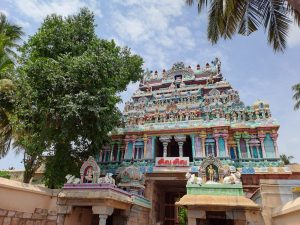
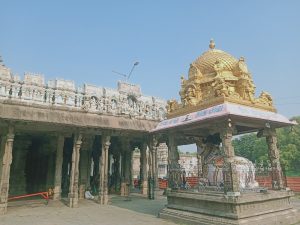
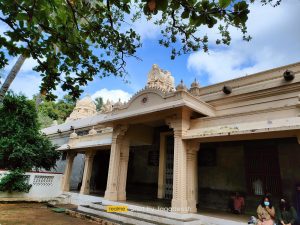
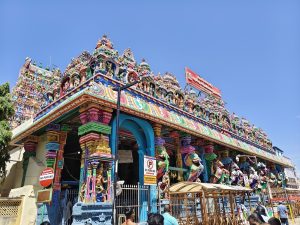
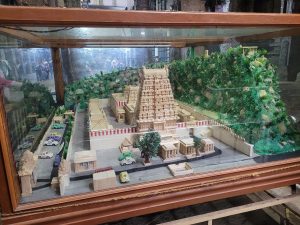
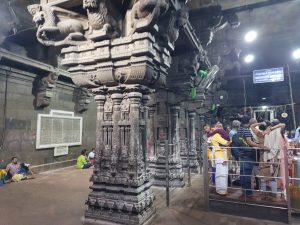
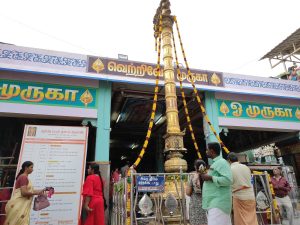
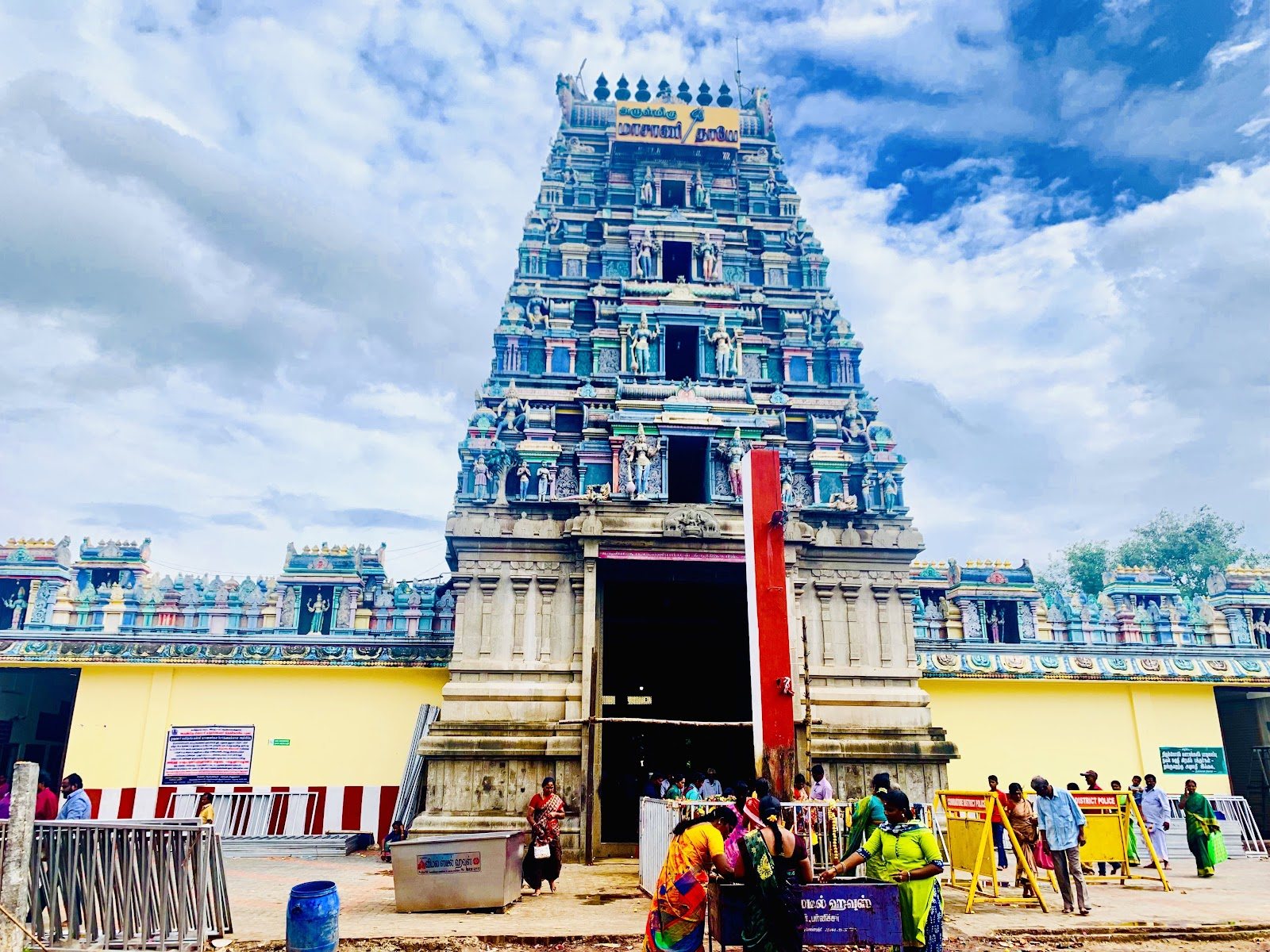
The temple entrance is marked by a multi-tiered Rajagopuram decorated with colorful stucco carvings. Once you cross the threshold, you step onto a wide, flagstone-paved courtyard centered around a tall stone flagpole known as the Dwajasthambam. The complex feels open to the open sky, letting in cool breezes that sweep down from the nearby Anaimalai Hills.
Inside the inner sanctum rests the central image of Goddess Masani Amman. Rather than an upright carving, the goddess is modeled in a supine posture, lying completely flat with her head turned upward. She measures 15 feet from head to foot, presenting a commanding and gentle presence at the same time. In her four hands, she carries a fire bowl, a bowl of sacred kumkuma, a trident, and a small drum called a damaru with a serpent wrapped around it.
As you move through the inner and outer passages, you will come across several secondary shrines and sacred fixtures that are central to the devotional life of the shrine:
- The Sacred Trident: Located just outside the primary sanctum, this metal trident is the focus of healing prayers. Devotees circumambulate the trident seeking relief from general physical ailments and severe menstrual pain.
- The Neethi Kal: Known as the Stone of Justice, this historic marker serves as the spiritual platform where worshippers formally surrender unresolved grievances, family disputes, and lost property to the goddess.
- The Chili-Grinding Stone Mortars: A dedicated section of the courtyard where worshippers grind dried red peppers into a thick paste during special justice rituals.
- Subsidiary Shrines: Enclosed shrines dedicated to Mahamuniappan, Pechiamman, and Mahisasuramardhini, where you can watch quiet daily lamp offerings.
How a Visit Works and What to Expect
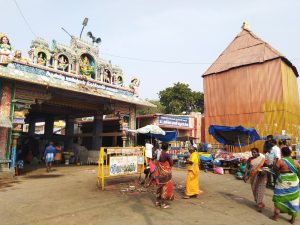
When you arrive, you will leave your footwear at the designated counter outside the outer gate. Entry into the general queue is free, although the temple office also sells tickets for a separate line during crowded mornings. As you enter, people gather to purchase small offering baskets containing coconuts, flowers, bananas, and kumkuma packets from licensed stalls near the Rajagopuram.
One of the most notable practices here is the red chili grinding ritual. People who have suffered injustice, deception, or financial theft grind dry red chillies on stone mortars in the courtyard to appeal for divine intervention. This process carries deep spiritual gravity among worshippers. According to temple tradition, anyone who presents ground red chillies at the altar must return to the temple within three months, or at another designated time, to conduct an abhiseka ceremony thanking the goddess once peace is restored.
Local tip: If you are visiting for general prayer and quiet sightseeing, you do not need to take part in the chili offering. You can simply join the general line for darshan, walk reverently around the trident, and spend a few quiet moments sitting in the pillared courtyard.
Etiquette and Courtyard Rules
Because Masani Amman Temple is an active pilgrimage center, respectful decorum is expected of all visitors at all times. Dress conservatively in traditional Indian clothing. Men should wear a dhoti, a traditional kurta with trousers, or plain shirts and long pants. Women should wear sarees, salwar kameez, or churidars with a dupatta. Western casual clothes like shorts, tank tops, and short skirts are strictly prohibited by temple administration.
Remove your shoes before stepping onto the stone boundary of the temple. Footwear can be checked at the counter near the main entrance for a very small fee. Photography, video recording, and mobile phone calls are strictly banned inside the temple walls and especially inside the inner sanctum. Keep your phone switched off or in silent mode inside your bag.
There are no formal bans against non-Hindu visitors entering the complex. However, you should walk quietly, refrain from touching religious carvings or sacred ritual items, and follow the flow of worshippers through the queues.
Best Time to Go and How Long to Stay
The temple doors open daily from 6:00 AM to 12:30 PM, then close during the heat of the afternoon before reopening from 4:00 PM to 8:00 PM. On heavy pilgrimage occasions and major new moon gatherings, the sanctum may remain accessible throughout the day without the usual afternoon break. Arriving between 6:30 AM and 8:00 AM allows you to enjoy cooler temperatures and shorter wait times before tourist buses arrive from Pollachi.
The flagship annual observance is the Kundam Festival, held during the Tamil month of Thai between January and February. During this festival, thousands gather to witness the ceremonial fire-walking walk across glowing embers in fulfillment of personal vows. Additional large gatherings occur on Amavasya (new moon days), Pournami (full moon days), Aadi Pooram, and throughout Navaratri.
On normal weekdays, allow roughly one to two hours to walk the grounds, join the darshan line, and sit quietly in the outer halls. During festive weekends or full moon dates, wait times can stretch to three hours or longer.
Getting There from Pondicherry and Where to Stay
Anaimalai sits on the opposite side of Tamil Nadu from Pondicherry. By road, the distance is roughly 390 kilometers. If you are driving or hiring a private car, plan for about 8 to 9 hours of travel. The most common route heads westward through Viluppuram, Salem, Tiruppur, and Pollachi, or down through Dindigul and Udumalaipettai. It makes for a pleasant two-day inland road trip if you break the drive in Salem or Coimbatore.
For public transit, take an overnight bus or train from Pondicherry or nearby Viluppuram Junction toward Coimbatore. From Coimbatore Junction, which lies about 55 kilometers away, or Pollachi Junction, about 14 kilometers away, frequent regional buses run directly to the Anaimalai bus stand near the temple gate. Coimbatore International Airport, approximately 60 kilometers northeast, is the closest air hub.
Because Anaimalai is a small rural town, the most convenient places to stay are in Pollachi. You will find comfortable budget hotels, family lodges, and local dining options in Pollachi, just a short 25-minute drive from the temple.
Places to Combine with Your Visit
Because the temple visit generally takes just a morning, you can easily combine your trip with other natural attractions along the base of the Western Ghats. The landscape here is lush, green, and cooled by mountain weather for much of the year.
- Aliyar Dam and Park: Located about 15 kilometers south of Anaimalai, this wide reservoir features gardens, a boating area, and lovely views of the mountain ridge rising behind the water.
- Topslip and the Anamalai Tiger Reserve: About 20 kilometers into the hills, Topslip offers forest department van rides and walking trails through dense teak woods.
- Valparai Hill Station: If you enjoy mountain roads, drive about 55 kilometers up the ghat section through tea plantations to reach the high-altitude plateau of Valparai.
Before you head onward, stop at one of the small vegetarian tea stalls near the temple gate for a cup of hot milk tea and fresh banana bajji, a regional specialty in the Pollachi agricultural belt.
What recent visitors say
A quick, honest snapshot from recent Google reviews, so you know what to expect before you go.
What people loved
★★★★★ Sudin · 3 months ago
“A truly peaceful and divine place. The temple has a very positive atmosphere, and the moment you step inside, you feel a sense of calm and devotion. The surroundings are clean, well-maintained, and perfect for spending some quiet time in…”
★★★★★ Rajaravivarma · 4 months ago
“The temple is unique because the goddess idol is in a reclining (lying) posture, which is very rare among Amman temples in India. The idol is around 15 feet long and represents divine protection and justice. Devotees strongly believe the…”
★★★★★ Srijith · 8 months ago
“Pleasant amman temple is located at Pollachi, Coimbatore. When enter temple feel get good vibration. Parking fecility is available but average. There are many pooja shops near outside temple and river also near by temple like walkable…”
What some found difficult
★☆☆☆☆ Gowtham · a month ago
“I recently visited temple ,aware of road side shops the written a VENDUDHAL CITU with that they scamming to bought unnecessary pooja things and diverting a devotees too to visit a temple, be a millionaire, they only having respect from…”
Reviews via Google Maps. Opinions are those of their authors.
Frequently asked questions
What is the meaning behind the red chili ritual at Masani Amman Temple?
Devotees who have experienced theft, betrayal, or injustice grind dry red chillies on stone mortars in the courtyard as an appeal to the goddess for fair arbitration. Worshippers who make this offering are expected to return within three months to perform a thank-offering abhiseka once their trouble is resolved.
Can non-Hindu travellers enter the temple sanctum?
Yes, non-Hindu visitors are permitted to enter the temple complex and view the sanctum from the public darshan lines. You must observe all customary standards, including removing your shoes, dressing in modest Indian clothing, and maintaining quiet respect.
Why is the deity depicted in a reclining position?
The 15-foot figure reflects the regional legend of an innocent woman executed by an ancient king, who was laid to rest at the local burial ground. Her recumbent posture represents her connection to the earth and her role as an accessible, protective guardian.
Is photography permitted anywhere inside the temple?
No, photography and video recording are strictly prohibited inside the entire temple compound. You must keep your cameras and mobile phones stored inside your bags while visiting.
Find it
Address: Masaniamman Koil Street, Anaimalai, Tamil Nadu 642104, India