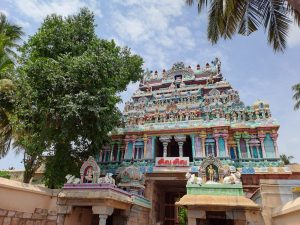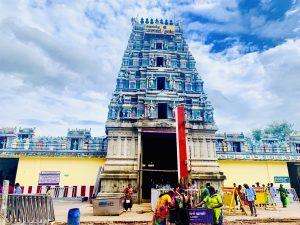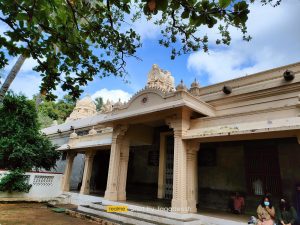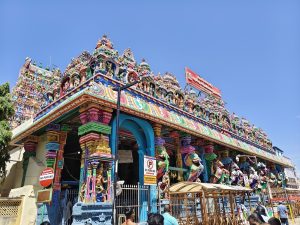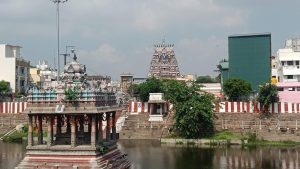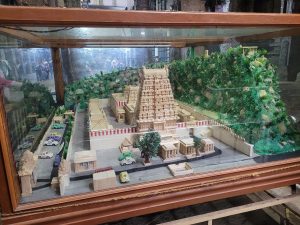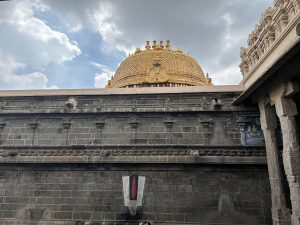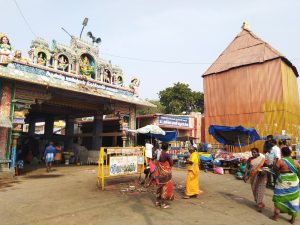
Ekambaranathar Temple stands in the northern part of Kanchipuram as one of the most significant ancient shrines in South India. Dedicated to Lord Shiva, the complex stretches over twenty-five acres of quiet stone pavilions, high corridors, and open courtyards where devotees have gathered for more than a thousand years.
If you are travelling inland from Pondicherry, Kanchipuram makes a rewarding cultural detour or a dedicated day trip. The town is known for its weaver traditions and grand stone towers, with this temple serving as its crowning Saivite sanctuary. Visiting is straightforward when you know what to wear, when to arrive, and how to conduct yourself around the sacred shrines.
At a glance
| Best time of day | Early morning around 6:30 AM or late afternoon from 4:30 PM |
|---|---|
| Allow | 1.5 to 2 hours |
| Dress | Strictly modest traditional attire; covered shoulders and legs |
| Photography | Restricted; allowed in some outer areas, forbidden in inner shrines |
| From Pondicherry | roughly 115 km, about 2.5 to 3 hours by road |
Why this temple matters
Ekambaranathar Temple holds a foundational place in Saivite worship across Tamil Nadu. It is celebrated as one of the Pancha Bhoota Sthalams, a group of five sacred temples in South India that each embody one of the primordial elements of nature. Here, Lord Shiva is worshipped as the manifestation of Earth through the Prithvi Lingam, an earthen lingam that legend attributes to Goddess Parvati, who shaped it from river sand to worship Shiva with deep devotion.
The sanctuary is also recognised as a Paadal Petra Sthalam, praised in the seventh-century verses of the Tevaram composed by the canonical Nayanar poets Appar, Sundarar, and Sambandar. Historical records and Tamil classical literature date references to the temple back to the sixth and seventh centuries. Over successive generations, the Pallava, Chola, and Vijayanagara royal houses contributed immense stone halls, sculpted corridors, and defensive perimeter walls.
A notable distinction here is the absence of an independent sanctum for Goddess Parvati within the temple grounds. In the sacred geography of Kanchipuram, Kamakshi Amman at her nearby temple is revered as the sole presiding female power for the entire city, so Shiva stands alone in this sanctuary as Ekambareswarar.
What you will see in the complex
Approaching the entrance, your gaze is immediately drawn upward by the southern Raja Gopuram. This monumental tower rises through eleven tiers to a height of approximately fifty-nine metres, or roughly one hundred and ninety-two feet. Commissioned during the Vijayanagara period, it ranks among the tallest entrance gateways in South India and features hundreds of stucco figures recounting classical lore across its steep exterior.
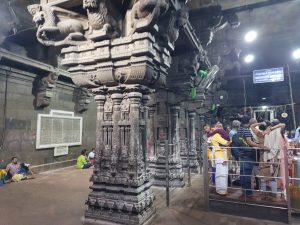
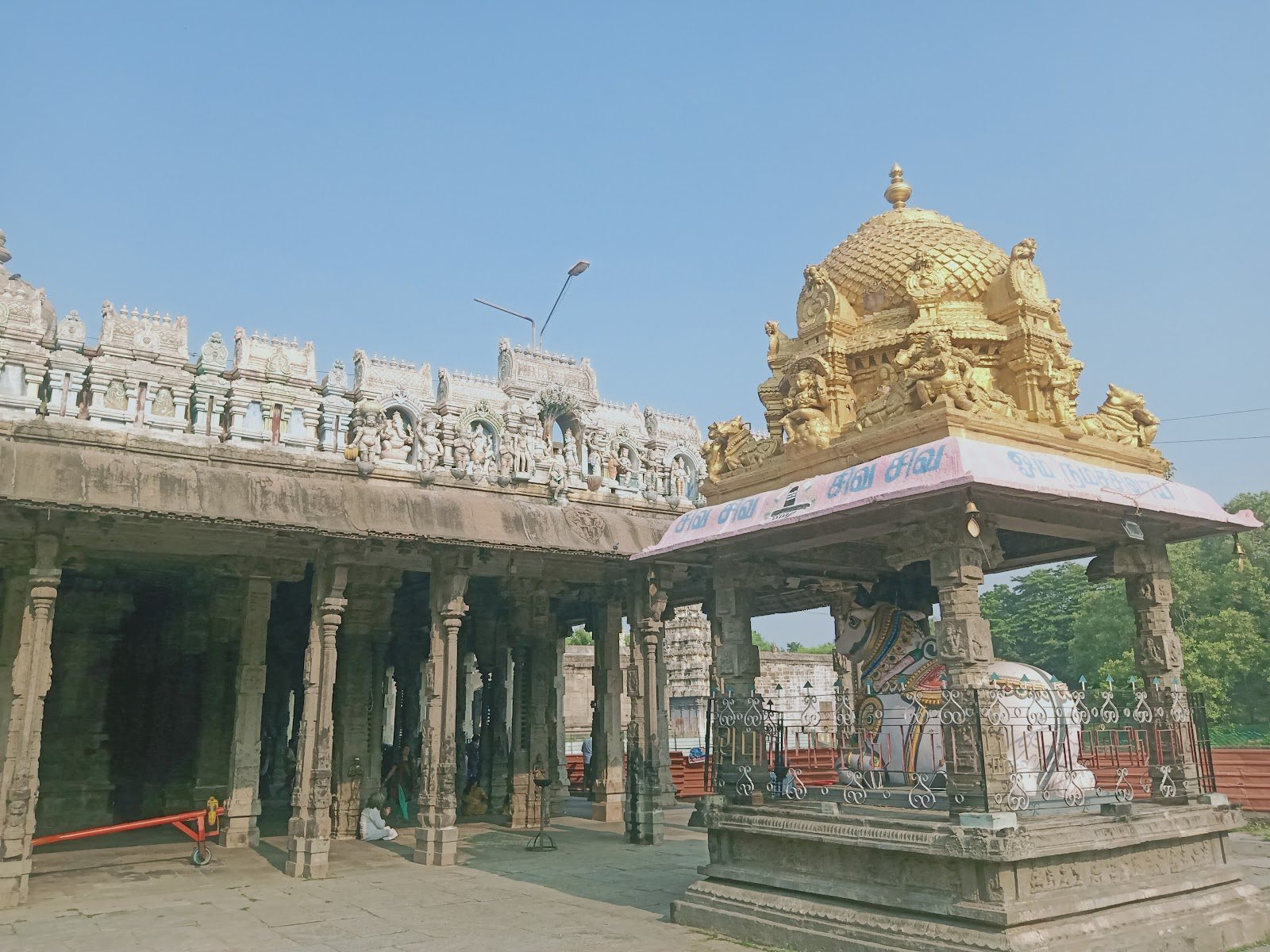
Once inside the boundary walls, the scale of the complex opens out before you. The Vijayanagara rulers erected a vast thousand-pillared hall, where long lines of carved granite pillars create cool aisles sheltered from the afternoon heat. Even during busier hours, the sheer physical size of the stone enclosures lends a sense of spaciousness and composure to your walk.
- The sacred Sthala Vriksham: an ancient mango tree growing in an open courtyard, traditionally held to bear four different varieties of fruit that correspond to the four Vedas.
- The Sahasra Lingam: an impressive stone hallway featuring a large lingam finely carved with 1,008 miniature lingam reliefs on its single surface.
- Nilathingal Thundam Perumal: a dedicated shrine to Lord Vishnu, distinguished as one of the 108 Vaishnavite Divya Desams located inside a primary Shiva complex.
- Side shrines dedicated to Vinayaka, Subramania, the Navagrahas, Bairava, and Chandra situated throughout the circumambulatory corridors.
- The kosta wall niches holding sculpted figures of Dakshinamurthy, Lingodbhava, and Brahma along the central sanctum exterior.
How a visit works
When you arrive, leave your footwear at the designated shoe counter beside the gopuram entrance before stepping onto the stone threshold. General admission to the temple grounds is completely free of charge. From time to time, special darshan queues with a nominal ticket fee operate near the central sanctum to manage crowd density on auspicious days, though the regular line moves steadily on quiet weekday mornings.
A standard visit involves following the outer and inner prakarams, or circumambulatory walkways, in a clockwise direction. As you walk along the granite flagstones, you will pass devotees sitting quietly in the pillared corridors, priests carrying brass lamps, and families offering flowers at the sub-shrines. The inner sanctum houses the earthen lingam, where daily pujas involve waving camphor flames and chanting ancient Sanskrit and Tamil hymns.
You do not need to take part in the rituals to appreciate the space. Standing quietly to observe the ceremony from a respectful distance is entirely welcomed. The atmosphere in the early morning is particularly calm, filled with the resonance of bronze bells, the scent of burning ghee, and cool breezes drifting through the high stone arches.
Local tip: Bring a few small rupee notes if you wish to purchase traditional clay lamp offerings or leave a coin at the shoe-storage counter outside.
Etiquette and what to wear
Ekambaranathar Temple is an active house of worship with clear codes of conduct. Traditional, modest dress is strictly required by the temple administration. Visitors wearing improper clothing will be turned away at the entrance gate by temple security staff.
- Attire for men: Dhotis, pyjamas, or modest formal trousers paired with shirts. Shorts, lungis, and sleeveless shirts are not permitted.
- Attire for women: Sarees, half-sarees, or salwar kameez sets with dupattas. Miniskirts, cropped tops, shorts, and tight gym wear are strictly banned.
- Footwear: Shoes, sandals, and socks must be removed before entering the gateway and left at the outside shoe stands.
- Photography: Taking photographs is strictly prohibited inside the inner corridors, mandapams, and sanctum sanctorum. Some outer courtyard spaces may allow handheld snapshots, but you must look for signage and always ask the security guards before taking out a camera or phone.
- Non-Hindu visitors: Travellers of all backgrounds are welcome to explore the outer halls, the thousand-pillared mandapam, and courtyard shrines. Entry into the innermost sanctum chamber is generally restricted to practising Hindus.
Best time to go and how long to stay
The temple doors open daily in two broad shifts: from 6:00 AM until 12:30 PM, and again from 4:00 PM until 8:30 PM. These opening hours can shift slightly during major festive days or private temple rituals, so arriving within the first two hours of each shift is sensible. The stone paving heats up rapidly under the midday sun, making the early morning window between 6:30 AM and 8:30 AM the most comfortable time for walking barefoot across the open courtyards.
Plan to spend roughly an hour and a half to two hours at the site. This allows plenty of time to view the stone carving in the thousand-pillared hall, walk around the mango tree, and sit for a few peaceful minutes along the granite verandas without rushing.
| Festival | Timing | What to Expect |
|---|---|---|
| Panguni Uthiram / Brahmotsavam | March to April | Ten-day primary festival marking the divine wedding of Shiva and Parvati with grand chariot processions |
| Maha Shivaratri | February to March | All-night prayers, continuous chanting, and substantial crowds of pilgrims |
| Karthikai Deepam | November to December | Lighting of thousands of earthen oil lamps across the courtyards and stone corridors |
Getting there from Pondicherry and where to stay
Reaching Kanchipuram from Pondicherry takes about two and a half to three hours by private taxi or car, covering a driving distance of roughly one hundred and fifteen kilometres. The route heads north through Tindivanam before turning onto the well-paved inland highways toward Kanchipuram town. If you prefer rail travel, Kanchipuram Railway Station sits about one to two kilometres from the temple, with connections linking through to Chennai and Chengalpattu.
For travellers flying into the region, Chennai International Airport is the nearest aviation hub, positioned roughly sixty-five to seventy-five kilometres to the northeast along the national highway corridor.
While many visitors make the journey as a day excursion from Pondicherry or Chennai, staying overnight in Kanchipuram lets you experience the dawn temple rituals before day-trippers arrive. Several modest, clean family hotels and vegetarian lodges operate around the town centre within a ten-minute auto-rickshaw ride of the temple entrance.
Nice to combine with
Kanchipuram is celebrated across Tamil Nadu as a city of historic sanctuaries, making it easy to group multiple points of interest into a single itinerary. After finishing your visit here, you can easily walk or take a brief auto-rickshaw ride to several renowned sites located nearby:
- Kanchi Kamakshi Amman Temple: The supreme feminine spiritual centre of Kanchipuram, dedicated to Goddess Kamakshi.
- Kailasanathar Temple: The oldest surviving stone temple in Kanchipuram, famed for its intricate eighth-century Pallava sandstone carvings.
- Varadharaja Perumal Temple: A massive Vaishnavite complex situated on the eastern edge of town, known for its carved granite pillared pavilions.
- Kanchi Kamakoti Peetham: The respected monastic institution and centre of traditional learning established in the town.
- Traditional silk weaving workshops: Local weaving quarters where master craftspeople produce authentic handloom Kanchipuram silk sarees on wooden frame looms.
Between temple stops, pause at one of the traditional vegetarian mess halls along Gandhi Road or near the bus stand for a fresh plate of hot idlis, crispy dosas, and filter coffee served on fresh banana leaves.
What recent visitors say
A quick, honest snapshot from recent Google reviews, so you know what to expect before you go.
What people loved
★★★★★ Tarakaram · in the last week
“Ekambaranathar Temple is one of the pancha bhoota lingam. This temple represents as Earth sign. It the ancient temple. Here the crowd is not too much but it’s good to visit.”
★★★★★ Sourav · in the last week
“Its a very nice temple. Very peaceful and nicely maintained. Photos not allowed inside.”
★★★★★ Nagendra · a month ago
“One of the main temple in Kanchipuram. Temple dedicated to Lord Shiva, representing the earth element among the five sacred Pancha Bhoota Sthalams. Also there is a Sacred Mango Tree in the temple premises. Timings: 6:00 AM to 12:30 PM and…”
Reviews via Google Maps. Opinions are those of their authors.
Frequently asked questions
Is there an entrance fee for Ekambaranathar Temple?
General entry into the temple complex is completely free for all visitors. During major festivals or crowded weekend mornings, optional paid darshan queues may be available at the inner counter for faster access.
What is the dress code to enter the temple?
Modest traditional attire is strictly enforced. Men should wear dhotis, pyjamas, or formal trousers with shirts, while women should wear sarees, half-sarees, or salwar kameez. Shorts, sleeveless tops, and miniskirts are strictly prohibited.
Can non-Hindus visit Ekambaranathar Temple?
Yes, non-Hindu visitors are permitted in the outer courtyards, the thousand-pillared hall, and along the general pradakshina paths. However, admission into the innermost sanctum chamber holding the earthen lingam is generally reserved for practising Hindus.
How far is the temple from Pondicherry?
The temple is located in Kanchipuram, roughly 115 kilometres north of Pondicherry. A private taxi ride typically takes between two and a half to three hours depending on local highway traffic.
Find it
Address: Ekambaranathar koil, Kanchipuram, Tamil Nadu 631502, India