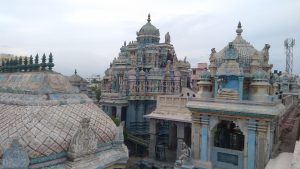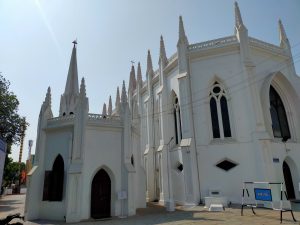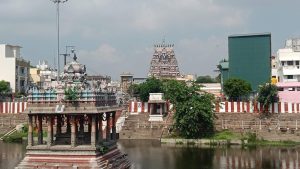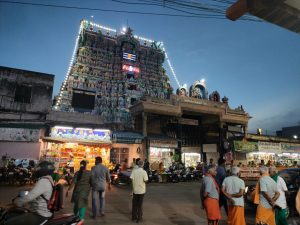
The Nithya Kalyana Perumal Temple in Thiruvidandhai is one of the most serene sacred stops you can make along the East Coast Road. Located just north of Mahabalipuram, it provides a quiet pause from coastal road traffic, welcoming worshippers and travellers into stone courtyards that have stood for more than a thousand years.
Devotees frequently travel here from across South India to offer prayers for marriage, while heritage travellers come to admire the ancient stone carvings preserved by the Archaeological Survey of India. If you are journeying north from Pondicherry or spending a morning along the coast near Kovalam, this guide will help you navigate your visit comfortably and respectfully.
At a glance
| Best time of day | Early morning between 6:30 AM and 8:30 AM |
|---|---|
| Allow | 45 minutes to 1.5 hours |
| Dress | Modest traditional attire; shoulders and knees fully covered |
| Photography | Strictly prohibited inside the sanctum; courtyard rules vary |
| From Pondicherry | roughly 110 km by road (about 2.5 hours via ECR) |
History and Sacred Meaning
This temple holds an esteemed place in the Sri Vaishnavite tradition as the 62nd of the 108 Divya Desams, which are the sacred geographic shrines dedicated to Lord Vishnu. Its historical origins date back well over a millennium. Stone inscriptions carved into the granite base document patronage, grants, and renovations carried out during the Pallava, Chola, and Rashtrakuta eras. Because of its exceptional age and artistic value, the entire complex is recognized and protected as an ancient monument by the Archaeological Survey of India (ASI).
The local name Thiruvidandhai comes from the Tamil phrase Thiru-vida-enthai, which translates to holding the Goddess on the left. In the main inner sanctum, the presiding deity, Lord Lakshmi Varaha Perumal, stands facing east with his consort, Goddess Komalavalli Nachiyar, seated upon his left lap. The processional deity is celebrated as Nithya Kalyana Perumal, which means The Eternal Groom.
According to temple tradition, Sage Kalava had 360 daughters and prayed to Lord Varaha to take care of them. The Lord granted his prayer by marrying one daughter on each day of the year. On the final day, he united them all into one form as Goddess Lakshmi on his lap. Because of this legend, men and women facing delays in finding a life partner come here to perform special marriage prayers known locally as Kalyana Prarthana.
The temple was also celebrated during the eighth century by the Alvar poet-saint Tirumangai Azhwar, who composed thirteen devotional verses in praise of the deity in the Nalayira Divya Prabandham. Later acharyas, including Sri Manavala Mamunigal, also revered this ancient coastal shrine.
What You Will See Inside the Complex
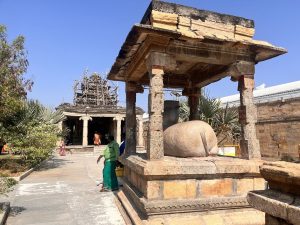
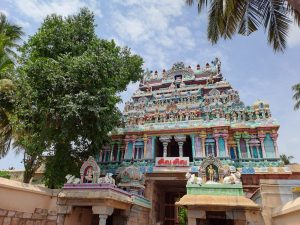
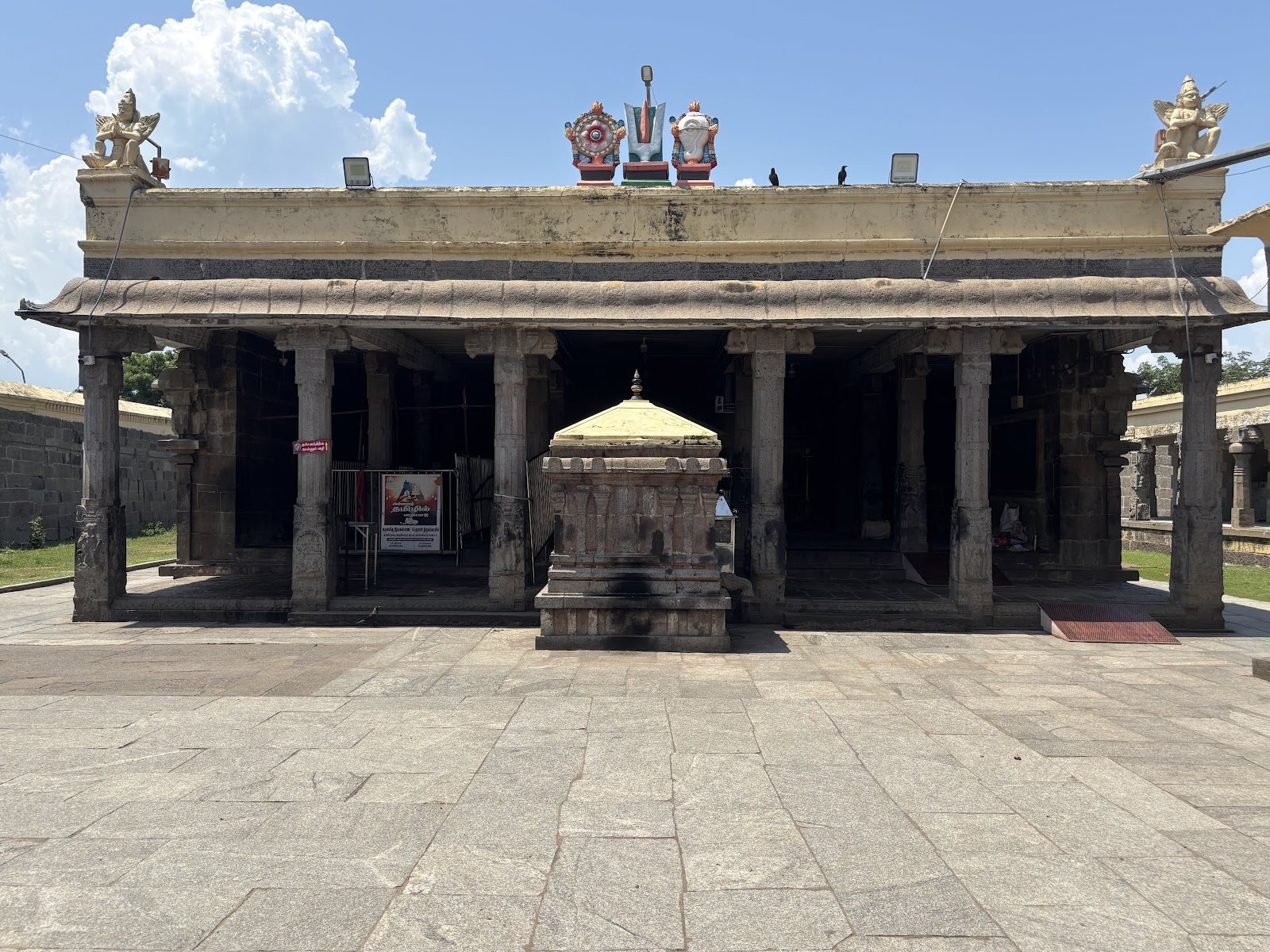
The temple exhibits classical Dravidian architecture, built predominantly in dark grey granite that keeps the interior pleasantly cool even under midday sun. As you approach from North Mada Street, the first sight is the tall entrance gopuram rising against the coastal sky. Passing beneath this gateway, you step into a tranquil pillared courtyard that feels distinctly removed from the busy East Coast Road outside.
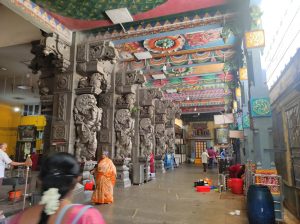
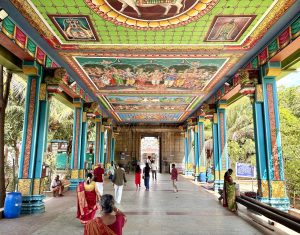
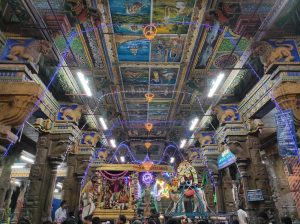
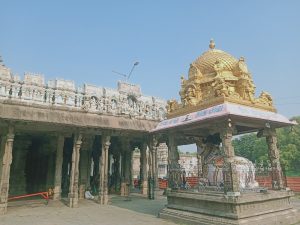
Leading toward the inner sanctum is an impressive 16-pillared sculpted hall. As you walk through, take time to look closely at the relief carvings on each column. The stonework features detailed depictions of Puranic legends, celestial dancers, and Vaishnavite motifs shaped by stone masons centuries ago. Directly above the sanctum stands the sacred Kalyana Vimanam, visible from the open pradakshina path.
Within the perimeter walls, you will discover several individual secondary sanctums alongside the main hall:
- The separate shrine dedicated to Goddess Komalavalli Thayar, the primary consort.
- The dedicated sanctum for Andal, the revered female Alvar saint.
- Individual shrines dedicated to Lord Ranganatha and Aranganayaki.
- Two sacred temple water tanks known as Kalyana Theertham and Varaha Theertham, where ceremonial ablutions and sacred water rituals take place.
Local tip: Look closely at the lower exterior walls of the granite mandapam to see ancient Tamil inscriptions from the Chola and Pallava periods, carved cleanly into the stone blocks.
How a Visit Works
Before you enter through the main gopuram, you will leave your footwear at the designated counter outside. The entrance courtyard is quiet and straightforward to navigate. General darshan is free of cost and allows you to walk along the standard queue line toward the main sanctum of Lord Lakshmi Varaha Perumal. If the queue is longer on weekends, there is often a special darshan line available for a nominal fee, which moves at a faster pace.
Visitors attending specifically for marriage prayers will find priest counters offering prayer sets. The Kalyana Prarthana ritual involves offering two fresh garlands and an archana coconut set to the Lord and Thayar. During the ritual, the priest places the blessed garlands around the devotee. You wear the garland around your neck as you complete circumambulations around the inner courtyard, before taking one garland home to keep until marriage takes place.
Even if you are not participating in the ritual, watching the gentle rhythm of offerings, the soft chime of brass bells, and the chanting of ancient hymns creates a deeply calming experience. Allow yourself unhurried time to sit for a few minutes on the cool stone floor of the pillared hall after your darshan.
Etiquette and What to Wear
Because this is an active place of daily worship with strict traditions, modest clothing is strictly enforced by temple staff at the entrance. Men should wear traditional dhotis, pyjamas, or formal trousers paired with shirts. Shorts, sleeveless vests, and beachwear are not permitted. Women should wear sarees, half-sarees, or salwar kameez and churidars with a dupatta properly draped across the shoulders.
Footwear must be taken off and left at the shoe storage counter outside the gopuram. Leaving a nominal tip of a few coins with the attendant is customary.
Photography and video recording are strictly prohibited inside the inner sanctum and covered mandapams. Photography guidelines for the outer heritage courtyards and the stone perimeter vary, so always look for posted signage or check with temple staff before using a camera or phone.
Regarding non-Hindu visitors, entry guidelines can vary. Non-Hindus are welcome to walk through the outer heritage courtyards and appreciate the historical Dravidian architecture, while access to the inner sanctum for ritual viewing remains subject to local administrative custom. If you are unsure, ask politely at the entrance office.
Best Time to Go and How Long to Stay
The temple opens daily in two sessions: from 6:00 AM until 12:00 PM in the morning, and from 3:00 PM until 8:00 PM in the evening. Timings can shift slightly on major festival days and eclipse dates, so planning an arrival well before midday closure is advisable. The most pleasant time to visit is early in the morning between 6:30 AM and 8:30 AM, when the air is fresh, queues are short, and the granite courtyards remain cool beneath your bare feet.
Plan to spend between 45 minutes and an hour and a half here. That provides ample time for darshan, a peaceful walk around the shrines, and time to study the temple inscriptions and carvings.
The temple calendar includes several prominent religious celebrations throughout the year:
- Chittirai Brahmotsavam: The primary annual ten-day festival taking place in April or May, featuring grand chariot processions and the temple flag hoisting.
- Vaikunta Ekadasi: Celebrated during the winter months of December or January, marked by the ceremonial opening of the celestial gateway known as Swarga Vasal.
- Other key observances: Regular celebrations including Garuda Sevai, Panguni Uthiram, and Thai Poosam draw large gatherings of devotees from surrounding regions.
Getting There from Pondicherry
Thiruvidandhai is situated along the East Coast Road (ECR), roughly 110 km north of Pondicherry. The drive takes about two to two-and-a-half hours by car or private taxi, offering pleasant views of coastal salt pans, casuarina groves, and fishing settlements along the highway.
If you are using public transit, regular state transport and private buses travelling between Puducherry and Chennai Central or Tambaram run along the ECR. You can ask the bus conductor to drop you at the Thiruvidandhai bus stop, which is located just a short walk down North Mada Street to the temple gate. For rail travel, Chengalpattu Junction is roughly 30 km away, Tambaram is about 32 km, and Chennai Central is about 40 km. Chennai International Airport is roughly 35 to 40 km away.
For travellers basing themselves along the coast between Chennai and Pondicherry, nearby Kovalam is only about 3 km away and Mahabalipuram is about 15 km away. Coastal heritage resorts, such as Dune Eco Village Resort and Spa further south, make convenient and peaceful accommodation bases for an unhurried exploration of the region.
Places to Combine with Your Visit
Because of its prime position on the highway, a visit to this temple pairs naturally with several other stops along the coast. You can easily build a relaxed half-day or full-day itinerary:
- Covelong Beach in Kovalam, roughly 3 km north, known for traditional fishing catamarans, coastal breezes, and local water sports.
- Madras Crocodile Bank Trust, located roughly 4 km south, a premier conservation and research center dedicated to reptiles and native crocodilians.
- DakshinaChitra Heritage Museum, roughly 10 km north, which features reconstructed traditional homes, craft demonstrations, and regional architecture from across South India.
- The Mahabalipuram UNESCO World Heritage site, roughly 15 km south, home to the Shore Temple, the Pancha Rathas, and the majestic rock relief of Arjuna’s Penance.
After your temple visit, local cafes and small South Indian dining spots along the ECR in Kovalam and Mamallapuram provide good places to rest, enjoy fresh coconut water, or sit down for a traditional filter coffee.
What recent visitors say
A quick, honest snapshot from recent Google reviews, so you know what to expect before you go.
What people loved
★★★★★ Partha · in the last week
“Highly serene temple of Varaha Murthy and Bhooma Devi on his lap”
★★★★★ Sri · in the last week
“Our traditional orthodox family favorable temple. Highly recommend for everyone”
★★★★★ hari · a month ago
“One of the temples located on the outskirts of city. Crowded on weekends. Located on a walkable distance from the bus stop. Unmarried people visit this temple with the belief and wish of getting married soon. As well lots of coupes visit…”
Reviews via Google Maps. Opinions are those of their authors.
Frequently asked questions
Why do people visit Nithya Kalyana Perumal Temple for marriage?
According to tradition, Lord Varaha married the 360 daughters of Sage Kalava, taking the name Nithya Kalyana Perumal, or the eternal groom. Devotees perform the Kalyana Prarthana ritual here to seek divine blessings in finding a life partner.
Can non-Hindus enter Nithya Kalyana Perumal Temple?
Non-Hindu visitors are welcome to explore the outer heritage courtyards to appreciate the ancient architecture. Access to the inner sanctum is subject to temple customs, so it is best to ask local staff at the entrance.
What is the dress code for entering the temple?
Devotees must wear traditional, modest attire. Men should wear dhotis, pyjamas, or formal trousers with shirts, while women should wear sarees, half-sarees, or churidars with dupattas. Shorts and sleeveless garments are not allowed.
Are there entrance tickets for visiting?
General darshan is free of charge for all visitors. The temple charges nominal fees only if you opt for special quick-darshan queues, specific archana offerings, or the formal marriage prayer ritual.
Find it
Address: NITHYA KALYANA PERUMAL TEMPLE, N Mada St, Thiruvidandhai, Tamil Nadu 603112, India