Sri Parthasarathyswamy Temple stands in the heart of Triplicane, carrying over a thousand years of continuous worship within Chennai. If you are travelling up the coast from Pondicherry for a weekend in the state capital, spending a quiet morning here gives you a direct link to the ancient devotional history of Tamil Nadu.
The streets outside run with daily life, flower sellers, and neighbourhood routines. Once you cross the threshold of the stone gateway, the rhythm changes to the sound of temple bells, chanting, and priests attending to morning rituals that have taken place since Pallava times.
At a glance
| Best time of day | Early morning between 6:00 AM and 8:00 AM |
|---|---|
| Allow | 1 to 2 hours |
| Dress | Strictly modest traditional attire; dhoti or trousers for men, saree or salwar for women |
| Photography | Strictly forbidden inside the inner sanctum and inner complex |
| From Pondicherry | roughly 150 km and about 3.5 to 4 hours by road |
Why this place matters
The Sri Parthasarathyswamy Temple is one of the oldest surviving structures in Chennai. Historical records date its origins to the 6th to 8th century CE under the Pallava dynasty, with construction traditionally attributed to rulers such as King Narasimhavarman I and Dantivarman. Over succeeding centuries, both the Chola and Vijayanagara empires added courtyards, mandapas, and detailed stonework, expanding it into the grand complex standing today.
For Vaishnavite pilgrims, this temple holds immense spiritual weight. It is counted among the 108 Divya Desams, the sacred shrines of Lord Vishnu praised in the verses of the Naalayira Divya Prabandham. The Alvar poet-saints, including Thirumangai Alvar and Peyalvar, wrote verses praising the deity here, rooting the temple deeply in regional literature and tradition.
The name of the temple explains its core theology. In Sanskrit, Parthasarathy means the Charioteer of Partha, referring to Lord Krishna guiding Arjuna through the great war of the Mahabharata. Uniquely, the temple enshrines five distinct forms of Lord Vishnu under a single roof: Krishna as Parthasarathy, Rama, Yoga Narasimha, Gajendra Varadaraja, and Ranganatha.
What you will see inside the complex
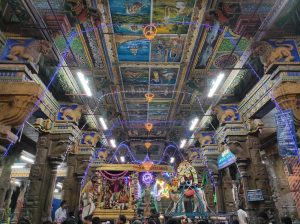
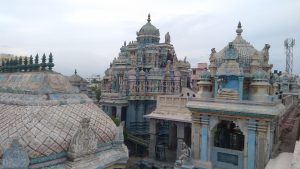
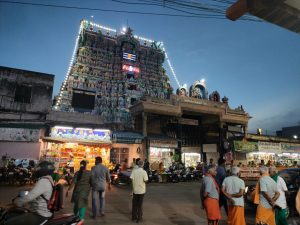
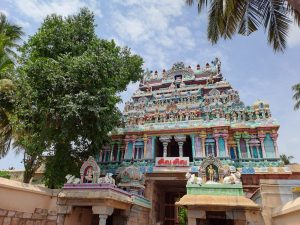
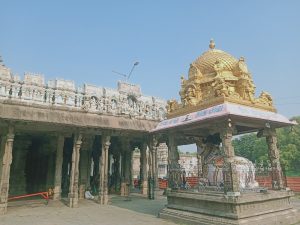
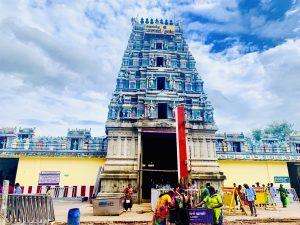
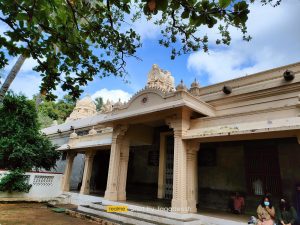
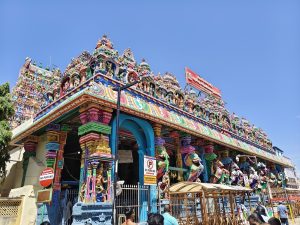
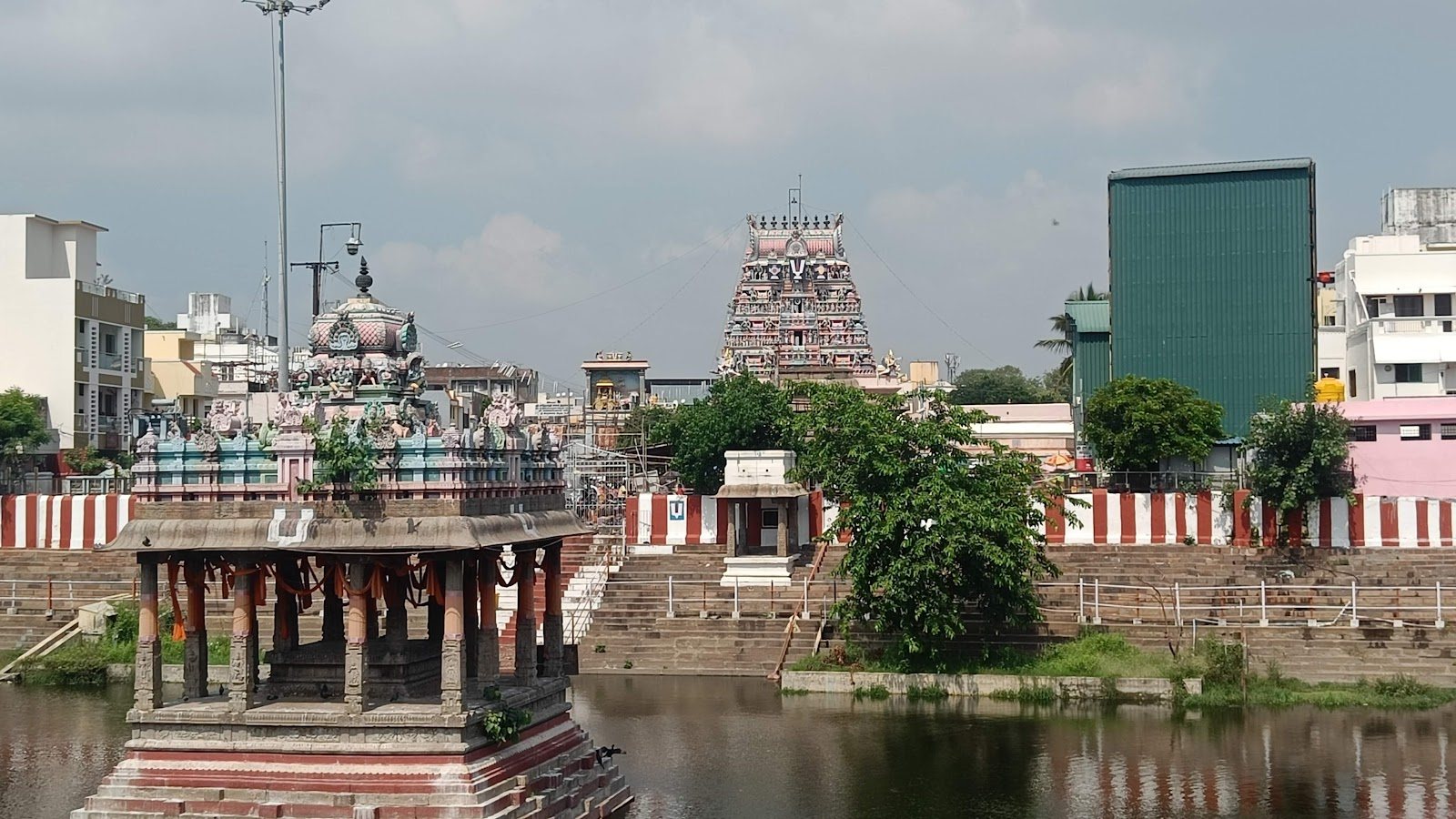
The complex is built in traditional Dravidian temple architecture. As you approach down Car Street, you are met by a high gateway tower, or gopuram, detailed with plaster figures depicting stories from sacred scripture. Inside, open courtyards lead toward grand pillared halls, known as mandapas, where you can study centuries-old stone carvings supported by granite columns.
The focal point of the temple is the sanctum of Sri Venkatakrishnan, the main deity. Unlike typical depictions of Lord Vishnu, this deity is shown standing with a prominent moustache. He holds a conch in his hand but carries no offensive weapons, symbolising his vow during the Kurukshetra war to act strictly as a non-combatant charioteer. Beside him stand figures of his consort Rukmini and members of his family, including Balarama, Satyaki, Pradyumna, and Aniruddha.
Beyond the central shrine, several other sanctums deserve your attention:
- The separate shrine dedicated to Goddess Lakshmi, worshipped here as Vedavalli Thayar.
- Sanctums dedicated to Lord Rama, Yoga Narasimha, Gajendra Varadaraja, and Lord Ranganatha reclining on the serpent bed.
- Kairavani Theertham, the expansive sacred temple tank, historically famous for lily blooms that gave the old neighbourhood its name, Thiruvallikeni.
How a visit works
When you arrive, you will leave your footwear at the counters stationed near the main entrance on Car Street. General entry to the temple is free, though nominal charges apply if you choose to take faster special darshan lines during busy hours or if you wish to sponsor specific archana rituals.
The flow through the temple follows a set circuit. Devotees walk through the pillared corridors toward the primary sanctum, queuing along metal barricades designed to keep the crowd orderly. As you approach the inner sanctum, priests present camphor flames before the deity, offer holy water, and distribute tulsi leaves to worshippers. The atmosphere inside the granite halls is fragrant with camphor, incense, and fresh jasmine.
Local tip: Visit on a weekday morning around 7:00 AM. The crowds are light, the temple stones are cool beneath your bare feet, and you can observe the daily rituals at a calm, unhurried pace.
Etiquette and dress code
Because this is an active and revered place of worship, the temple administrators enforce traditional decorum. Adhering to the dress code is mandatory to gain entry beyond the outer gates.
- Clothing for men: You should wear a traditional dhoti, a pyjama, or formal trousers paired with a decent shirt. Shorts, sleeveless t-shirts, jeans, and casual athletic wear are strictly barred.
- Clothing for women: Traditional Indian attire is required, such as a saree, a half-saree, or a salwar-kameez complete with a dupatta. Western clothing, short dresses, jeans, and tight tops are not permitted.
- Footwear: Shoes, sandals, and socks must be removed before entering the gate. Dedicated shoe stands operate outside the entrance for a small fee.
- Photography: Cameras and smartphones must remain put away. Photography is strictly prohibited within the inner sanctum and inner temple corridors.
- Conduct: Maintain a quiet and respectful tone inside the pillared halls. Non-Hindus are generally permitted to walk through the outer courtyards, though entry into the inner sanctum varies according to traditional temple regulations.
Best time to visit and festival calendar
The temple generally opens each day from 6:00 AM to 12:00 PM in the morning, and reopens from 4:00 PM to 9:00 PM in the evening. During major festivals, these hours often extend to accommodate thousands of pilgrims.
| Festival | Tamil / English Season | Key Observation |
|---|---|---|
| Vaikunta Ekadasi | Margazhi (December – January) | Ceremonial opening of the Paramapada Vasal, attracting very large crowds. |
| Brahmotsavam | Chittirai (April – May) & Aani (June – July) | Major annual chariot processions around the streets of Triplicane. |
| Theppotsavam | Annual schedule varies | Float festival celebrated on the waters of the Kairavani Theertham tank. |
| Sri Jayanthi | Avani (August – September) | Celebration of Krishna Janmashtami with elaborate pujas. |
If you prefer a peaceful visit, aim for November through February when Chennai experiences slightly cooler temperatures. Allow about 1 to 2 hours to walk through the pavilions, sit by the courtyard, and see each shrine.
Getting there from Pondicherry and where to stay
Sri Parthasarathyswamy Temple sits roughly 150 km north of Pondicherry. Driving via the scenic East Coast Road (ECR) takes about 3.5 to 4 hours, depending on traffic when entering south Chennai. Alternatively, frequent express buses run between Pondicherry and Chennai, stopping near Guindy or Koyambedu, from where you can take a taxi or auto-rickshaw directly to Triplicane.
For local transit inside Chennai, the Thiruvallikeni MRTS railway station is located about 1 km away. Major rail hubs like Chennai Central and Chennai Egmore are both roughly 4 km to the north, while Chennai International Airport is roughly 16 to 18 km southwest of the temple.
If you are planning an overnight trip, hotels in Mylapore, Royapettah, or along Mount Road provide easy access to Triplicane. For those returning south toward Pondicherry along ECR, resort options like Dune Eco Village Resort and Spa offer a relaxing stay outside the city bustle once your Chennai sightseeing is complete.
What to see nearby in Chennai
Triplicane borders some of the most historic quarters of Chennai, making it easy to create a rewarding half-day walking or driving itinerary:
- Marina Beach: Located roughly 1 km east of the temple, perfect for a breezy walk along the promenade after your morning temple visit.
- Vivekananda House (Illam): About 1 km from the temple, this landmark building on the beach road preserves the history of Swami Vivekananda’s stay in the city.
- Kapaleeshwarar Temple: Situated about 3.5 km away in Mylapore, this ancient Shiva temple offers a wonderful architectural complement to Parthasarathy’s Vaishnavite heritage.
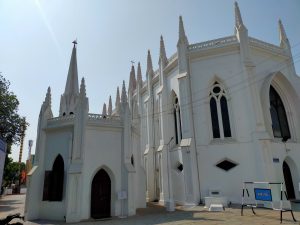
- San Thome Basilica: About 3.5 km south along the coast, this historic church stands built over the tomb of Saint Thomas.
After your visit, wander down the lanes of Triplicane to sample freshly made South Indian filter coffee and traditional tiffin items like idlis or crispy vadas from local vegetarian eateries near the temple car streets.
What recent visitors say
A quick, honest snapshot from recent Google reviews, so you know what to expect before you go.
What people loved
★★★★★ PRI · in the last week
“It’s such a bliss to be in this temple .. but if the management cab give some history explained will help new comers to enjoy more”
★★★★★ ABHIMANYU · a month ago
“A deeply spiritual and historic temple in the heart of Triplicane. The ancient Dravidian architecture, grand gopurams, and intricate stone carvings create a serene, divine atmosphere. The darshan of Lord Venkatakrishna (Parthasarathy…”
★★★★★ Raghavendra · 2 months ago
“Parthasarathy Temple is one of the 108 Divya Desams dedicated to Lord Vishnu and is a place every devotee should experience at least once. If possible, visit during a less crowded time to truly immerse yourself in the temple’s serene and…”
Reviews via Google Maps. Opinions are those of their authors.
Frequently asked questions
What is the general entry fee for the temple?
General admission into Sri Parthasarathyswamy Temple is free for all visitors. Nominal fees are charged only if you opt for dedicated special darshan queues or choose to sponsor specific ritual offerings.
What should I wear to visit Sri Parthasarathyswamy Temple?
Strict traditional attire is required. Men should wear a dhoti, pyjama, or formal trousers with a shirt, while women should wear a saree, half-saree, or salwar-kameez with a dupatta. Western casuals, shorts, jeans, and sleeveless tops are not allowed.
Can non-Hindus visit the temple?
Non-Hindus are generally welcome to explore the outer courtyards and appreciate the mandapas and traditional architecture. Entry into the inner sanctum is subject to orthodox temple customs and regulations.
How far is the temple from Chennai Central Railway Station?
Chennai Central (Puratchi Thalaivar Dr. M.G. Ramachandran Central Railway Station) is roughly 4 km north of the temple. A quick ride by taxi or auto-rickshaw takes around 15 to 20 minutes under normal traffic conditions.
Find it
Address: Car St, Narayana Krishnaraja Puram, Triplicane, Chennai, Tamil Nadu 600005, India
You might also like
- Where to stay in Pondicherry
- Churches, temples, mosques and ashrams in Pondicherry
- Saneeswarar Temple
- Sri Aurobindo Ashram
- Sacred Heart of Jesus Church
- Things to do in Pondicherry
- Visiting Parthasarathy Temple in Triplicane Chennai
- Guide to Ekambaranathar Temple in Kanchipuram
- Visiting Jambukeswarar Temple in Tiruchirappalli
- Visiting Swami Nellaiappar Temple in Tirunelveli