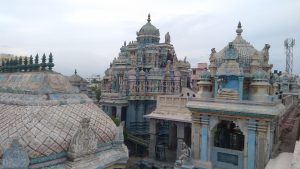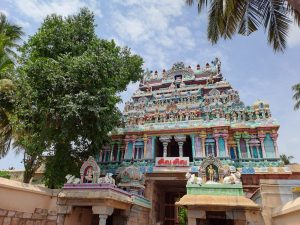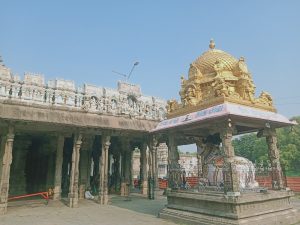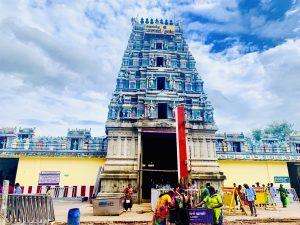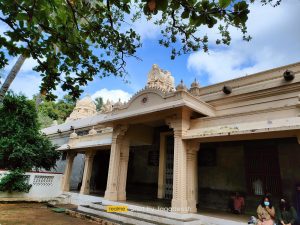
Patteeswarar Temple stands quietly on the banks of the Noyyal River in Perur, just outside Coimbatore. If you are travelling westward across Tamil Nadu from Pondicherry, this ancient place of worship offers a deep connection to regional heritage and early Dravidian architecture.
Known locally as Perur Temple, the complex welcomes pilgrims, families, and quiet observers alike. Here you can walk along shaded stone corridors, watch the morning rituals unfold, and admire centuries of Chola, Hoysala, and Nayak craftsmanship without the heavy rush often found in larger metropolitan shrines.
At a glance
| Best time of day | Early morning between 6:30 AM and 8:30 AM |
|---|---|
| Allow | 1.5 to 2 hours |
| Dress | Traditional modest attire (shoulders and knees covered) |
| Photography | Permitted in outer areas; prohibited in sanctums and corridors |
| From Pondicherry | roughly 380 km by road (about 7 to 8 hours) |
History and Sacred Meaning
The roots of Patteeswarar Temple run deep into South Indian history. It is counted among the seven ancient Kongu Sivalayams, the holy Shiva shrines that define the spiritual geography of the Kongu region. Local tradition traces its founding back to early Chola rule under Karikala Chola. In later centuries, Hoysala rulers, kings of the Vijayanagara Empire, and the Madurai Nayaks added their own stone halls and mandapams, creating the layered layout you see today.
Great Tamil Shaivite poet-saints, including Sundarar, celebrated this shrine in the Thevaram devotional hymns. Saints Sambandar and Arunagirinathar also composed verses here. The central sanctum honours Lord Shiva in the form of Patteeswarar, worshipped as a self-manifested (Swayambhu) Lingam. Legend ties this form to Kamadhenu, the divine cow.
Two venerable trees within the grounds carry great spiritual meaning for devotees: the Irava Panai, or deathless palm, and the Pirava Puli, the birthless tamarind. In regional belief, these trees represent liberation from the cycle of death and rebirth, giving quiet comfort to pilgrims who pause beneath them.
What You Will See Across the Grounds
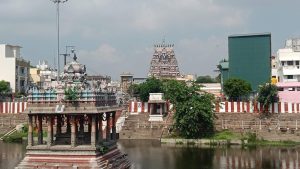
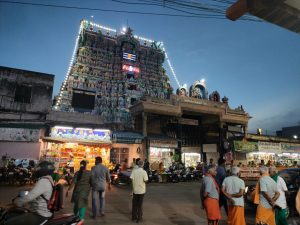
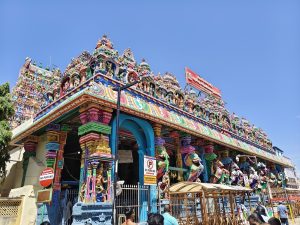
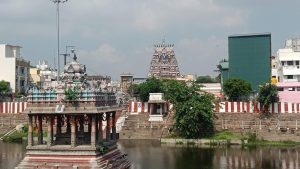
As you arrive, the towering multi-tiered Rajagopuram rises above the tree line. Just opposite the main gateway sits the traditional temple tank, and nearby are the Perur Padithurai, the ancient stone bathing steps that step down to the Noyyal River. Morning light reflects softly off the water here, making it a peaceful spot to pause before entering.
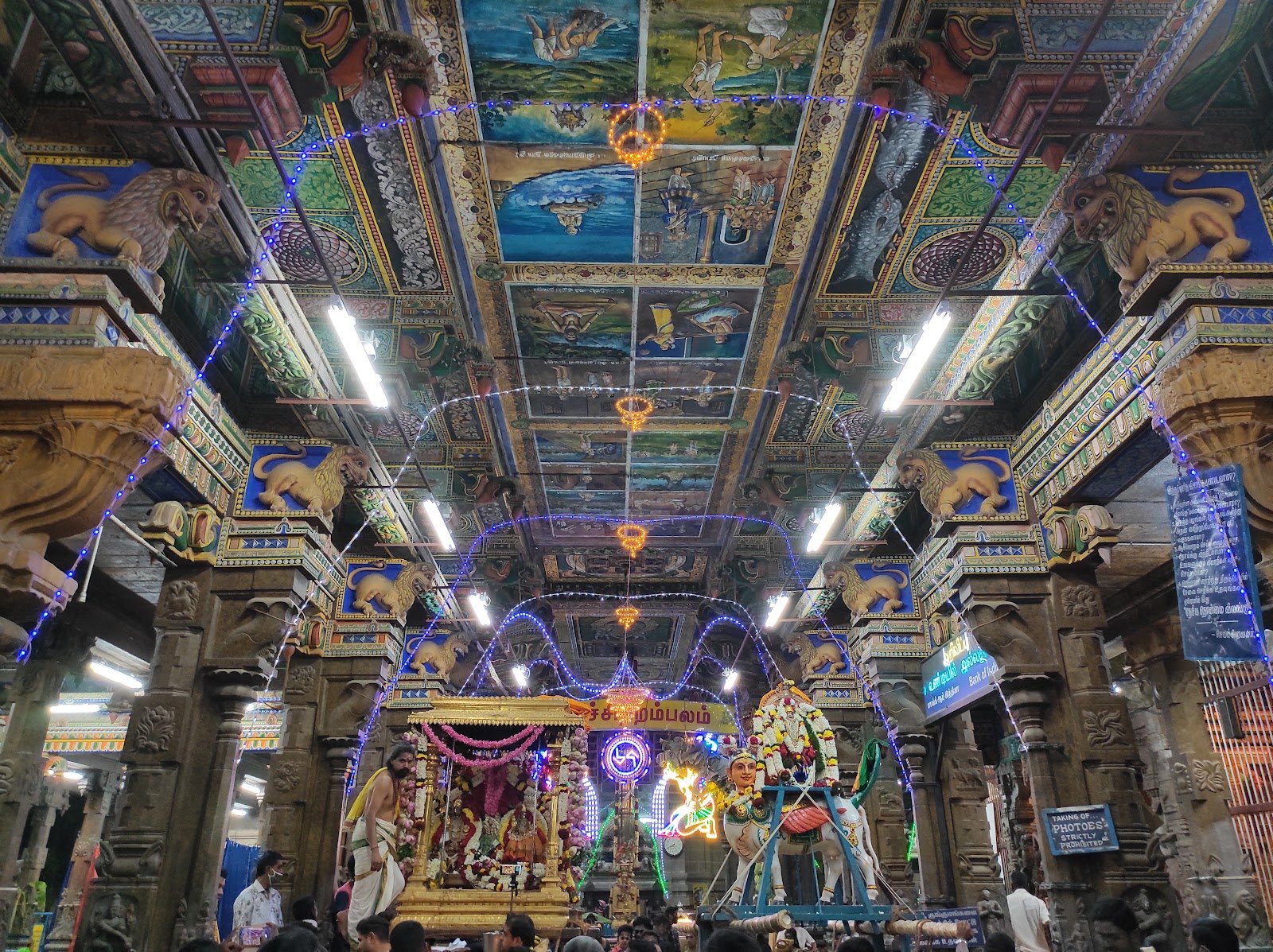
The architectural highlight of the complex is the Kanaka Sabha, or Golden Hall, built during the Madurai Nayak period. This mandapam contains some of the finest stone sculpture in Western Tamil Nadu. The monolithic pillars are carved with extraordinary detail, featuring dynamic forms of Shiva such as Gajasamhara and Veerabhadra. If you look up toward the ceiling beams, you will notice delicate stone chains carved entirely from single blocks of rock, suspended in the air with remarkable precision.
The Golden Hall houses a golden icon of Lord Nataraja, depicting his cosmic dance. Beside the main sanctum of Patteeswarar and his consort, Goddess Pachainayaki Amman, you will find smaller shrines dedicated to Patti Vinayagar (Ganesha), Murugan, and Bhikshatana, an ascetic form of Shiva.
How a Visit Works
A standard visit starts at the shoe counter outside the main entrance. After leaving your footwear, you pass beneath the gopuram into the stone-paved inner courtyards. The atmosphere inside is calm, smelling faintly of camphor, crushed jasmine flowers, and burning sesame oil lamps.
General entry is free of charge. You can walk straight through the general queue to view the deities. If you wish to participate in specific poojas or access quicker darshan lines during busy morning periods, tickets are available for a nominal fee at counters near the entrance.
You can circumambulate the inner praharams (corridors) at your own pace. Priests conduct regular daily aartis throughout the morning and evening. You are welcome to sit quietly on the cool stone floor of the pillared mandapams to listen to the bells, chants, and nadaswaram music without feeling rushed.
Local tip: The stone slabs in the open courtyards absorb heat rapidly under the midday sun. Plan to finish your walk through the outdoor sections before 10:00 AM so the stones remain comfortable under bare feet.
Etiquette and What to Wear
Patteeswarar Temple is an active, deeply cherished house of worship where worshippers come for daily prayers and personal vows. Because of this, temple authorities and local devotees expect all visitors to dress conservatively and conduct themselves with quiet dignity throughout the inner and outer halls.
- Dress code: Modest clothing is strictly enforced. Men should wear dhotis, pyjamas, or formal trousers paired with shirts. Women must wear sarees, salwar kameez, or churidars. Shorts, sleeveless tops, and revealing clothes are forbidden.
- Footwear: Shoes, sandals, and socks are strictly prohibited inside the complex and must be left at the dedicated shoe stalls outside the entrance.
- Photography: Photography is restricted inside the temple corridors and strictly prohibited within the sanctum sanctorum areas.
- Non-Hindu entry: Visitors of all faiths are generally permitted into the outer corridors and mandapams, provided they adhere to the dress code and observe local customs with respect.
Best Time to Go and How Long to Stay
The temple typically opens daily from 6:00 AM to 1:00 PM, closes during the heat of the afternoon, and reopens from 4:00 PM to 9:00 PM. These timings can vary on festival days and during eclipse periods, so checking locally on arrival is always a sensible step.
Plan to spend between 1.5 and 2 hours at the complex. This allows enough time to study the intricate carvings in the Golden Hall, pay respects at the sub-shrines, and spend a few quiet moments by the Noyyal bathing steps. If you visit during an annual celebration, allow extra time for larger crowds and processions.
| Festival | Timing | Significance |
|---|---|---|
| Panguni Uthiram | March–April | The annual 10-day Brahmotsavam featuring a grand chariot procession. |
| Aani Sapling Planting | June–July | Agricultural ceremonial ritual honouring planting traditions. |
| Margazhi Arudra Darshanam | December–January | Major celebration dedicated to Lord Nataraja and his cosmic dance. |
| Maha Shivaratri | February–March | Observed with all-night poojas, continuous abhishekam, and hymns. |
Getting There from Pondicherry and Where to Stay
Perur sits roughly 7 to 9 kilometres west of central Coimbatore. If you are travelling from Pondicherry by road, the journey spans roughly 380 kilometres via Villupuram, Salem, and Erode, taking about 7 to 8 hours by car or bus. You can also take a daytime or overnight train from Villupuram Junction to Coimbatore Junction, which is located roughly 9 to 10 kilometres from the temple.
For travellers arriving by air, Coimbatore International Airport lies approximately 18 to 20 kilometres to the east. From Coimbatore city centre, local buses run frequently along Siruvani Main Road directly to Perur, and auto-rickshaws or taxis are easy to find.
Because Perur is so close to Coimbatore, staying in the city offers the most convenient base. You will find a wide range of family-run guesthouses and comfortable modern hotels around the railway station and along the major arterial avenues.
Nice to Combine With
A visit to Perur fits naturally into a broader day trip around the western edge of Coimbatore. Several prominent spiritual landmarks and natural sights lie within easy driving distance:
- Eachanari Vinayagar Temple: An ancient shrine dedicated to Ganesha, located roughly 13 kilometres away.
- Marudhamalai Hill Murugan Temple: Perched on the slopes of the Western Ghats, about 14 kilometres to the north.
- Dhyanalinga and Isha Yoga Centre: Set near the Velliangiri foothills, approximately 25 kilometres west.
- Siruvani Waterfalls and Dam: Situated about 30 kilometres away, celebrated for clean forest streams and scenic views.
After completing your morning temple visit, stop at a local roadside mess along Perur Main Road for freshly brewed South Indian filter coffee and warm tiffin served on banana leaves.
What recent visitors say
A quick, honest snapshot from recent Google reviews, so you know what to expect before you go.
What people loved
★★★★★ selva · in the last week
“The Kumbabhishekam has been completed and it is now in a new splendor.”
★★★★★ Suitcase · a month ago
“Patteeswarar Temple is a truly divine and peaceful place. The spiritual vibes and historical architecture are absolutely magnificent. Visiting here brings immense peace of mind. The premises are beautifully maintained, making the divine…”
★★★★★ Ajay · a month ago
“Came here for the first time Only heard about it from dad and other people at Brindavan Paradise. The craftsmanship is amazing and the vibes are unmatched. Felt recharged right after leaving”
Reviews via Google Maps. Opinions are those of their authors.
Frequently asked questions
Is photography permitted inside Patteeswarar Temple?
Photography is restricted inside the covered corridors and mandapams, and it is strictly prohibited in the sanctum sanctorum. You may take pictures of the outer tower and temple tank from outside.
Are non-Hindus allowed inside the temple?
Yes, non-Hindu visitors are generally permitted into the outer corridors and mandapams such as the Kanaka Sabha. Visitors must follow the dress code, remove footwear, and maintain quiet respect.
How far is Patteeswarar Temple from Coimbatore railway station?
Coimbatore Junction is roughly 9 to 10 kilometres away. You can easily reach Perur by auto-rickshaw, taxi, or local city bus along Siruvani Main Road.
Is there an entry fee to visit Patteeswarar Temple?
General admission is completely free. Nominal charges apply only if you choose special darshan queues or book specific personal poojas.
Find it
Address: 28, Siruvani Main Rd, Perur, Tamil Nadu 641010, India
You might also like
- Hotels in Perur, Coimbatore
- Churches, temples, mosques and ashrams in Pondicherry
- Saneeswarar Temple
- Sri Aurobindo Ashram
- Sacred Heart of Jesus Church
- Things to do in Pondicherry
- The Story of Auroville: From Vision to Reality
- Visiting Sri Parthasarathyswamy Temple in Chennai
- Visiting Santhome Cathedral Basilica in Chennai: A Guide
- Visiting Shri Ashtalakshmi Temple in Chennai: A Guide