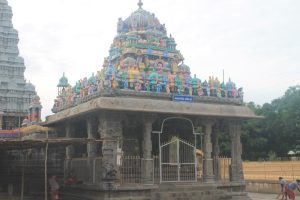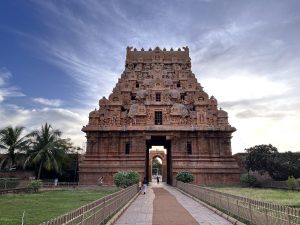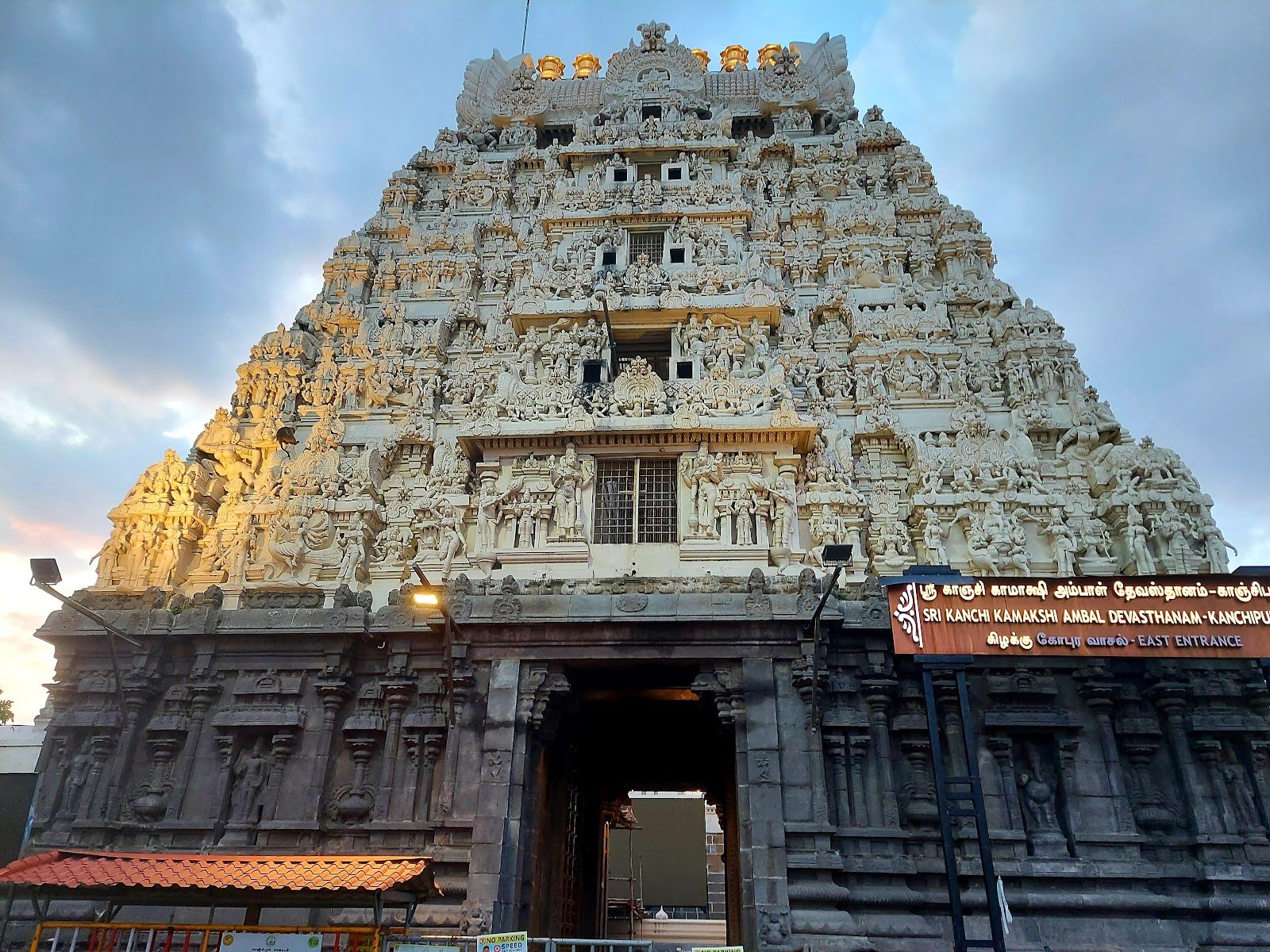
The Kamakshi Amman Temple stands at the spiritual centre of Kanchipuram, drawing worshippers from across India to honour the supreme goddess of Shaktism. Unlike most temple towns where each major Shiva sanctuary includes a separate shrine for his consort, Kanchipuram reserves that honour entirely for Kamakshi. She is venerated as the presiding goddess of the whole city, giving the temple a quiet preeminence that has endured for centuries.
If you are travelling up from Pondicherry for a day or staying overnight among the silk weavers of Kanchi, this temple offers a profound window into living South Indian devotion. Here is what you should know to plan a smooth, respectful morning or evening visit.
At a glance
| Best time of day | Early morning around 6:00 AM or late afternoon around 4:30 PM |
|---|---|
| Allow | 1.5 to 2.5 hours |
| Dress | Strict traditional attire; shoulders and legs fully covered |
| Photography | Strictly prohibited inside the temple premises |
| From Pondicherry | roughly 115 km by road, about 3 hours |
Why this temple matters
The sanctuary holds an extraordinary status within Hinduism as one of the eighteen Maha Shakta Pithas, marking the spot where tradition holds that the navel of Goddess Sati fell. Historians trace its origins to the fifth through eighth centuries during the reign of the Pallava dynasty, when Kanchipuram served as their royal capital. Later renovations and expansions took place under the Chola kings in the fourteenth century and subsequently under the Vijayanagara rulers.
The great philosopher Adi Shankaracharya is deeply linked to the temple lore. Tradition tells that he pacified the fierce energy of the goddess by installing the sacred Sri Chakra directly in front of the inner sanctum. To this day, the temple is administered by the Shri Kanchi Kamakoti Peetam, continuing a direct line of monastic tradition overseen by Shri Jayendra Saraswati Swamigal.
The temple also bridges traditions. It is praised by the Vaishnavite Alvars in the Naalayira Divya Prabandham and accommodates Tirukkalvanur, one of the 108 Divya Desam shrines dedicated to Vishnu in his form as Varaha Perumal. In local belief, Vishnu stands here as the protective brother of Kamakshi, reflecting a rare and gentle harmony between Shaivite, Shakta, and Vaishnava devotion.
What you will see inside the complex
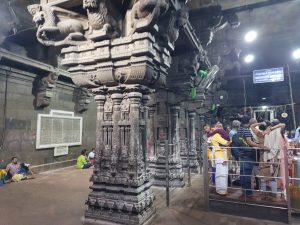
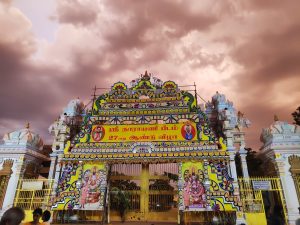
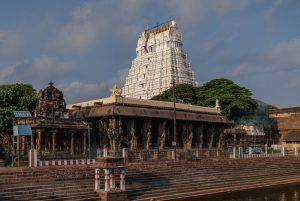
Covering roughly five acres, the complex is enclosed by massive stone perimeter walls pierced by four towering entrance gopurams. As you cross the threshold, the scale of classical Dravidian stonework becomes apparent, organized around wide pillared corridors and the Pancha Ganga temple tank, also called Kamakshi Kulam.
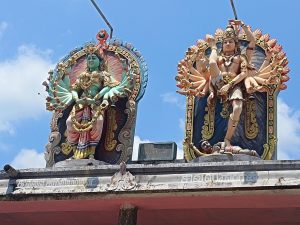
At the heart of the complex rises the gilded golden vimana above the inner sanctum. The central deity sits within the Gayatri Mandapam, a pillared hall where the four walls represent the four Vedas and the twenty-four stone pillars signify the syllables of the sacred Gayatri mantra. Goddess Kamakshi is enshrined in Padmasana, the seated yogic lotus posture, facing southeast. In her four hands, she carries a noose, an elephant goad, a bow of sugarcane, and arrows of flowers, flanked by depictions of Shiva, Vishnu, and Brahma.
Five distinct forms of the goddess are venerated across the sanctum and its surrounding enclosures:
- Sri Kamakshi Para Bhattarika: The primary deity seated in the inner sanctum behind the consecrated Sri Yantra.
- Tapa Kamakshi: A representation to the right of the main idol showing the goddess as a yogini in a balancing posture, commemorating her penance under the mango tree near the Vegavati river.
- Anjana Kamakshi: Located to the left of the sanctum, also known as Arupa Lakshmi, where Lakshmi performed penance to regain her beauty and where worshippers receive kumkuma.
- Swarna Kamakshi: A shrine in the second enclosure. The original golden image was carried south to Thanjavur by Kamakshi Dasar during sixteenth-century conflicts, so the shrine today houses a revered replacement crafted from panchaloha, a sacred alloy of five metals.
- Utsava Kamakshi: The processional bronze form in the second enclosure, accompanied by Saraswati and Lakshmi, taken out during temple festivals.
Do not miss the shrine of Durvasa in front of the sanctum, who is regarded as a primary assistant of the goddess and credited with consecrating the original yantra. In the third enclosure, look for the quiet shrine shared by Hayagriva and Sage Agastya, marking the place where Agastya is believed to have learned the sacred hymn Lalita Sahasranamam.
How a visit works
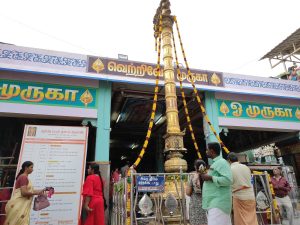
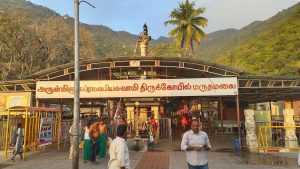
You will approach through Kamakshi Amman Sannathi Street, where small shops sell fresh flowers, bilva leaves, and clay lamps. Before reaching the stone gateway, leave your footwear at the designated shoe stall outside for a small coin fee.
General entrance to the temple is free, though special darshan tickets can be purchased inside the compound if the lines are long. Devotees join queue lines that move steadily through the pillared hallways toward the Gayatri Mandapam. Once inside the pillared core, the atmosphere grows quiet and focused. Priests offer lamps to the central image and pass holy water and vermilion powder to devotees.
Local tip: Take your time in the second enclosure after viewing the inner sanctum. Worshippers often sit quietly on the stone pavement to absorb the coolness of the granite and listen to the rhythmic recitation of Sanskrit verses.
Etiquette and what to wear
Kamakshi Amman Temple observes serious orthodox traditions. All visitors must arrive dressed in traditional temple dress. For men, this means a dhoti with an angavastram or formal trousers with a modest shirt. In certain inner areas of the sanctum, men are required to remove their shirts and vests before approaching the deity. Women should wear a saree, a half-saree, or a modest salwar kameez with a properly draped dupatta.
Modern casual clothes such as shorts, jeans, tights, and sleeveless tops are strictly forbidden, and temple guards will turn away anyone who is not dressed appropriately. Keep footwear off throughout the inner and outer stone courts.
Photography and video recording are completely barred anywhere past the entrance towers. Place your phone on silent and keep it safely inside a bag or pocket. Non-Hindu visitors are warmly welcomed to explore the outer courtyards and admire the historic architecture, though entry into the innermost sanctum chamber is reserved for Hindu worshippers.
Best time to go and how long to stay
The temple generally opens its doors from 5:30 AM to 12:15 PM, and again from 4:00 PM until roughly 8:15 PM or 8:30 PM. These times can shift during special festivals or lunar observances, so verifying at the gate on arrival is always wise. Fridays, full moon nights known as Pournami, and festival days bring significantly larger crowds.
Arriving right as the gates open around 5:30 AM or around 4:30 PM offers the calmest experience. The morning air is pleasant, the stone flagstones are cool beneath bare feet, and the queues move with ease. Allow about one and a half to two hours for a complete visit, or up to three hours if you happen to attend on a Friday evening during the Golden Chariot procession.
Major annual festivals include the Brahmotsavam, celebrated in the Tamil month of Masi during February or March with silver chariot processions, and the nine nights of Navaratri in September or October.
Getting there from Pondicherry and where to stay
Kanchipuram lies roughly 115 km northwest of Pondicherry. By road, the journey takes about three hours depending on traffic, heading north past Tindivanam and Vandavasi. Hiring a private taxi for the day from Pondicherry is the most straightforward option, allowing you to travel in comfort and return by evening.
If you arrive by rail, Kanchipuram Railway Station sits about 1.5 to 2 km from the temple gates, easily reached by local auto-rickshaw. For air travellers, Chennai International Airport is roughly 70 to 75 km away.
For accommodation, you can comfortably make the journey as a day trip while keeping your base in Pondicherry near the seaside promenade or Sri Aurobindo Ashram. If you prefer to stay in Kanchipuram itself, several simple heritage guesthouses and clean family hotels operate along the main temple avenues within walking distance of the sanctum.
Nice to combine with your visit
Kanchipuram is famed across South India for both its sacred architecture and its master handloom silk weavers. You can easily pair your morning at the Kamakshi Amman Temple with several other ancient landmarks located just a short auto-rickshaw ride away:
- Ekambareswarar Temple: A massive Shaivite complex dedicated to the element of earth, renowned for its ancient sacred mango tree.
- Kailasanathar Temple: The oldest stone temple in Kanchipuram, celebrated for its delicate eighth-century Pallava carvings.
- Varadharaja Perumal Temple: A historic Vishnu temple featuring monumental stone corridors and intricate pillared mandapams.
- Sri Ulagalanda Perumal Temple: An ancient shrine housing a colossal stone carving of Vishnu in his Trivikrama form.
- Sri Kanchi Kamakoti Peetham: The monastic headquarters situated nearby in town, offering a quiet environment for study and meditation.
Before you leave town, stop by a local vegetarian mess near the temple streets for a crisp masala dosa, steamed idlis, and a cup of traditional South Indian filter coffee served in brass tumblers.
What recent visitors say
A quick, honest snapshot from recent Google reviews, so you know what to expect before you go.
What people loved
★★★★★ Tarakaram · in the last week
“I felt so devotional visiting the kanchi kamakshi Amman temple. Back water in the temple is so good at night and so peaceful.”
★★★★★ Udhaya · in the last week
“Kamakshi காமாட்சி அம்மன் கோயில்”
★★★★★ Pavan · 2 months ago
“The name Kamakshi is derived from Kama (desire/love) and Akshi (eye), meaning “The One with Eyes Full of Love” or “She whose glance fulfills desires.” She is revered as the supreme universal mother and sovereign goddess of Kanchipuram.…”
Reviews via Google Maps. Opinions are those of their authors.
Frequently asked questions
Can non-Hindus enter the Kamakshi Amman Temple?
Non-Hindus are permitted to enter the outer courtyards and view the traditional architecture. However, access to the inner sanctum sanctorum where the main deity is housed is reserved for practicing Hindus.
What is the dress code for visitors?
Modest traditional dress is strictly required. Men must wear dhotis or formal trousers, and may be asked to remove their shirts inside inner shrines; women must wear sarees, half-sarees, or salwar kameez. Jeans, shorts, and sleeveless tops are not permitted.
Is photography permitted on the temple grounds?
No, photography and videography are strictly prohibited within the temple complex. Keep cameras and mobile phones tucked away inside your bag during your walk around the premises.
How long does a visit usually take?
Most visitors spend between one and a half to two hours walking through the enclosures and having darshan. On Fridays, full-moon days, or during festive processions, expect the visit to take two to three hours due to longer lines.
Find it
Address: Kamakshi, Kamakshi Amman Sannathi St, Kanchipuram, Tamil Nadu 631502, India