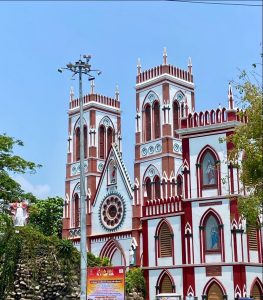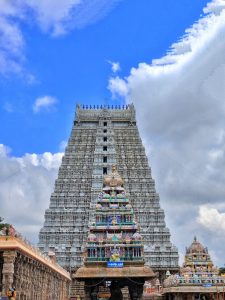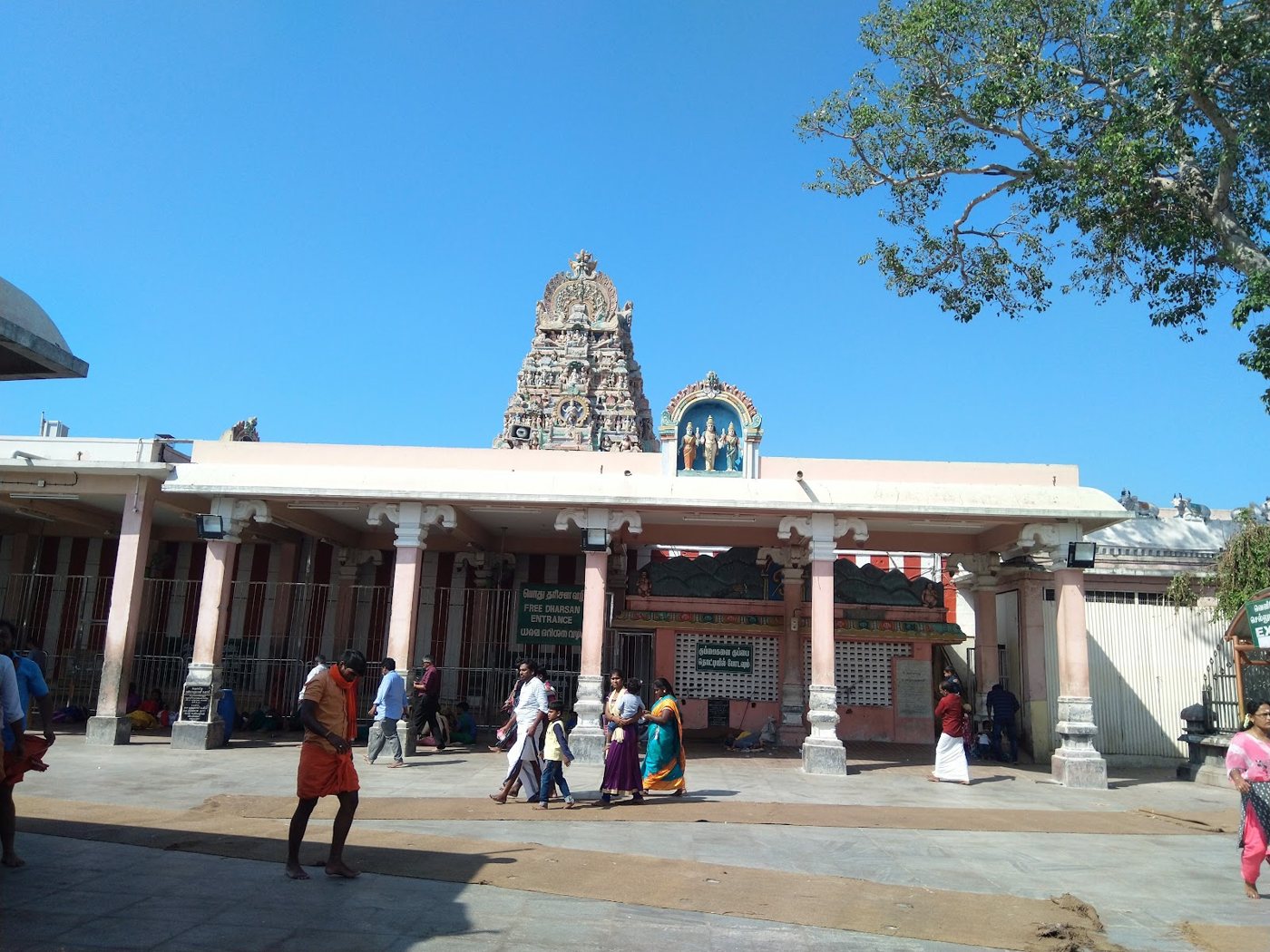
Thaipusam in Palani is one of the most dedicated and visually striking religious gatherings in southern India. Each year, several hundred thousand devotees travel on foot across the plains of Tamil Nadu to reach the hilltop sanctuary of Murugan, carrying ceremonial burdens on their shoulders and singing hymns to the beat of traditional drums. For a traveller, witnessing this event offers a direct window into the depth of Tamil devotional culture.
If you are planning to make the trip west from Pondicherry, you will find a town transformed by shared purpose. This guide covers the theological roots of the festival, what to expect along the procession paths, and practical tips on crowd safety, dress codes, and travel logistics.
At a glance
| When | Thai month (mid-January to early February) |
|---|---|
| Duration | 10-day Brahmotsavam festival |
| Where | Arulmigu Dhandayuthapani Swamy Temple, Palani |
| Highlight | Kavadi Aattam and the Thai Ther chariot procession |
| Dress | Traditional Indian attire with shoulders and legs covered |
| From Pondicherry | Roughly 330 to 350 km southwest by road |
The Story and Meaning Behind Thaipusam
Thaipusam marks the victory of Murugan over the asura Surapadman and commemorates the moment his mother, the goddess Parvati, presented him with the vel, a sacred spear of divine wisdom and power. According to the Kanda Puranam, three asura brothers named Surapadman, Tarakasuran, and Singamukhan earned boons of near-immortality from Shiva through severe austerities. They used this power to conquer the three worlds, subjecting celestial beings and humans to prolonged tyranny.
To deliver the cosmos from distress, Shiva manifested five additional heads, releasing a spark of fire from each of his six faces. The wind-god Vayu and the fire-god Agni carried these intense sparks to the Ganga, which carried them onward to the Saravana lake. There, the sparks turned into six infants nurtured by the Krittika handmaidens. Parvati then gathered them together into one six-headed child, Murugan.
Equipped with the vel and supported by his general Virabahu, Murugan defeated the asura forces. He split Surapadman into two halves, which were transformed into a mango tree, then into a peacock that became his mount and a rooster that became his banner. In Palani, Murugan is revered atop Sivagiri hill as Arulmigu Dhandayuthapani Swamy Temple enshrines him: a youthful ascetic clad in a simple loincloth, bearing a staff, representing detachment, austerity, and spiritual liberation.
The custom of carrying a burden, or kavadi, traces back to the demon-devotee Idumban. Instructed by the sage Agastya, Idumban carried the two hills Sivagiri and Saktigiri balanced on a pole across his shoulders. Devotees today take up that physical load to settle a spiritual vow or plead for healing on behalf of loved ones.
When the Festival Takes Place and Key Days
The festival falls on the full moon day of the Tamil month of Thai, when the moon aligns with the Pusam star. In the Gregorian calendar, this falls between mid-January and early February. The exact calendar day shifts each year in line with the lunar cycle, and temple authorities confirm the schedule shortly before the opening ceremonies.
In Palani, Thaipusam is celebrated as a ten-day Brahmotsavam festival centered around both the foothill shrines and the main hill sanctuary. While prayers and foot pilgrimages take place throughout the period, certain days draw exceptionally large gatherings.
| Festival Day | Ceremony and Significance |
|---|---|
| Day 1 | Dwajarohanam: Sacred flag-hoisting at Periyanayaki Amman Temple marking the official start. |
| Day 6 | Velli Ther: Procession of Murugan with consorts Valli and Deivanai on the silver chariot. |
| Day 7 | Thai Ther: Main Thaipusam day featuring the grand wooden chariot and golden chariot procession. |
| Day 10 | Teppotsavam: The float festival, concluding the formal Brahmotsavam observances. |
Local tip: If you want to observe the deepest concentration of vows and chariot movement, aim to be in Palani from Day 6 through Day 7. Be prepared for peak crowd levels on these two dates.

Rituals and What You Will See
Devotees observe strict personal disciplines before taking part in Thaipusam. For days or weeks prior, they adhere to a vegetarian diet, maintain prayer routines, practice fasting, and remain celibate. Many walk barefoot for days across hundreds of kilometers, a journey known as pada yatra, sleeping in roadside rest sheds along the highways of central Tamil Nadu.
The defining ritual of the festival is Kavadi Aattam, the ceremonial dance of the burden. The simplest kavadi is a semicircular arch of wood or steel decorated with peacock feathers and balanced on the shoulders. Devotees carry pots of milk (pal kavadi), tender coconuts, sugarcane, or flowers as offerings to the deity.
- Milk Pots: Thousands of pilgrims carry brass or clay pots of fresh cow milk wrapped in yellow cloth to pour over the deity in anointment.
- Piercings and Penance: Some worshipers pierce their tongues or cheeks with miniature silver vel skewers, applying holy ash (vibuthi) to the sites while entering states of intense focus aided by drumming.
- Folk Music and Dance: Processions echo with the beat of thappu drums, the wail of the nadaswaram, and traditional folk dances such as Oyilattam.
- Panchamirtham Prasad: Visitors receive Palani Panchamirtham, a sacred preparation made from mashed hill bananas, honey, ghee, jaggery, and cardamom, which holds a protected geographical indication tag.
Where to Watch and How to Plan Your Day
Activity centers around two main zones: the hill base (Adivaram) and the hilltop sanctum. The perimeter streets encircling the foot of the hill, called Giri Veethi, are the best vantage point for observing the arrival of walking pilgrims, kavadi dancers, and the massive wooden car known as the Thai Ther.
The Periyanayaki Amman Temple in the lower town is the base for the flag-hoisting and the early vehicle processions. Watching from the street corners along Giri Veethi allows you to see the dancing and music without becoming trapped inside the narrow hilltop queues.
Ascending to the hilltop temple requires either climbing 693 stone steps, taking the haulage winch, or using the ropeway car. During Thaipusam, wait times for the mechanical lifts can stretch for hours, and the stairways are packed shoulder to shoulder. If you wish to climb, start before dawn to avoid the midday sun and the heaviest human logjams.
Local tip: Station yourself along the outer edge of Giri Veethi during the late afternoon. You will have room to step back while watching the chariots and dancing groups pass by.

Etiquette, What to Wear, and Photography
Thaipusam is an act of deep penance, not street theatre. Always treat the participants with discretion and respect. Step aside promptly to allow kavadi carriers and milk bearers a clear path, as many have walked great distances under physical strain.
Modest clothing is mandatory throughout the temple precinct. Men must wear dhotis, pyjamas, or modest trousers with a shirt or kurta. Women should wear sarees or salwar kameez with a dupatta. Avoid sleeveless tops, shorts, or tight modern clothing. You must remove all footwear before stepping onto the sacred circumambulation paths and hill stairways.
Photography rules are firmly enforced. Cameras and smartphones are strictly prohibited inside the inner temple complex and sanctum areas on the hill. In the streets below, you may photograph the chariots and public rituals, but do not push lenses into the faces of people in prayer or trance. Always seek permission before photographing individual pilgrims.
Safety and Practical Tips for Crowded Days
Crowd numbers in Palani during Thaipusam regularly exceed several hundred thousand people, filling every street around the base of the hill from dawn well into the night. Moving safely through these gatherings requires patience, steady footing, and clear forethought so you can witness the rituals without getting caught in bottlenecks.
- Heat and Hydration: Tamil Nadu days in January and February become very warm by mid-morning. Carry your own sealed drinking water, wear a hat while on open roads, and drink fluids regularly.
- Footwear Management: Leaving shoes in unmonitored street corners almost guarantees losing them. Use the official paid shoe-keeping stalls at the base, or leave your footwear in your hotel room and walk out barefoot as local pilgrims do.
- Children and Elders: Dense crowds make it easy for groups to get separated. Keep children by the hand at all times and avoid bringing small children into the tight interior queue lines.
- Personal Belongings: Secure your mobile phones, identity cards, and cash in zippered internal pouches. Pickpockets operate in dense bottlenecks around the chariot path.

Getting to Palani and Where to Stay
Palani is located in the Dindigul district of Tamil Nadu. If you are starting from Pondicherry, the journey is roughly 330 to 350 km southwest by road, taking about seven hours by private car via Tiruchirappalli and Dindigul. State transport buses run regular services connecting Pondicherry, Tiruchirappalli, and Palani.
By rail, Palani has its own station (PLNI) connected to regional lines, while the major junction at Dindigul lies about 57 km to the east with broader express connections across South India. The nearest flight gateways are Coimbatore International Airport, about 110 km away, and Madurai Airport, roughly 120 km away.
Accommodation in Palani is limited mostly to pilgrim lodges, basic hotels, and trust guest houses. Because several hundred thousand people arrive during the main Brahmotsavam days, local rooms book out many weeks ahead. Reserve your stay far in advance, or consider staying in Dindigul or Madurai and making an early day trip to Palani by road.
Extending Your Journey
After experiencing Thaipusam in Palani, you can easily combine your return journey with other historic locations in the region. The city of Madurai, famous for its Meenakshi Temple and annual float festivals, sits roughly two hours to the southeast. It offers an excellent range of heritage hotels, South Indian dining spots, and cultural landmarks.
Heading east toward Tiruchirappalli allows you to visit the massive temple island of Srirangam and the Rockfort before continuing northeast back to the Coromandel coast and Pondicherry. Exploring these towns in sequence gives you a full appreciation of Tamil temple architecture, music traditions, and inland landscapes.
What recent visitors say
A quick, honest snapshot from recent Google reviews, so you know what to expect before you go.
What people loved
“Superb 693 steps was awesome”
“You can get into the temple via three ways 1. By walking steps (adivaram) 2. Winch train 3. Rope car station No mobile phones are allowed. Need to be deposited in the mobile counter (10 rupees ticket ). They have a free counter for foot…”
“Feeling blessed after visiting here I visited here on July 7, a Tuesday. It was less crowded on this day. There are 3 wats to reach the temple, one is to climb the stairs, second is to use the drench and third option in cable car. On that…”
Reviews via Google Maps. Opinions are those of their authors.
Frequently asked questions
When is the next Thaipusam celebrated?
Thaipusam occurs on the full moon day of the Tamil month of Thai, which falls between mid-January and early February. The exact calendar date is calculated based on the Pusam star and is confirmed annually by the Hindu Religious and Charitable Endowments Department.
Can non-Hindus attend Thaipusam in Palani?
Visitors of all backgrounds can observe the processions, chariot festivals, and street ceremonies along the Giri Veethi and lower town. Access to the inner sanctum atop the hill is reserved for practicing Hindus in accordance with traditional temple rules.
What makes Palani Panchamirtham unique?
Palani Panchamirtham is a traditional temple sweet prepared without adding water, using five natural ingredients: hill bananas, honey, ghee, jaggery, and cardamom. It is renowned for its long shelf life and holds a registered geographical indication tag.
How difficult is the walk up Sivagiri hill?
The climb consists of 693 stone steps. While it takes roughly twenty to thirty minutes on a normal day, festival crowds can make the ascent much slower. Wear comfortable socks if the midday stones are warm, or use the winch or ropeway service if queues allow.
Find it
Address: Head Office North, 315, Giri Veethi, Palani, Tamil Nadu 624601, India