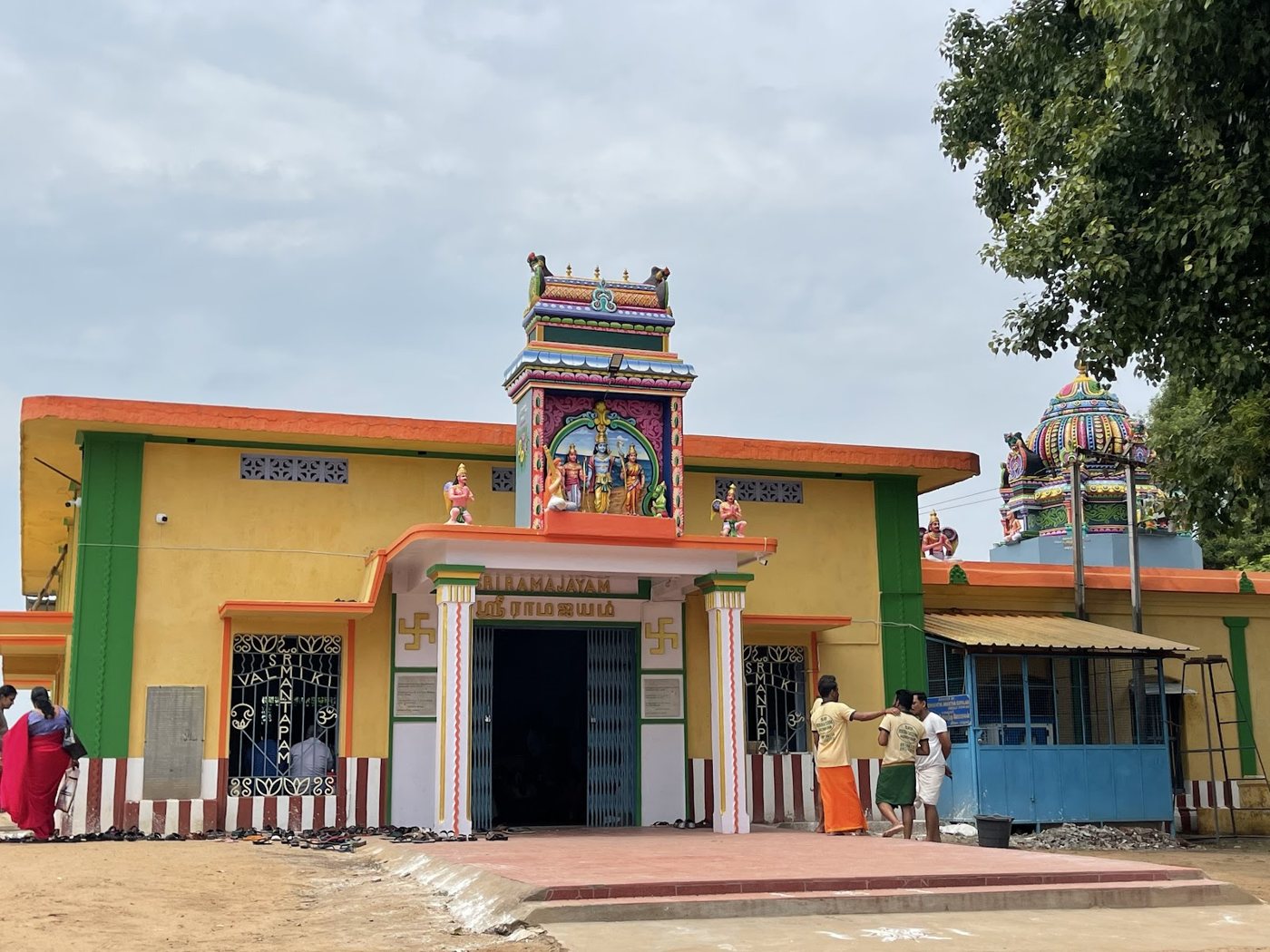
The Thyagaraja Aradhana Thanjavur gathering at Thiruvaiyaru is one of the most moving musical assemblies in southern India. Each winter, musicians and listeners travel to the banks of the Cauvery River to pay homage to the composer Saint Thyagaraja, sitting shoulder to shoulder on simple floor carpets to sing without tickets, green rooms, or commercial boundaries.
Unlike a conventional auditorium event, this commemoration is an act of collective devotion held directly at the composer’s memorial shrine. If you are travelling from Pondicherry or exploring the temple towns of the Cauvery delta, spending a day here gives you a rare look into a living tradition where music is shared purely as prayer.
At a glance
| When | Tamil month of Thai (Pushya Bahula Panchami), usually January or early February |
|---|---|
| Duration | Five continuous days |
| Where | Sri Thyagaraja Swamy Samadhi, Thiruvaiyaru, Thanjavur district |
| Highlight | Choral rendition of the Pancharatna Kritis by hundreds of musicians |
| Dress | Modest traditional Indian attire (dhoti, kurta, saree, or salwar kameez) |
| From Pondicherry | Roughly 160 to 180 km by road (about 3.5 to 4.5 hours drive via Kumbakonam) |
What the festival celebrates
Saint Thyagaraja, who lived between 1767 and 1847, is celebrated as one of the Trinity of Carnatic music alongside Muthuswami Dikshitar and Syama Sastri. He spent much of his life in Thiruvaiyaru, composing hundreds of devotional songs dedicated to Lord Rama before attaining jeeva samadhi, or conscious spiritual passing, on the northern bank of the Cauvery River.
The annual aradhana, which translates as an act of adoration or honoring, marks the anniversary of his passing. Early in the twentieth century, several branches of his disciple lineages united under the Sri Thyagabrahma Mahotsava Sabha to establish a single, shared celebration. The gathering is not run as a festival of paid concerts. Instead, every performance is regarded as seva, a voluntary service and sacred devotional offering to the saint and the divine.
When it takes place and key days
The festival follows the Hindu lunar calendar and is observed on Pushya Bahula Panchami, the fifth day of the waning moon in the lunar month of Pushya. In the Tamil calendar, this falls during the month of Thai, corresponding to January or early February in the Gregorian calendar. The celebrations run across five continuous days.
| Festival Stage | Key Events and Timings |
|---|---|
| Days 1 to 4 | Continuous recitals from morning until late night by students, seniors, and master artists. |
| Day 5 (Early Morning) | Unchavruthi Bhajan procession walking from the saint’s ancestral home to his samadhi shrine. |
| Day 5 (Mid-Morning) | Mass choral rendition of the Pancharatna Kritis between 9:00 AM and 10:00 AM. |
| Day 5 (Night) | Evening deity procession accompanied by nadaswaram musicians, ending with the Anjaneya Utsavam. |
Because the exact dates shift every year according to the lunar cycle, festival dates are confirmed locally by the Sri Thyagabrahma Mahotsava Sabha well ahead of each edition.

What you will see and hear
The primary celebration day begins at dawn with the Unchavruthi Bhajan. A group of musicians walks through the narrow lanes of Thiruvaiyaru, beginning at the composer’s ancestral home on Thirumanjana Veedhi and heading toward the riverbank. They sing devotional verses while carrying a brass vessel to receive voluntary gifts of uncooked rice, re-enacting the saint’s humble life as a mendicant who refused royal patronage.
At the samadhi shrine, priests conduct sacred bathing ceremonies known as abhishekam over the memorial idol. Offerings of milk, curd, honey, and fragrant sandalwood paste are poured over the stone, followed by floral archana rituals.
The centerpiece of the entire gathering is the collective performance of the Pancharatna Kritis, or the Five Gems. For one hour, hundreds of vocalists, violinists, veena players, flautists, mridangists, and ghatam artists sit packed on the stage and floor to sing and play in complete unison. The sound of these five complex compositions echoing together over the riverbed is solemn, powerful, and deeply moving.
Throughout the rest of the five days, individual artists take the stage for short musical sets. Young prodigies share the same platform as veteran maestros, with recitals proceeding from early morning until late evening.
Where to watch and how to plan your day
All major events happen at the Sri Thyagaraja Swamy Samadhi complex on the riverbank in Thiruvaiyaru. A massive, temporary covered pandal is constructed right opposite the samadhi to accommodate the musicians and the public.
There are no tickets, reservations, or assigned seats. Admission is free, and seating is on carpets spread across the ground inside the pavilion. If you wish to witness the Pancharatna Kritis on the fifth morning, you should plan to arrive inside the pandal before 7:00 AM. By 8:00 AM, the pavilion is generally full to capacity, and movement becomes very limited.
Local tip: Bring a light cotton cushion or a foldable cloth mat to sit on, as sitting flat on thin pandal carpets for several hours can become uncomfortable.

Etiquette, dress code, and photography
The samadhi grounds are treated as a place of worship. You will need to take off your footwear before entering the memorial enclosure and pavilion. Wear traditional, modest Indian clothing. Men generally wear dhotis or kurtas with formal trousers, while women wear sarees or salwar kameez. Revealing western clothes or shorts are out of place.
Visitors of all backgrounds and faiths are welcome to sit inside the listening pavilion. Maintain silence during the recitals. Photography is permitted, but please turn off camera flashes and keep mobile phones on silent. Avoid standing up in the middle of the carpeted seating area to film, as this blocks the view of devotees and listeners behind you.
Safety and practical advice
Navigating the village of Thiruvaiyaru during the aradhana days requires some practical preparation and patience. The riverbank roads are narrow, and with tens of thousands of visitors gathering in a small rural settlement, being mindful of your personal comfort and safety helps you enjoy the musical tribute without unnecessary stress.
- Footwear storage: With thousands leaving sandals outside the gate, shoes can easily get misplaced. Keep your footwear in a lightweight cloth tote bag that you can carry with you inside the pandal.
- Midday heat: While January mornings in the delta are cool, the midday sun warms up quickly under the temporary tin or thatch roof. Drink clean bottled water and carry a small hand towel.
- Valuables: The narrow approach roads leading to the shrine become tightly packed during processions. Keep wallets, phones, and cash inside zipped inner pockets.
- Children: Thiruvaiyaru’s riverbank lanes are crowded. If you bring young children, hold their hands closely and fix a clear meeting point outside the memorial gates in case someone gets separated.

Getting there and where to stay
Thiruvaiyaru is a small rural town located roughly 13 km north of Thanjavur city. Thanjavur Junction is the nearest major railway station, offering frequent trains to Chennai, Tiruchirappalli, and other major hubs. From Thanjavur, local buses and shared auto-rickshaws run continuously up to the Thiruvaiyaru bus stand.
The nearest air link is Tiruchirappalli International Airport, located about 65 to 70 km away by road. If you are starting out from Pondicherry, the drive takes about 3.5 to 4.5 hours across a distance of roughly 160 to 180 km, traveling southwest via Kumbakonam.
Accommodation in Thiruvaiyaru itself is extremely limited. Most visitors choose to stay in Thanjavur or Kumbakonam. Hotels and guesthouses in both towns fill up weeks ahead of the main aradhana day due to the influx of artists and music lovers, so make your room bookings well in advance.
Combining your visit with nearby sights
If you follow the winter Carnatic season, visiting Thiruvaiyaru pairs naturally with the Chennai December Music Season, offering a contrast between air-conditioned urban sabhas and a grounded village setting. While based in Thanjavur, take time to visit the grand Brihadisvara Temple, built by the Chola dynasty, as well as the Thanjavur Royal Palace and its bronze gallery.
The surrounding delta countryside is dotted with historic settlements and quiet agrarian roads. Do not leave without trying local Thanjavur filter coffee and a traditional midday vegetarian meal served on a fresh banana leaf at a town mess.
What recent visitors say
A quick, honest snapshot from recent Google reviews, so you know what to expect before you go.
What people loved
“It was a surreal experience for me to visit Thyagaraja swamigals samadhi. If you ever enjoyed carnatic music then go for it …”
“Saint thiagaraja temple at the banks of River cauvery in tiruvaiyaru. Yearly festival happens during Bahula panchami thithi, when the saints panchatranam are sung by all the carnatic musicians in unison. A must visit place”
“A lovely , peaceful sanctuary of divinity dedicated to the great Saint Thyagaraja , one of “The Trinity of Carnatic Music” . Developing a forgotten samadhi into this holy place was the lifetime achievement of the great lady Bangalore…”
What some found difficult
“We are here for the Thyagaraja aradhane. The first day of the festival there were looking speeches by politicians but unfortunately not one of them stayed back to listen to a single performance by the various artists. The arrangements are…”
Reviews via Google Maps. Opinions are those of their authors.
Frequently asked questions
When is the next Thyagaraja Aradhana held?
The festival is celebrated annually in the Tamil month of Thai on Pushya Bahula Panchami, which corresponds to January or early February. Specific dates for future editions are announced locally each year by the Sri Thyagabrahma Mahotsava Sabha.
Do I need tickets or an invitation to enter?
No tickets or passes are required. The memorial complex and the performance pandal are free and open to everyone on a first-come, first-served basis.
Can non-Hindus attend the festival?
Yes. People of all backgrounds and nationalities are welcome to sit in the open pavilion, listen to the recitals, and observe the musical tributes respectfully.
Which day is the most important to attend?
The fifth day, known as the Aradhana Day, is the primary day to visit. It features the morning Unchavruthi street procession and the iconic mass rendering of the Pancharatna Kritis between 9:00 AM and 10:00 AM.
Find it
Address: V4H5+VV7, Thiruvaiyaru, Tamil Nadu 613204, India
You might also like
- Where to stay in Pondicherry
- Festivals of Pondicherry and Tamil Nadu
- Visiting Brihadeeswara Temple in Thanjavur: A Guide
- Thanjavur Palace Guide: History, Hours and Tips
- Things to do in Pondicherry
- Thanjavur Palace Guide: History, Hours and Tips
- Experiencing the Mamallapuram Dance Festival by the Sea
- International Yoga Festival Pondicherry: Guide to January Events