The Parthasarathy Temple in Triplicane is one of the oldest living places of worship in Chennai, with foundations dating back to the eighth century. Stepping off the neighborhood streets into its granite courtyards brings you immediately into an active, devotional world shaped by morning chants, camphor smoke, and centuries of Tamil history.
If you are travelling north from Pondicherry for a day trip or a weekend visit to Chennai, this revered Vaishnavite site offers a direct connection to classical Dravidian architecture. It is a working temple where local families, temple scholars, and pilgrims from across South India gather every day to offer prayers.
At a glance
| Best time of day | Early morning around 6:00 AM or late afternoon from 4:30 PM |
|---|---|
| Allow | 1 to 2 hours |
| Dress | Modest traditional attire; dhotis, kurtas, sarees, or salwar kameez |
| Photography | Strictly prohibited inside inner sanctums and worship areas |
| From Pondicherry | Roughly 3.5 to 4 hours (about 150 km) via the East Coast Road |
The history and meaning of the temple
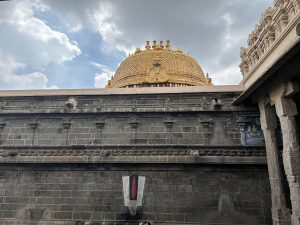
The temple traces its earliest standing structure to the eighth century CE, built under the patronage of the Pallava dynasty. Historical records associate its founding with King Narasimhavarman I and later King Dantivarman. Over subsequent centuries, rulers of the Chola dynasty and the Vijayanagara Empire expanded the complex, adding grand pillared halls, tall gateway towers, and defensive stone walls.
This sacred site is celebrated as one of the 108 Divya Desams, which are the holy Vishnu shrines praised in the Tamil devotional canon known as the Naalayira Divya Prabandham. The seventh- and eighth-century poet-saints, the Alvars, including Thirumangai Alvar and Peyalvar, composed verses honoring this shrine and its presiding deities.
The primary focus of devotion here is Lord Krishna in his role as Parthasarathy, a Sanskrit title meaning the charioteer of Partha, or Arjuna, during the great Kurukshetra battle described in the Mahabharata. Unlike most depictions of Krishna playing a flute, the primary stone form here portrays him as an elder warrior-guide. He stands roughly nine feet tall with a prominent mustache and a conch shell, bearing no weapons in honor of his pledge during the epic war. If you look closely during a clear view of the sanctum, you can see small carved marks on the face of the icon that represent the scars from arrows received while shielding Arjuna on the battlefield.
What makes the complex particularly distinct among South Indian Vaishnavite temples is that it houses five separate incarnations of Vishnu under one roof: Venkatakrishnan (Krishna), Yoga Narasimha, Rama, Gajendra Varadarajar, and Ranganatha, alongside a dedicated shrine for Goddess Vedavalli Thayar.
Classical architecture and what to see
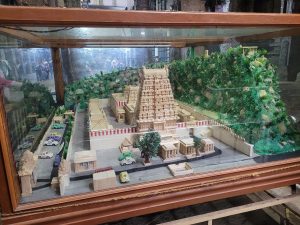
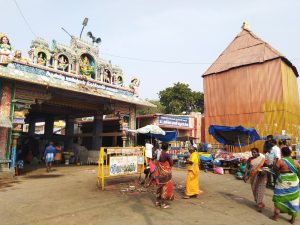
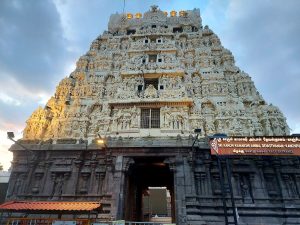
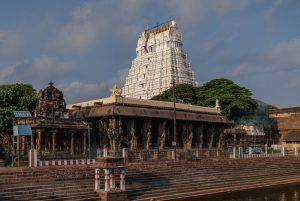
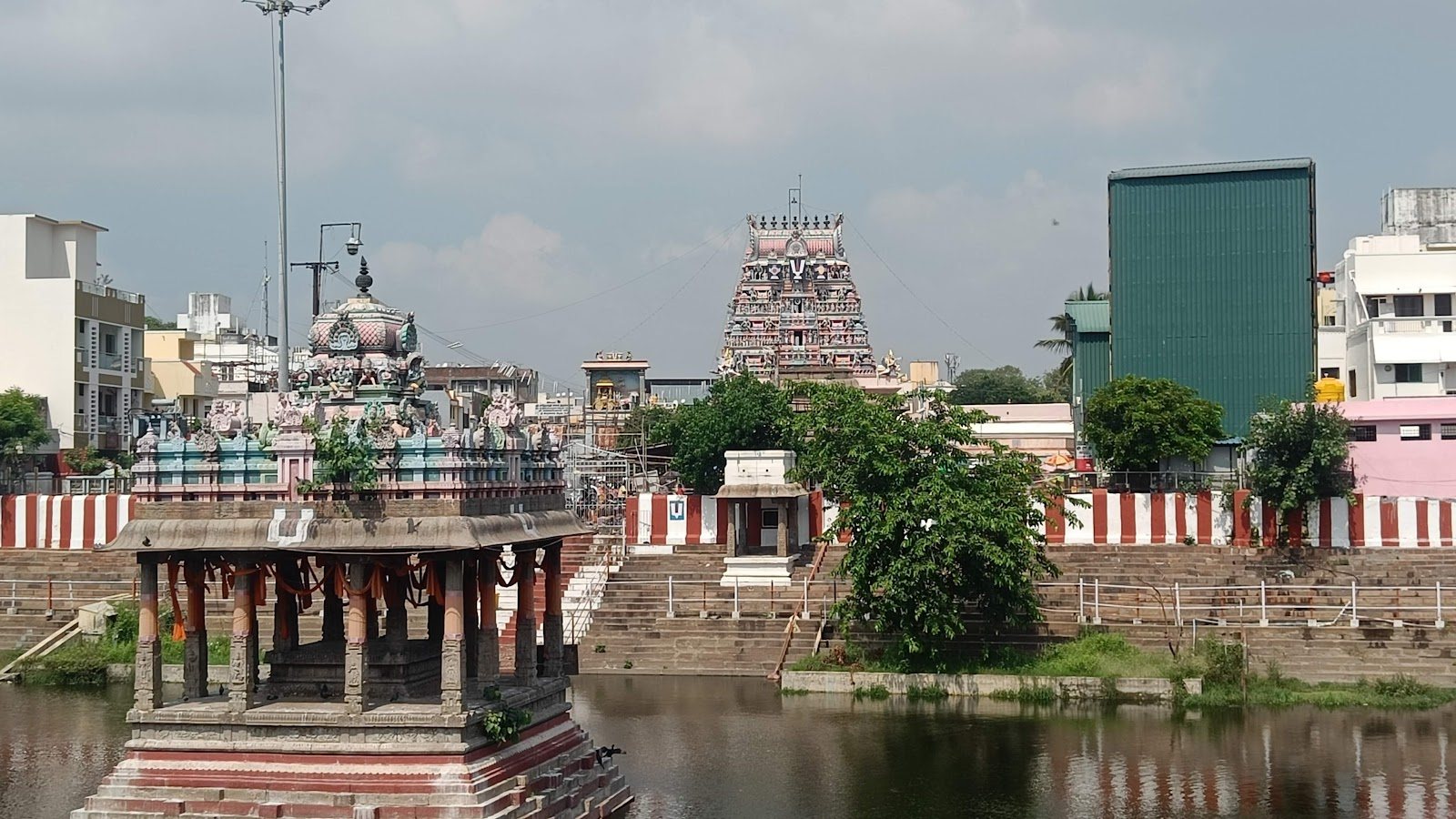
As you approach along the car street of Triplicane, the soaring eastern gopuram rises above the neighborhood rooftops. The temple follows classical Dravidian architectural principles, organized in concentric rectangular enclosures that lead from open pillared walkways inward to intimate, dimly lit stone sanctums.
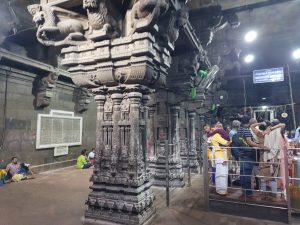
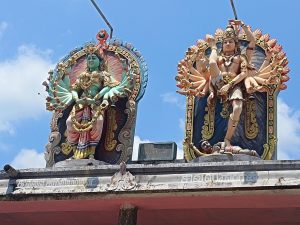
The carved mandapas date back primarily to the Vijayanagara era. Their stone pillars feature detailed relief sculptures of mythical creatures, musicians, dancing figures, and royal benefactors. If you walk slowly along the perimeter walls of the central halls, you will notice ancient Tamil stone inscriptions. These inscriptions, dating from both the eighth-century Pallava period and the later Vijayanagara period, record endowments, land grants, and royal renovations that kept the temple running across generations.
Outside the main gateway lies the sacred temple tank, known as the Kairavani Pushkarini. Historically, this large stepped reservoir was celebrated for blooming water lilies. Today, its wide stone steps serve as an important focal point during annual float festivals, reflecting the temple towers in its waters during early morning hours.
How a visit works
A standard visit is straightforward, though the courtyards can become crowded during festival periods and weekend mornings. You will leave your footwear at the designated shoe stalls located near the perimeter gate before entering through the main gopuram.
The temple operates with two primary visiting windows each day. It opens around 5:30 AM or 6:00 AM and remains accessible until about 12:00 PM or 12:30 PM. In the afternoon, doors reopen at 4:00 PM and stay open until 9:00 PM. Exact timings for specific pujas and rituals can shift slightly depending on calendar days, so allow a little flexibility in your schedule.
General entry for darshan is free of charge. Devotees join the standard queue lines to walk past the main sanctum of Parthasarathy and the secondary sanctums. During busy hours, the temple administration often operates a paid special darshan counter where you can purchase tickets for a shorter queue. You can also book specific archana rituals or offerings at internal ticket desks.
Local tip: Join the morning queue between 6:30 AM and 7:30 AM when the air is cooler and the stone floors are pleasant to walk on barefoot. The atmosphere is calm, and temple priests are performing the early rituals.
Temple dress code and etiquette
The Parthasarathy Temple is a deeply revered center of faith, and traditional decorum is strictly observed by temple authorities and worshippers alike.
- Attire for men: Traditional dhotis or veshtis, kurtas, or full-length trousers worn with shirts. Shorts, cutoff pants, and sleeveless shirts are not permitted.
- Attire for women: Sarees, half-sarees, or salwar kameez sets with dupattas. Short dresses, skirts, ripped denim, and sleeveless tops are not allowed.
- Footwear: Must be deposited outside the temple before entering the premises. Walking barefoot on the stone flags is required.
- Photography: Strictly banned inside the inner sanctums and all prayer halls. Keep mobile phones silenced and placed securely inside bags or pockets.
- Non-Hindu visitors: Generally welcome to enter the outer courtyards and admire the architectural mandapas provided you follow dress guidelines and show quiet respect. Direct access to the innermost sanctum (garbhagriha) may be restricted to practicing Hindus.
Inside the worship halls, speak in low tones, avoid pointing your feet directly at the sanctum shrines when seated, and follow the flow of the devotees waiting for darshan.
Seasons, timings, and festival calendar
Triplicane stays warm throughout the year, but the pleasant months from November to February make temple walking far more comfortable. During the hotter months from April to June, granite stones heat up rapidly by late morning, making early morning or evening visits essential.
Throughout the year, the temple hosts major religious events that draw thousands of worshippers:
- Vaikunta Ekadasi: Held in December or January, this is the most important festival of the year. Devotees gather in vast numbers for the opening of the Paramapada Vaasal, the ceremonial Gate of Heaven.
- Brahmotsavam: Grand multi-day celebrations involving deity processions and towering wooden chariots pulled through Triplicane streets. The festival for Parthasarathy takes place in April or May, followed by a separate Brahmotsavam for Yoga Narasimha in June or July.
- Teppotsavam: The float festival, where illuminated deities are taken out onto the waters of the Kairavani Pushkarini tank.
- Other observed festivals: Krishna Janmashtami, Ramanavami, and Maasi Magam.
Getting there from Pondicherry and where to stay
If you are starting from Pondicherry, the journey to Chennai covers roughly 150 kilometers. Travelling by car or private taxi along the East Coast Road takes about 3.5 to 4 hours, depending on city traffic as you approach southern Chennai. State express buses also run frequently between Pondicherry and Chennai, terminating at Koyambedu or passing through Thiruvanmiyur.
Within Chennai, the temple sits in the central coastal neighborhood of Triplicane. Thiruvallikeni MRTS railway station is only about 800 meters away, making public suburban rail an easy transit choice. Chennai Central railway station is roughly 4 kilometers away, while Chennai Egmore is about 4.5 kilometers distant. If you fly into Chennai International Airport, the temple is approximately 16 to 18 kilometers away by road.
For accommodation, nearby neighborhoods like Mylapore, Royapettah, and the Marina beach front offer a broad range of heritage guest houses and business hotels. Staying near central Chennai allows you to reach Triplicane within a short auto-rickshaw ride early in the morning.
Places to visit nearby in Chennai
Triplicane is well connected to several other cultural landmarks in central Chennai, allowing you to build an easy half-day walking or driving plan around your temple visit:
- Marina Beach: Located roughly 1 kilometer east, this wide sandy coastline is perfect for an evening stroll after temple hours.
- Vivekananda House (Illam): About 1 kilometer away along the beach road, this historic building is where Swami Vivekananda stayed during his visit to Madras in 1897.
- Arulmigu Kapaleeshwarar Temple: Situated roughly 3.5 kilometers south in Mylapore, this famous seventh-century Shaivite temple makes an excellent architectural companion visit to Parthasarathy.
- San Thome Cathedral Basilica: Roughly 3.5 kilometers away, this neo-Gothic Catholic basilica stands over the tomb of Saint Thomas the Apostle.
While in the Triplicane neighborhood, stop at one of the traditional vegetarian mess halls or street-side coffee counters along the car streets for a glass of piping hot South Indian filter coffee and a fresh plate of idlis.
What recent visitors say
A quick, honest snapshot from recent Google reviews, so you know what to expect before you go.
What people loved
★★★★★ PRI · in the last week
“It’s such a bliss to be in this temple .. but if the management cab give some history explained will help new comers to enjoy more”
★★★★★ ABHIMANYU · a month ago
“A deeply spiritual and historic temple in the heart of Triplicane. The ancient Dravidian architecture, grand gopurams, and intricate stone carvings create a serene, divine atmosphere. The darshan of Lord Venkatakrishna (Parthasarathy…”
★★★★★ Raghavendra · 2 months ago
“Parthasarathy Temple is one of the 108 Divya Desams dedicated to Lord Vishnu and is a place every devotee should experience at least once. If possible, visit during a less crowded time to truly immerse yourself in the temple’s serene and…”
Reviews via Google Maps. Opinions are those of their authors.
Frequently asked questions
Is there an entry fee at Parthasarathy Temple?
General entry to the temple is completely free. The temple occasionally offers paid special darshan queues or tickets for specific pujas and archanas, which you can purchase at internal counters inside the complex.
Can non-Hindus visit Parthasarathy Temple?
Non-Hindus are generally permitted to enter the outer courtyards and view the Vijayanagara architecture and mandapas, provided they follow the strict dress code and maintain quiet decorum. Access to the innermost sanctum is typically reserved for practicing Hindus.
What is the dress code for visitors?
Visitors must wear modest traditional clothing. Men should wear dhotis, kurtas, or full trousers with shirts, while women should wear sarees, half-sarees, or salwar kameez. Shorts, miniskirts, sleeveless tops, and torn jeans are strictly forbidden.
Can I take photographs inside the temple?
No, photography and videography are strictly prohibited inside the temple sanctums and active prayer spaces. You should keep cameras and mobile phones stored away quietly while walking through the halls.
Find it
Address: Car St, Narayana Krishnaraja Puram, Triplicane, Chennai, Tamil Nadu 600005, India
You might also like
- Where to stay in Pondicherry
- Churches, temples, mosques and ashrams in Pondicherry
- Saneeswarar Temple
- Sri Aurobindo Ashram
- Sacred Heart of Jesus Church
- Things to do in Pondicherry
- Samayapuram Mariamman Temple: A Pilgrim Guide
- Guide to Sri Ranganatha Swamy Temple in Srirangam
- Visiting Azhagar Temple: A Travel and Pilgrim Guide