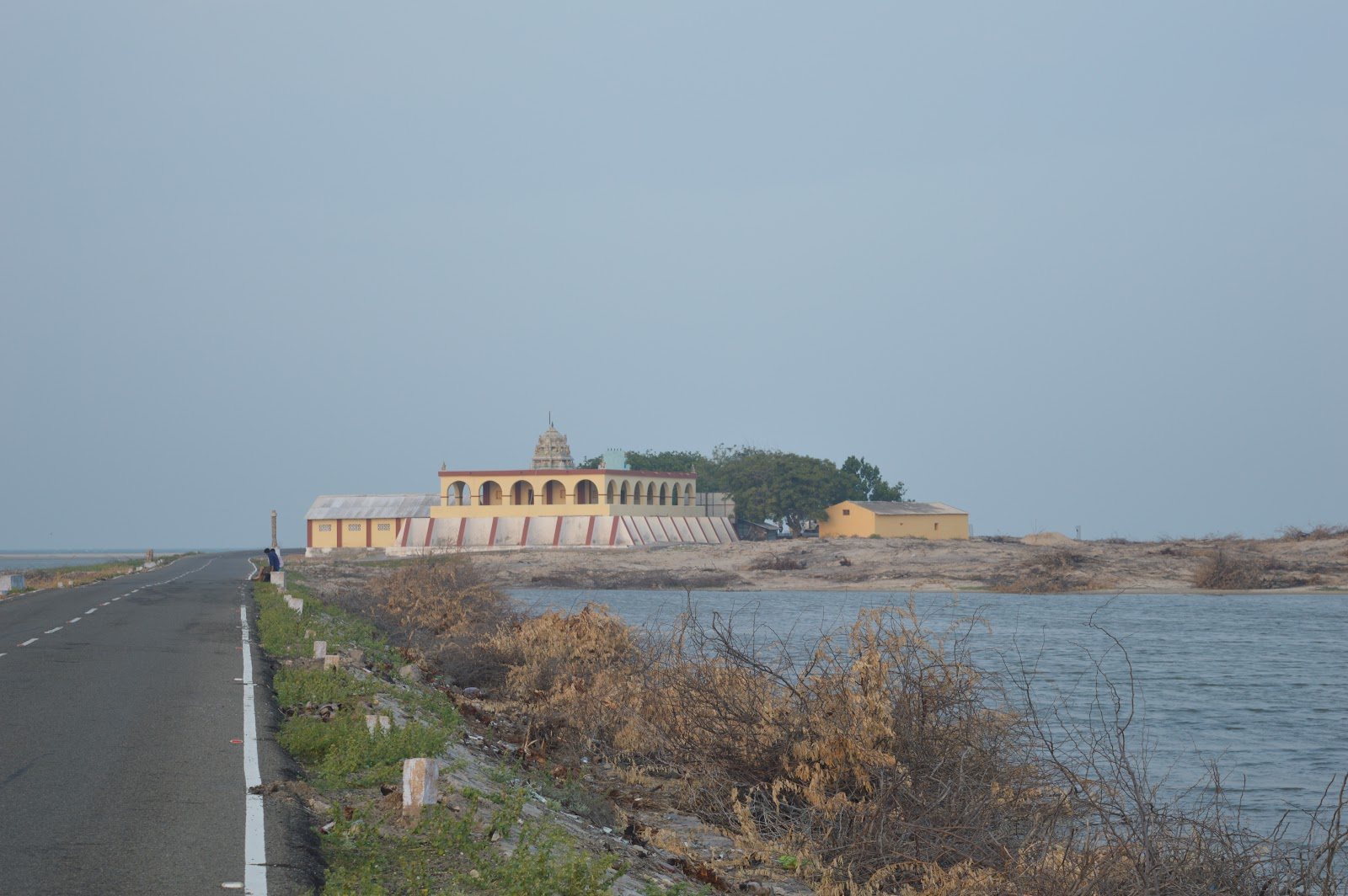
The Kodanda Ramar Temple stands on a slender strip of land between Rameswaram and Dhanushkodi, framed on either side by calm, salty lagoons and the open sea. While many travellers focus entirely on the grand corridor of the main temple in town, this modest stone shrine offers an entirely different feeling. Out here, the ocean breeze is constant, the horizon stretches far in every direction, and the air carries the clean scent of coastal waters and burning camphor.
For generations of pilgrims, this remote sanctuary has marked one of the most poignant episodes in the epic Ramayana. It is a peaceful place to spend an unhurried hour, watching morning light fall across ancient stone carvings and listening to the steady wash of waves in the distance.
At a glance
| Best time of day | Early morning or late afternoon |
|---|---|
| Allow | 45 minutes to 1 hour |
| Dress | Modest attire covering shoulders and knees |
| Photography | Restricted inside the sanctum |
| From Pondicherry | roughly 420 km by road (about 8 hours) |
Why this place matters
In the sacred geography of Tamil Nadu, Kodanda Ramar Temple occupies a rare position. The shrine is estimated to be between 500 and 1,000 years old and holds an esteemed place as one of the 108 Abhimana Kshethrams in the Vaishnavite tradition. It draws its name from Kothandam, the divine bow carried by Lord Rama.
According to ancient tradition, this is the exact location where Vibhishana, the younger brother of the demon king Ravana, broke ties with Lanka to seek complete refuge, or saranagati, with Rama. Vibhishana had repeatedly counselled his brother to return Sita peacefully, but his pleas were met with insults and exile. Arriving at the seashore where Rama’s army was gathered, Vibhishana surrendered without conditions. Moved by his sincerity, Rama accepted him as an ally and, right here on this coastline before the final battle had even begun, conducted Vibhishana’s coronation ceremony, or pattabhishekam, declaring him the rightful ruler of Lanka.
In more recent history, the temple gained a quiet reputation as an enduring wonder of local endurance. During the devastating 1964 cyclone that submerged Dhanushkodi and erased its railway lines and homes, this isolated structure was the sole historic building to remain standing intact amidst the catastrophic winds and surging tide. To local fishermen and visiting pilgrims alike, its survival added a deep layer of emotional resilience to the landscape.
What you will see
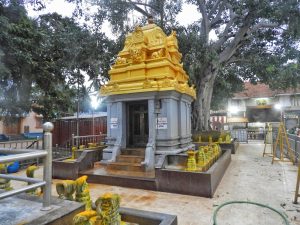
Approaching the temple along the Dhanushkodi road, the structure appears almost to float on the shallow wetlands. It rests on a raised stone platform, built high enough to withstand the changing moods of the Palk Strait and the Gulf of Mannar. As you step onto the courtyard, you are surrounded by vast skies, pale sands, and low-lying brackish pools often dotted with coastal birds.
The temple itself is compact compared to the sprawling urban temples of Tamil Nadu. Inside, the stone walls feature relief carvings and pictorial panels that depict key episodes from the Ramayana, with a special emphasis on the meeting between Rama, Lakshmana, and Vibhishana. The stonework is weathered by centuries of salt-laden sea air, giving it an earthy, timeless texture.
In the central sanctum, you will see the presiding deities of Lord Rama holding his bow, alongside Sita, Lakshmana, Hanuman, and a crowned Vibhishana standing in perpetual reverence. Near the inner hall, priests often display a porous floating stone, traditionally preserved to remind visitors of the legendary Rama Setu bridge built across the waters to Lanka. You can observe the stone floating in a vessel of water, a sight that draws quiet fascination from both young children and elder pilgrims.
How a visit works
The rhythm of a visit here is simple, gentle, and unhurried. When you arrive at the outer gate, leave your footwear at the designated shoe stand or by the entrance steps. You will walk across the warm stone courtyard toward the main hall.
- Pass through the entry porch where you can pause to admire the Ramayana wall carvings and the floating stone exhibit.
- Approach the sanctum sanctorum for darshan, where the temple priest offers arati and sacred ash or kumkum.
- Circumambulate the inner shrine slowly along the stone pathway.
- Spend a few minutes resting on the outer stone plinth, enjoying the cool sea breeze and wide horizon.
Entry to the temple is completely free. During major celebrations such as Rama Navami, which honours Rama’s appearance, the atmosphere becomes lively with special abhishekams, Vedic chants, and steady streams of devotees from across southern India. Hanuman Jayanti is another notable occasion when special prayers and sweet offerings take place.
Local tip: Because the temple stands directly in the wetlands, winds can pick up strongly by midday. Holding onto your scarf or sunglasses as you walk along the raised causeway is always a good idea.
Etiquette and what to wear
Although the setting feels wild and open, this is a working Vaishnavite temple where traditional decorum should be maintained at all times. Dressing respectfully helps maintain the peaceful atmosphere of worship.
- Men should wear a traditional dhoti with a shirt or kurta, or neat full-length trousers. Shorts and sleeveless vests are not permitted.
- Women should wear a saree, half-saree, or a salwar kameez with a dupatta. Western garments such as shorts, mini-skirts, or sleeveless tops should be avoided.
- Always remove shoes, sandals, and leather belts before stepping into the temple compound.
- Photography is strictly prohibited inside the sanctum sanctorum. You may take photos of the coastal scenery and the outer walls, provided you do so discreetly without disturbing worshippers.
- Keep mobile phones on silent mode while walking through the premises.
There are no formal barriers barring people of different faiths from entering, but standard Hindu temple etiquette applies. Approach the sanctum quietly, refrain from loud chatter, and accept sacred offerings with your right hand.
Best time to go and how long to stay
The temple is typically open every day from 7:00 AM until 5:00 PM. However, because it sits directly along the open coast, operating hours can shift slightly depending on weather conditions, heavy rains, or high tides. If you are travelling during monsoon periods or choppy weather, it is sensible to ask locally in Rameswaram before setting out.
Early morning is by far the loveliest time to visit. Arriving between 7:00 AM and 9:00 AM lets you catch the soft golden light reflecting off the surrounding waters before the sun becomes harsh. Late afternoon, around 3:30 PM to 4:30 PM, is also pleasant as the heat begins to abate.
Plan to spend between 45 minutes and an hour here. That provides ample time to pay your respects at the sanctum, see the floating stone, read through the relief panels, and sit quietly to watch the sea.
Getting there from Pondicherry and where to stay nearby
From Pondicherry, travelling down to Rameswaram is a rewarding road journey along Tamil Nadu’s coastal corridor. The distance is roughly 420 km, which generally takes about eight to nine hours of driving by private car or taxi via Chidambaram, Thanjavur, Pudukkottai, and Ramanathapuram. If you prefer rail travel, you can board an overnight train from Villupuram Junction, located about 40 km west of Pondicherry, directly to Rameswaram Railway Station.
Once you reach Rameswaram, Kodanda Ramar Temple is located roughly 10 to 13 km southeast along the Kochi-Madurai-Dhanushkodi road. Local auto-rickshaws, private cabs, and town buses ply this route regularly on their way toward the ruins of Dhanushkodi.
| Travel Mode | Approximate Duration | Route Notes |
|---|---|---|
| Private Car / Taxi | 8 to 9 hours | Scenic drive southward from Pondicherry via NH32 and NH536. |
| Train via Villupuram | 9 to 10 hours overnight | Direct passenger trains connect Villupuram Junction to Rameswaram. |
| Flight via Madurai | 6 hours total travel | Drive to Chennai or fly via Madurai Airport, roughly 175 km from Rameswaram. |
For accommodation, base yourself in Rameswaram town, where there is a wide range of pilgrim guest houses, neat family-run lodges, and comfortable mid-range hotels close to the western gate of the main temple. Staying in town keeps you within an easy twenty-minute drive of Kodanda Ramar Temple.
Nice to combine with
Because Kodanda Ramar Temple sits midway along the Dhanushkodi spit, it naturally pairs with a half-day exploration of the southeastern tip of Rameswaram island.
- Dhanushkodi Ghost Town: Located further down the road, this abandoned settlement still displays the windswept ruins of its railway station, colonial church, and post office wrecked in the 1964 storm.
- Arichal Munai: The final drivable end of the sandy spit where the Bay of Bengal meets the Indian Ocean, marked by panoramic ocean vistas.
- Ramanathaswamy Temple: The celebrated Jyotirlinga shrine in Rameswaram town, renowned for its towering gopurams and magnificent pillared corridors.
- Dr. A.P.J. Abdul Kalam National Memorial: A well-curated memorial near Pei Karumbu that chronicles the life and achievements of India’s beloved former President.
On your way back into Rameswaram town, stop at one of the small roadside stalls near the fishing hamlets for fresh tender coconut water, or head to the bazaar streets near the main temple for a simple meal of hot ghee roast dosas and fresh filter coffee.
What recent visitors say
A quick, honest snapshot from recent Google reviews, so you know what to expect before you go.
What people loved
★★★★★ Shree · 2 months ago
“Had a truly divine and peaceful experience at Kodanda Ramar Temple. The temple has a very calm and spiritual atmosphere that instantly brings inner peace. The architecture is beautiful and well maintained, and the darshan of Lord Rama was…”
★★★★★ Manikandan · 2 months ago
“The Kothandaramaswamy Temple is a sacred coastal shrine dedicated to Lord Rama, located about 12 to 13 kilometers from Rameswaram on the road leading to Dhanushkodi. It is famous for being the sole historical building that survived the…”
★★★★★ Anuj · 4 months ago
“A must-visit temple on the way to Dhanushkodi. Kodandarama Temple is located in a beautifully isolated area surrounded by perfect scenic views. The temple is very old and has a unique charm, with beautiful traditional paintings and…”
Reviews via Google Maps. Opinions are those of their authors.
Frequently asked questions
What is the entry fee for Kodanda Ramar Temple?
There is no entry fee to visit the temple. Access to the shrine, the courtyards, and the viewing of the floating stone is completely free for all visitors.
Can non-Hindus visit Kodanda Ramar Temple?
Yes, there are no specific formal restrictions barring non-Hindu visitors. Anyone may enter provided they dress modestly, remove footwear, and maintain quiet respect.
Why is the temple named Kodanda Ramar?
The name comes from Kothandam, the divine bow carried by Lord Rama. The central deity in the sanctum depicts Rama holding this bow during his encampment on the Rameswaram coast.
Did Kodanda Ramar Temple really survive the 1964 cyclone?
Yes, the temple was the only historic structure on the coastal spit to remain standing intact when the devastating cyclone submerged and ruined the town of Dhanushkodi.
Find it
Address: Kochi – Madurai – Dhanushkodi Rd, Munichallai, Madurai, Rameswaram, Tamil Nadu 623526, India
You might also like
- Where to stay in Pondicherry
- Churches, temples, mosques and ashrams in Pondicherry
- Things to do in Pondicherry
- Sri Ramanathaswamy Temple: A Visitor Guide to Rameswaram
- Visiting Vandiyur Mariamman Teppakulam in Madurai
- Sunrise Point Kanniyakumari: Visiting the Ocean Edge
- Visiting Sri Sarangapani Swamy Temple in Kumbakonam