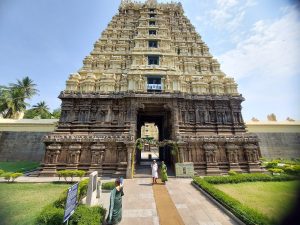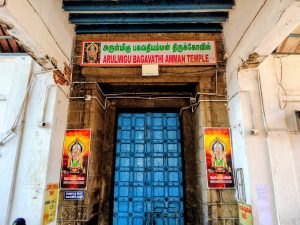
Vandiyur Mariamman Teppakulam is one of the most expansive and serene public landmarks you can visit in Madurai. Spanning around sixteen acres on the eastern side of the city, this vast square reservoir offers a calm, breezy contrast to the dense streets surrounding the central bazaars. Built centuries ago to hold water and serve sacred rituals, it remains a cherished gathering space for local families, pilgrims, and evening walkers.
If you are travelling southwest from Pondicherry to explore the cultural landmarks of Tamil Nadu, Madurai is often a central stop on your itinerary. While most travellers spend the bulk of their time at the main city temples, spending an hour or two along the stone ghats of this immense tank allows you to appreciate the grand scale of seventeenth-century Nayak engineering and neighbourhood life.
At a glance
| Best time of day | Early morning or late afternoon before sunset |
|---|---|
| Allow | 1 to 2 hours |
| Dress | Modest clothing covering shoulders and knees |
| Photography | Allowed around perimeter; restricted in sanctums |
| From Pondicherry | roughly 330 km, about 6 to 7 hours by road |
Why this place matters
The reservoir was commissioned around 1645 CE by King Tirumala Nayaka, one of the most prominent rulers of the Madurai Nayak dynasty. Local accounts tell a memorable story about its construction. Workers originally dug this immense pit to extract clay and earth needed to fire the bricks for the king’s grand residence, Thirumalai Nayakkar Mahal. As laborers excavated the deep soil, they uncovered an enormous stone carving of Lord Ganesha.
Recognizing the sacred nature of the find, King Tirumala Nayaka ordered the excavation to be shaped into a formal, stepped square tank. The unearthed carving, reverently named Mukkuruni Vinayakar, was transported to the Meenakshi Sundareswarar Temple, where it remains enshrined today. Covering approximately sixteen acres, the resulting reservoir became one of the largest temple tanks in all of South India.
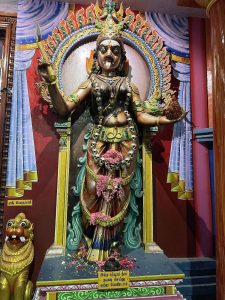
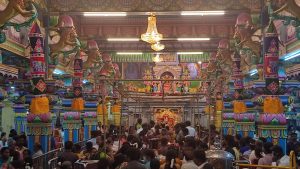
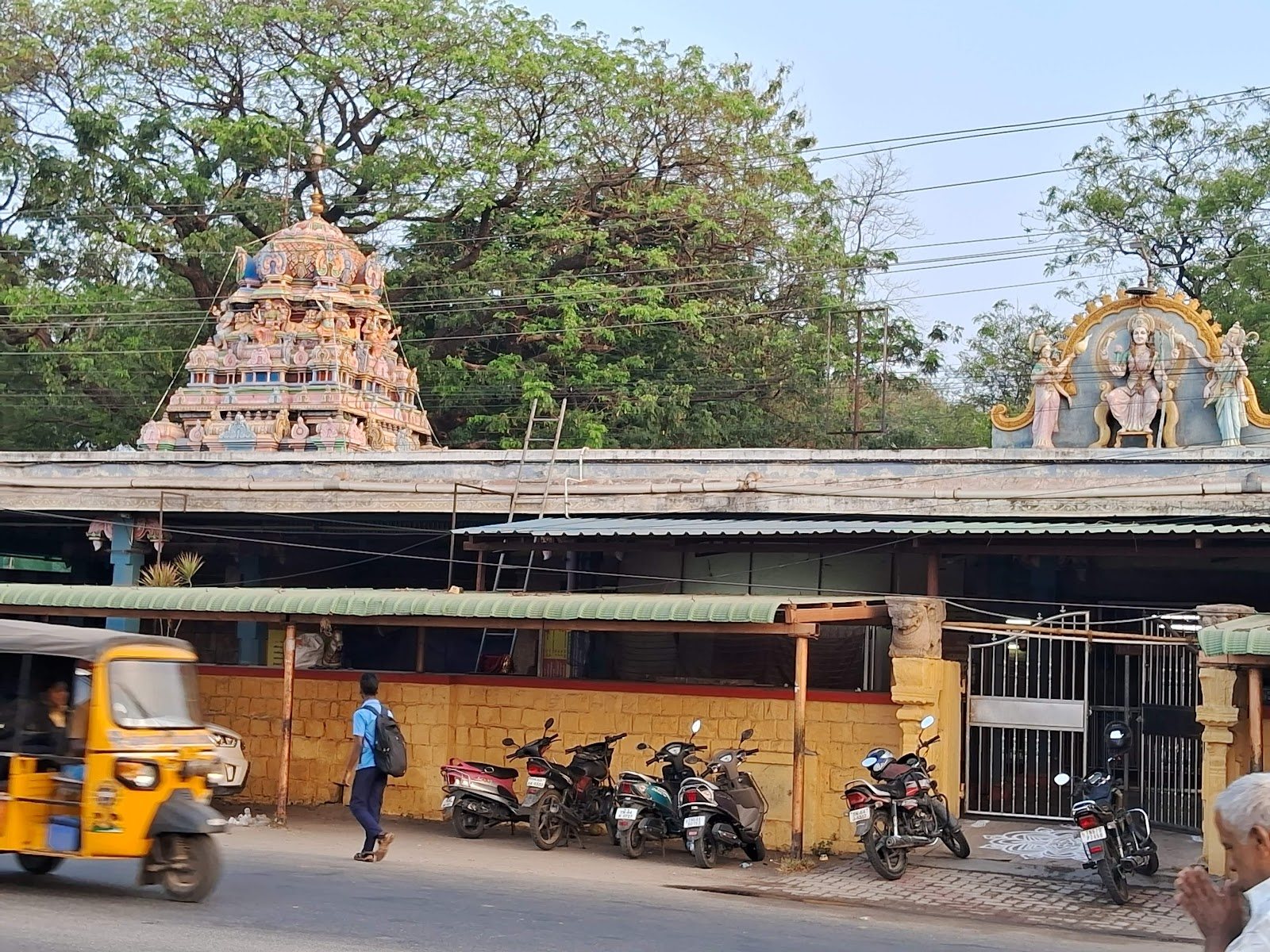
Beyond its size, the tank serves an enduring spiritual role. It is directly affiliated with the adjoining Vandiyur Mariamman Temple, a place of worship dedicated to Goddess Mariamman, who is revered across Tamil Nadu for rain, good health, and family well-being. Together, the temple and the reservoir represent a harmonious blend of royal urban planning and local devotional life.
What you will see
The sheer proportions of the reservoir are striking the moment you approach its banks. The water body forms a massive geometric square, flanked on all four sides by twelve wide granite steps that lead down toward the water. Historically, master builders designed an ingenious hydrological system of underground channels connecting directly to the Vaigai River, allowing seasonal floodwaters to fill the reservoir.
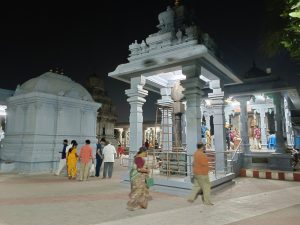
Right in the middle of the tank sits an artificial island known as the Maiya Mandapam. This central island features a raised stone pavilion crowned with decorative corner towers, a pleasant garden, and an entrenched shrine dedicated to Lord Vigneshwara, also known as Vinayaka or Ganesha. When the tank holds water, the reflection of the stone towers on the calm surface creates a peaceful scene.
Along the perimeter, you will find a paved public promenade lined with trees, small street-food carts, and benches. During mornings and late afternoons, residents come here to exercise, feed fish, read newspapers, or enjoy the open sky. The surrounding neighbourhood of Meenakshi Nagar provides an authentic glimpse into everyday Madurai life away from the commercial core.
How a visit works
Visiting the reservoir is straightforward and completely free of charge. The outer promenade and stone steps are open daily from 5:00 AM to 9:00 PM, giving you plenty of flexibility to fit a walk into your day. You can stroll along the perimeter walls, sit by the water on the wide granite steps, or cross over to visit the neighbouring Vandiyur Mariamman Temple.
Access to the central Maiya Mandapam island depends on current conditions. During seasons when water fills the reservoir, official boat services sometimes operate to carry visitors and pilgrims across to the central shrine, though schedules vary based on water depth and maintenance. When the water level is low, access to the island is typically restricted to preserve the structure.
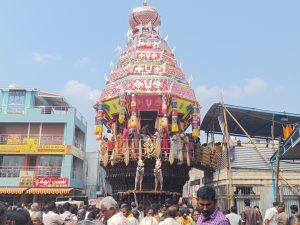
The most dramatic spectacle here takes place during the annual Float Festival, known locally as Theppotsavam. Held on the full moon of the Tamil month of Thai, which falls between January and February, the festival commemorates the birth anniversary of King Thirumalai Nayak. Processional deities of Goddess Meenakshi and Lord Sundareswarar are carried from the Meenakshi Temple in a ceremonial procession to the tank. They are placed onto an illuminated, flower-decked floating raft and pulled slowly across the water while thousands of devotees gather along the granite steps to watch.
Local tip: If you plan to attend the Float Festival in January or February, arrive early in the afternoon to secure a comfortable place on the steps, as the banks fill quickly with local families.
Etiquette and what to wear
Because the reservoir is connected to active places of worship, standard cultural norms apply across the site. Visitors of all backgrounds and faiths are welcome to walk along the public promenade, relax on the stone ghats, and view the central island from the perimeter. If you plan to enter the sanctum of the Vandiyur Mariamman Temple or the central Ganesha shrine when open, please keep temple etiquette in mind.
- Wear modest clothing that covers your shoulders, chest, and knees. Loose trousers, long skirts, salwars, kurtis, or shirts work well in the southern heat.
- Traditional Indian clothing such as dhotis or trousers with shirts for men, and saris or churidars for women, is recommended if you wish to enter active sanctum areas.
- Remove your shoes before stepping onto sanctum platforms or inside temple shrines. You may wear sandals along the outer paved promenade.
- Photography is permitted around the perimeter and along the stone steps, but cameras and mobile phones must be put away inside active sanctums.
- Keep noise levels low, particularly near shrines where devotees may be sitting in prayer or contemplation.
Best time to go and how long to stay
Madurai can become quite hot during the middle of the day, with stone surfaces retaining heat under direct sunlight. The best time to visit is between 6:00 AM and 8:30 AM, or between 4:30 PM and 6:30 PM. The early morning offers cool breezes off the water and soft light for photography, while late afternoons bring a friendly local atmosphere as families gather for evening strolls.
Most travellers find that an hour to an hour and a half is plenty of time to walk a section of the perimeter, take in the views of the Maiya Mandapam, and visit the adjoining Mariamman shrine. If you enjoy sketching, photography, or simply watching the water birds that frequent the tank, you can easily extend your stay without feeling rushed.
Seasonally, the winter months from November to February offer the most pleasant weather, with moderate daytime temperatures. This period also coincides with the Northeast monsoon run-off, making it more likely that the reservoir contains ample water.
Getting there from Pondicherry and where to stay nearby
Madurai lies southwest of Pondicherry at a distance of roughly 330 km. If you travel by road via Villupuram and Tiruchirappalli, the drive typically takes about 6 to 7 hours depending on traffic and rest stops. Regular overnight sleeper buses connect Pondicherry to Madurai, and train connections are available through Villupuram Junction.
Once you arrive in Madurai, reaching the reservoir is easy. The site is located in the Meenakshi Nagar area, roughly 4 to 5 km east of the city center. Madurai Junction railway station is approximately 5 to 6 km away, and Madurai Airport is about 14 to 15 km to the south. Auto-rickshaws and local taxis are readily available throughout the city to take you straight to the tank steps.
For accommodation, you will find numerous hotels and guesthouses located within a 4 km radius, particularly around Madurai Junction and the streets surrounding the Meenakshi Amman Temple. Staying near the city center puts you within easy reach of both the historic monuments and the quieter residential eastern districts where the tank is located.
Nice to combine with
Because the tank sits just a few kilometers east of central Madurai, you can effortlessly pair your visit with several other historic landmarks in a single morning or afternoon outing:
| Nearby Landmark | Approximate Distance | What to Expect |
|---|---|---|
| Thirumalai Nayakkar Mahal | 3.5 km | The 17th-century palace built by King Tirumala Nayaka, known for its massive stone pillars and grand courtyard. |
| Meenakshi Sundareswarar Temple | 4.0 km | Madurai’s central temple complex, home to towering gopurams and the Mukkuruni Vinayakar unearthed at this tank. |
| Gandhi Memorial Museum | 4.0 km | Housed in the historic Tamukkam Palace, presenting an extensive chronicle of India’s freedom movement. |
| Koodal Azhagar Temple | 5.0 km | An ancient Vaishnavite temple renowned for its sculpted granite architecture and multi-tiered shrines. |
After a morning walk along the tank banks, consider stopping at a local cafe near the palace or temple quarter for a cup of traditional South Indian filter coffee and a warm plate of fluffy Madurai idlis.
What recent visitors say
A quick, honest snapshot from recent Google reviews, so you know what to expect before you go.
What people loved
★★★★★ Essentia · 3 weeks ago
“Visited Vandiyur Mariamman Teppakulam during my Tamil Nadu trip. The water view was beautiful and the whole place felt peaceful and relaxing. I enjoyed walking around, taking photos, and spending some quiet time there. A lovely place to…”
★★★★★ Jayan · 3 months ago
“A beautiful temple tank, where a grand flotilla will be used to circumambulate the Central mandapam during festivals. A beautiful location for spending evening on the outskirts of Madurai, which once upon a time was the water source of the…”
★★★★★ Aksa · 4 months ago
“Visited Vandiyur Mariamman Teppakulam and it was a calm and relaxing experience 🌊✨ The place is very spacious with a huge water tank and a beautiful mandapam at the center. It’s a nice spot to just sit and enjoy the surroundings. Evening…”
Reviews via Google Maps. Opinions are those of their authors.
Frequently asked questions
Is there an entry fee to visit Vandiyur Mariamman Teppakulam?
No, entry to the promenade and stone ghats is entirely free. If boat transfers to the central island are operating, a nominal charge set by local operators may apply.
Can non-Hindus visit the reservoir and its island?
Yes, non-Hindus are fully welcome to explore the outer banks, granite steps, and promenade. Entry into active sanctum areas of adjoining shrines follows standard Tamil Nadu temple regulations.
When does the Float Festival take place?
The Float Festival, or Theppotsavam, is held annually on the full moon day of the Tamil month of Thai, which corresponds to January or February on the Gregorian calendar.
How far is the tank from the Meenakshi Amman Temple?
The reservoir is located approximately 4 km east of the Meenakshi Sundareswarar Temple, making it a quick fifteen-minute auto-rickshaw ride between the two locations.
Find it
Address: W46X+57G, Mariamman Nagar, Meenakshi Nagar, Madurai, Tamil Nadu 625009, India
You might also like
- Hotels in Madurai
- Churches, temples, mosques and ashrams in Pondicherry
- Things to do in Pondicherry
- Samayapuram Mariamman Temple: A Pilgrim Guide
- Vana Badrakali Amman Temple Guide: Visit Thekkampatti
- Visiting Nagaraja Temple in Nagercoil: A Practical Guide
- Thanjavur Palace Guide: History, Hours and Tips