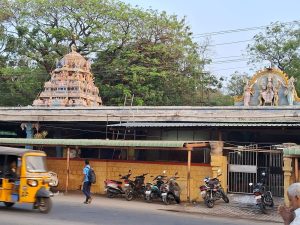
Muthukumarasamy Temple, widely known to residents as Kandhakottam, stands along Rasappa Chetty Street in the historic trade district of Park Town. Dedicated to Lord Murugan, this centuries-old house of worship provides a quiet sanctuary of prayer and reflection just paces away from the crowded market thoroughfares of northern Chennai. When you travel up along the coast from Pondicherry, spending time in these stone halls offers a direct connection to the living religious traditions of the state.
The temple holds deep roots in classical Tamil devotional literature and the memories of revered saints. Whether you arrive early in the morning to witness the quiet ritual bathing of the deities, study the intricate granite stone carvings, or learn about the legacy of the saint-poet Vallalar, this temple invites you to slow down and observe. Here is everything you need to know to make your visit easy, comfortable, and respectful.
At a glance
| Best time of day | Early morning around 6:30 AM or during evening pujas |
|---|---|
| Allow | 45 minutes to 1 hour |
| Dress | Modest traditional attire; shoulders and legs covered |
| Photography | Strictly prohibited inside the inner sanctum |
| From Pondicherry | roughly 150 km by road, about 3.5 to 4 hours |
A sacred foundation in old Madras
The story of the temple begins in the seventeenth century, a period when Chennai was expanding rapidly as a centre for regional commerce. In the 1670s, with formal consecration taking place around 1673, two devoted residents named Velur Mari Chettiar and Kandappa Achari founded the original place of worship. According to ancient temple lore, they found the granite idol of the deity resting sheltered within an anthill near Thiruporur, situated south of the city. Recognizing its sacred significance, they carried the image to their neighbourhood in Chennai to install it for public reverence.
As the community flourished over the generations, the temple grew from a modest brick and mortar building into a substantial complex. It was reconstructed and expanded in stone during the early nineteenth century to accommodate growing numbers of worshipers. Today, known affectionately as Kandhakottam, the temple is carefully administered and maintained by the Hindu Religious and Charitable Endowments (HR&CE) Department of the Government of Tamil Nadu.
The shrine carries extraordinary literary and devotional weight across Tamil Nadu because of its association with Saint Ramalinga Adigal, widely honoured as Vallalar. The famous nineteenth-century saint spent the formative years of his spiritual life here in Chennai. Within these quiet corridors and mandapams, he felt the deep creative impulse to compose his celebrated collection of devotional hymns, the Deiva Mani Malai, singing praises to the temple’s presiding deity.
Temple layout, towers, and sacred shrines
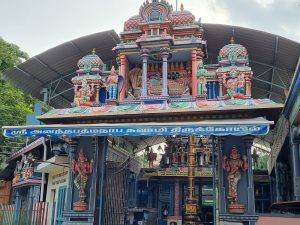
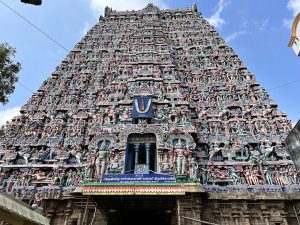
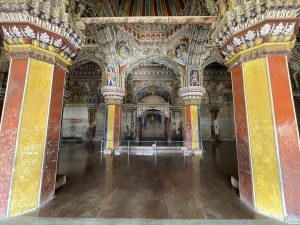
The complex is constructed in the traditional Dravidian style of temple architecture, characterized by solid granite stonework and detailed carved plaster. As you approach down Rasappa Chetty Street, your gaze meets the multi-tiered Rajagopuram, the ceremonial gateway tower that rises high above the street canopy. Adorned with sculptural representations of sacred figures, this gateway leads you from the busy commerce of Rattan Bazaar into the cooler, sheltered stone halls of the interior.
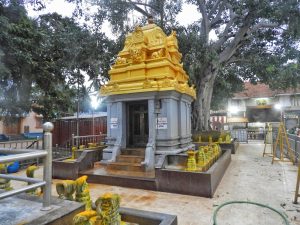
At the centre of the temple stands the moolasthanam, the innermost sanctum sanctorum. Here, Lord Murugan is worshiped under the name Kandaswamy, or Muthukumaraswamy, represented in dark polished stone flanked by his consorts, Valli and Deivayanai. Close to the sanctum stands the utsavar, the sacred bronze processional deity of Sri Muthukumaraswamy, which is dressed in festive silks and carried through the streets during annual festivals.
As you walk along the circumambulatory path around the sanctum, you will encounter several secondary shrines that form integral parts of the complex. There are dedicated spaces for Kulakkarai Vinayakar, Lord Natarajar, Kashi Viswanathar, and Visalakshi Amman, as well as a peaceful shrine commemorating Saint Ramalinga Adigal himself.
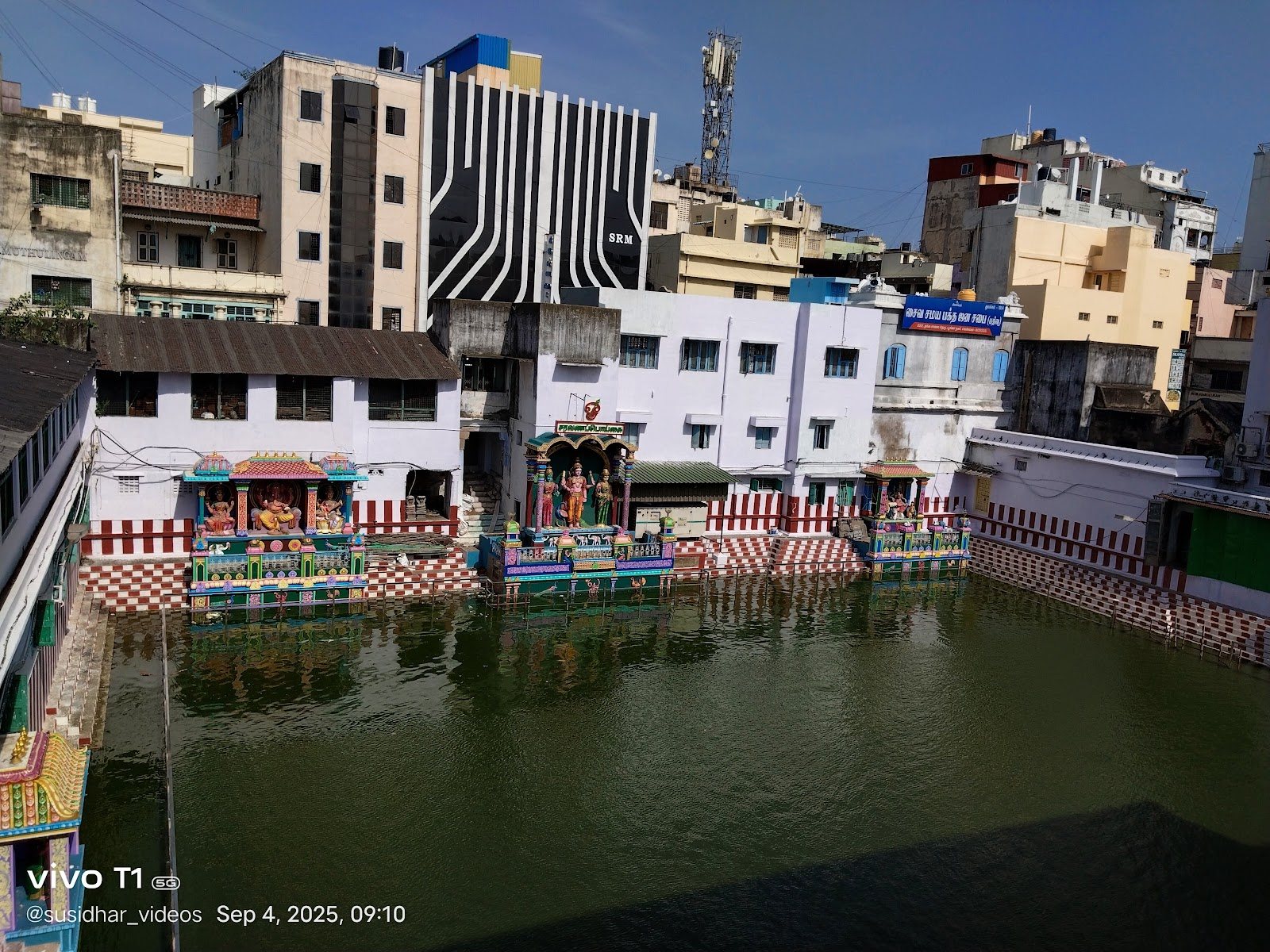
Bordering the courtyards is the sacred water tank known as Saravana Poigai, which adds a refreshing openness to the complex. The temple also preserves a remarkable silver car, an intricate ceremonial chariot finished in silver that is pulled through the streets during peak festival days.
Stepping inside and witnessing daily rituals
Walking inside the temple is an experience that engages all your senses. You step across cool stone flagstones polished smooth by centuries of bare feet, surrounded by the fragrance of fresh jasmine blossoms, smouldering camphor, and burning sesame oil lamps. Devotees move in a customary clockwise direction around the shrines before approaching the main sanctum for darshan, the blessed sight of the deity. General admission is free of charge, though nominal fees apply if you wish to purchase special darshan tickets or book specific archana offerings.
While regular pujas take place throughout every morning and evening, Thursdays hold a unique spiritual significance for the local community. Every Thursday evening, worshipers gather in the pillared mandapam for the communal chanting of Saint Vallalar’s Arutperunjothi Agaval, followed by the sacred Jothi Darshanam light ceremony. Listening to the resonant cadence of the verses echoing off the stone pillars is deeply grounding.
Local tip: If you plan to attend the Thursday evening Jothi Darshanam, aim to arrive by 6:00 PM so you can view the shrines peacefully before the chanting begins.
The temple calendar also includes major seasonal festivals that draw crowds from all over Chennai. During Aadi Krithigai, the magnificent silver car procession takes place through the surrounding neighbourhood. Kandha Sashti is observed with deep solemnity, featuring the ritual reenactments of Soorasamharam and the celebratory divine wedding, Thirukalyanam. Other prominent festivals include Thai Poosam, Panguni Uthiram, and Vaikasi Visakam.
Etiquette and what to wear
Muthukumarasamy Temple is a living place of daily worship where local families gather to pray, chant, and find inner peace. Keeping a calm and respectful presence helps preserve this sacred atmosphere for everyone. Taking a moment to understand and observe the customary practices will ensure you feel entirely welcome and at ease throughout your visit.
- Footwear: Remove your shoes, sandals, or socks before passing through the outer gateway. A monitored shoe stand is available near the entrance where you can leave your footwear safely for a small tip.
- Dress code: Modest, conservative attire is mandatory. Men should wear traditional dhotis, pyjamas, or modest trousers paired with a shirt. Women should wear sarees, half-sarees, or salwar kameez churidars with a dupatta. Western casual clothing such as shorts, mini-skirts, and sleeveless shirts are discouraged or prohibited.
- Photography: Taking photographs or recording videos inside the inner sanctum sanctorum is strictly forbidden. Please keep your mobile phone on silent mode and pocketed while walking inside the prayer halls.
- Courtyard access: Respectful visitors of all faiths and backgrounds are permitted within the open courtyards and pillared mandapams. Direct access near the innermost sanctum during specific sacred ceremonies follows standard HR&CE guidelines.
Best time to go and how long to stay
The temple follows the customary two-session daily schedule seen in ancient temples across Tamil Nadu. The doors open early in the morning and close around midday, reopening in the late afternoon for evening services. Because festival observances can alter the standard timings, checking local announcements on festival dates is always sensible.
| Session | Typical Timings | Experience |
|---|---|---|
| Morning Session | 6:00 AM to 12:00 PM / 12:30 PM | Cooler air, quiet corridors, and morning cleansing pujas |
| Evening Session | 4:00 PM to 9:00 PM / 9:45 PM | Lit oil lamps, evening aarti, and traditional music |
| Thursday Evening | Around 6:00 PM onwards | Recitation of Vallalar hymns and Jothi Darshanam |
You should allow roughly 45 minutes to an hour for your visit. This gives you plenty of unhurried time to complete the parikrama walk around the sanctum, visit the secondary shrines, view the Saravana Poigai water tank, and sit quietly in the pillared mandapam to take in the meditative setting.
Getting there from Pondicherry and where to stay nearby
If you are starting your journey from Pondicherry, Chennai sits roughly 150 kilometres to the north. Travelling by private car or taxi along the East Coast Road takes about 3.5 to 4 hours, depending on regional traffic conditions as you approach the city limits. Regular express buses run throughout the day between Pondicherry and Chennai’s primary transit terminals, providing an economical alternative.
Once you arrive in Chennai, the temple is located on Rasappa Chetty Street in Park Town, near Rattan Bazaar. It is very close to key transport hubs: Chennai Central railway station (Puratchi Thalaivar Dr. M.G. Ramachandran Central) as well as the Chennai Park and Park Town local stations are only about 1 to 2 kilometres away. You can easily reach the temple gates from any of these stations with a short auto-rickshaw ride.
If you are flying in, Chennai International Airport is located roughly 20 kilometres southwest of the temple. For overnight accommodations, the Park Town and Central station neighbourhoods feature many practical transit hotels, while the business hotels along Anna Salai provide modern comfort just a short drive away. If you enjoyed the heritage atmosphere of Sri Vedapureeswarar Temple during your time in Pondicherry, spending a morning here will feel just as rewarding.
Nice to combine with
Park Town and adjoining George Town make up one of Chennai’s oldest municipal sectors, filled with historical landmarks, traditional markets, and colonial-era public architecture. You can easily pair your temple visit with other interesting sites within a short radius:
- Chennai Sri Ekambareswarar Temple and Chenna Kesava Perumal Temple: Historic twin temples located nearby in the same neighbourhood, known for their peaceful courtyards.
- Fort St. George and St. Mary’s Church: The historic seventeenth-century fortified citadel housing the oldest surviving British church in India.
- Ripon Building and Victoria Public Hall: Majestic neoclassical civic buildings located just west of Chennai Central railway station.
- Marina Beach: A broad sandy shoreline stretching along the Bay of Bengal, roughly 4 kilometres away, ideal for an evening stroll after a busy day in the old town.
What recent visitors say
A quick, honest snapshot from recent Google reviews, so you know what to expect before you go.
What people loved
★★★★★ Anandarajan · in the last week
“One of the good temple murugan lord blessed”
★★★★★ Raj · 3 months ago
“Finally, after such a long-awaited plan, I had the blessing of visiting this sacred temple. 🙏✨ The moment I stepped inside, I felt an incredible sense of peace and positive energy that words can hardly describe. The divine atmosphere…”
★★★★★ Lokesh · 8 months ago
“I have been visiting Kandhakottam Sri Kandaswamy Temple since my childhood, and for the past 5 years I have been coming here every Tuesday without fail. This temple holds a very deep personal and spiritual connection for me. This is a very…”
Reviews via Google Maps. Opinions are those of their authors.
Frequently asked questions
What is the admission fee for Muthukumarasamy Temple?
General entry to the temple is completely free for all visitors. The administration charges nominal fees only if you choose special darshan lines or wish to book dedicated puja rituals.
Can non-Hindu visitors enter the temple?
Yes, respectful visitors of all faiths are welcome to walk through the outer courtyards and pillared mandapams. Direct access to the innermost sanctum during specific sacred ceremonies follows standard temple guidelines.
How far is the temple from Chennai Central railway station?
The temple is located very close to Chennai Central railway station, roughly 1 to 2 kilometres away. A quick auto-rickshaw ride from the station will drop you right at the street entrance in roughly ten minutes.
Is photography allowed inside the temple?
Photography and videography are strictly prohibited inside the inner sanctum sanctorum. Visitors are asked to keep their cameras packed away and mobile phones switched to silent mode while walking through the prayer halls.
Find it
Address: 44, Rasappa Chetty St, Rattan Bazaar, Park Town, Chennai, Tamil Nadu 600003, India
You might also like
- Where to stay in Pondicherry
- Churches, temples, mosques and ashrams in Pondicherry
- Things to do in Pondicherry
- Visiting Parthasarathy Temple in Triplicane Chennai
- Visiting Sri Parthasarathyswamy Temple in Chennai
- Visiting Santhome Cathedral Basilica in Chennai: A Guide
- Visiting Shri Ashtalakshmi Temple in Chennai: A Guide