A journey to Nagaraja Temple brings you right to the physical and spiritual heart of Nagercoil. The city itself owes its name to this ancient shrine, where quiet courtyards and ancient trees welcome travellers and pilgrims arriving from across South India. Dedicated to the Serpent King, it is a serene place that carries a distinct atmosphere from the moment you step through the main entrance.
If you are travelling down towards the southern tip of Tamil Nadu from Pondicherry, this temple offers a gentle pause. Its architecture and daily traditions reflect centuries of shared culture between Tamil Nadu and Kerala. The simple presence of sand, stone serpent carvings, and open skies makes an impression that stays with you long after you leave.
At a glance
| Best time of day | Early morning between 6:00 AM and 8:00 AM |
|---|---|
| Allow | 1 to 2 hours |
| Dress | Traditional Indian attire; men remove shirts for the inner sanctum |
| Photography | Strictly prohibited inside the sanctum and inner praharams |
| From Pondicherry | roughly 560 km by road |
Why this place matters
The Arulmigu Sri Nagaraja Temple is ancient, with roots stretching back prior to the twelfth century. The very name Nagercoil translates to the temple of the Nagas. For generations, the town grew outward around this central sanctuary. The shrine holds deep local reverence as a major center for snake worship, where people travel to pray for relief from Naga Dosham, an astrological serpent affliction, as well as chronic skin ailments.
Royal patronage shaped its physical footprint. In the sixteenth century, King Veera Udaya Marthanda Varma, ruler of Venad and Travancore, rebuilt and endowed the shrine. Tradition records that he undertook this major restoration after being cured of a persistent skin condition here. His devotion cemented the temple’s status within the wider kingdom.
Beyond its Hindu heritage, the grounds carry fascinating historical layers. Scholars and visitors note significant Jain associations across the complex. Pillar carvings and archaeological remains reflect a past where Jain monks and traditions shared or influenced this sacred ground. These layered stones remind us of the peaceful coexistence and spiritual cross-pollination that defined the region over many centuries.
What you will see
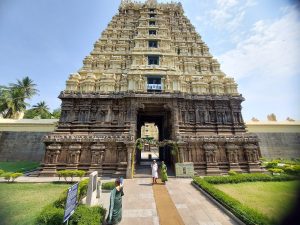
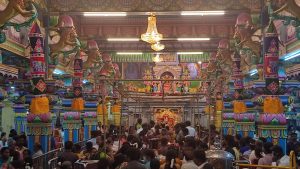
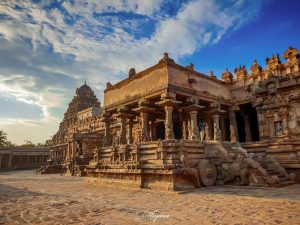
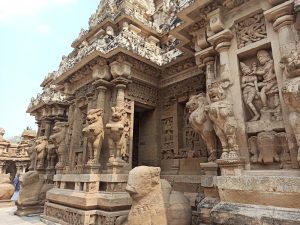
As you walk into the temple, the first thing you will notice is the regional architectural harmony. The complex exhibits a synthesis of Kerala and Dravidian styles. You will find sloping roofs, timber work, and stone gateways coming together in a way that feels organic rather than grand or imposing.
The most extraordinary feature of the entire complex is the sanctum sanctorum, or garbhagriha, of Nagaraja. Unlike the towering stone sanctums found in most major Tamil temples, this inner chamber retains a simple thatched roof made of leaves and bamboo, sitting over a floor of plain earth and sand. This humble form is kept intentionally under ancient mandate. Enshrined within is Nagaraja, represented as a five-headed cobra, often identified with Vasuki.
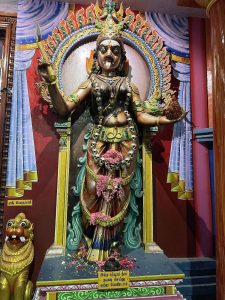
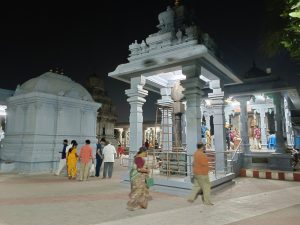
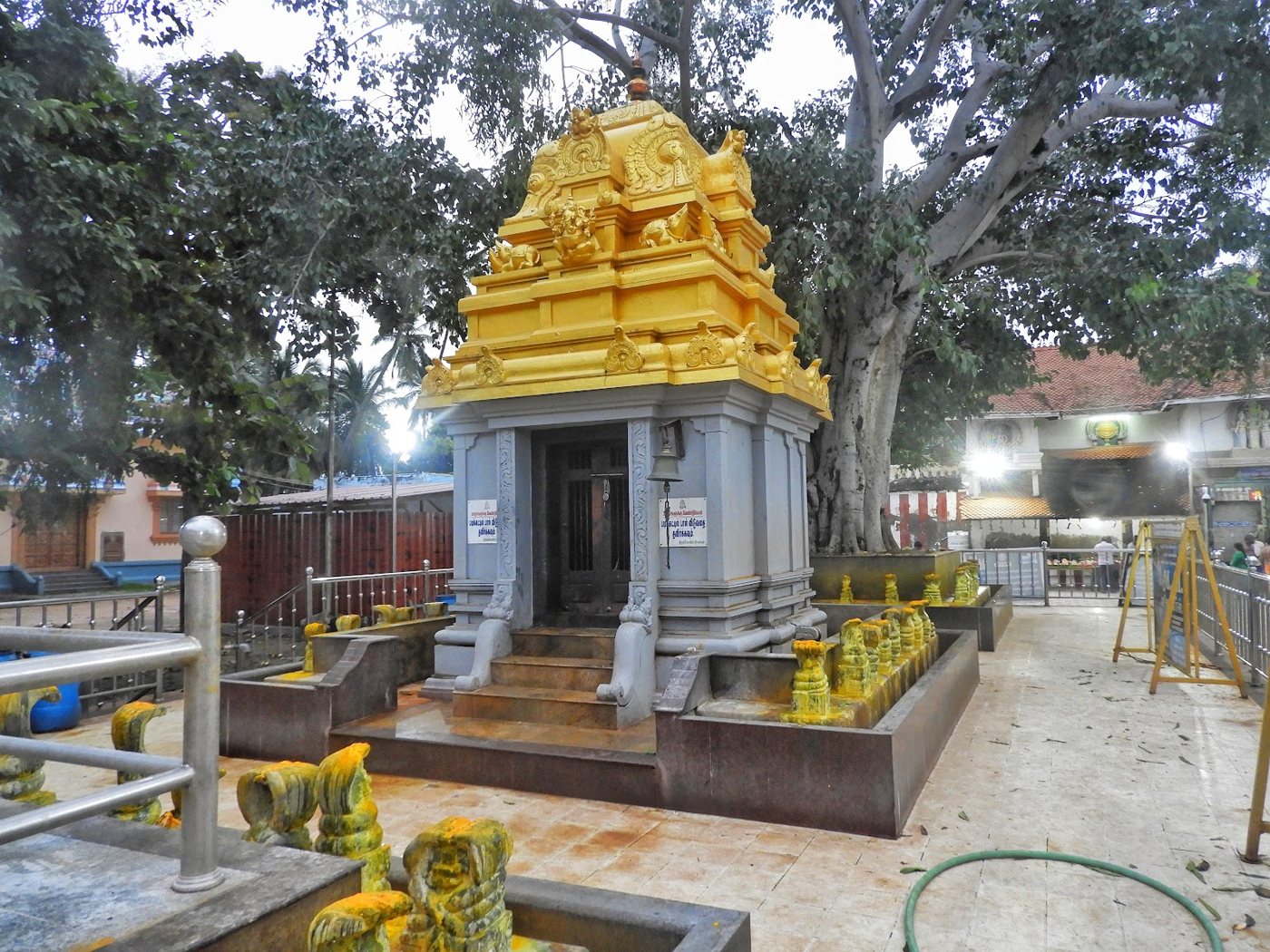
Around the main shrine, you will discover several secondary shrines. There are dedicated spaces for Lord Shiva, Lord Ananthakrishna flanked by Rukmini and Satyabhama, as well as shrines for Ganesha, Subrahmanya, and Durga. Throughout the courtyard, hundreds of consecrated stone serpent figures sit arranged under old trees and along boundary walls.
Take time to study the pillars in the mandapa halls. Look closely at the carved reliefs. Alongside familiar Hindu iconography, you can spot clear representations of Jain Tirthankaras, including Parsvanatha sheltered by a serpent hood and Mahavira seated in meditation. Nearby, the large sacred temple tank, known as the Naga Theertham, reflects the sky and anchors the outer precinct in stillness.
How a visit works
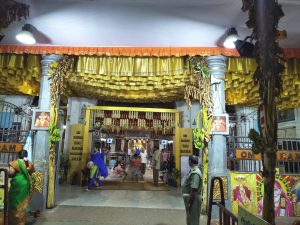
When you arrive, you will leave your footwear at the designated counter near the outer entrance before stepping through the gateway. Wash your feet at the available taps if needed. The temple complex is spacious, with stone pathways leading through shaded courtyards toward the inner halls.
Devotees queue along brass barricades to enter the inner praharam leading to the thatched sanctum. Inside, the atmosphere is quiet and reverent. Priests perform regular arati ceremonies before the five-headed deity. One unique aspect of receiving blessings here is the distribution of sacred wet sand from the sanctum floor as prasadam. Devotees accept a small pinch of this cool, moist earth, which is traditionally applied to the forehead or kept with reverence for healing.
After paying respects at the central sanctum, walk in a clockwise direction through the corridors to visit the shrines of Shiva, Ananthakrishna, and Durga. You will see people offering milk, turmeric, and flowers to the stone serpent statues in the courtyard. You can sit quietly along the mandapa steps or near the edge of the Naga Theertham to absorb the quiet rhythm of morning prayers before heading back out into the town.
Etiquette and what to wear
Because this is an active and traditional place of worship, adhering to the established dress code is essential for entry. The temple administration maintains traditional rules:
- Men are required to wear a dhoti or formal trousers. You must remove your upper shirt and vest before entering the inner sanctum areas.
- Women should wear sarees, half-sarees, or salwar kameez sets with a dupatta properly draped.
- Casual modern attire such as shorts, mini skirts, sleeveless tops, and beachwear is strictly not allowed.
- Footwear must be left outside at the entrance counters.
Photography and videography are strictly prohibited inside the sanctum sanctorum and the inner praharams. Please keep your mobile phone on silent and stored away in your bag. Entry regulations for non-Hindu visitors can vary and remain subject to local temple administration guidance; if you are an international visitor, check politely with the staff at the entrance office before entering the inner sanctum.
Local tip: Carry a light cloth bag to hold your upper shirt while walking through the inner sanctum, as you will need to carry it in your hands until you step back out into the open courtyard.
Best time to go and how long to stay
The temple generally opens daily from 6:00 AM to 12:30 PM, then closes for the afternoon before reopening from 6:30 PM to 8:30 PM. On select auspicious days, the doors open earlier, around 4:30 AM. Timings can shift during major festivals, so arriving early in the morning guarantees a cooler, calmer experience.
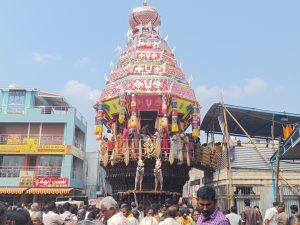
The annual ten-day Thai Brahmmotsavam is the temple’s largest festival. Celebrated during the Tamil month of Thai (falling across January and February), it brings massive crowds to witness the ceremonial temple car procession. Another notable period occurs during the Tamil month of Avani (August to September), when all Sundays draw large numbers of families from nearby villages for special offerings. Monthly Ayilyam (Aslesha) star days also see elevated numbers of devotees seeking serpent blessings.
For a standard morning visit on regular days, allow roughly one to two hours. This gives you plenty of time to wait in the queue, receive prasadam, examine the pillar carvings, and walk around the sacred tank without feeling rushed.
Getting there from Pondicherry and where to stay nearby
Nagercoil is located near the southern tip of the Indian peninsula, roughly 560 km by road from Pondicherry. If you are driving or booking a private car, the drive takes around ten to eleven hours via NH38 through Madurai and Tirunelveli. A comfortable way to travel is to take an overnight train from nearby Viluppuram Junction down to Nagercoil Junction (NCJ). The railway station is situated roughly 3 to 4 km from the temple gates, making it an easy auto-rickshaw ride into the town center.
For those arriving by air, Trivandrum International Airport (TRV) in Kerala is the closest airport, situated approximately 75 to 80 km away. Taxis and intercity buses run regularly from Trivandrum to Nagercoil, taking roughly two to three hours depending on coastal traffic.
Nagercoil city center offers clean, modest hotels geared toward business travellers and pilgrims. If you prefer seaside accommodation, you can easily base yourself in Kanyakumari, about 20 km to the south, where you will find a broader range of beachfront hotels and guest houses.
Nice to combine with
Because Nagercoil sits close to several historical and coastal landmarks, you can build a rewarding half-day or full-day excursion around your temple visit.
- Thanumalayan Temple in Suchindram: Located roughly 6 km away, this renowned temple is famous for its towering white gopuram, musical stone pillars, and unique dedication to the Trimurti (Shiva, Vishnu, and Brahma).
- Padmanabhapuram Palace: Situated roughly 15 km northwest, this fourteenth-century wooden palace showcases master craftsmanship in rosewood, antique furniture, and cool granite courtyards.
- Kanyakumari: Located about 20 km south, where the Arabian Sea, Indian Ocean, and Bay of Bengal converge. Visit the Vivekananda Rock Memorial, walk along the coastline, and watch the sun set over the water.
After visiting Nagaraja Temple, stop at one of the traditional vegetarian mess halls along the North Car Street or near the municipal bus stand for a light breakfast of hot idlis, vadas, and fresh filter coffee served on banana leaves.
What recent visitors say
A quick, honest snapshot from recent Google reviews, so you know what to expect before you go.
What people loved
★★★★★ Neeraj · 2 months ago
“A visit to the Nagaraja Temple, Nagercoil is a unique and spiritually enriching experience.dedicated to Nagaraja (the Serpent King), this ancient temple is known for its peaceful atmosphere and deep spiritual significance. The temple…”
★★★★★ Dr · 3 months ago
“A great temple for nsgaraja in kerala architecture Nice pleasant temple with one pond outside and one onside with huge fishes Main deity is lord magar with five heads swayambhu too Lot of sub deities Happy to be there Not much crowded”
★★★★★ Sai · 6 months ago
“Visiting Nagaraja Temple in Nagercoil was a peaceful and divine experience. The temple is well-known for its unique connection with the serpent god, and the atmosphere is calm and spiritually uplifting. As soon as I entered, I felt a sense…”
Reviews via Google Maps. Opinions are those of their authors.
Frequently asked questions
What is the entry fee for Nagaraja Temple?
General entry to the temple is completely free. There are no mandatory entry fees to walk the courtyards or join the regular darshan queue.
What is special about the prasadam given at this temple?
Devotees receive sacred wet sand collected directly from the earthen floor of the thatched sanctum sanctorum. It is considered blessed and is traditionally applied to the forehead or kept for healing.
Are men required to take off their shirts?
Yes, men are required to remove their shirts and vests before stepping into the inner sanctum areas. Traditional dhotis or formal trousers must be worn.
Can I take photographs inside the temple complex?
Photography is strictly prohibited inside the sanctum sanctorum and inner praharams. Always keep cameras and mobile phones put away while inside the worship corridors.
Find it
Address: 5CQM+288, N Car St, Ozhuginasery, Nagercoil, Tamil Nadu 629001, India