The Kailasanatha Temple stands quietly on the western edge of Kanchipuram, offering visitors a direct look into the early days of South Indian stone craft. When you travel inland from Pondicherry, leaving the coastal breeze behind, this ancient site provides a calming encounter with genuine history.
Unlike some of the larger temple compounds across Tamil Nadu, this monument feels open and grounded. Built by the Pallava dynasty over thirteen hundred years ago, it remains a special stop for anyone who appreciates classical stone carving, peaceful courtyards, and deep architectural heritage.
At a glance
| Best time of day | Early morning (6:00 AM to 8:30 AM) or late afternoon |
|---|---|
| Allow | 1 to 1.5 hours |
| Dress | Modest clothing covering shoulders and knees; shoes off at entrance |
| Photography | Permitted in courtyards; tripods require prior ASI clearance |
| From Pondicherry | roughly 120 km (about 3 to 3.5 hours) by road |
Why this place matters
The story of this sanctuary dates back to the late seventh and early eighth centuries CE, between roughly 685 and 705 CE. King Narasimhavarman II, also known as Rajasimha, commissioned the project, and his son, Mahendravarman III, completed the work. Today, it stands as the oldest surviving stone temple in Kanchipuram.
Before this complex arose, much of South Indian religious building consisted of rock-cut cave shrines or perishable structures of wood and brick. Kailasanatha marked a historic turning point. It established the foundational blueprint for structural stone temples in the Dravidian tradition, shaping centuries of regional design that followed.
Dedicated to Lord Shiva as Kailasanatha, meaning the Lord of Mount Kailash, the site holds immense artistic and cultural value. The Archaeological Survey of India (ASI) maintains and protects the entire complex as a monument of national importance, keeping its ancient stonework safeguarded for future generations.
What you will see
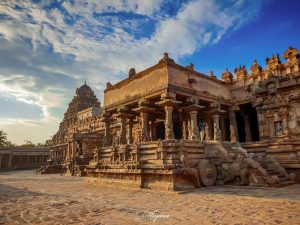
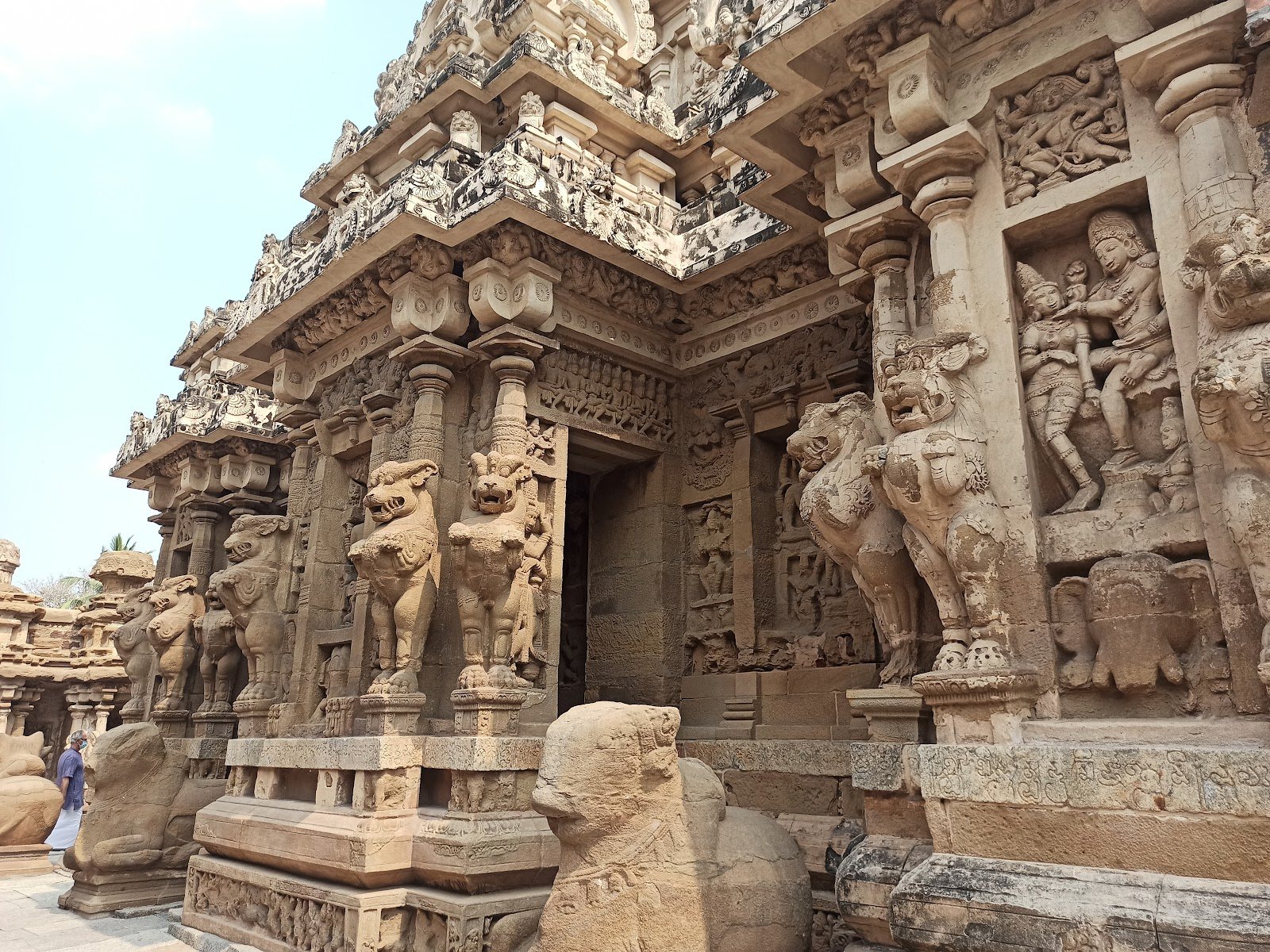
As you pass through the main entrance, the layout unfolds with remarkable symmetry. The builders constructed the monument predominantly out of soft sandstone resting on a durable granite foundation. Over the centuries, weather and natural elements have softened some of the carved edges, lending the pale stone a gentle, earthen texture under the morning sun.
At the center rises the stepped pyramidal tower, or vimana, resting directly above the main sanctum. Its tiers feature intricately carved figures of deities, celestial attendants, and decorative scrollwork. Encircling this primary tower is a rectangular courtyard lined with 58 small secondary shrine cells. Each cell contains sculptures portraying various forms of Shiva and Parvati, along with other divinities.
Pillars throughout the complex rest upon rearing yalis, the mythical lion-beasts that serve as the hallmark of Pallava architecture. Inside the primary sanctum sits a massive, sixteen-faceted Shiva Lingam carved from polished black granite. Behind the lingam and in several exterior niches, you can spot prominent Somaskanda reliefs, which depict Shiva and Parvati seated alongside child Skanda.
If you look closely inside the perimeter cells, you will discover faint traces of eighth-century Pallava-era frescoes and plasterwork that once coated the walls. Another unique feature is the narrow pradakshina, an inner circumambulatory passage encircling the sanctum. Walking through this tight corridor traditionally symbolizes the journey of the soul through birth, life, and ultimate spiritual liberation.
How a visit works
Visiting the temple is an easy, low-stress experience. Admission is completely free, and you do not need to buy any entry tickets. The gates open daily from 6:00 AM to 12:00 PM in the morning, and again from 4:00 PM to 7:30 PM in the afternoon and evening. Hours can shift slightly on festival days, so checking locally if your visit coincides with a celebration is a good practice.
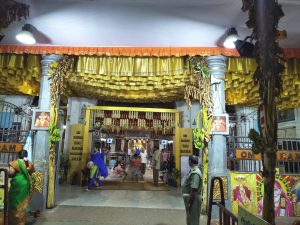
Because the monument functions as both a protected archaeological site and an active place of prayer, you will see a gentle mix of casual sightseers and dedicated worshippers. Resident priests carry out traditional rituals inside the sanctum, and you are welcome to watch quietly from the pillared hall.
You are free to wander the perimeter walkway, examine the carvings at your own pace, and sit on the open stone paving. The compound rarely feels rushed, allowing you to appreciate the craftsmanship without feeling herded along.
Local tip: The sandstone floor warms up quickly once the sun climbs high. Arriving closer to opening time at 6:00 AM lets you walk comfortably barefoot across the open courtyard.
Etiquette and what to wear
Showing care and consideration will make your time here pleasant and simple. You must leave your shoes outside the temple enclosure before walking in. Shoe-drop counters operate near the entrance where attendants will look after your footwear for a small coin tip.
Modest clothing is expected. Choose attire that covers your shoulders and falls below your knees. Loose cotton pants, maxi skirts, salwars, or kurtas are sensible choices, particularly during warm days. Visitors of all religions and nationalities are welcome throughout the complex, including the courtyard and shrine areas.
Handheld photography is allowed across the open courtyards and around the perimeter structures. When taking pictures, be discreet near individuals engaged in worship. If you plan to use professional camera gear or tripods, you will need to arrange formal clearance from the Archaeological Survey of India ahead of time.
Best time to go and how long to stay
The ideal time to arrive is between 6:00 AM and 8:30 AM. In the early morning hours, the air is cool, the sandstone reflects a soft amber glow, and the courtyard stays quiet. The late afternoon period between 4:30 PM and sunset is another comfortable window for a visit.
Plan to spend between 1 and 1.5 hours on site. This timeframe gives you plenty of opportunity to study the fifty-eight secondary shrines, inspect the yali pillars, take photographs, and spend a quiet moment in the pillared hall.
The atmosphere changes dramatically during Maha Shivaratri, the temple’s largest yearly festival. Thousands of devotees gather for night-long prayers and sacred ceremonies. If you choose to visit during this festival, expect long queues, active crowds, and an intense devotional setting.
Getting there from Pondicherry and where to stay nearby
Kanchipuram is situated northwest of Pondicherry, roughly 120 km away. A drive by private car or taxi takes about 3 to 3.5 hours, traveling inland via Tindivanam and Vandavasi. Direct regional buses also run from the Pondicherry central bus stand to Kanchipuram, though a hired car offers the convenience of stopping for fresh tea and returning on your own schedule.
The temple address is 26, Kailasanathar Temple Road, Pillaiyarpalayam, located about 2.5 km west of the Kanchipuram town center. If you are traveling through the wider transport network, Kanchipuram Railway Station is roughly 3 km away, while Chennai International Airport is approximately 65 to 70 km to the northeast.
While many travellers make the trip as a single-day excursion from Pondicherry, spending one night in Kanchipuram allows you to explore multiple historic shrines without rushing. Clean, comfortable budget hotels and traditional lodges are available close to the central bus stand and railway station.
Nice to combine with
Kanchipuram is celebrated across Tamil Nadu for its remarkable concentration of sacred architecture. You can easily link your visit to Kailasanatha Temple with several other ancient structures located close by in the town:
- Ekambareswarar Temple (approximately 2 km away), known for its towering entrance gateway and vast halls
- Kamakshi Amman Temple (approximately 2.5 km away), one of the most prominent Shakti shrines in the state
- Vaikunta Perumal Temple (approximately 3.5 km away), an early Pallava temple dedicated to Vishnu with detailed historical relief panels
- Varadharaja Perumal Temple (approximately 5 km away), celebrated for its sprawling compound and detailed stone pillars
Between temple visits, step into one of the traditional vegetarian mess halls near the center of town for an authentic South Indian meal served on a fresh banana leaf. The neighborhood of Pillaiyarpalayam is also home to traditional handloom silk weaving units, where you can watch master weavers create world-famous Kanchipuram silk sarees before your journey back to Pondicherry.
What recent visitors say
A quick, honest snapshot from recent Google reviews, so you know what to expect before you go.
What people loved
★★★★★ Tarakaram · in the last week
“One of the Ancient Temples in Kanchipuram. Inside the temple there are two dwara named Punarapi Maranam and Punarapi Jananam. There is a thin space where we need to pass people who are little chubby please don’t try it. Thin people can.”
★★★★★ Be · in the last week
“Pallava architecture. It is a thrilling experience of going around pragaram of Shiv lingh ( Main deity). We need to scroll , walk and again scroll for finishing one round .”
★★★★★ Sumanth · in the last week
“A finest masterpiece of architecture temple ever!!”
Reviews via Google Maps. Opinions are those of their authors.
Frequently asked questions
Is there an entry fee to visit Kailasanatha Temple?
No, entry to the temple is completely free. There are no tickets required for visitors or pilgrims.
Are non-Hindu visitors allowed to enter?
Yes. Visitors of all nationalities and religious backgrounds are permitted throughout the monument and courtyard complex.
Can I take photos inside the temple?
Photography is allowed in the open courtyards and around the perimeter structures. However, tripods and commercial equipment require prior written permission from the Archaeological Survey of India.
How far is the temple from Kanchipuram Railway Station?
The temple is located roughly 3 km from Kanchipuram Railway Station. You can easily reach it in about ten to fifteen minutes using a local auto-rickshaw.
Find it
Address: 26, Kailasanathar Temple Rd, Pillaiyarpalayam, Kanchipuram, Tamil Nadu 631502, India
You might also like
- Where to stay in Pondicherry
- Churches, temples, mosques and ashrams in Pondicherry
- Saneeswarar Temple
- Sri Aurobindo Ashram
- Sacred Heart of Jesus Church
- Things to do in Pondicherry
- Visiting Varadaraja Perumal Temple in Kanchipuram
- Visiting the Kamakshi Amman Temple in Kanchipuram
- Guide to Ekambaranathar Temple in Kanchipuram