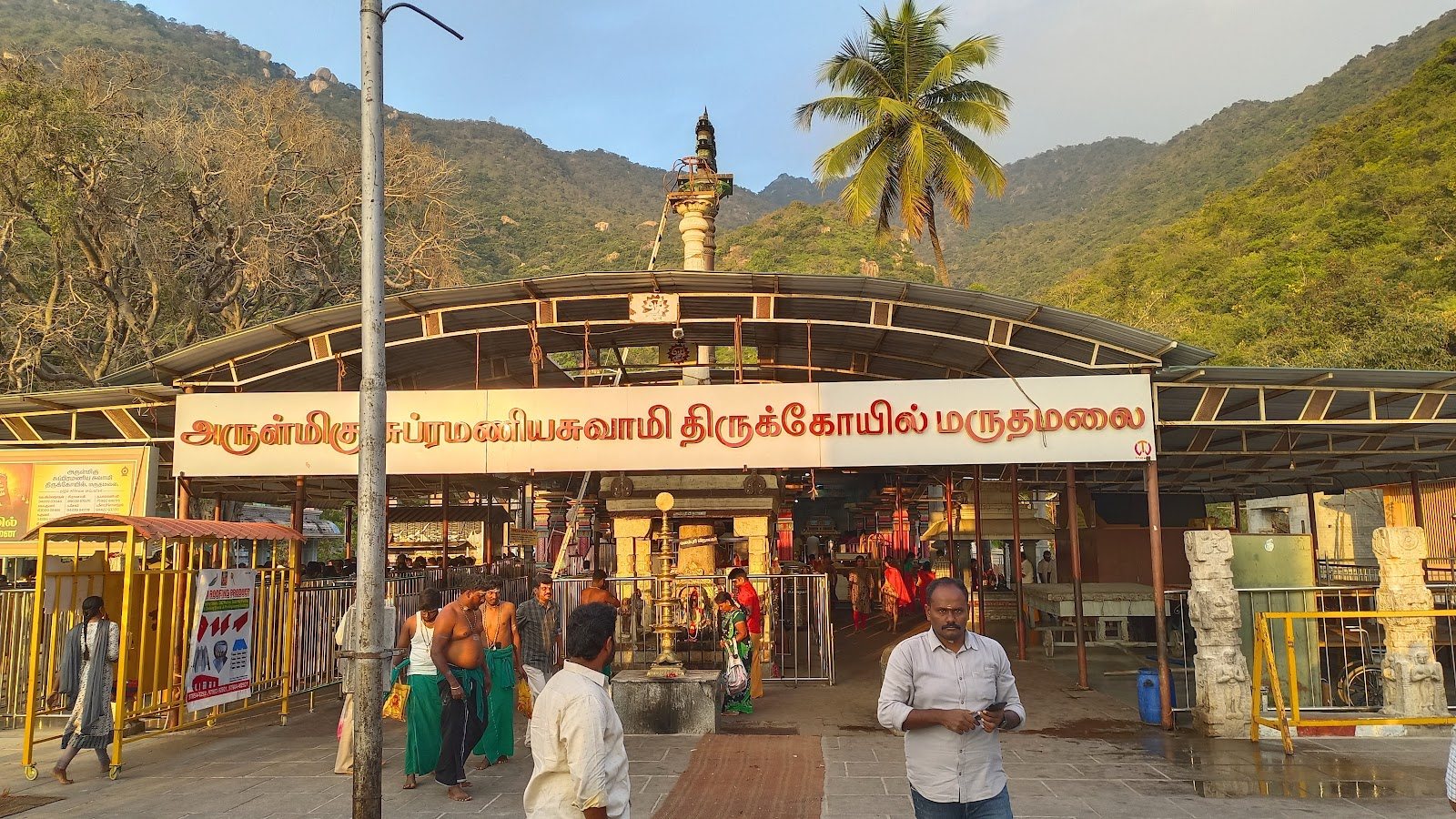
Marudhamalai Temple rises above the plains on a granite hill in the Western Ghats, located just outside Coimbatore. Dedicated to Lord Murugan, it has welcomed pilgrims for many generations who come to seek blessings, take in the sweeping views of the surrounding countryside, and enjoy the clean mountain breeze carrying the scent of native trees.
If you are travelling west across Tamil Nadu from Pondicherry, this hill shrine makes an enriching stop. The atmosphere combines deep quiet, classical stone architecture, and an easygoing pace that allows you to slow down and experience the rhythm of daily temple life.
At a glance
| Best time of day | Early morning or late afternoon |
|---|---|
| Allow | 2 to 3 hours |
| Dress | Strict conservative attire (dhoti, pyjama, saree, churidar) |
| Photography | Strictly prohibited inside inner complex and sanctum |
| From Pondicherry | Roughly 380 km by road (about 7 to 8 hours) |
The story and significance of the hill shrine
The sanctuary sits at an elevation of roughly 600 feet on an outcrop of the Western Ghats. Its spiritual heritage reaches back to the Sangam period, with major stone construction carried out under Tamil rulers in the 12th century. Over subsequent centuries, further enhancements were added during both the Pandya and Nayaka periods.
The hill gets its name from the native Marudham, or Arjuna, trees that grow on its slopes. These trees have long been valued in traditional medicine, and the hillside air is believed by devotees to carry healing qualities. While Lord Murugan has six classical pilgrimage abodes known as the Arupadaiveedu, devotees widely honour this site as his seventh abode, giving it an affectionate and venerable status across Tamil Nadu.
Here, Lord Murugan is revered under several names, including Subramaniaswamy, Marudhachalamurthy, and Dhandayuthapani. The location also shares an intimate bond with Pambatti Siddhar, one of the legendary eighteen Tamil Siddhars, who meditated and attained spiritual perfection on these slopes. During the 15th century, the poet-saint Arunagirinathar visited the hill and composed verses praising the deity in his celebrated work, the Thiruppugazh.
What to see around the temple grounds
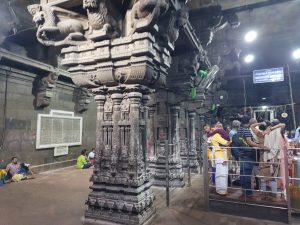
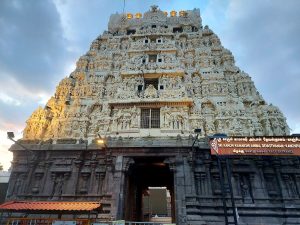
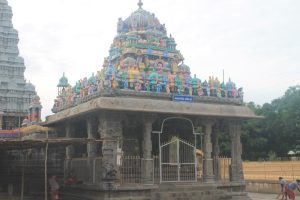
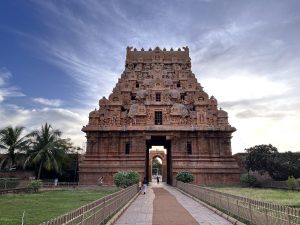
The main complex displays traditional Dravidian temple design. As you approach, you see a colourful multi-tiered Rajagopuram rising above sculpted pillared halls. Unlike many east-facing shrines across southern India, the sanctum sanctorum here faces west, which is an uncommon feature.
There are several distinctive spots to visit on the hill:
- Thaan Thondri Vinaayakar: A self-manifested Ganesha shrine situated at the foothills, where visitors traditionally pay respects before ascending.
- The Stone Stairway: A flight of roughly 700 to 800 stone steps leading directly from the base to the upper compound.
- The Ghat Road: A winding paved road that snakes up the hillside for vehicle and bus access.
- Pambatti Siddhar Cave: A sacred cave shrine, known locally as a kugai, dedicated to the sage who lived and meditated on the hill.
- Marudha Theertham: A sacred natural water spring that trickles down from the rocks, held in high regard by worshippers.
Local tip: Take a moment to seek out the path leading down to the Pambatti Siddhar Cave. The low-ceilinged stone chamber is deeply peaceful and offers a direct sense of the ascetic life that flourished here.
How a visit works from start to finish
Your journey begins at the base of the hill, known as Adivaram. If you arrive by private taxi or local bus, you will disembark here. Before you begin your climb, you must leave your footwear at the designated shoe-storage counters near the base.
To reach the summit, you have two choices. You can walk up the 700 to 800 stone steps, which takes between thirty and forty-five minutes at a steady pace, or you can board one of the regular Devasthanam shuttle buses that navigate the winding ghat road up to the temple entrance.
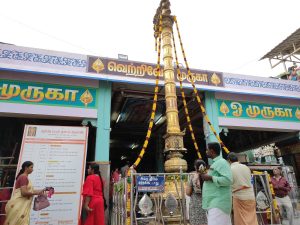
General entrance into the temple is free. You join the regular queue line that leads through the pillared mandapams toward the inner sanctum. For those on a tighter schedule or visiting during busy weekends, paid ticket counters near the entrance offer special darshan lines and facilitate specific pooja or abhishekam offerings. The exact charges for these poojas vary, so it is best to check the official board at the counter when you arrive.
Temple etiquette and dress code
This is an active place of daily worship, and visitors are expected to follow the standard regulations set by the Tamil Nadu Hindu Religious and Charitable Endowments (HR&CE) department. Dress standards are conservative and strictly enforced by temple staff at the entrances.
Men should wear traditional dhotis, pyjamas, or modest formal trousers and shirts. Women should wear sarees, half-sarees, or churidars and salwar-kameez sets paired with a dupatta. Casual modern garments like shorts, lungis, capris, and sleeveless tops are not allowed inside the grounds.
Remove your shoes before entering the temple steps or stepping onto the upper paved courtyards. Photography and video recording are strictly prohibited inside the inner complex and the sanctum sanctorum. People from all backgrounds and faiths are generally welcome to visit the premises, provided they dress appropriately and behave respectfully during the rituals.
When to go and how long to stay
The temple doors generally open daily from around 5:30 AM or 6:00 AM until 1:00 PM, and reopen in the afternoon from 2:00 PM until 8:30 PM. Exact hours for specific pooja sessions and darshan can vary, particularly during festival periods.
Planning your arrival for the early morning or late afternoon keeps you away from midday heat, especially if you plan to walk up the exposed stone steps. Allow roughly two to three hours for a complete visit, which gives you ample time to ascend, visit the shrines, view the cave, and return to the base.
The hill draws especially large gatherings during major festival seasons. If you enjoy witnessing traditional celebrations, note these key dates on the Tamil calendar:
- Thai Poosam (January to February): Celebrated with ceremonial chariot processions, milk-pot offerings, and pilgrims carrying kavadi structures.
- Panguni Uthiram (March to April): A major spring celebration honouring divine weddings.
- Skanda Sashti and Soorasamharam (October to November): Commemorates the victory of Murugan over negative forces.
- Thiru Karthigai or Karthigai Deepam (November to December): Celebrated with oil lamps lit across the hillside and temple courtyards.
Getting there from Pondicherry and where to stay
Coimbatore sits on the western side of Tamil Nadu, roughly 380 km from Pondicherry. If you drive by car, the journey takes about seven to eight hours via the central highway routes crossing Villupuram, Salem, and Erode. You can also take an overnight bus or train connecting directly into Coimbatore Junction.
From Coimbatore city centre, the Marudhamalai foothills lie roughly 12 to 15 km to the west. Coimbatore Junction railway station is approximately 15 km away, while Coimbatore International Airport is roughly 25 to 27 km to the east. Public town buses leave regularly from the Gandhipuram bus terminal and Coimbatore Central Bus Stand, dropping passengers right at the Adivaram stop. Taxis and auto-rickshaws are also widely available across the city.
Because the temple is easily reached within a half-hour drive from central Coimbatore, most travellers base themselves in the city, where you will find comfortable lodging options ranging from business hotels near the railway station to quieter guesthouses on the western outskirts.
Other places to see nearby
Coimbatore and its surrounding foothills offer plenty of meaningful sights to explore once your morning visit to the shrine comes to an end. You can easily pair your trip up the hill with several respected religious sites and natural water spots across the western district:
- Perur Pateeswarar Temple: A celebrated ancient Shiva temple famed for its intricate stone carvings, located just southwest of the city centre.
- Eachanari Vinayagar Temple: A well-known temple dedicated to Lord Ganesha, situated along the southern approach to Coimbatore.
- Dhyanalinga and Isha Yoga Centre: A tranquil meditation space set against the scenic base of the Velliangiri Mountains.
- Siruvani Waterfalls and Kovai Kutralam: Scenic mountain cascades tucked away in the forested hill tracts to the west of the city.
What recent visitors say
A quick, honest snapshot from recent Google reviews, so you know what to expect before you go.
What people loved
★★★★★ Arun · a month ago
“The trek to Marudhamalai Murugan Temple was a really nice experience. Walking up the hill through the steps gives a completely different feel compared to going by vehicle or bus. The surroundings are beautiful, with greenery, fresh air and…”
★★★★★ Ashutosh · 2 months ago
“This temple, built in the 12th century, is one of many Murugan temples perched on hills throughout the region. You can enjoy stunning views of the surrounding hill range and immerse yourself in the peaceful atmosphere that has drawn…”
★★★★★ Anupam · 3 months ago
“Arulmigu Subramaniya Swamy Temple is one of the most peaceful and spiritually uplifting places to visit near Coimbatore. Located on Marudhamalai Hill, about 14 km from the city center, the temple is easily accessible by taxi or private…”
Reviews via Google Maps. Opinions are those of their authors.
Frequently asked questions
Can older travellers or young children reach the top without climbing stairs?
Yes, older visitors and small children do not need to walk the steps. The Devasthanam operates regular shuttle buses along the winding ghat road that carry passengers from the foothills right up to the main temple complex entrance.
Is photography allowed at Marudhamalai Temple?
Photography is strictly prohibited inside the inner complex and around the sanctum sanctorum. You should put cameras and mobile phones away once you enter the sacred halls to respect the worshippers and staff.
How long does it take to walk up the steps?
The stone stairway consists of roughly 700 to 800 steps. Most people in reasonable health can complete the walk in thirty to forty-five minutes, depending on how frequently they stop to rest and admire the view.
What should I wear when visiting the temple?
You must dress modestly according to regional temple rules. Men should wear a dhoti, pyjama, or formal trousers with a shirt, while women should wear a saree, half-sarees, or a churidar with a dupatta. Shorts, lungis, and sleeveless tops are strictly forbidden.
Find it
Address: Maruthamalai Sri Subrahmanya Swamy Temple Rd, Marudhamalai Adivaram, Coimbatore, Tamil Nadu 641046, India
You might also like
- Hotels in Coimbatore
- Churches, temples, mosques and ashrams in Pondicherry
- Saneeswarar Temple
- Sri Aurobindo Ashram
- Sacred Heart of Jesus Church
- Things to do in Pondicherry
- Visiting Varadaraja Perumal Temple in Kanchipuram
- Visiting Thillai Nataraja Temple in Chidambaram
- Visiting the Vellore Golden Temple: A Complete Guide