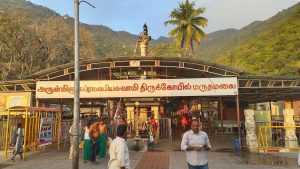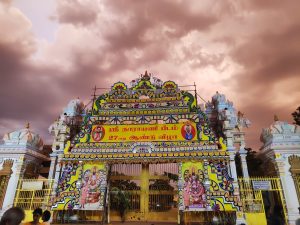
Tirupparankundram Murugan Temple stands against the sheer slope of a massive granite hill just outside Madurai, marking one of the most sacred pilgrimage sites in southern Tamil Nadu. If you are travelling down from Pondicherry across the central plains, this ancient complex offers an immediate sense of the state’s deep spiritual geography, where living worship continues inside chambers cut by hand more than twelve centuries ago.
Known formally as Arulmigu Subramaniya Swami Temple, the site draws worshippers and travellers who come to pay their respects, admire classical Pandyan and Nayaka stonework, or witness the traditional weddings held daily on the temple grounds. Here is practical advice on how to plan your morning or evening visit, navigate the queues, and appreciate the setting with proper respect.
At a glance
| Best time of day | Early morning around 6:00 AM or late afternoon after 4:30 PM |
|---|---|
| Allow | 1.5 to 2.5 hours |
| Dress | Strictly traditional: dhotis, pyjamas, or formal trousers for men; sarees, half-sarees, or salwar kameez for women |
| Photography | Strictly barred inside inner cave shrines and the sanctum; permitted in outer courtyards |
| From Pondicherry | roughly 330 km by road (about 6 to 7 hours of travel) |
Why this place matters
In Tamil culture, Lord Murugan is intimately connected with hills and landscapes. Tirupparankundram is revered as the very first of the Arupadaiveedu, the six sacred war-camp abodes of the deity spread across Tamil Nadu. According to tradition, it was on this hillside that Murugan married Deivayanai, the daughter of Indra, following his victory over the demon Surapadman. Because of this divine union, families from all over the region consider the temple an exceptionally auspicious place to solemnize marriages.
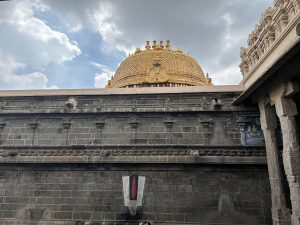
Beyond its devotional standing, the temple holds substantial historical weight. Stone inscriptions identify the core rock-hewn sanctums as products of the Early Pandya dynasty, dating back to the 8th century CE. Later regional rulers, particularly the Madurai Nayakas, added soaring gateways, broad pillared mandapams, and outer perimeter walls to enclose the hillside complex.
The sanctuary has also been celebrated by Tamil poet-saints through the centuries. Nakkeerar praised the hill in his classical work Tirumurukarruppatai, and the 15th-century poet Arunagirinathar composed songs for it in his celebrated Thiruppugazh collection. When you stand in the stone corridors, you are walking through poetry and history that local residents have sustained uninterrupted for generations.
What you will see
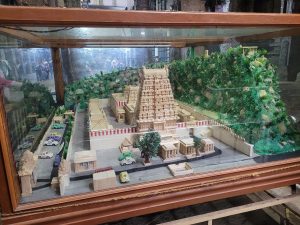
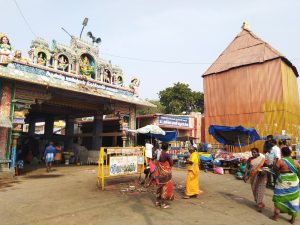
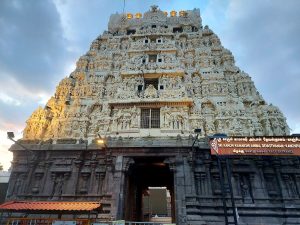
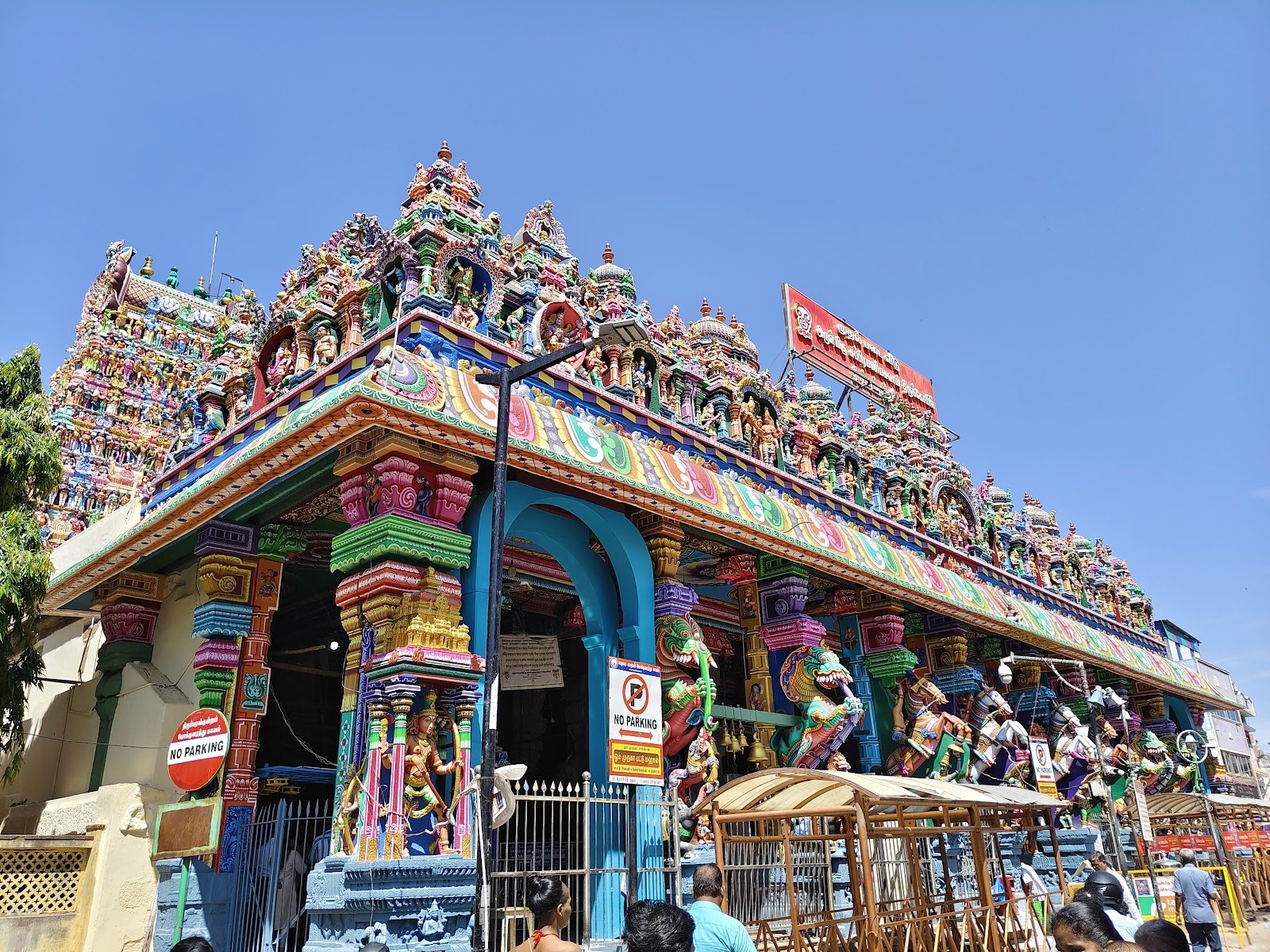
As you approach along Periya Ratha Veethi, the temple announces itself through a massive Rajagopuram that rises roughly 150 feet into the air. This multi-tiered tower is covered in detailed plasterwork figures illustrating scenes from Hindu sacred stories. Passing beneath it leads you away from the heat of the town into cool stone corridors.
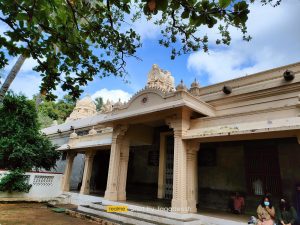
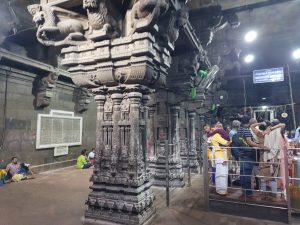
The outer spaces contain vast pillared halls, notably the Kambathadi Mandapam and the Asthana Mandapam. Here, the granite pillars feature carved figures of warriors, celestial attendants, and deities created during the Nayaka era. Each column rewards a slow look; the stone has been polished smooth by centuries of devotees touching the carvings as they pass.
The heart of the temple, however, is hollowed straight into the living rock of the hill. Unlike typical temple designs where a single main deity occupies the central shrine, this rock-cut chamber contains five major deities carved into the stone face: Murugan with Deivayanai, Shiva as Parangirinathar, Vishnu as Pavala Kanivai Perumal, Durga, and Vinayaka. Remarkably, Shiva and Vishnu are positioned facing one another, an uncommon arrangement in historic South Indian temple layout.
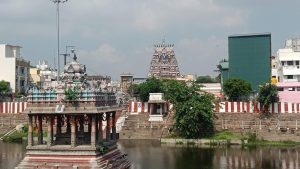
Outside the stone halls, you will find the Saravana Poigai, a sacred pond fed by the surrounding hill catchment. Worshippers gather around its stone steps in the early mornings, often purchasing puffed rice or grain to feed the schools of fish swimming near the surface.
Local tip: Take a few quiet minutes near the steps of Saravana Poigai before entering the queue. The breeze off the water cools the stone paths, and watching devotees feed the fish gives you a gentle glimpse into local routine.
How a visit works
Visits begin at the footwear stalls near the base of the Rajagopuram, where you must leave your sandals or shoes before stepping onto the stone pavement. The temple operates on a standard two-session daily schedule, generally opening at 5:30 AM and closing its doors for the afternoon around 1:00 PM. It reopens at 4:00 PM and remains active until 9:00 PM, though these times can shift slightly on major festival days.
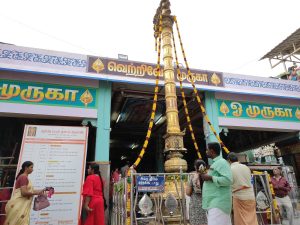
Upon entering, you will find two main paths toward the inner rock-cut sanctum: a free general darshan line and separate special queues accessed by paying a nominal ticket fee at an official counter. On normal weekday mornings, the general line moves at a steady pace, usually taking 30 to 45 minutes to reach the inner sanctum. On weekends, auspicious wedding dates, and monthly Sashti days, queues can take well over an hour or two. If you have limited time, purchasing a special darshan pass is a sensible choice.
As the line winds inward, the ceilings lower and the air turns noticeably cooler against the raw granite. Inside the sanctum, priests offer camphor flame and holy ash (vibhuti) before the seated image of Subramanya Swamy and Deivayanai. You simply fold your hands in respect, accept the prasad if offered with your right hand, and continue along the one-way walkway out to the open courtyards.
| Darshan Queue Type | Approximate Wait (Weekdays) | Approximate Wait (Festivals / Weekends) | Fee |
|---|---|---|---|
| General Entry Line | 30 to 50 minutes | 1.5 to 3 hours | Free |
| Special Entry Line | 15 to 30 minutes | 45 to 90 minutes | Nominal token fee at counter |
Etiquette and what to wear
This temple observes strict standards regarding dress and personal conduct. Security personnel and temple attendants monitor the entrance gates, and visitors in non-compliant attire will be turned away. Modest traditional attire is required for all guests:
- Men should wear a traditional dhoti (veshti), simple pyjamas, or formal trousers paired with a decent shirt. Shorts, track pants, and sleeveless undershirts are prohibited.
- Women should wear sarees, half-sarees, or salwar kameez sets with a dupatta properly draped across the shoulders. Western clothes, skirts, and sleeveless tops are not accepted.
- Footwear of any kind must be deposited at the marked stalls outside the outer gopuram before stepping into the temple grounds.
- Mobile phones must be kept silenced or switched off. Photography and videography are strictly prohibited inside the cave enclosures and the sanctum.
Non-Hindu visitors are welcome to explore the outer courtyards and the pillared mandapams to view the historical carvings. However, access into the innermost rock-cut sanctum may be restricted to practicing Hindus. Always follow the directions posted on boards or given by temple supervisors at the barricades.
Best time to go and how long to stay
The most pleasant conditions occur during the cooler winter months from November through February, when walking barefoot on outdoor stone flags is easy even in mid-morning. If you visit between April and June, daytime temperatures around Madurai can become intense, making early morning arrivals essential.
Aim to arrive either between 6:00 AM and 7:30 AM or around 4:30 PM. The morning light strikes the outer Rajagopuram beautifully, and the granite floors have not absorbed the heat of the sun. Allow roughly one and a half to two hours for a calm, complete visit, which gives you adequate time to walk through the mandapams, sit near the pond, and complete your darshan without rushing.
If you wish to experience the temple in celebration, the annual Panguni Uthiram festival (falling around March or April) celebrates the divine wedding over several days with traditional music and chariot processions. Another major event is Skanda Sashti in October or November, when thousands attend reenactments of Murugan’s victory. Keep in mind that visiting during these events means standing in long queues and navigating crowded streets.
Getting there from Pondicherry and where to stay nearby
If you are starting from Pondicherry, Tirupparankundram lies roughly 330 km to the southwest, just beyond Madurai. Driving by private car or taxi takes about 6 to 7 hours, following the national highway network through Villupuram, Tiruchirappalli, and onward to Madurai bypass. Regular express buses run from Pondicherry to Madurai throughout the day and night.
Once you arrive in Madurai, reaching Tirupparankundram is straightforward. The temple is approximately 8 km southwest of Madurai city centre. You can take an auto-rickshaw or local city bus directly from Madurai Junction railway station, which takes around 20 to 30 minutes depending on street traffic. The small Thiruparankundram Railway Station is about 1 km away from the temple entrance for those taking passenger trains, while Madurai International Airport is roughly 11 km to the east.
Because Thiruparankundram functions primarily as a quiet temple settlement, most visitors find it convenient to stay in Madurai city. The central areas near the Madurai Junction station and Town Hall Road offer clean hotels, simple guest houses, and easy access to both morning transport and local dining.
Nice to combine with
Since Thiruparankundram sits on the southern edge of Madurai, it fits naturally into a broader exploration of the area’s heritage:
- Arulmigu Meenakshi Sundareswarar Temple: Located about 9 km north, this world-renowned temple complex forms the heart of Madurai and can easily be seen on the same day.
- Thirumalai Nayakkar Mahal: Roughly 9 km away, this 17th-century palace showcases grand stucco arches and high ceilings designed by the same dynasty that added to Tirupparankundram’s halls.
- Gandhi Memorial Museum: About 13 km northeast, housed in a historic Nayaka palace surrounded by peaceful gardens.
- Pazhamudircholai Murugan Temple: Situated roughly 30 km north on the forested slopes of Alagar Kovil hill, this is the sixth and final abode of Murugan, allowing pilgrims to visit two sacred camps in one trip.
Before heading back to your hotel, consider stopping at a local mess in Madurai for classic vegetarian meals served on banana leaves, or sample a glass of Jigarthanda, a traditional chilled sweet drink popular throughout the city.
What recent visitors say
A quick, honest snapshot from recent Google reviews, so you know what to expect before you go.
What people loved
★★★★★ Ajey · 2 months ago
“Arulmigu Subramaniya Swami Temple, Tirupparankundram This temple offers a truly unique and divine experience. – From the outside, you first see the historical temple entry with the hill rising behind it. – As you enter, you climb stairs…”
★★★★★ Kattrali_by_Ram · 4 months ago
“Thiruparankundram Subramanya Swamy Temple is a magnificent site where natural rock and ancient spiritual traditions meet. 1. The Legacy The First Abode: It stands proudly as the first of the Arupadai Veedu (the six sacred abodes of Lord…”
★★★★★ Dr.P.Niranjana · 5 months ago
“A visit to Thiruparankundram Murugan Temple offers a rich blend of history, spirituality, and remarkable architecture. This ancient temple, dedicated to Lord Murugan, is one of the six sacred abodes (Arupadai Veedu) and is believed to date…”
Reviews via Google Maps. Opinions are those of their authors.
Frequently asked questions
What are the daily opening hours of Tirupparankundram temple?
The temple is open every day from 5:30 AM to 1:00 PM in the morning, and from 4:00 PM to 9:00 PM in the evening. Timings can extend or alter during major annual festivals.
Can non-Hindus enter the temple?
Non-Hindus are permitted to enter the outer grounds, the pond area, and the pillared halls to admire the stone architecture. However, access inside the inner rock-cut sanctum is generally restricted to practicing Hindus.
Is parking available near the temple?
Yes, designated vehicle parking zones are located a short walking distance from the main Rajagopuram along the surrounding streets. On festival days or auspicious wedding dates, spaces fill quickly, so an early arrival is recommended.
Is photography permitted inside Tirupparankundram Murugan Temple?
Photography is strictly forbidden within the cave chambers, corridors leading to the shrines, and the inner sanctum. You may take photos of the towering exterior Rajagopuram and the outer courtyards where signs permit.
Find it
Address: 146a, Periya Ratha Veethi, Thiruparankundram, Tamil Nadu 625005, India
You might also like
- Where to stay in Pondicherry
- Churches, temples, mosques and ashrams in Pondicherry
- Saneeswarar Temple
- Sri Aurobindo Ashram
- Sacred Heart of Jesus Church
- Things to do in Pondicherry
- Vadapalani Murugan Temple: Practical Guide for Visitors
- Guide to Sri Ranganatha Swamy Temple in Srirangam
- Visiting Azhagar Temple: A Travel and Pilgrim Guide
- Visiting Parthasarathy Temple in Triplicane Chennai