The Karamadai Ranganathar Temple offers a peaceful glimpse into the long spiritual traditions of western Tamil Nadu. Situated along East Car Street in the small town of Karamadai, this historic place of worship honours Lord Vishnu through an unusual form that sets it apart from other Vaishnavite shrines across South India.
While celebrated Ranganatha temples along the Cauvery river portray the deity resting in a long reclining posture, the sanctum here houses an ancient stone where only the divine face appears. Framed by stone pillared halls and quiet temple streets, it makes a rewarding cultural stop when travelling inland from the coast.
At a glance
| Best time of day | Early morning around 6:00 AM or late afternoon from 4:30 PM |
|---|---|
| Allow | 1 to 2 hours |
| Dress | Strict traditional clothing (dhoti or trousers; saree or churidar with dupatta) |
| Photography | Strictly prohibited inside the sanctum and inner courtyard |
| From Pondicherry | roughly 370 km by road, taking about 7 to 8 hours |
Why this place matters
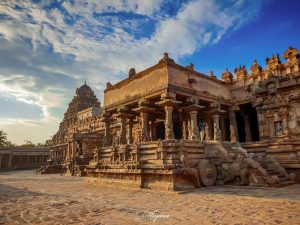
The sanctuary traces its beginnings to the Chola period between the tenth and eleventh centuries. Over the generations, regional rulers expanded the modest shrine into a fortified religious compound. Major stone walls and sculptured halls were constructed under the Madurai Nayak monarch Thirumalai Nayak, and the temple later received royal patronage and endowments from the Mysore Wadiyars.
Within the Sri Vaishnava tradition, the shrine is honoured as one of the 108 Abhimana Kshethrams and counts among the Pancharanga Kshetrams of the Coimbatore region. Regional history also links the complex to the revered theologian Sri Ramanujacharya, who stayed in Karamadai during his journey from Srirangam toward Melkote in Karnataka. Today, the complex is administered under the Hindu Religious and Charitable Endowments (HR&CE) Department of Tamil Nadu.
What you will see inside the complex
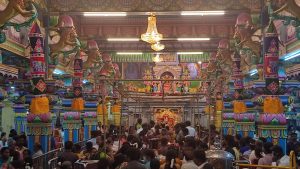
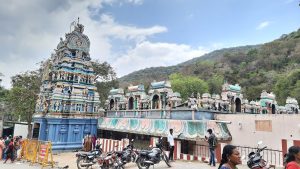
Approaching from East Car Street, you are met by a prominent east-facing, seven-tiered Rajagopuram. This towering gateway opens into a spacious complex constructed in classical Dravidian style and enclosed within high granite perimeter walls.
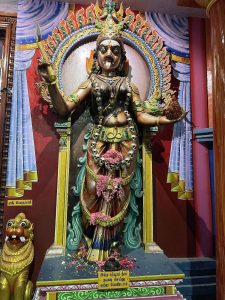
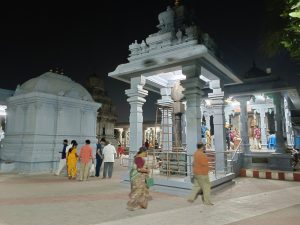
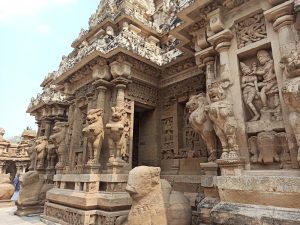
Inside the entrance tower, you walk through expansive stone mandapams supported by carved pillars. Take a few unhurried minutes to study the pillar carvings, which illustrate scenes from the Dashavatara alongside various deities and traditional guardian motifs. Out in the courtyard, you will see the tall Dwajasthambam (flag mast), the stone Balipeedam, and a shrine dedicated to Garudalwar positioned facing directly toward the inner shrine.
The temple grounds also preserve the sacred Sthala Vriksham, a Karai tree (Canthium coromandelicum), which gave the town of Karamadai its name. At the centre of the temple stands the sanctum of Lord Ranganathar. Unlike standard representations of Vishnu in the reclining Sayana posture, the Moolavar here is worshipped in a Swayambhu form, an uncarved square stone on which only the head and face of the deity emerge naturally.
Several sub-shrines surround the central sanctum:
- A dedicated shrine for Goddess Lakshmi, worshipped as Sri Ranganayaki Thayar
- Shrines honouring Bettadamman (Bhudevi) and Andal
- Individual sanctums for Venugopala and Anjaneyar
- Shrines dedicated to Sri Ramanuja and the Alvars
How a visit works
Visiting the temple is simple and follows standard South Indian worship practices. The temple opens daily from 5:30 AM to 1:00 PM, closes during the afternoon heat, and reopens from 4:00 PM to 8:30 PM. Hours can vary slightly on Saturdays and major festival dates when queues run longer.
Before passing through the main gateway, leave your shoes at the shoe stand situated outside along the street. General darshan is free of charge. If you arrive during a busy hour, you can buy a special quick-darshan ticket or an archana ticket at the official counter near the entrance.
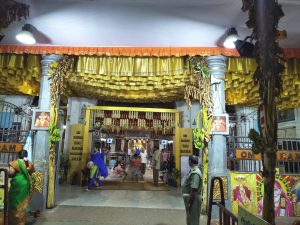
The pathway takes you past the Garuda shrine and into the covered inner courtyard. Inside, oil lamps cast a warm glow across the stone floor. Priests present the camphor flame before the sanctum, and worshippers receive sanctified water, tulsi leaves, and kumkum before walking clockwise around the inner prakaram to complete their prayers.
Etiquette and what to wear
Because the temple operates under state HR&CE regulations, visitors must strictly respect the official temple dress code. Both men and women should choose modest attire suitable for a living place of worship.
- Men must wear a traditional dhoti with an upper cloth, pyjamas, or modest formal trousers with a shirt. Shorts, sleeveless tops, and casual western lounge wear are not allowed.
- Women should wear a saree, half-saree, or salwar-churidar with a dupatta. Western casuals, short dresses, and sleeveless tops are prohibited.
- Remove all footwear before entering and leave it at the outdoor counter.
Keep your phone switched off or muted while on the premises. Photography is strictly prohibited inside the inner sanctum and inner prakaram, and you should always respect the sanctity of worshippers in prayer.
Entry policies for non-Hindu visitors can vary. Travellers of all backgrounds are generally welcome to explore the outer courtyards and admire the stone carvings, but access into the inner sanctum during rituals may be reserved for practicing Hindus. If you are unsure, ask a staff member near the counter before stepping inside.
Local tip: The stone courtyard stones can grow uncomfortably hot to walk on by late morning. Plan to arrive early to keep your barefoot walk pleasant.
Best time to go and how long to stay
The most comfortable time to visit is early in the morning between 6:00 AM and 8:00 AM, when temperatures are mild and daily rituals commence. The evening hours after 5:00 PM are equally pleasant, as lamps are lit across the corridors.
Saturdays attract substantial crowds from surrounding agricultural towns, leading to longer waiting times. If you prefer a quiet visit, aim for a weekday morning between Tuesday and Thursday.
Several annual festivals draw thousands of pilgrims to Karamadai:
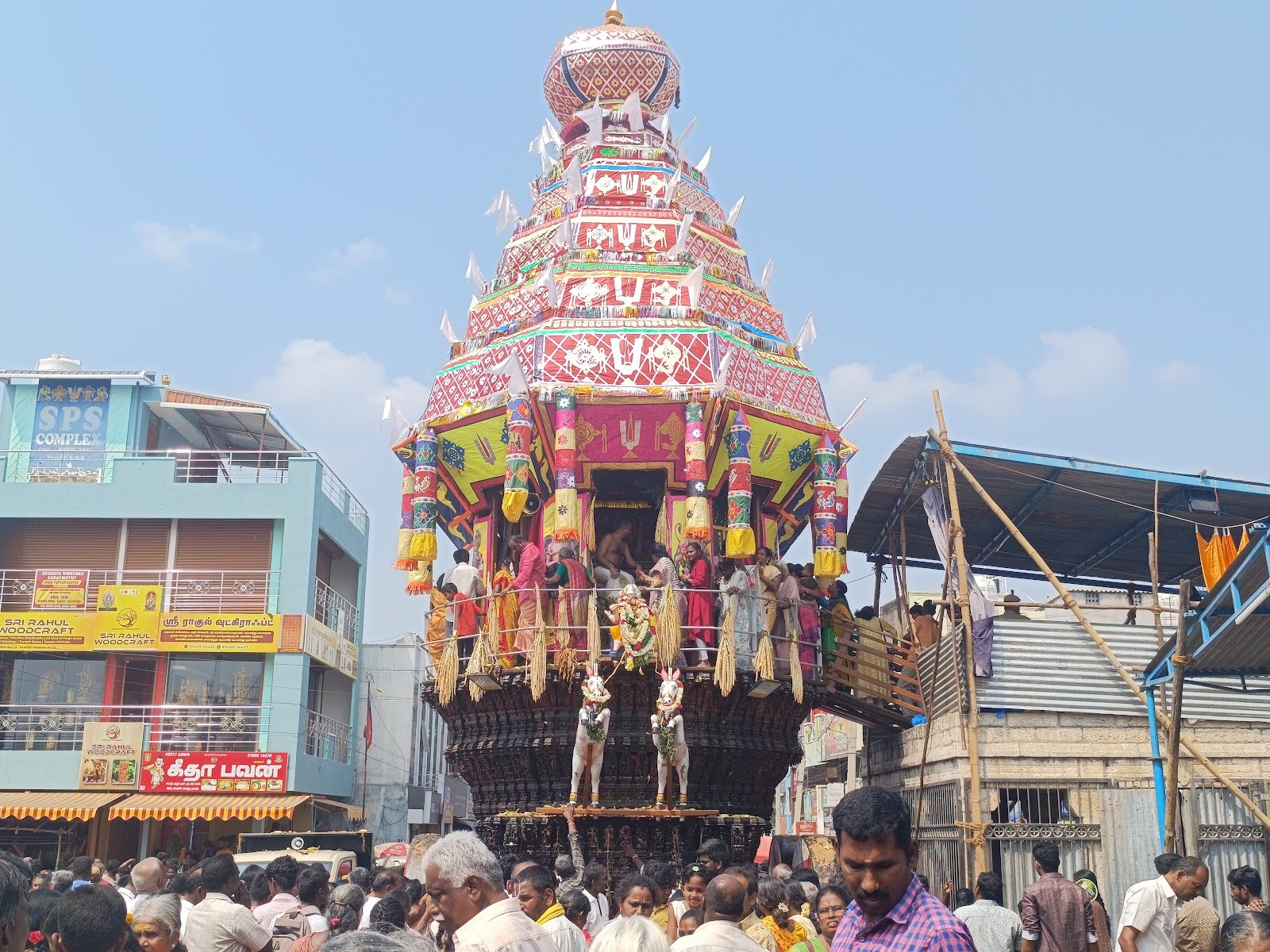
- Maasi Brahmotsavam: A 15-day celebration held during the Tamil month of Masi (February to March), highlighted by the Ther car procession and traditional Kavala Seva.
- Vaikunta Ekadasi: Observed in Margazhi (December to January), featuring the ceremonial opening of the Sorga Vasal gateway.
- Purattasi Saturdays: Special devotional pujas observed throughout September and October.
- Ramanuja Jayanti and Navaratri: Seasonal observances marked by special decorations and recitations.
A standard visit usually takes between 1 and 2 hours, which allows sufficient time to view the stone architecture, visit the subsidiary shrines, and sit quietly in the hall.
Getting there from Pondicherry and where to stay nearby
Karamadai lies just north of Coimbatore on the arterial road leading toward the Nilgiris. If you are travelling from Pondicherry, the road distance is roughly 370 km. Driving by car or hired taxi takes about 7 to 8 hours, generally following the national highway network through Villupuram, Salem, and Coimbatore.
For public transport, you can board an overnight or daytime express bus from Pondicherry to Coimbatore. From Coimbatore, frequent town buses depart from the main bus stands toward Mettupalayam, stopping right in Karamadai. You can also travel by train to Coimbatore Junction, about 27 km away, or take a local passenger train to Karamadai Railway Station, which is roughly 1 km from the temple gates.
If you are flying, Coimbatore International Airport sits approximately 35 km away. Karamadai itself has modest town facilities, so most travellers stay in Coimbatore, where hotels and family guesthouses are abundant, or in Mettupalayam, about 14 km to the north.
Nice to combine with
Because your temple visit takes only a few hours, you can comfortably combine it with other historical and natural stops nearby:
- Nilgiri Mountain Railway: Based roughly 14 km away at Mettupalayam, this operational UNESCO World Heritage Site is the starting point for the historic metre-gauge train into the hills.
- Vanabhadrakali Amman Temple: A popular riverside sanctuary situated along the Bhavani river near Mettupalayam.
- Kurunthamalai Murugan Temple: A scenic hill shrine located roughly 13 km east of Karamadai.
Before continuing your journey, stop by the small tea shops and vegetarian eateries along East Car Street for freshly prepared idlis and hot South Indian filter coffee.
What recent visitors say
A quick, honest snapshot from recent Google reviews, so you know what to expect before you go.
What people loved
★★★★★ vivek · 7 months ago
“That’s wonderful! 🙏😊 Seeing Ranganathar Swami (Lord Vishnu in reclining form) is considered very auspicious and brings peace and blessings to devotees. 🛐 Peace of mind 🌼 Prosperity and protection”
★★★★★ Radhakrishna · a year ago
“This temple is located in Karamadai town which is ~22-25km from Coimbatore city. Temple is dedicated to Lord Vishnu who is in the form of Suyambu. Temple is 1000+ yrs old and believed to be built by the chola empire. The temple complex is…”
★★★★☆ MUTHU · 6 months ago
“A must visit temple in Coimbatore, underrated temple, lord vishnu is standing as aranganathar, you can get buses from new bus stand, buses in route to Mettupalayam and Coimbatore stops here at karamadai bus stop🛑.”
Reviews via Google Maps. Opinions are those of their authors.
Frequently asked questions
Is there an entry ticket for Karamadai Ranganathar Temple?
General entry for darshan is free. Special quick-darshan tickets and receipts for specific archanas can be purchased at the temple counter if you wish to avoid long queues during peak hours.
Why is the deity here considered unusual?
In most major shrines, Lord Ranganatha is depicted resting in a reclining posture on the serpent Adisesha. Here, the Moolavar is a self-manifested square stone on which only the face and head of the deity appear.
Can non-Hindus enter the temple complex?
Visitors of all faiths are generally welcome to enter the outer courtyards and admire the historic pillared halls. However, entry into the innermost sanctum during active rituals may be restricted to practicing Hindus.
What should visitors wear to the temple?
The temple follows official HR&CE dress rules. Men should wear dhotis, pyjamas, or formal pants with a shirt, while women should wear sarees, half-sarees, or churidars with dupattas. Shorts and western casuals are prohibited.
Find it
Address: 23, East Car Street, Karamadai, Tamil Nadu 641104, India