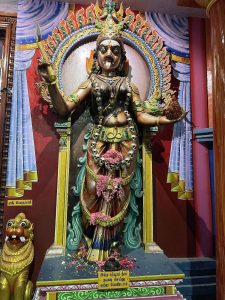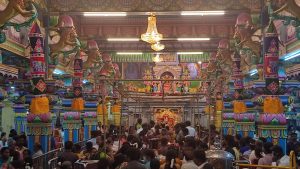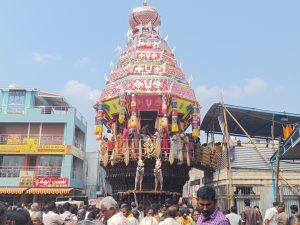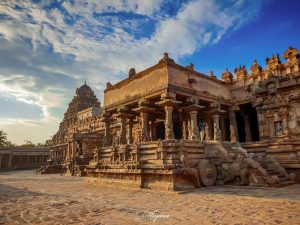
The Arupadai Veedu Murugan Temple in Chennai brings the six sacred pilgrimage abodes of Lord Murugan together onto a peaceful stretch of land near the sea. If you are travelling north from Pondicherry along the coast, it makes for a quiet and deeply meaningful stop before you reach the centre of the city.
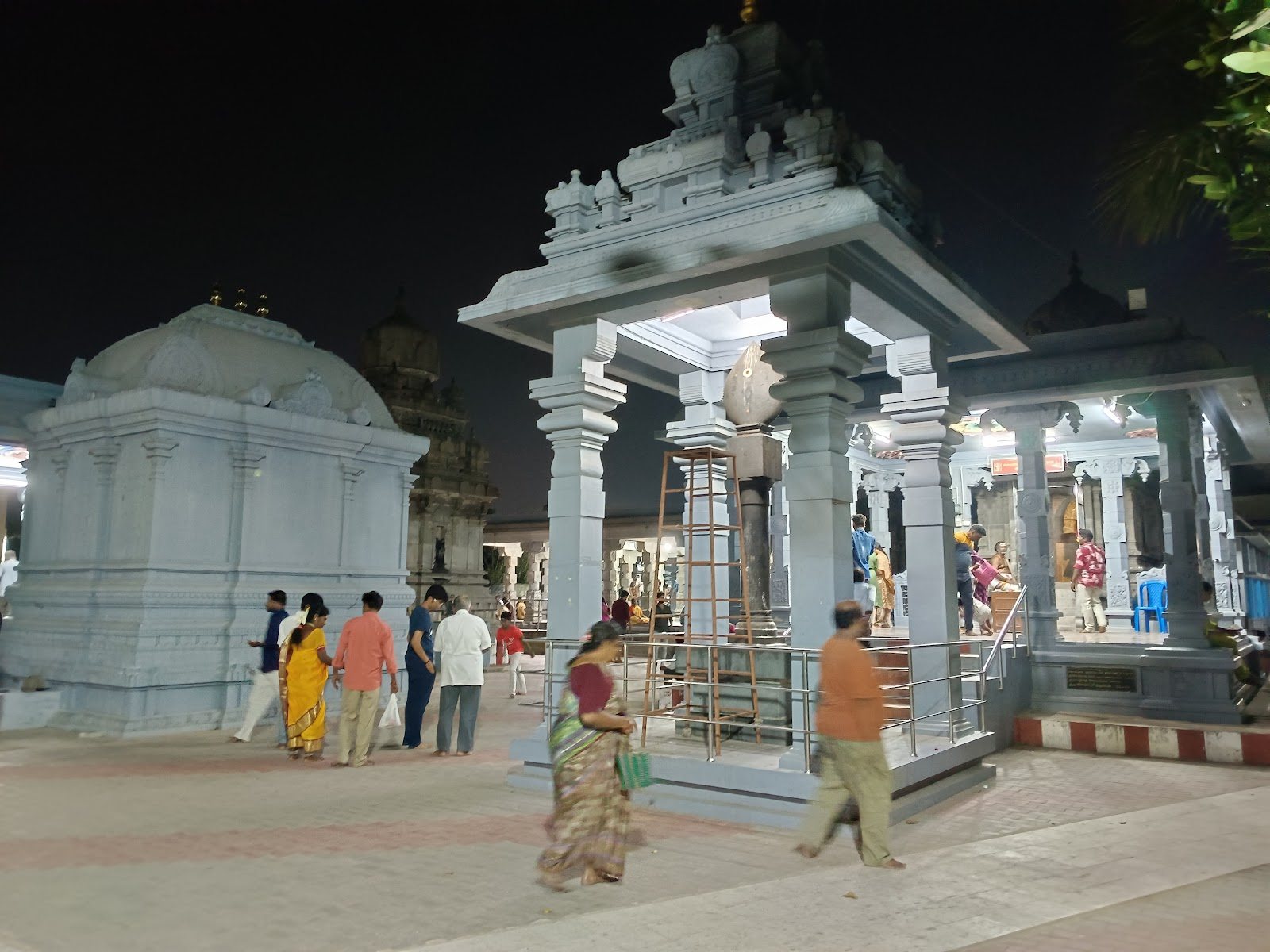
Built entirely of carved grey granite, the complex allows devotees to visit representations of all six holy hill temples in one single walk. The salty breeze from nearby Elliot’s Beach sweeps across the open courtyards, giving the stone shrines an atmosphere that feels unhurried, grounded, and set apart from ordinary city life.
At a glance
| Best time of day | Early morning or around sunset |
|---|---|
| Allow | 45 minutes to 1 hour |
| Dress | Modest traditional attire; shoulders and legs covered |
| Photography | Prohibited inside the sanctum and inner shrines |
| From Pondicherry | roughly 145 km by road via East Coast Road |
The story and spiritual vision behind the temple
In Hindu tradition across Tamil Nadu, Lord Murugan is revered through six preeminent pilgrimage sites known together as the Arupadai Veedu. Normally, paying respects at each abode requires travelling hundreds of kilometres across the state, from the seashore of Tiruchendur to the rocky heights of Palani and Swamimalai. In 1984, Dr. Alagappa Alagappan envisioned a single sanctuary where pilgrims could honor all six forms in one precinct. He sought the spiritual counsel and blessings of Sage Chandrashekarendra Saraswati, the revered Shankaracharya of the Kanchi Kamakoti Peetam, who encouraged the project.
Following this guidance, the government of Tamil Nadu, led by then-Chief Minister M. G. Ramachandran, sanctioned one acre of coastal ground in Kalakshetra Colony for the complex. The project also carried deep ties to the spiritual prophecies of Saint Pamban Swamigal, a devoted Murugan poet and scholar whose resting shrine sits nearby in Thiruvanmiyur.
Construction work began in 1995 under the care of master temple architect M. Muthiah. Devotees and stone artisans worked for seven years to carve the granite structures. The temple was formally consecrated during its Maha Kumbhabhishekam on June 21, 2002, an event presided over by Sri Jayendra Saraswati Swamigal.
Architecture and what to look for
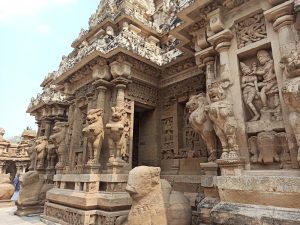
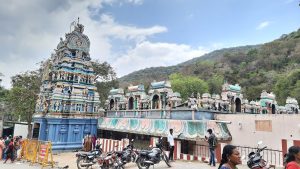
The complex is built in the classic Dravidian architectural style, crafted primarily from hard granite stone. As you arrive from Thirumurugan Street, you face an imposing east-facing Rajagopuram rising in four detailed tiers. Beyond this gateway stands the Dwajasthambam, the tall bronze-sheathed flag mast that signals the spiritual boundary of the sanctum.
Inside, the layout mirrors the geography of the six original shrines across Tamil Nadu:
- Swamimalai sits toward the northeast, honoring Murugan as Swaminatha Swami who taught the meaning of the Pranava mantra to Lord Shiva.
- Tiruchendur faces east near the entrance, representing the solitary seashore abode where Murugan camped before his battle with Surapadman.
- Thiruparankundram and Pazhamudircholai occupy the southern section, commemorating Murugan’s marriage to Deivanai and his hillside grove near Madurai.
- Palani is placed to the west, presenting Murugan as Dhandayuthapani, the ascetic youth holding a staff, detached from worldly possessions.
- Thiruthani stands in the northwest, recalling the peaceful hill where the deity rested after his victories and wed Valli.
At the heart of the ground floor stands a central shrine for Sri Maha Vallabha Ganapathi, affectionately known to worshippers as New York Ganapathy because Dr. Alagappan had previously helped establish the famous Ganesha temple in Flushing, New York. Alongside these main shrines, you will see a Vel Mandapam holding the sacred spear, as well as sanctums for Lord Shiva as Sathyagreeswarar, Idumban, and Yoga Bhairavar.
How a visit works in practice
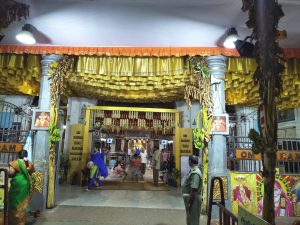
Visiting the temple is simple and straightforward. There is no admission fee for entering the grounds. At the entrance gate, you leave your footwear at the designated counter before walking barefoot across the smooth stone perimeter.
Most worshippers begin their visit by offering greetings to Sri Maha Vallabha Ganapathi before circling the shrines in a clockwise direction. As you walk between the different stone platforms, the distinct iconography of each Murugan abode becomes clear. At each shrine, priests conduct pujas, wave camphor lamps, and distribute sacred ash or kumkum to devotees.
If you visit during special occasions, the temple takes on a heightened rhythm. The major annual events include:
- Skanda Sashti: A six-day festival that culminates in Soorasamharam, dramatising Murugan’s triumph over ignorance and ego.
- Thai Poosam: An energetic holy day marked by devotees carrying milk pots and kavadi structures in penance and gratitude.
- Panguni Uthiram and Aadi Krithigai: Auspicious asterisms celebrated with elaborate abhishekams and floral decorations.
Local tip: If you enjoy a quiet environment, visit on a regular weekday morning around 7:30 AM when the morning pujas conclude and priests chant in the quiet granite hallways.
Etiquette, dress code, and temple rules
Because this is an active place of prayer and traditional worship, visitors are expected to observe quiet decorum and follow the temple dress standards strictly.
Men must wear conservative clothing such as a dhoti, a traditional kurta, or formal trousers with a collared shirt. Women should wear a saree, a half-saree, or a salwar kameez paired with a dupatta. Western casuals like shorts, mini skirts, three-quarters, and sleeveless shirts are strictly prohibited at the entrance.
Photography is strictly forbidden around the inner sanctums and direct shrine openings. You may keep your phone switched to silent inside your bag. Non-Hindu visitors are generally welcome to enter the outer grounds and observe the temple architecture, provided they are modestly dressed and behave with respect toward those praying.
Best times to visit and time to allow
The temple typically opens from 7:00 AM to 11:00 AM in the morning and from 5:00 PM to 8:30 PM in the evening. These hours can vary slightly during festival days, solar eclipses, or major auspicious occasions.
The best time to go is during the early morning hours just after sunrise, or in the late evening around 6:00 PM. The midday coastal sun can make the granite flagstones quite hot to walk on barefoot. An unhurried visit usually takes about 45 minutes to an hour, giving you enough time to pause at each of the six sanctums, view the carvings, and sit for a few minutes in the evening breeze.
Getting there from Pondicherry
For travellers starting from Pondicherry, the temple is located roughly 145 kilometres north along the scenic East Coast Road. By car or private taxi, the drive takes about 3 to 3.5 hours depending on morning traffic near the entrance to Chennai.
If you are taking an express bus from Pondicherry’s new bus stand, book one that travels via ECR toward Chennai Koyambedu or Thiruvanmiyur. Get down at Thiruvanmiyur bus depot, from where a short five-minute auto-rickshaw ride will take you directly to Kalakshetra Colony in Besant Nagar.
For those already in Chennai, the temple is around 14 kilometres from Chennai Central railway station and roughly 15 kilometres from Chennai International Airport. The nearest local train stops on the MRTS line are Kasturba Nagar and Thiruvanmiyur, both about 3 to 4 kilometres away.
What to see nearby
Kalakshetra Colony sits in one of the most pleasant, tree-shaded corners of southern Chennai, making it very easy to combine your temple visit with other sights within walking distance:
- Arulmigu Sri Ashtalakshmi Temple: Located right on the beach sand nearby, this multi-tiered temple honors the eight manifestations of Goddess Lakshmi.
- Elliot’s Beach: A wide, breezy seaside promenade located just a short stroll away, popular for quiet morning walks.
- Kalakshetra Foundation: The celebrated centre for classical Bharatanatyam dance and fine arts, situated in the same quiet neighbourhood.
- Marundeeswarar Temple and Pamban Swamigal Samadhi: Historic pilgrimage sites located a few minutes south in Thiruvanmiyur.
Local tip: After your visit, stop by one of the neighbourhood cafes or traditional tiffin stalls in Besant Nagar for a warm South Indian filter coffee and fresh dosas.
What recent visitors say
A quick, honest snapshot from recent Google reviews, so you know what to expect before you go.
What people loved
★★★★★ Saiabiram · in the last week
“Peaceful temple near the Bay of Bengal.”
★★★★★ ItsMe · 3 months ago
“A truly divine and peaceful place for every Murugan devotee. This temple beautifully represents all six sacred abodes (Arupadai Veedu) of Lord Murugan in one location, making it a unique spiritual experience. The temple is very clean…”
★★★★★ Ran · 3 months ago
“My visit to Arupadai Veedu Murugan Temple was absolutely divine! 🙏 The serene atmosphere and stunning architecture truly made for a memorable experience. I felt such peace and tranquility. Highly recommend a visit for anyone seeking…”
Reviews via Google Maps. Opinions are those of their authors.
Frequently asked questions
Is there an entry fee at Arupadai Veedu Murugan Temple?
No, general admission to the temple is completely free. You only pay a small nominal fee if you wish to leave your sandals at the footwear stall or book specific archana rituals.
Can non-Hindus visit the temple?
Yes, non-Hindu visitors are generally welcome to enter the courtyards and admire the stone architecture, as long as they follow the modest dress code and show quiet respect to devotees.
What should I wear when visiting?
Traditional modest dress is required. Men should wear dhotis, kurtas, or full-length formal trousers, while women should wear sarees or salwar kameez with a dupatta. Shorts and sleeveless tops are not allowed.
How long does a typical visit take?
A thorough visit to see all six abodes, offer prayers, and enjoy the courtyard takes between 45 minutes and one hour.
Find it
Address: 1, Thirumurugan St, Kalakshetra Colony, Besant Nagar, Chennai, Tamil Nadu 600090, India
You might also like
- Where to stay in Pondicherry
- Churches, temples, mosques and ashrams in Pondicherry
- Saneeswarar Temple
- Sri Aurobindo Ashram
- Sacred Heart of Jesus Church
- Things to do in Pondicherry
- Visiting Parthasarathy Temple in Triplicane Chennai
- Visiting Sri Parthasarathyswamy Temple in Chennai
- Visiting Santhome Cathedral Basilica in Chennai: A Guide
- Visiting Shri Ashtalakshmi Temple in Chennai: A Guide