The Sai Baba Temple Mylapore stands along Venkatesa Agraharam Road as one of the most revered spiritual addresses in Chennai. Dedicated to the nineteenth-century saint Shirdi Sai Baba, this calm complex welcomes people from all walks of life, regardless of background or community. For anyone travelling through Tamil Nadu with an interest in devotional life, stepping through its gates offers a gentle, unhurried look at living faith.
Many travellers based in Pondicherry make the journey north to Chennai for flight connections or cultural visits to historic neighbourhoods like Mylapore. If your travels bring you to this part of the city, the temple makes a deeply grounding stop. Here is everything you need to know before you set out, from temple etiquette and rituals to transport advice from Pondicherry.
At a glance
| Best time of day | Early morning around 6:00 AM or late afternoon before evening prayers |
|---|---|
| Allow | 45 to 60 minutes on regular days; 1.5 to 2 hours on Thursdays |
| Dress | Modest clothing covering shoulders and knees |
| Photography | Strictly prohibited inside the prayer halls and sanctum |
| From Pondicherry | roughly 150 km by road (about 3 to 3.5 hours) |
Why this place matters
The story of this temple is tied directly to Sri B. V. Narasimha Swamiji, a devotee from Salem who spent decades introducing the life of Shirdi Sai Baba across southern India. Through his extensive travels and writings, he helped popularise the saint’s name throughout the country, presenting Sai Baba’s message of love, peace, and universal brotherhood. In 1941, Narasimha Swamiji established the All India Sai Samaj, making it his life mission to bring people together across religious divisions.
Sai Baba lived and taught in Shirdi, belonging to no single creed and showing that spiritual truth transcends communal boundaries. He drew both Hindus and Muslims into a shared space of mutual respect. To carry forward this work in Chennai, Narasimha Swamiji oversaw the construction of this dedicated temple in 1952, financed through funds donated by a Chettiar merchant. The formal consecration, or Maha Kumbhabhishekam, took place in 1953. Today, the complex serves as the official administrative headquarters of the All India Sai Samaj and remains widely respected across India as an enduring centre of devotion.
What you will see inside the temple grounds
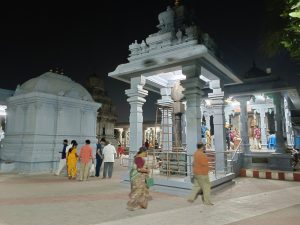
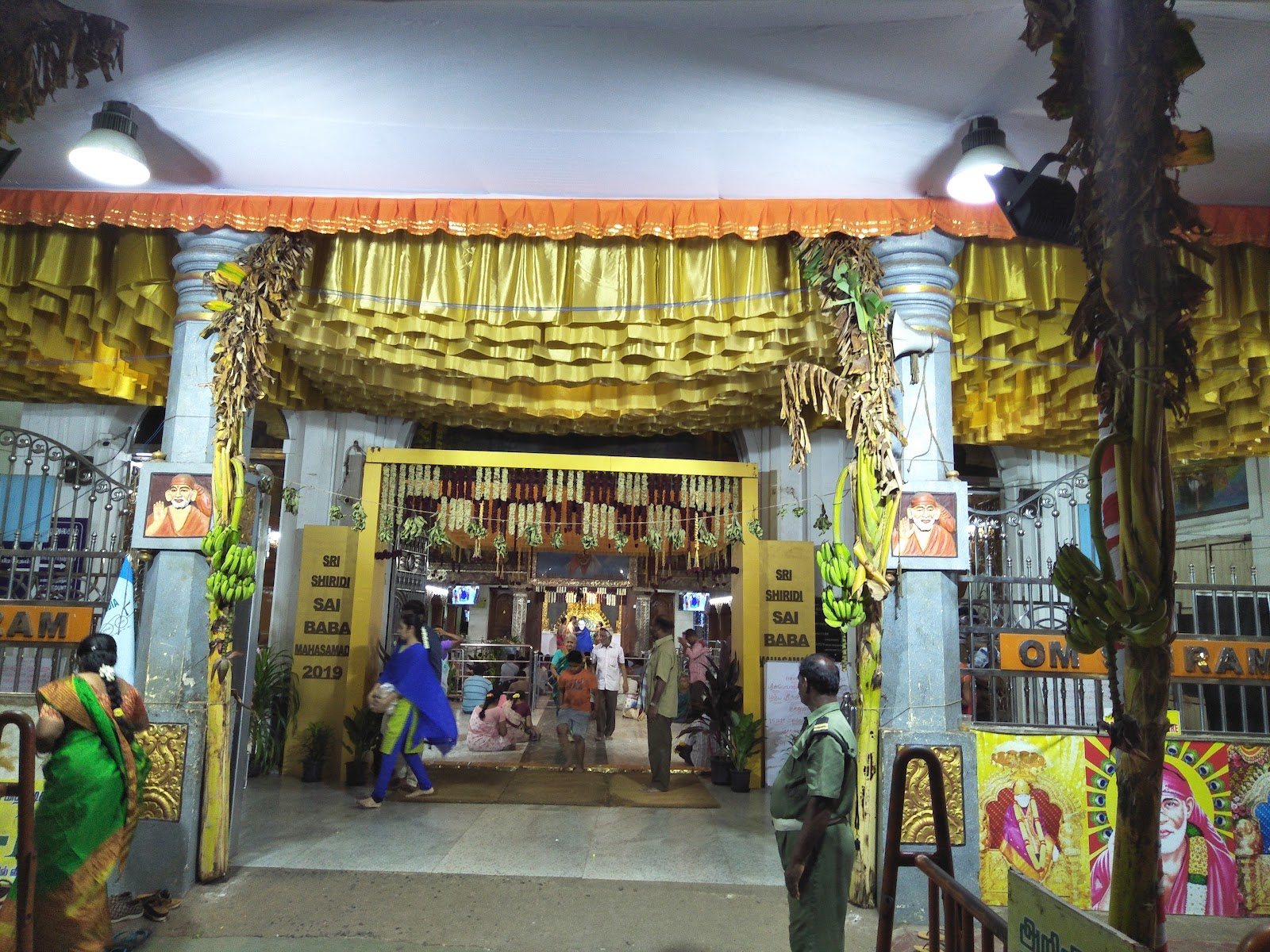
Approaching the temple, you first notice the traditional three-tiered Rajagopuram facing north. Once you pass through the doorway and leave your footwear outside, the atmosphere softens into quiet chanting and the scent of incense. The interior prayer hall features cool white marble flooring, offering physical relief from the Chennai heat as you walk toward the inner shrine.
The main sanctum contains three sacred representations of Shirdi Sai Baba:
- A serene white marble idol of Sai Baba, installed in 1987, seated in his characteristic posture with one leg crossed over the other.
- An earlier Panchaloha idol crafted from a traditional five-metal alloy.
- The original Moolasthanam portrait of the saint, which has watched over devotees since the temple early years.
Beyond the main sanctum, you will find a dedicated Dwarkamai replica, named after the historic Shirdi mosque where Sai Baba lived. Inside this hall burns the sacred dhuni, a perpetual fire kept continuously alight in remembrance of the flame Baba tended throughout his life. Devotees pause here to offer prayers and receive holy ash. Nearby sits a memorial shrine and cottage dedicated to the founder, Sri B. V. Narasimha Swamiji, honouring his role in establishing the community.
How a visit works
Visiting the temple is simple and accessible. Entry is free for general darshan, and there are no tickets required to enter the inner halls. You begin by depositing your shoes at the designated footwear counters located along the street entrance. You then wash your hands and feet at the taps provided before stepping into the central courtyard.
Inside, devotees form orderly queues to walk past the marble idol. During prayer sessions, or aartis, visitors sit on the marble floor to listen to traditional devotional songs sung in unison. Volunteers and temple staff guide the crowd smoothly. After seeing the main shrine, take a slow walk through the Dwarkamai hall to view the dhuni, then spend a quiet moment at Narasimha Swamiji memorial shrine before collecting holy ash and prasad on your way out.
Temple etiquette and dress code
Because Shirdi Sai Baba rejected rigid sectarian divisions, this temple is completely open to visitors of all faiths, religions, and backgrounds. Everyone is received with equal dignity. However, like any active Hindu temple and spiritual sanctuary, traditional standards of decorum apply at all times.
- Dress modestly out of respect. Men should wear long trousers or traditional dhotis with shirts. Women should wear ankle-length skirts, salwar kameez, or saris. Please avoid sleeveless tops, shorts, and tight gym wear.
- Footwear must be taken off before crossing the threshold into the temple premises.
- Photography and videography using mobile phones or digital cameras are strictly prohibited inside the temple halls and sanctum.
- Switch your phone to silent mode as soon as you enter to preserve the meditative silence.
- Speak in hushed tones, especially when walking near devotees engaged in quiet contemplation.
Local tip: Carry a cloth bag to store your footwear if the outdoor counters are crowded, and bring small change if you wish to purchase fresh floral garlands or offer a voluntary donation at the office counters.
Best time to go and how long to stay
The temple typically opens each day around 5:45 AM and remains open until about 1:00 PM. It reopens in the afternoon, generally between 3:00 PM or 4:00 PM, and stays open until roughly 9:00 PM. Keep in mind that specific ritual timings can vary slightly, so it is wise to arrive with a little flexibility.
Thursday is the sacred day of the week for Sai Baba devotees. On Thursdays, the temple extends its opening hours, but you will encounter massive crowds, long queues, and lively aartis from dawn until late evening. If you want a peaceful, reflective visit where you can sit quietly on the marble floor, choose a weekday morning between 6:30 AM and 9:00 AM, or late afternoon around 4:30 PM.
The temple also witnesses major annual celebrations during Guru Purnima, Rama Navami, and Vijayadashami, which commemorates Sai Baba Mahasamadhi. Expect elaborate flower arrangements, prolonged rituals, and thousands of pilgrims on those dates. For a regular visit, 45 to 60 minutes is plenty of time to view the shrines and enjoy the stillness.
| Day or Occasion | Atmosphere | Recommended Duration |
|---|---|---|
| Monday to Wednesday | Calm, quiet, swift darshan | 45 to 60 minutes |
| Thursday | Intense devotional energy, crowded queues | 1.5 to 2.5 hours |
| Friday to Sunday | Moderately busy with local families | 1 hour |
| Guru Purnima / Vijayadashami | Festival crowds, elaborate rituals | 2 to 3 hours |
Getting there from Pondicherry and where to stay
Mylapore is located in central-south Chennai, roughly 150 km north of Pondicherry. If you are travelling by car or private taxi along the East Coast Road, the journey takes about 3 to 3.5 hours depending on traffic entering the southern suburbs of Chennai. Alternatively, frequent express buses run between Pondicherry and Chennai Koyambedu or Guindy, from where you can take a local taxi, auto-rickshaw, or metro connection into Mylapore.
Within Chennai, rail transit is remarkably straightforward for this location. The Mundagakanniamman Koil MRTS Station is within short walking distance, about 500 to 700 metres from the temple entrance. Thirumayilai MRTS Station is also nearby. For long-distance trains, Chennai Central and Chennai Egmore railway stations are roughly 6 to 9 km away, while Chennai International Airport lies about 15 to 18 km southwest.
If you plan to stay overnight in Chennai before returning to Pondicherry, the Mylapore and Alwarpet areas offer pleasant heritage guesthouses and comfortable modern hotels within a short walk of the temple. Staying locally lets you attend the early morning kakad aarti without fighting city traffic.
Nice to combine with your visit
Mylapore is widely regarded as the cultural heart of Chennai, making it effortless to build a meaningful half-day itinerary around the Sai Baba Temple. A short walk through the neighbourhood lanes brings you to other celebrated heritage and spiritual sites:
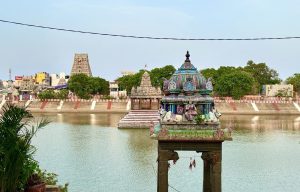
- Sri Kapaleeshwarar Temple: Situated about 1 km away, this historic Shiva temple features magnificent Dravidian architecture, ornate stucco towers, and a vast sacred water tank surrounded by traditional agraharam houses.
- Sri Ramakrishna Math: Also roughly 1 km away, this quiet universal centre offers immaculate gardens and a grand prayer hall dedicated to Sri Ramakrishna Paramahamsa.
- San Thome Cathedral Basilica: Located about 2.5 km east toward the sea, this soaring neo-Gothic Catholic basilica is built over the tomb of Saint Thomas the Apostle.
- Marina Beach: Just about 3 km east, the sandy shoreline is ideal for an evening stroll to watch the surf and feel the coastal breeze.
Between temple stops, pause at one of Mylapore traditional vegetarian mess halls or heritage cafes for hot idlis and a tumbler of freshly brewed South Indian filter coffee.
What recent visitors say
A quick, honest snapshot from recent Google reviews, so you know what to expect before you go.
What people loved
★★★★★ VENKATA · 2 months ago
“Very peaceful and divine place. Been there for evening Aarati and it was one hour of divine experience. The temple is not that much cleaner, except the baba place. Outside the temple it was a complete chaos as it was a busy road of traffic…”
★★★★★ Sankar · 3 months ago
“Very powerful Baba. Just sit and pray, you will come back as a calm and completely transformed person. Since renovation is going on, you may feel little lack of the old serenity…”
★★★★★ Balasubramaniyam · 4 months ago
“One of the best and the oldest Shirdi Sai Baba temple’s in Chennai City. Lots of expansion being carried out presently. It was a small and beautiful temple when I visited it in 1993. It’s getting modified into a huge temple complex…”
What some found difficult
★☆☆☆☆ Arthipriya · 6 months ago
“Temple is good but I didn’t like the behaviour of lady who gave prasadam. My husband was feeding prasadam to my child since it was hot he found difficult to hold so he kept above undiyal and rudely that lady told don’t keep there. Food was…”
★★★☆☆ Rajendran · in the last week
“Renovation and construction is going on for a very long time.”
Reviews via Google Maps. Opinions are those of their authors.
Frequently asked questions
Can non-Hindus visit the Sai Baba Temple Mylapore?
Yes, absolutely. Shirdi Sai Baba preached universal brotherhood and rejected religious distinctions, so people of all faiths, backgrounds, and nationalities are warmly welcomed to enter and pray.
Is there an entry fee to visit the temple?
No, general admission and darshan are completely free of charge. You do not need to buy a ticket to walk through the prayer halls or view the shrines.
Why are Thursdays so crowded at this temple?
Thursday is traditionally regarded as Guru-var, a sacred day dedicated to the spiritual guru in Indian tradition. Devotees of Shirdi Sai Baba arrive in large numbers on Thursdays to attend special aartis and offer prayers.
Are cameras and mobile phones allowed inside?
You may carry your mobile phone into the complex, but mobile photography and video recording are strictly prohibited inside the prayer halls and sanctum. Keep your phone silenced throughout your visit.
Find it
Address: 27M7+4VF, Venkatesa Agraharam Rd, Kabali Nagar, Venkatesa Agraharam, Mylapore, Chennai, Tamil Nadu 600004, India
You might also like
- Where to stay in Pondicherry
- Churches, temples, mosques and ashrams in Pondicherry
- Saneeswarar Temple
- Sri Aurobindo Ashram
- Sacred Heart of Jesus Church
- Things to do in Pondicherry
- Visiting Parthasarathy Temple in Triplicane Chennai
- Visiting Sri Parthasarathyswamy Temple in Chennai
- Visiting Santhome Cathedral Basilica in Chennai: A Guide
- Visiting Shri Ashtalakshmi Temple in Chennai: A Guide