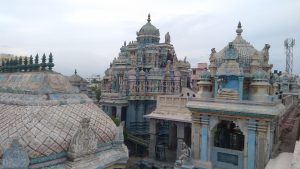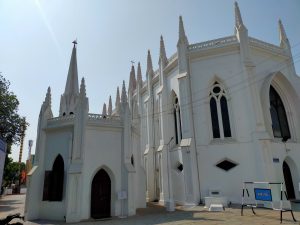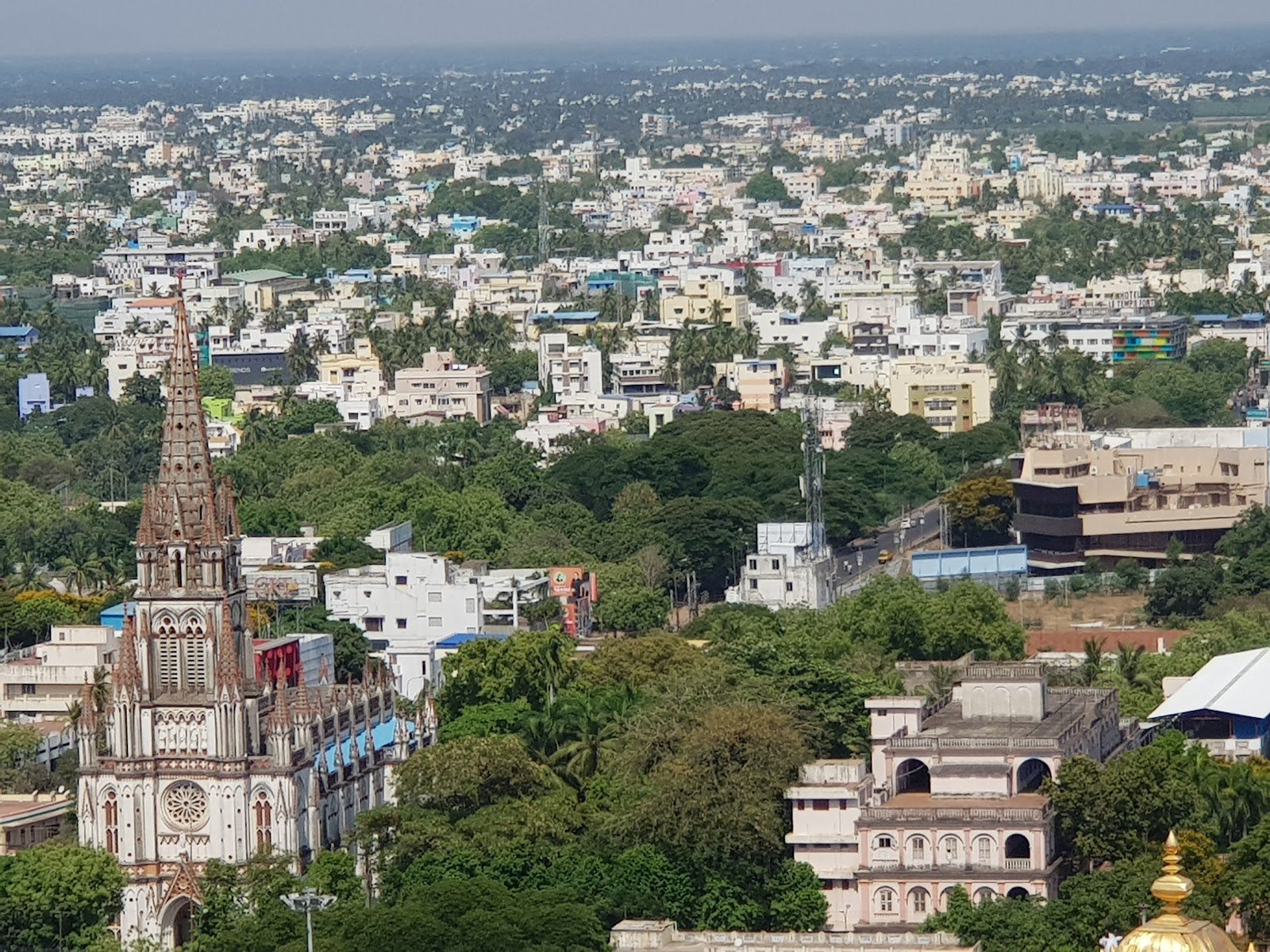
Thayumanavar Temple stands halfway up the sheer mass of the Tiruchirappalli Rockfort, rising high above the old city streets and the Kaveri plain. The shrine is dedicated to Lord Shiva, worshipped here as Thayumanaswamy alongside his consort Parvati, known as Mattuvar Kuzhalammai. It is one of the most remarkable religious sites in central Tamil Nadu, combining ancient rock-cut halls with living daily devotion.
The climb up the stone stairs takes you away from the noise of the markets below and brings you into cool, shaded corridors carved straight out of the granite cliff. Whether you travel to Tiruchirappalli specifically for the temples or stop here while exploring Tamil Nadu from Pondicherry, this hill sanctuary rewards every step of the ascent.
At a glance
| Best time of day | Early morning or late afternoon |
|---|---|
| Allow | 2 to 3 hours including the climb |
| Dress | Modest traditional attire covering shoulders and knees |
| Photography | Permitted in outer areas; forbidden in the inner sanctum |
| From Pondicherry | roughly 200 km (about 4 hours) by road |
The story and significance of the sanctuary
The name of the temple carries a touching legend. Local tradition recounts that a pregnant woman living on the far bank of the Kaveri River was cut off from her mother during a heavy flood while going into labour. In response to her desperate prayers, Lord Shiva assumed the physical form of her mother to tend to her and deliver the child safely. Because of this act of maternal care, the deity received the name Thayumanavar, which translates to ‘he who became a mother’, or Matrubhuteswara in Sanskrit.
The temple has an extraordinary heritage that stretches across more than a millennium. The foundation belongs to the sixth and seventh centuries during the rule of the Pallava king Mahendravarman I. Over subsequent centuries, the site received substantial patronage and architectural additions from the Medieval Cholas, the Nayaks of Madurai, and the rulers of the Vijayanagara Empire.
In Tamil religious literature, it holds revered status as a Paadal Petra Sthalam, praised in the seventh-century Tevaram hymns by the celebrated Saivite Nayanar poets Sambandar and Appar. Later, in the eighteenth century, the respected scholar and philosopher-saint Thayumanavar was named in honour of this very deity. The saint served as a royal minister in Tiruchirappalli before turning to a quiet life of spiritual contemplation, writing more than fourteen hundred Tamil hymns on meditation, self-discipline, and the harmony of Saiva Siddhanta and Vedanta.
What you will see as you climb
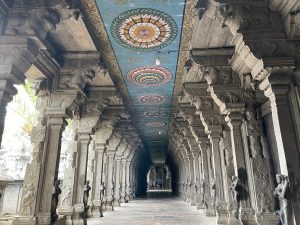
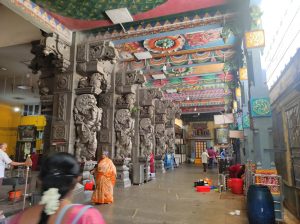
The temple complex is situated roughly midway up the 275-foot-high granite hill known locally as Malaikottai. To reach it, you walk up hundreds of stone steps cut directly into the hillside. The path is enclosed by rock walls and tall stone pillars, which keep the walkway relatively sheltered from the direct heat of the midday sun.
As you move through the complex, several distinctive architectural elements stand out:
- The primary shrine of Thayumanaswamy, where Lord Shiva is worshipped in the form of a stone lingam, alongside the dedicated shrine for the goddess Mattuvar Kuzhalammai.
- The Upper Cave Temple, known as Lalitankura Pallaveswaram, a seventh-century rock-cut excavation featuring early Pallava inscriptions and a magnificent stone relief of Gangadharamurti.
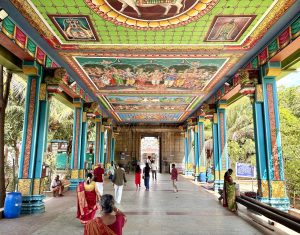
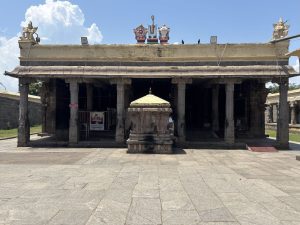
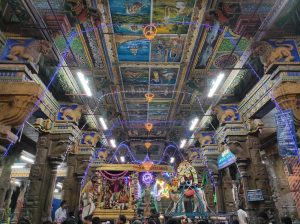
- Expansive pillared mandapams adorned with finely carved columns that date from the Nayak and Vijayanagara building periods.
- Stone inscriptions incised into the granite surfaces that document centuries of royal endowments and historical milestones.
The air inside the pillared halls remains naturally cool, smelling faintly of camphor, oil lamps, and damp stone. The contrast between the rough natural cliff face and the polished surfaces of the carved pillars gives the complex a memorable atmosphere.
How a visit works in practice
Your journey begins at the base of the rock on Chinna Kadai Street. Before you start up the stairs, you will find designated counters where you must leave your footwear. From there, you begin the climb bare foot. The stone steps can feel cool in the early morning and quite warm by midday, so timing your ascent makes a big difference to your comfort.
General admission to the temple complex is completely free. There are small ticket counters along the way where you may pay a nominal fee for special darshan queues or camera passes for permitted zones. While non-Hindu visitors are welcome to explore the Rockfort complex, walk the outer pillared halls, and admire the rock-cut cave, access to the innermost sanctum, or garbhagriha, is traditionally restricted to practicing Hindus.
During pooja times, temple priests conduct rituals with chanting and the waving of brass lamps before the deity. Even from the outer corridors, you can hear the resonant ringing of heavy temple bells and the sound of devotional chanting echoing off the stone walls.
Temple etiquette and dress code
Thayumanavar Temple is an active place of daily worship. Treating the space and the worshippers with discretion ensures an easy, respectful visit. Traditional Indian dress is expected for all visitors entering the worship areas.
- Men should wear dhotis, pyjamas, or formal trousers with shirts. Shorts and sleeveless tops are not allowed.
- Women should wear sarees, salwar kameez sets, or long clothing that covers both the shoulders and legs.
- Footwear must be deposited at the stalls near the entrance at the bottom of the hill. Carrying shoes in bags up the stairs is discouraged.
- Photography is strictly prohibited inside the inner sanctum. You may take pictures in the outer corridors, open rock walkways, and viewing spots, but always verify current camera pass rules at the counter.
- Keep your phone on silent and speak softly, particularly when standing in queues near the prayer halls.
Best time to go and planning your schedule
The temple generally opens its doors daily from 6:00 AM to 12:00 PM, closing in the middle of the day, and then reopening from 4:00 PM to 8:00 PM. Specific ritual timings may shift slightly depending on the religious calendar, so arriving near the start of either session is wise.
The early morning is by far the pleasantest time to make the climb. The granite steps have not yet absorbed the day’s heat, and the morning breeze coming off the plains is refreshing. The late afternoon after 4:00 PM is another comfortable window, allowing you to finish your temple visit as the sun begins to set over Tiruchirappalli.
Local tip: Plan your visit to allow around two to three hours. This gives you ample time to walk up the steps at a leisurely pace, take in the rock carvings, and sit quietly in the pillared mandapam without hurrying.
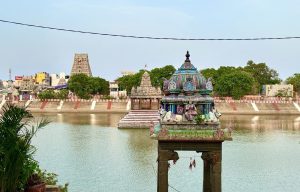
Major religious gatherings bring larger crowds to the rock. The most prominent event is the Theppa Thiruvizha, a ten-day float festival held in the sacred Teppakulam tank at the foot of the hill during the Tamil month of Panguni (March to April). Other lively occasions include the Chithirai Car Festival between April and May, as well as the annual observances of Maha Shivaratri.
Getting there from Pondicherry and staying nearby
Tiruchirappalli sits southwest of Pondicherry. The road trip covers roughly 200 kilometres and takes about four hours by private car or taxi, travelling via Villupuram and Perambalur along National Highway 38. Regular state buses also connect Pondicherry and Trichy throughout the day.
If you arrive by rail or air directly, the temple is easy to reach within the city:
| Transit Point | Approximate Distance | Typical Travel Time |
|---|---|---|
| Tiruchirappalli Fort Railway Station | 1 km | 5 minutes by auto-rickshaw |
| Tiruchirappalli Junction Railway Station | 4.5 km | 15 to 20 minutes |
| Tiruchirappalli International Airport | 9 km | 25 to 30 minutes |
Auto-rickshaws and local city buses run continuously between Tiruchirappalli Junction and the Rockfort area. For accommodation, you will find clean business hotels and simple guesthouses around the railway junction and along the roads leading toward Srirangam.
Nearby landmarks to combine with your visit
Because Thayumanavar Temple is built into the Rockfort hill, you can easily combine it with other major religious sites in Tiruchirappalli without travelling far.
- Ucchi Pillaiyar Temple: Continue climbing to the very peak of the Rockfort rock to visit this small shrine dedicated to Lord Ganesha, which offers sweeping panoramic views across the entire city and the Kaveri River.
- Sri Ranganathaswamy Temple: Located roughly 4 kilometres to the north in Srirangam, this vast river-island complex is one of the most famous Vaishnavite shrines in India.
- Jambukeswarar Temple: Situated about 4 kilometres away at Thiruvanaikaval, this ancient Shiva temple represents the element of water among the sacred Pancha Bhoota Sthalams.
After completing your walk down from the rock, take time to explore the market lanes of Chinna Kadai Street. It is an ideal spot to stop at a traditional South Indian vegetarian restaurant for freshly brewed filter coffee, crisp dosas, or a midday banana-leaf meal.
What recent visitors say
A quick, honest snapshot from recent Google reviews, so you know what to expect before you go.
What people loved
★★★★★ ARUNAACHALAM. · 2 weeks ago
“I had visited Shri Thayumanavar temple with my uncle on 17th may 2026, the temple was really amazing and maintained well, i learnt many things after visiting, a must visit place, Thank you 🙏”
★★★★★ Madhan · 3 weeks ago
“One of the Awesome temple in Tamilnadu”
★★★★★ Lensory · 4 months ago
“Sri Thayumanavar Temple is a spiritually significant temple located on the Rockfort hill in Tiruchirappalli. The temple is well known for its religious importance and its unique location partway up the famous rock formation, offering…”
Reviews via Google Maps. Opinions are those of their authors.
Frequently asked questions
Can non-Hindus visit Thayumanavar Temple?
Yes. Non-Hindu visitors are welcome to climb the Rockfort, walk through the pillared halls, and view the Pallava cave sculptures. However, admission into the innermost sanctum where the main lingam is housed is traditionally reserved for practicing Hindus.
How difficult is the climb to Thayumanavar Temple?
The temple is located midway up the 275-foot rock hill. The ascent involves climbing a few hundred smooth stone steps. While the climb requires moderate physical effort, the stairways are sheltered by stone roofs, and there are wide landings where you can stop to catch your breath.
What is the best time of year to visit?
The cooler months from November through February provide the most comfortable weather for climbing the stone stairs bare foot. If you wish to witness major temple celebrations, consider visiting during the Panguni float festival in March or April.
Is photography permitted inside the temple?
Photography is strictly barred inside the inner sanctum of the shrine. You are generally allowed to take pictures of the carved pillars in the outer corridors and the views from the rock, though camera fees may apply at the entrance counter.
Find it
Address: 51, Chinna Kadai St, Tiruchirappalli, Tamil Nadu 620002, India
You might also like
- Where to stay in Pondicherry
- Churches, temples, mosques and ashrams in Pondicherry
- Saneeswarar Temple
- Sri Aurobindo Ashram
- Sacred Heart of Jesus Church
- Things to do in Pondicherry
- Visiting Jambukeswarar Temple in Tiruchirappalli
- Visiting Suchindram Thanumalayan Temple: A Travel Guide
- Kapaleeshwarar Temple: A Mylapore Travel Guide
- Visiting Muthumalai Murugan Temple in Yethappur