A journey to Sri Prathyangira Devi Temple brings you to the southern fringes of Chennai, set along the link road connecting the Old Mahabalipuram Road and the East Coast Road in Sholinganallur. The temple grounds border the waters of the Buckingham Canal, just a short distance inland from the Bay of Bengal. If you are travelling north from Pondicherry along the coastal highway, this sanctuary makes an easy and meaningful stop before you reach the central districts of Chennai.
The sanctuary is dedicated to the goddess Prathyangira, revered by devotees as an unfailing guardian of Dharma and a shield against adversity. While classical depictions often portray her in a fierce mood, this temple is notable because it venerates her benevolent and peaceful aspect. It is a quiet place where you can step away from highway traffic, observe traditional prayer services, and experience a living centre of Tamil worship.
At a glance
| Best time of day | Early morning around 8:00 AM or late afternoon at 4:30 PM |
|---|---|
| Allow | 1 to 1.5 hours |
| Dress | Modest traditional Indian clothing; shoulders and knees covered |
| Photography | Strictly prohibited inside inner sanctums and halls |
| From Pondicherry | roughly 135 km north along the ECR, about 2.5 to 3 hours by road |
Why this temple matters
The history of the shrine is modern compared to the ancient stone landmarks of Kanchipuram or Mahabalipuram, yet its spiritual role is deeply rooted in local devotional life. The temple was established in 1998 by Prof. Dr. Sri Prathyangira Swamy under the aegis of the Sri Prathyangira Swamy Siddhar Peedam Trust. Following careful construction according to scriptural guidelines, the grand consecration, known as the Kumbhabhishekam, took place on August 22, 1999.
The primary deity enshrined here is Maha Prathyangira Devi, who is represented with the body of a human female and the head of a lion. Within Hindu sacred tradition, she is venerated as an immense cosmic protector capable of dispelling dark forces, curbing the effects of witchcraft, and upholding moral righteousness. People facing prolonged hardships, family distress, or health struggles travel here seeking her blessings.
What makes this particular complex special across India is that the goddess is worshipped in her Shanta form. In many older tantric contexts, Prathyangira is invoked in an intense, wrathful disposition, but here her countenance is gentle, graceful, and compassionate. Devotees find comfort in this quiet posture, viewing her as an approachable maternal protector rather than a fearsome deity.
What you will see on the grounds
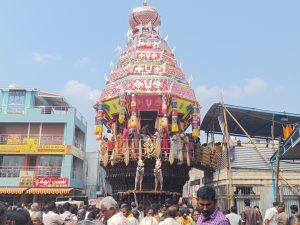
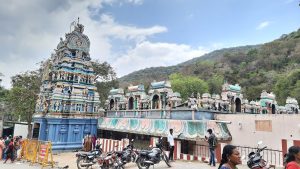
Turning off the main Sholinganallur link road into KTK Town brings you to the temple gates, which are crowned by a tall, multi-tiered Raja Gopuram. The entrance tower features detailed carvings of deities and mythological scenes finished in rich colours. The entire complex was planned and built in strict accordance with Vaastu Shastra, an ancient architectural discipline focused on spatial alignment and spiritual balance.
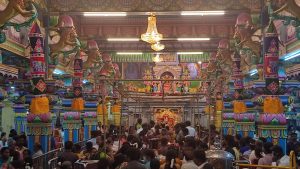
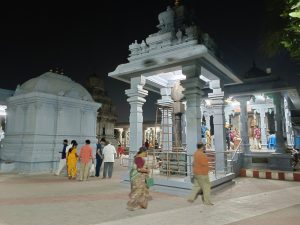
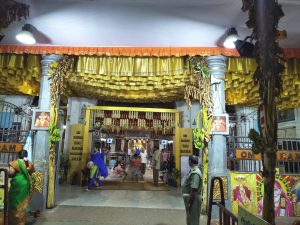
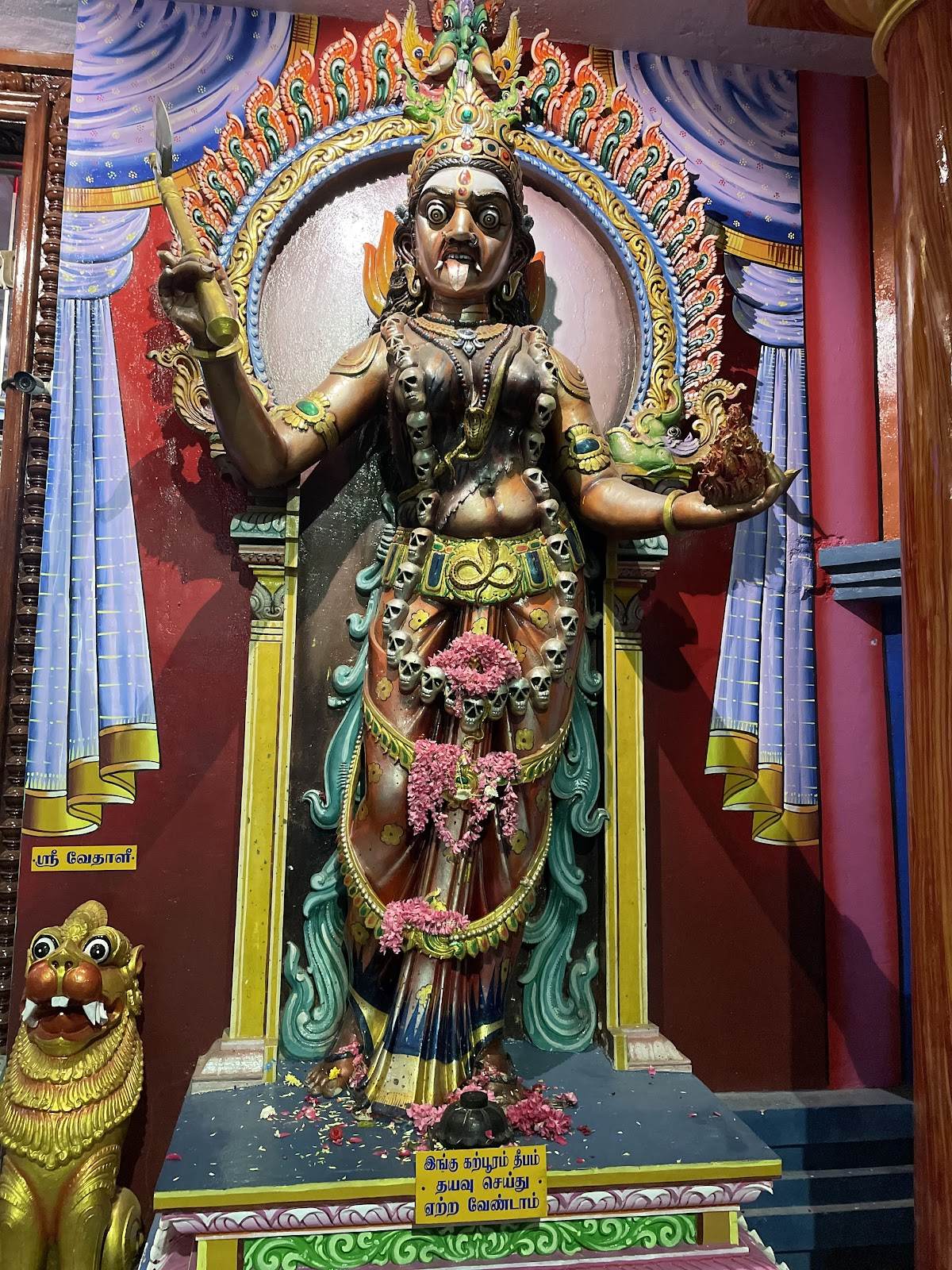
Once inside the outer enclosure, you walk along covered stone corridors that wrap around the main sanctum. The central shrine holds the sculpted image of Maha Prathyangira Devi, often adorned with fragrant flower garlands, silk vestments, and ceremonial lamps. Around her sanctum sits an extensive assembly of secondary shrines dedicated to other divine figures:
- Goddess Varahi, Goddess Neela Saraswathi, and Goddess Kaalikaambal
- Lord Shiva worshipped as Aishwarya Eshwarar, along with Lord Sharabha and Narasimha
- Panchamukha Anjaneya, the revered five-faced form of Hanuman
- Lord Ganesha, Lord Muruga, Lord Ayyappan, and Guruvayoorappan
- Agni Bhagavan, Saniswara, and the planetary nodes Rahu and Ketu, as part of the Navagraha installation
The layout encourages a complete walking prayer route. As you move clockwise from one alcove to the next, you will hear the low chanting of Sanskrit mantras, the ringing of bronze bells, and the quiet shuffling of barefoot worshippers on cool granite flags.
How a visit works
Entry to the temple complex is free for everyone. Before stepping past the threshold, leave your shoes at the designated footwear stand near the outer entrance. Small shops outside sell woven baskets filled with coconuts, fresh jasmine strands, bananas, and camphor if you wish to offer an archana inside.
Daily services follow a fixed ritual order. Priests conduct regular abishegam, bathing the deities with sacred waters, milk, and ceremonial offerings, followed by archana prayers where names of the divine are chanted on behalf of families. Sundays bring larger crowds of local devotees who gather for extended morning and evening pooja services.
On special lunar occasions, particularly on Amavasya or New Moon days, the temple conducts powerful sacrificial fire rituals known as homas or yagnas. Large cauldrons are lit with dried wood, clarified butter, and dried chillies, which are traditionally offered to Prathyangira Devi to disperse negativity and restore harmony.
Local tip: All homas organized at the temple are performed entirely free of charge for the public welfare. The temple trust does not employ booking agents, nor does it charge fees for participating in these collective fire ceremonies. Do not pay any third party claiming to reserve a spot for you.
Etiquette and what to wear
Sri Prathyangira Devi Temple is an active, devout place of worship where families come for quiet solace and prayer. Respecting local customs ensures your visit is smooth and comfortable for everyone around you. People of all backgrounds and faiths are permitted to enter, provided they respect the sanctity of the space.
- Attire: Wear traditional, conservative clothing. Men should wear dhotis, kurtas, or regular full-length trousers. Women should wear sarees, salwar suits, or churidars. Shorts, miniskirts, sleeveless shirts, and gym clothes are strictly discouraged.
- Footwear: Remove your shoes, sandals, and socks before passing through the main entrance gateway. Shoe-keeping stalls are available outside.
- Photography: Cameras and video recordings are strictly prohibited inside the temple halls and near the inner sanctums. Keep your mobile phone turned off or set to silent mode.
- Movement: Always walk around shrines in a clockwise direction. If you choose to sit down on the stone floor to rest or meditate, keep your feet tucked beside or behind you rather than pointing your soles toward the altars.
Best time to go and how long to stay
Like most traditional Tamil Nadu temples, the gates open in the morning and close during the heat of midday before opening again for the evening. If you want a peaceful darshan with minimal waiting, arrive around 8:00 AM or shortly after the doors reopen at 4:00 PM on a weekday.
| Day | Morning Hours | Evening Hours |
|---|---|---|
| Monday to Saturday | 8:00 AM – 12:00 PM (or 12:30 PM) | 4:00 PM – 7:45 PM (or 8:00 PM) |
| Sunday | 8:00 AM – 1:00 PM | 4:00 PM – 8:30 PM (extended on Amavasya) |
Allow roughly one to one and a half hours for a relaxed visit. This gives you sufficient time to leave your footwear, walk through the secondary shrines, spend a few quiet moments before the main sanctum, and observe the priests conducting prayers.
Crowd levels rise significantly during Amavasya, the nine nights of Navaratri, and on New Year’s Day on January 1. During Navaratri, the complex is decorated with intricate Golu doll displays, elaborate floral ornaments, and classical music presentations. If you visit during these festivals, expect longer waiting lines and plan to allow at least two hours.
Getting there from Pondicherry and where to stay
Reaching the temple from Pondicherry is straightforward. The temple is located roughly 135 km north along the East Coast Road, taking about 2.5 to 3 hours by car or private taxi. As you drive past Mahabalipuram and approach South Chennai, you turn westward onto the link road that connects ECR with Old Mahabalipuram Road at Sholinganallur.
If you are using public transit from Pondicherry, board any Chennai-bound express bus running via ECR and ask the conductor to set you down at the Akkarai junction or near the Sholinganallur toll gate. From either drop-off point, local three-wheeled auto-rickshaws will take you directly down the link road to the temple gates in less than ten minutes.
For travellers coming from within the city, the temple is approximately 12 km from the Velachery MRTS rail station, about 15 km from Tambaram railway station, and roughly 18 to 20 km from Chennai International Airport. If you plan to spend the night in the area, you will find comfortable beachside resorts along the ECR corridor, as well as dependable business hotels along the IT park avenue of OMR.
Nice places to combine with your trip
Because the temple is situated right between the coastal highway and the southern suburban corridor, you can easily pair your morning prayer with a few relaxing cultural and seaside stops. The immediate neighbourhood offers a pleasant blend of spiritual shrines, coastal open spaces, and local artistic landmarks that fit naturally into a day trip itinerary.
- ISKCON Temple Chennai: Located in nearby Injambakkam, about 4 km north, this expansive temple dedicated to Lord Krishna features white marble architecture, landscaped courtyards, and a very quiet prayer atmosphere.
- Akkarai Beach: Situated roughly 3 km east along the coast, this sandy stretch provides a welcome sea breeze and an unhurried setting for an early morning or late afternoon walk.
- Cholamandal Artists’ Village: Set about 6 km north along the ECR, this established artists’ colony features open-air sculpture gardens, contemporary painting galleries, and working studios founded in the 1960s.
- VGP Universal Kingdom and Marine Kingdom: Located roughly 4 km away, this family entertainment park houses an extensive walk-through underwater aquarium featuring diverse marine species.
After completing your temple rounds, the adjacent East Coast Road provides numerous open-air cafes, vegetarian South Indian messes, and coastal dining spots where you can enjoy hot filter coffee and freshly made dosas before continuing your journey.
What recent visitors say
A quick, honest snapshot from recent Google reviews, so you know what to expect before you go.
What people loved
★★★★★ Murugesh · in the last week
“Very clean. Weekdays are best time to visit for seniors”
★★★★★ Selvaraj · 3 months ago
“I had a truly wonderful experience visiting the Sri Prathyangira Devi Temple this past weekend! 🙏 There was absolutely no wait to enter, which made the visit even more pleasant. I highly recommend this peaceful and sacred place. ✨🕉️”
★★★★★ Heeraji · 3 months ago
“Prathyangira Temple, ❤️🙏 This is one of my most favorite temples. I’ve been visiting since it first opened, and every visit gives me peace and positive energy. I have a deep devotion to Varahi Amman, and the divine presence here feels very…”
Reviews via Google Maps. Opinions are those of their authors.
Frequently asked questions
Can non-Hindus visit Sri Prathyangira Devi Temple?
Yes, visitors of all faiths are welcome to enter the temple. You are asked to dress conservatively, take off your shoes outside, maintain a respectful silence, and avoid photography inside the sanctums.
Do I need to pay to participate in the temple homam?
No, all homas and fire rituals conducted here are performed free of charge for the public good. The temple administration does not use booking agents or charge any fee to attend.
What should I wear when visiting the temple?
Traditional Indian attire is recommended, such as a dhoti or formal trousers for men, and a saree, salwar kameez, or churidar for women. Revealing garments like shorts and sleeveless tops are not allowed.
Is there car parking near the temple?
Yes, street parking is available along the link road and side lanes of KTK Town outside the main entrance. Space can become tight on Sundays and during major festivals such as Amavasya.
Find it
Address: 16A, Sri Prathyangira Kovil, Road, KTK Town, Sholinganallur, Chennai, Tamil Nadu 600119, India
You might also like
- Where to stay in Pondicherry
- Churches, temples, mosques and ashrams in Pondicherry
- Pratyangira Devi temple
- Things to do in Pondicherry
- Visiting Parthasarathy Temple in Triplicane Chennai
- Visiting Sri Parthasarathyswamy Temple in Chennai
- Visiting Santhome Cathedral Basilica in Chennai: A Guide
- Visiting Shri Ashtalakshmi Temple in Chennai: A Guide