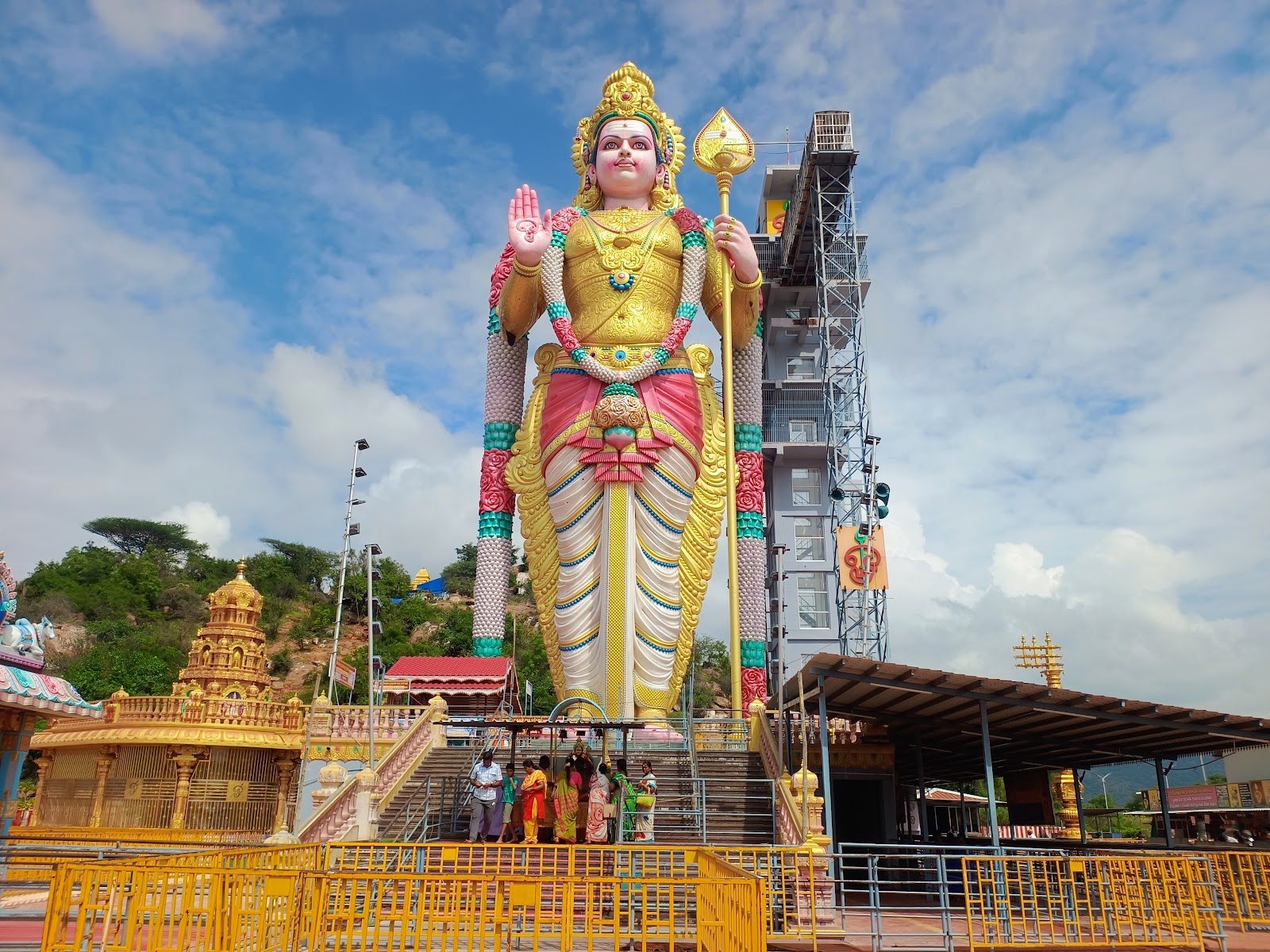
The Muthumalai Murugan Temple rises dramatically above the rural plains of Salem district, drawing travellers and pilgrims who journey along the highway connecting Salem and Chennai. Located in Puthira Goundampalayam near Yethappur, the complex has quickly become one of the most prominent spiritual landmarks in northern Tamil Nadu. It is dedicated to Lord Murugan, revered across the state as the deity of valor, wisdom, and victory.
If you are based in Pondicherry and planning an excursion westward toward Salem or the Shevaroy Hills, this makes an accessible and fascinating stop. The grounds are spacious, welcoming, and organized to handle both quiet morning worshippers and large weekend gatherings.
At a glance
| Best time of day | Early morning or late afternoon |
|---|---|
| Allow | 1 to 2 hours |
| Dress | Modest traditional attire; shoulders and knees covered |
| Photography | Permitted in the outer grounds and complex |
| From Pondicherry | roughly 190 km by road, about 3.5 to 4 hours |
Why this temple matters
The idea behind the temple came from N. Sridhar, Chairman of the Sri Muthumalai Murugan Trust. He wished to establish a sacred destination in Tamil Nadu for devotees who might never have the opportunity to travel across the ocean to the famous Batu Caves in Malaysia. Through local initiative and private funding, the project was realised, culminating in its grand consecration, known as the Kumbhabhishekam, on April 6, 2022.
At the heart of the complex is the tallest Murugan statue in the world, standing an astonishing 146 feet high. This landmark work of devotion surpasses the 140-foot statue at Batu Caves by six feet, establishing a notable world record. For devotees of Murugan, also called Kartikeya, Skanda, and Subramanya, the site carries profound emotional and spiritual resonance as a modern triumph of sacred craftsmanship.
While many historic temples across Tamil Nadu trace their stones back many centuries, this sanctuary represents living faith in the modern era. It showcases traditional iconography scaled up to monumental proportions, built using contemporary engineering while strictly observing ancient ritual prescriptions.
What you will see on the grounds
The centerpiece of the entire compound is the golden-hued statue of Lord Murugan. The deity stands in the Abhayahasta mudra, a hand gesture offering comfort, protection, and freedom from fear. In his grip rests an enormous eighty-foot vel, the divine spear that symbolises discernment and spiritual strength.
The statue was designed and sculpted by Tiruvarur Thiyagarajan, the very same master craftsman who created the renowned Murugan sculpture at Batu Caves in Malaysia. His signature aesthetic shows in the sharp details, graceful proportions, and the radiant golden paint that catches the brilliant morning sun against the backdrop of distant hills.
As you walk through the complex, several distinct features catch your attention:
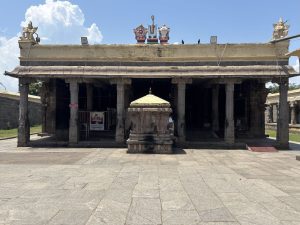
- The Sri Vinayagar shrine positioned near the entrance, honouring Lord Ganesha as the remover of obstacles before devotees proceed further.
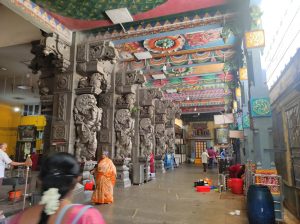
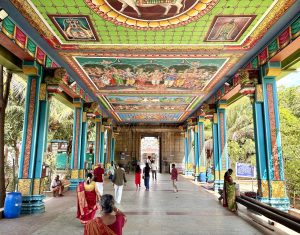
- Intricate stone carvings along the outer perimeter walls, displaying traditional scenes and narratives drawn directly from Hindu scriptures.
- The main sanctum sanctorum situated right at the foot of the giant statue, where daily pujas, arati rituals, and offerings take place.
- An integrated elevator shaft built inside the statue structure, engineered to lift devotees up to an elevation of approximately 120 feet.
The lift facility allows pilgrims an exceptional viewpoint right up near the chest of the deity, providing a rare close-up look at the sculpture work and a platform used during special milk and water ritual anointments, known as abhishekam.
How a visit works
Entering the temple is straightforward and easy to navigate, even for first-time visitors. General admission to walk through the grounds and pray at the ground-level sanctums is completely free. If you wish to ride the elevator up the statue for the high vantage point and specialized darshan, you will need to purchase a separate ticket at the counter inside the complex.
The temple generally opens its gates from 6:00 AM to 1:00 PM, closing during the hottest part of the afternoon, and reopens from 4:00 PM to 8:00 PM. Keep in mind that on special festival dates and auspicious days like Sashti, these hours often extend to accommodate large crowds.
- Leave your shoes at the designated footwear deposit stalls located near the main entrance.
- Stop first at the entrance shrine dedicated to Sri Vinayagar to pay your initial respects.
- Walk through the open courtyard toward the base sanctum to observe or join in the ground-level rituals and arati.
- If you purchased an elevator ticket, queue at the lift entrance to ascend toward the 120-foot platform for the aerial view of the surrounding countryside.
Local tip: Carry small currency notes with you for footwear storage tokens and prasadam counters, as digital payment signals can occasionally fluctuate in the rural highway corridor.
Etiquette and dress code
This is an active place of daily prayer for families from all over the region, so calm and respectful conduct is expected from everyone. Speaking in moderate tones and turning mobile phones on silent ensures a peaceful atmosphere for worshippers around the shrines.
Traditional and modest attire is strongly recommended. For men, a traditional dhoti with a neat shirt or full-length trousers is appropriate. Shorts, bermudas, and casual lungis are strictly discouraged and security may deny entry to anyone wearing them. For women, sarees, salwar kameez suits, or long skirts with modest tops covering the shoulders and chest are suitable choices.
Footwear must always be removed before you step onto the paved shrine courtyards. Well-marked counters collect shoes for a very nominal fee. Photography is permitted throughout the outer open grounds and courtyard areas, making it easy to capture pictures of the massive statue against the sky, but always avoid aiming cameras directly into the inner sanctum where priests conduct the holy rituals.
Best time to visit
Because you must walk barefoot on stone pathways, visiting between 6:30 AM and 9:00 AM or after 4:30 PM is by far the most comfortable option. The daytime sun warms the granite paving tiles rapidly by late morning, making midday visits uncomfortable on your feet.
Plan on spending around an hour if you only intend to tour the courtyard and base shrine, or roughly two hours if you plan to wait for the elevator and spend time taking in the panoramic views from above.
The atmosphere changes considerably depending on the Hindu calendar. The most energetic occasions include:
- Thaipusam, typically falling in January or February, when throngs of pilgrims arrive on foot bearing milk pots and floral offerings.
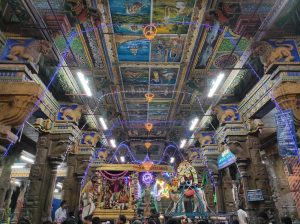
- Skanda Sashti in late autumn, marked by dramatic theatrical enactments of Soorasamharam, celebrating Murugan triumphing over demonic forces.
- Panguni Uthiram in March or April, celebrated with grand processions and deep communal devotion.
- Kavadi Utsavam days, when devotees carry decorated wooden balance frames upon their shoulders in fulfillment of sacred vows.
Getting there from Pondicherry and where to stay
Reaching Yethappur from Pondicherry is an uncomplicated overland journey. The driving route heads westward via Villupuram, joining the National Highway network towards Ulundurpet and then straight along National Highway 79 through Kallakurichi and Attur. The distance is roughly 190 km, which generally takes about 3.5 to 4 hours by private car or hired taxi.
The temple sits right alongside the Salem to Chennai highway in Puthira Goundampalayam, making it practically impossible to miss from the road. The town of Valapady is approximately 10 km to the west, while Attur sits about 22 km to the east.
If you are traveling by train, the local Ettapur Road Railway Station is only about 3.5 km away and handles regional passenger services. For broader rail links across South India, Salem Junction sits roughly 50 km to the west. For air transit, Salem domestic airport is about 65 km away, while Tiruchirappalli International Airport is roughly 140 km to the south.
| Hub | Distance | Typical Travel Mode |
|---|---|---|
| Pondicherry | Roughly 190 km | Direct drive via NH 79 (approx. 4 hours) |
| Attur | Approx. 22 km | Local taxi or highway bus (approx. 25 minutes) |
| Salem City | Approx. 50 km | Highway bus, cab, or passenger train (approx. 1 hour) |
| Ettapur Road Station | Approx. 3.5 km | Local auto-rickshaw (approx. 10 minutes) |
For accommodation, you will find basic lodging in nearby Attur, but most travellers prefer to base themselves in Salem city, where a full spectrum of comfortable business hotels, family suites, and dining venues are readily available.
Nice places to combine with your visit
Because the temple visit rarely takes more than half a day, you can easily combine it with other historical and natural points of interest in Salem district before heading back toward the coast or continuing into the hills.
- Attur Fort: Located roughly 22 km east along the banks of the Vasishta River, this 17th-century stone fortress features substantial ramparts, granaries, and arched royal quarters built during regional nayak rule.
- Muttal Falls (Anaivilunthan): A quiet seasonal waterfall and forest eco-tourism zone located near Attur, offering freshwater cascades and scenic green walks after the monsoon rains.
- Yercaud: The cool, coffee-covered hill station in the Shevaroy Hills sits approximately 65 km away, making this highway temple an ideal morning pause before driving up the scenic winding ghat roads.
For meals along the way, the Salem to Chennai highway corridor has numerous family-friendly vegetarian motels and roadside restaurants serving freshly steamed idlis, crisp dosas, and South Indian filter coffee.
What recent visitors say
A quick, honest snapshot from recent Google reviews, so you know what to expect before you go.
What people loved
★★★★★ Arunkumar · 4 months ago
“Visited the majestic and world’s tallest Murugan statue at Muthumalai. The divine experience and beautiful architecture are truly breathtaking. The premises are very clean, peaceful, and well-maintained. Ample parking spaces and lift…”
★★★★★ sundararajan · 9 months ago
“This is the highest murugan statue in the world. The viswaroopadarasinam is built by a private devotee. The original temple is in the hillock top for which you have to trek . Probably in the coming days the steps will be laid for the…”
★★★★☆ ulttimatesasi · 2 months ago
“Sri Muthumalai Murugan Temple is home to the world’s tallest statue of Lory Murugan. The Deity is named Viswaroopa Murugan. A lift facility is available to perform “Panneer Abhishekam” (Ritual bathing with Rose water) for Viswaroopa…”
What some found difficult
★★★☆☆ A · 4 months ago
“This temple was open to public in 2022, after a delay of nearly two and half years due to corona. The work began in 2016 itself. More than the vibe, which builds over a period of time and correct austerities, its now a good picnic point.…”
Reviews via Google Maps. Opinions are those of their authors.
Frequently asked questions
Is there an entry fee to visit the temple?
General entry to the temple grounds and base sanctum is free for all visitors. However, if you wish to ride the elevator up the statue structure to the 120-foot viewing level, a separate paid ticket is required at the counter.
Can non-Hindus visit the Muthumalai Murugan Temple?
Yes, visitors of all backgrounds are welcome to explore the open grounds and admire the remarkable architecture. Everyone is expected to follow the standard rules of etiquette, which include wearing modest clothing and removing footwear before entering.
What should I wear when visiting?
Modest and traditional clothing is required. Men should wear shirts paired with dhotis or neat full-length trousers, while women should wear sarees or salwar kameez suits. Casual shorts and lungis are not permitted.
Is photography permitted on the premises?
Photography is generally permitted in the outer courtyards and open complex areas, allowing you to take pictures of the monumental statue. Avoid photographing inside the inner sanctum where religious ceremonies and pujas are actively taking place.
Find it
Address: Salem Puthira Goundampalayam, Yethappur, Tamil Nadu 636119, India