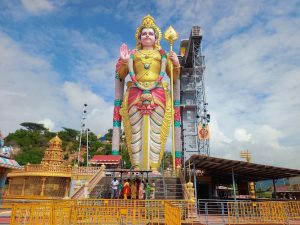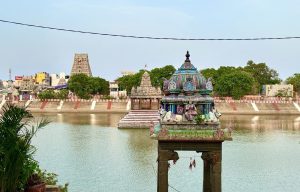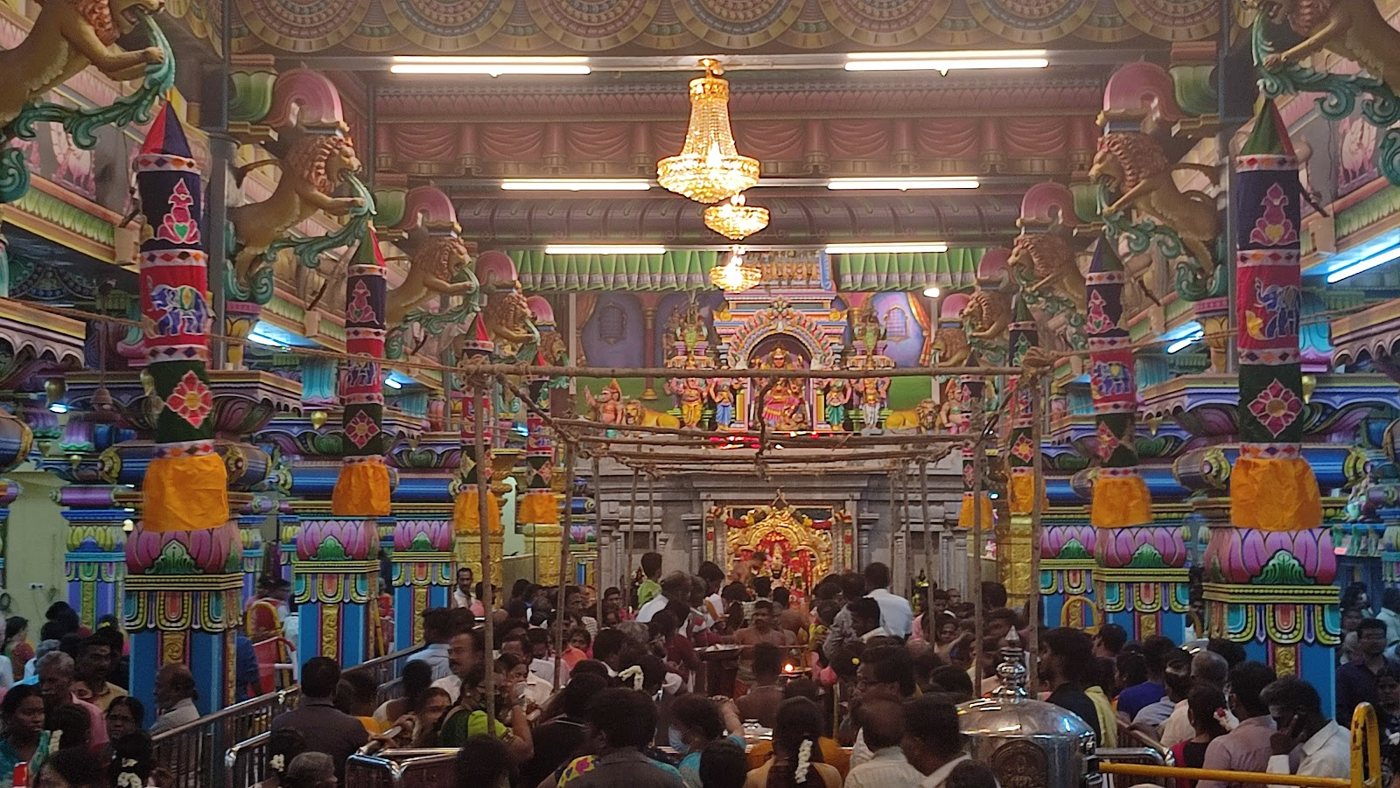
Arulmigu Vekkaliyamman Kovil in Woraiyur is one of the most distinctive temples you will encounter in Tiruchirappalli. Unlike standard South Indian shrines crowned with towering stone roofs, the main sanctum here opens directly to the sky, allowing sun, wind, and rain to fall freely upon the stone deity seated below.
Woraiyur was the historic capital of the Early Chola kings, and this sacred complex has served the local community for generations. If you travel inland from Pondicherry to explore the ancient towns along the Cauvery basin, spending an hour here offers a genuine look at everyday Tamil spiritual life and a remarkable local tradition of personal prayer.
At a glance
| Best time of day | Early morning around 6:00 AM or late afternoon from 4:30 PM |
|---|---|
| Allow | 45 minutes to 1 hour |
| Dress | Modest traditional attire; shoulders and knees covered |
| Photography | Strictly prohibited inside inner sanctum and core halls |
| From Pondicherry | roughly 200 km by road (about 4 hours drive) |
The Chola capital and the roofless sanctum
To understand why this temple looks the way it does, it helps to know where you are standing. Woraiyur, known in ancient literature as Uraiyur, served as the royal seat of power for the Early Chola dynasty. Historical accounts tell us that the Chola rulers revered Goddess Vekkaliyamman as their fierce guardian deity, turning to her shrine for blessings and protection before marching their troops into military campaigns.
The defining physical trait of the temple is its completely roofless sanctum. Local legend explains this through a dramatic story of divine retribution and maternal mercy. According to tradition, a severe storm of mud and sand swept over Woraiyur due to divine anger, blowing away the roofs and walls of ordinary citizens and leaving them completely exposed to the elements.
Moved by the suffering of the townspeople, Goddess Vekkaliyamman intervened to halt the storm. She took a solemn vow that she would reside in an open-sky sanctum, enduring the baking summer sun and heavy monsoon rains herself, until every single one of her devotees had adequate shelter. To this day, despite the expansion of the outer corridors and halls, no ceiling has ever been constructed over the central shrine.
Architecture and sacred details
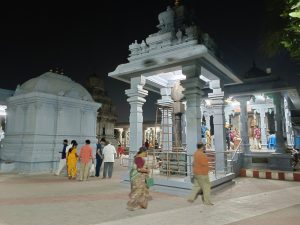
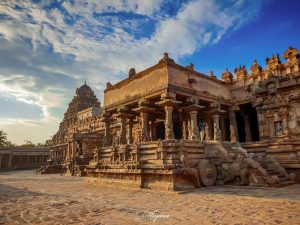
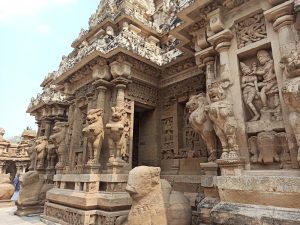
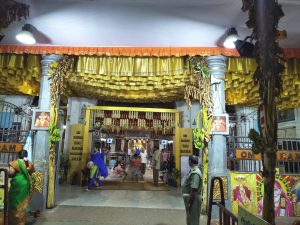
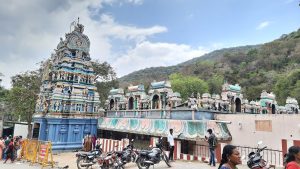
Approaching the temple along S S Kovil Street, you will be greeted by a traditional Tamil entrance tower, or gopuram, decorated with painted figures from Hindu puranas. As you pass beneath the gateway, the complex opens into broad stone pillared halls (mandapams) and an enclosed circumambulatory corridor (prakaram). The layout reflects classic Dravidian craftsmanship, grounded in granite and cool plaster.
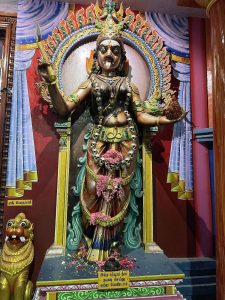
At the heart of the complex sits the north-facing stone form of Vekkaliyamman. She is depicted as a protective manifestation of Shakti in the form of Kali, seated in the Yoga Peeta posture. The carving shows her with four arms: she holds a trident (trishul), a small drum (udukkai), a noose (pasha), and an akshaya patra, which represents an inexhaustible vessel of sustenance. Her left foot rests firmly upon a subdued demon, while her right leg remains folded in meditation.
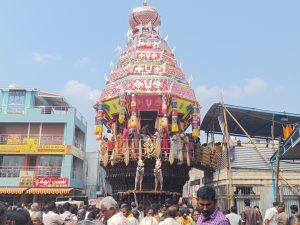
Beyond the stone deity, the temple houses a magnificent golden chariot (thangathther). Crafted from gold and silver, this elaborate ceremonial car carries the processional image through the streets during annual temple festivals, drawing immense crowds from across the region.
How a visit works and the petition ritual
A visit to Arulmigu Vekkaliyamman Kovil follows a gentle, practical rhythm. General admission is entirely free, and you can join the main queue for darshan alongside neighborhood families who visit each morning. If you arrive during peak morning or evening worship hours, you may choose to purchase a nominal special darshan ticket near the counter to move through a slightly faster line.
One of the most moving rituals here involves the writing of personal petitions. Devotees write their heartfelt grievances, domestic problems, health worries, or hopes onto slips of paper, which are available at the temple counters for a small fee. Once written, worshippers carry these slips toward the sanctum and tie them securely to the large iron trident (soolam) installed near the shrine.
The belief is that the Goddess reads every single plea tied to her weapon and resolves the troubles of her worshippers. Watching mothers, students, and elderly workers quietly knotting their paper notes to the trident gives you an intimate glimpse into the profound personal bond between the town and its patron deity.
Local tip: If you wish to participate in the petition ritual, pens and printed paper slips are available at the administrative counter near the inner prakaram entrance.
Temple etiquette and dress code
Arulmigu Vekkaliyamman Kovil is an active, deeply cherished house of prayer. Visitors from all backgrounds are welcome to enter the grounds, and non-Hindus are permitted inside the temple complex. Respecting the customs of the community will ensure your time here is peaceful and welcomed.
- Footwear: Leather shoes, sandals, and socks must be removed before entering the temple compound. Use the dedicated shoe-keeping stall near the main gate.
- Dress code: Modest clothing is strictly required. Men should wear traditional dhotis, pyjamas, or long formal trousers with shirts. Women should wear sarees, salwar kameez, or churidars with a dupatta. Shorts, skirts, sleeveless tops, and beachwear are not allowed.
- Photography: Taking photographs or recording video is strictly prohibited inside the inner sanctum, near the trident, and inside the core mandapams. Keep phones tucked away in your bag or pocket.
- Deportment: Walk gently, keep conversations low, and move clockwise around the inner corridors in keeping with Hindu tradition.
Best time to visit and festival calendar
The temple gates open daily in two broad shifts: from 5:15 AM or 6:00 AM until 1:00 PM, and again in the afternoon from 4:00 PM to 9:00 PM. Timings can shift slightly on festival days or auspicious lunar phases, so arriving near the start of either session is wise.
For a serene visit, plan for early morning between 6:30 AM and 8:00 AM, before the afternoon heat settles on the stone courtyard. Tuesdays and Fridays are considered especially sacred to the Goddess, meaning lines will be substantially longer, especially during the Tamil months of Aadi (July to August) and Thai (January to February).
If you enjoy seeing regional celebrations in full motion, consider visiting during one of the major annual observances:
- Panguni Poochoridal: Celebrated in the Tamil month of Panguni (March to April), during which thousands of devotees carry baskets of fresh flowers to offer to the deity.
- Chithirai Festival: Held in April or May, featuring grand temple processions and the ceremonial outing of the chariot.
- Vaikasi Mango Abhishekam: A special summer ritual in May or June where the deity is bathed with sacred offerings including fresh mango pulp.
- Navarathri: Nine nights of autumn celebrations with special evening decorations and classical music recitals.
Getting there from Pondicherry and practical transit
Tiruchirappalli makes an easy overland excursion from Pondicherry. By road, the distance is roughly 200 km, taking about four hours via the NH38 and NH45 corridors passing Villupuram and Perambalur. You can hire a private taxi from Pondicherry or catch one of the regular express buses departing from the Pondicherry central bus stand.
If you prefer rail travel, you can hire a car to Villupuram Junction (about 40 km from Pondicherry) and catch an express train down the main southern line to Tiruchirappalli Junction. The temple itself sits in Woraiyur, roughly 5 km north of Tiruchirappalli Junction railway station and about 10 km from Tiruchirappalli International Airport.
Navigating within Trichy is straightforward. From Chatram Bus Stand, the temple is roughly 3 km away, while from Central Bus Stand it is about 5 km. Both city buses and auto-rickshaws run frequently to Woraiyur. If you are staying overnight, the Cantonment area and the streets around Central Bus Stand offer clean, convenient hotels suited for short stays.
Nearby places to combine with your visit
Because a thorough visit to Arulmigu Vekkaliyamman Kovil takes about an hour, you can effortlessly pair it with other historic sites across the city in a single day.
| Place | Approximate Distance | What to Notice |
|---|---|---|
| Woraiyur Panchavarnaswamy Temple | Within Woraiyur | Ancient Shiva temple celebrated in classic Tamil Shaivite hymns. |
| Rockfort Ucchi Pillayar Temple | Roughly 4 km | A steep climb up a massive rock outcrop leading to panoramic city views. |
| Arulmigu Jambukeswarar Temple | Roughly 7 km | One of the Pancha Bhoota shrines, dedicated to the water element. |
| Sri Ranganathaswamy Temple | Roughly 9 km | Massive river-island temple complex in Srirangam with towering gopurams. |
After paying your respects at Vekkaliyamman Kovil, take a stroll down the lanes of Woraiyur. The area is known for small, traditional tea stalls where you can sit down for a glass of piping hot filter coffee alongside crisp medu vadas.
What recent visitors say
A quick, honest snapshot from recent Google reviews, so you know what to expect before you go.
What people loved
★★★★★ Prasanna · in the last week
“I went on a Tuesday Evening, temple was not crowded, overall 30min to complete the entire darshan. The temple has an interesting story pl visit and check it out.”
★★★★★ SARAVANAN · 5 months ago
“Visited Arulmigu Vekkali Amman Temple and had a truly divine and powerful experience. The temple is very special because the sanctum (karpagraha) has no roof, so the Ambal receives both sunlight and rain directly. It is believed that the…”
★★★★★ Anantha · 5 months ago
“Powerful I found the Arulmigu Vekkaliyamman Temple to be truly powerful! 🙏 The atmosphere was incredibly moving, and the deity’s presence was palpable. I felt a deep sense of peace during my visit. ✨ Highly recommend experiencing this…”
Reviews via Google Maps. Opinions are those of their authors.
Frequently asked questions
Can non-Hindus enter Arulmigu Vekkaliyamman Kovil?
Yes, non-Hindus are permitted inside the temple complex. You are welcome to walk through the mandapams and observe the open-air sanctum, provided you follow the dress code and remove your footwear outside.
What is the reason behind the roofless sanctum?
According to regional tradition, Goddess Vekkaliyamman vowed to remain without a roof over her shrine until every resident of Woraiyur had proper shelter, following an ancient storm that swept away their homes.
How does the paper petition ritual work?
Worshippers write their personal prayers or grievances on paper slips purchased for a small fee at the temple counter. They then tie these slips directly to the sacred trident located close to the main sanctum.
Is photography allowed inside the temple?
Photography and videography are strictly prohibited inside the inner sanctum and inner halls. You should keep cameras and mobile phones stored inside your pockets or bags while exploring the interior.
Find it
Address: Vekkaliyamman, 11c, S S Kovil Street, Woraiyur, Tiruchirappalli, Tamil Nadu 620003, India