Kanyakumari Bhagavati Amman Temple stands at the southernmost edge of the Indian mainland, directly overlooking the waters where three seas meet. If you are travelling down from Pondicherry along the southern Tamil Nadu coastline, this ancient temple is one of the most memorable spiritual landmarks you can experience. The sea breeze carries the sound of the surf straight into the granite courtyards, creating a setting that feels distinct from interior temple towns.
The shrine is dedicated to the virgin goddess Devi Kanya Kumari, a manifestation of Adi Parashakti. Pilgrims from all over India travel here to offer prayers, bathe at the shore, and witness the morning rituals. A little preparation helps you navigate the temple rules smoothly, from traditional clothing requirements to the daily opening hours.
At a glance
| Best time of day | Early morning around 5:00 AM or late afternoon before sunset |
|---|---|
| Allow | 1 to 2 hours for darshan and walking the corridors |
| Dress | Strict traditional attire; men must remove upper garments |
| Photography | Strictly prohibited inside the sanctum and corridors |
| From Pondicherry | Roughly 580 km by road, about 10 to 11 hours |
Why this place matters
Kanyakumari Bhagavati Amman Temple has a heritage that reaches back into ancient Sangam literature and classic Hindu epics. According to tradition, the temple marks the sacred ground where the young goddess performed severe penance in her resolve to vanquish the demon king Banasura. It is also venerated across India as a major Shakti Peetha, believed to be the spot where the spine of Goddess Sati fell.
Royal dynasties have sustained the temple across many centuries. Historical records show patronage from the early Pandya kings, the Nayak rulers of Madurai, and later the Kingdom of Travancore, each adding layers to the structures and rituals. That enduring support turned this coastal outpost into one of southern India’s primary pilgrimage destinations.
Geographically, the temple stands right in front of the Triveni Sangamam, the confluence of the Arabian Sea, the Bay of Bengal, and the Indian Ocean. For worshippers, completing a sea bath here and walking directly into the temple grounds is an essential rite of purification.
What you will see inside the temple
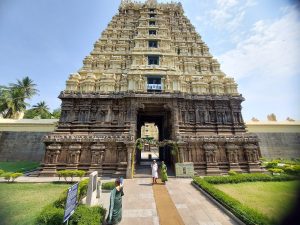
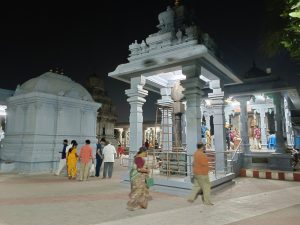
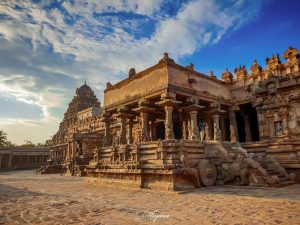
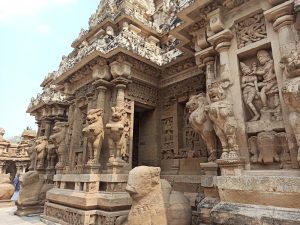
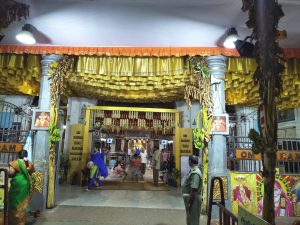
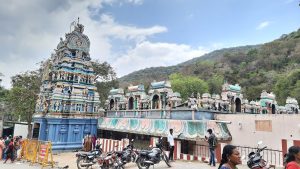
The temple exhibits an architectural character combining Dravidian stone traditions with regional Kerala styles. Sturdy granite masonry defines the outer boundary walls, built tall and strong to weather the humid, salt-laden marine air. As you pass through the multi-tiered entrance gopuram, you step into covered stone mandapams supported by carved pillars that lead toward the inner sanctuary.
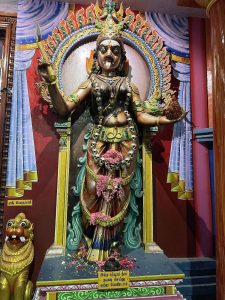
At the heart of the complex is the sanctum sanctorum, where the deity stands sculpted from dark stone. The goddess is portrayed as a young girl standing in penance, holding a rosary, or akshamala, in her hand. Her image is adorned with a famous diamond nose ring that catches the flickering oil lamps. An old legend relates that the nose gem shone with such intensity that passing mariners mistook it for a coastal lighthouse and ran their ships aground; as a result, the eastern sea-facing gateway was closed and remains shut for most of the year, opening only on special ritual dates.
While making your way along the circumambulatory path around the central shrine, you will also pass subsidiary shrines dedicated to Ganesha, Surya, and Lord Subrahmanya. Take a moment to pause in the pillared corridors, where the heavy stone floors stay pleasantly cool even during hot afternoons.
How a visit works
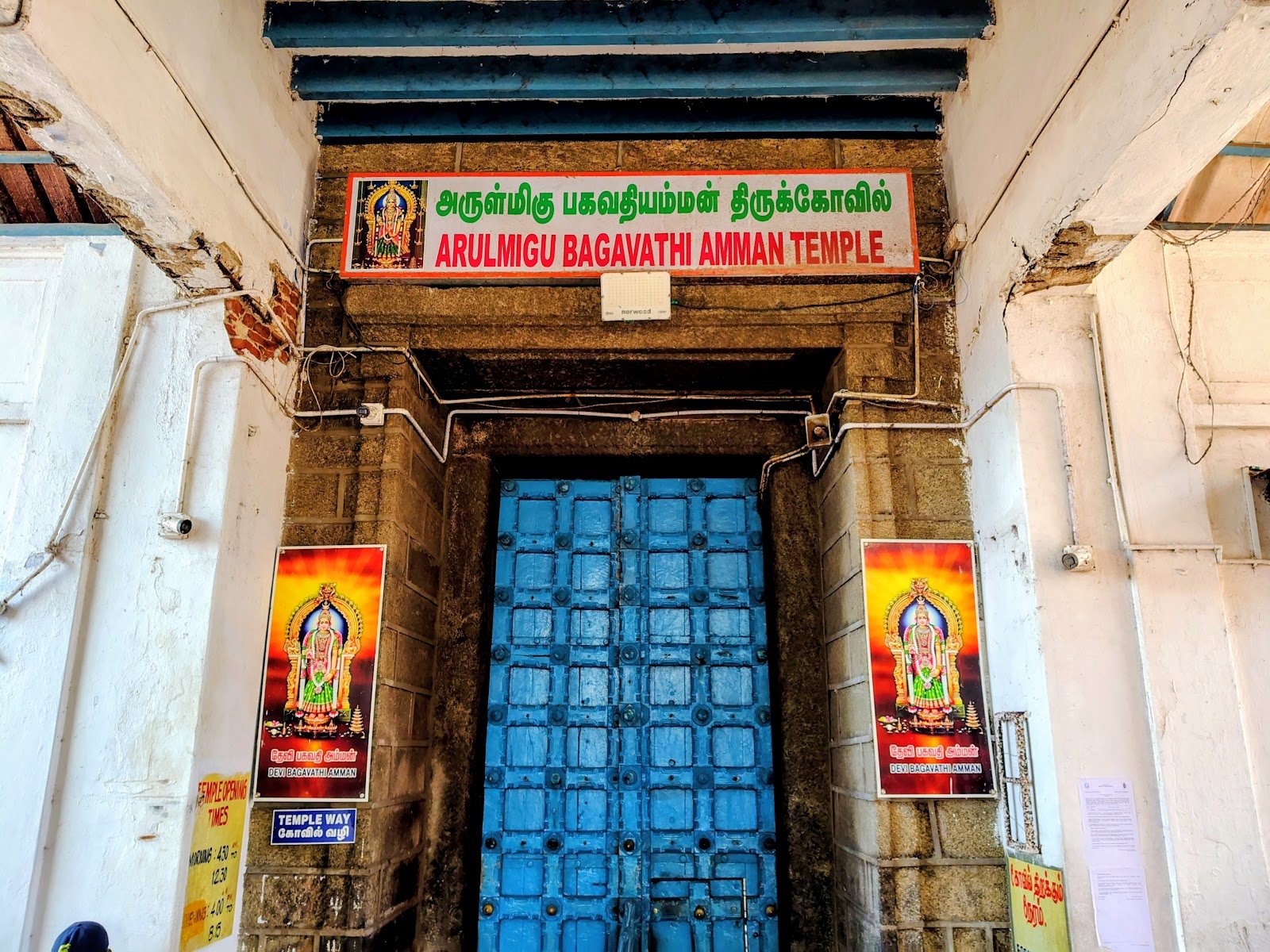
Before you approach the entrance, you must leave your shoes at the footwear counter outside the gates. The temple operates on a clear schedule, opening every day from 4:30 AM to 12:30 PM, then closing for the midday break before reopening from 4:00 PM to 8:00 PM. These timings can shift slightly during major annual festivals, so it is sensible to verify locally upon arrival.
General admission into the temple is completely free. You can simply join the general darshan line that moves along the outer mandapam into the inner sanctum. If you have limited time or wish to participate in special rituals, paid darshan and puja tickets can be purchased at designated counters near the entrance.
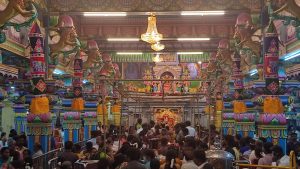
The queue moves at a steady pace. Priests conduct regular aarti ceremonies throughout the day, chanting Sanskrit verses and waving camphor lamps before the deity. Even during busy spells, the atmosphere remains disciplined, filled with the scent of burning oil lamps, sandalwood, and incense.
Etiquette and what to wear
The temple is administered under Tamil Nadu HR and CE regulations and enforces a strict traditional dress code that applies to all visitors without exception.
- Men must wear a dhoti or trousers. Shirts, vests, and any upper garments must be removed before entering the inner sanctum.
- Women must wear sarees, half-sarees, or churidars and salwar suits paired with a dupatta.
- Shorts, mini-skirts, sleeveless tops, and beach attire are not permitted anywhere past the entrance gates.
All cameras, video equipment, and mobile phones are strictly prohibited within the sanctum and the surrounding inner corridors. Keep your phone switched off or placed deep inside your bag. Silence is expected in the queue, especially near the sanctum. Please note that according to prevailing temple custom, entry into the inner sanctum is restricted to practicing Hindus. Non-Hindu visitors can usually appreciate the architecture from the outer areas.
Best time to go and how long to stay
The early morning session between 4:30 AM and 6:30 AM is peaceful and noticeably cooler. Arriving at dawn allows you to combine your temple visit with watching the sunrise over the ocean just outside the temple walls. The evening hours from 5:00 PM onward are also pleasant, though lines can grow longer as daytime sightseers arrive.
A standard visit takes roughly one hour on an ordinary weekday. On weekends, national holidays, and major religious celebrations, you should budget at least two to three hours to navigate the queues comfortably.
| Festival | Timing | What Happens |
|---|---|---|
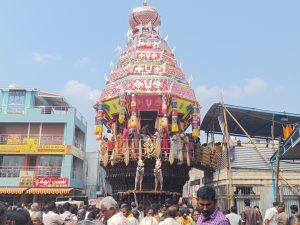
| Vaikasi Visakam | May to June | A ten-day Brahmotsavam featuring decorated car and float processions. |
| Navaratri | September to October | Ten days of celebration in the Tamil month of Purattasi, ending on Vijayadashami. |
| Chitra Pournami | April to May | Full moon observances with high pilgrim turnout at the seaside. |
| Aadi and Thai Amavasai | July/August and January/February | New moon days marked by ancestral rites and ritual baths at the shore. |
Local tip: If you plan to attend the temple during the festival seasons, book your local transport and hotel rooms well in advance, as Kanniyakumari sees substantial pilgrim traffic during these times.
Getting there from Pondicherry and where to stay
Reaching Kanniyakumari from Pondicherry requires a journey of roughly 580 to 600 km southward across Tamil Nadu. Driving directly takes about 10 to 11 hours via national highways heading past Madurai and Tirunelveli. Many travellers choose an overnight sleeper bus or take a train connecting through Viluppuram to Kanniyakumari Railway Station, which terminates just roughly 1 km from the temple gates.
If you prefer flying, the nearest aviation hub is Trivandrum International Airport in Kerala, located approximately 90 to 100 km away. From the airport, pre-paid taxis and regular state buses reach Kanniyakumari in about two and a half to three hours.
Kanniyakumari town offers a wide selection of basic guesthouses, pilgrim rest houses, and mid-range seaside hotels clustered within walking distance of Temple Road. For quieter, upscale stays, you can look toward the town of Nagercoil, roughly 19 km to the north, which also has major transport connections.
Nice to combine with
Because the temple sits right in the centre of the town’s historical point, you can easily explore several notable sights on foot within a few hundred metres of the temple entrance.
- Triveni Sangamam: Step down to the stone bathing ghats right beside the temple where pilgrims gather for ritual sea baths.
- Vivekananda Rock Memorial and Thiruvalluvar Statue: Walk to the ferry jetty located near the temple to board the short boat ride to the twin rock monuments standing off the coast.
- Gandhi Memorial Mandapam: A pink coastal structure built on the spot where Mahatma Gandhi’s ashes were placed for public homage before immersion.
- Kamarajar Mani Mantapa Mandapam: A quiet seaside memorial dedicated to the revered former Chief Minister of Tamil Nadu.
After your visit, the streets leading away from the temple are filled with small South Indian vegetarian messes and tea stalls where you can sit down for freshly made dosas, idlis, and hot filter coffee.
What recent visitors say
A quick, honest snapshot from recent Google reviews, so you know what to expect before you go.
What people loved
★★★★★ Subash · 2 months ago
“I visited this temple after seeing a dream and I am blessed. The speciality of Kanyakumari temple is that it’s very near to the shore, where three oceans meet (Triveni Sangam) – Arabian sea, Indian Ocean and Bay of Bengal. After getting…”
★★★★★ Subash · 4 months ago
“A must visit for the Hindu and located at one of the most important parts of India, its Southern most tip where Indian ocean meets the Arabian Sea and the Bay of Bengal. Unforgettable is the beautiful deity of Kanya Kumari with that…”
★★★★★ AK · 4 months ago
“Arulmigu Devi Kanyakumari Bhagavati Amman Temple is one of the most sacred temples in India, revered as a Shakti Peetha and known for its deep spiritual significance, historic heritage, and stunning location by the sea. Devotees appreciate…”
Reviews via Google Maps. Opinions are those of their authors.
Frequently asked questions
What is the dress code for men at Kanyakumari Bhagavati Amman Temple?
Men must wear dhotis or trousers and are required to take off their shirts and upper garments before going inside the inner sanctum. Wearing shorts or lungis is strictly disallowed.
Can non-Hindus enter the temple?
Non-Hindu visitors may walk through the outer areas of the temple complex. However, entry into the inner sanctum is customary only for practicing Hindus.
Is photography permitted anywhere inside?
No, photography and mobile phone use are strictly prohibited inside the temple sanctum and corridors. You must keep cameras inside your bag or leave them in your vehicle.
How far is the temple from the railway station?
Kanniyakumari Railway Station is roughly 1 km from the temple. You can easily reach the entrance via a five-minute auto-rickshaw ride or a brief fifteen-minute walk.
Find it
Address: 12/1, Temple Rd, Chembakatharisu, Kanniyakumari, Tamil Nadu 629702, India