The Jalakanteshwara Temple sits inside the wide stone walls of Vellore Fort, surrounded by a historic moat. Dedicated to Lord Shiva as the lord who resides in water, this temple brings together brilliant Vijayanagara stonework with the calm rhythm of daily South Indian worship. If you are exploring northern Tamil Nadu from Pondicherry, it makes a rewarding day trip or weekend stop.
Walking through the towering entrance gate brings an immediate sense of quiet focus. You hear the soft ring of brass bells, smell camphor and fresh jasmine, and walk past granite carvings that have endured for centuries. Here is what to expect during your visit, along with practical guidance to make your journey smooth and respectful.
At a glance
| Best time of day | Early morning between 6:30 AM and 8:30 AM, or late afternoon around 5:00 PM |
|---|---|
| Allow | 1 to 2 hours for the temple, plus extra time for the fort grounds |
| Dress | Modest traditional attire; shoulders and knees must be fully covered |
| Photography | Permitted in open courtyards; strictly forbidden inside the inner sanctum |
| From Pondicherry | Roughly 155 km, about 3.5 to 4 hours by road |
The history and revival of the fort temple
Construction of Jalakanteshwara Temple dates back to around 1550 CE, during the rule of the Vijayanagara Emperor Sadasivadeva Maharaya. The local chieftain Chinna Bommi Nayaka, also remembered as Bommi Reddi, oversaw its creation. The temple was planned as the spiritual core of the fortified settlement, honouring Shiva alongside his consort, Goddess Parvati, who is worshipped here as Akhilandeshwari Amman.
Following military conflicts and political changes in the seventeenth century, the presiding stone lingam was carefully moved to Sathuvacheri to protect it from harm. Worship stopped, and the temple stayed dormant for roughly 400 years. During the colonial era, the empty halls were repurposed as a military arsenal. In 1921, the Archaeological Survey of India declared the structure a protected monument.
A remarkable chapter in local heritage took place in 1981, when community efforts led to the return and reinstallation of the original lingam. A formal kumbhabhishekam, or consecration ceremony, was conducted in 1982. Today, the complex functions once again as a living centre of faith, where prayers and rituals take place daily among ancient stone colonnades.
What you will see inside the complex
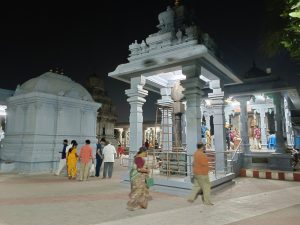
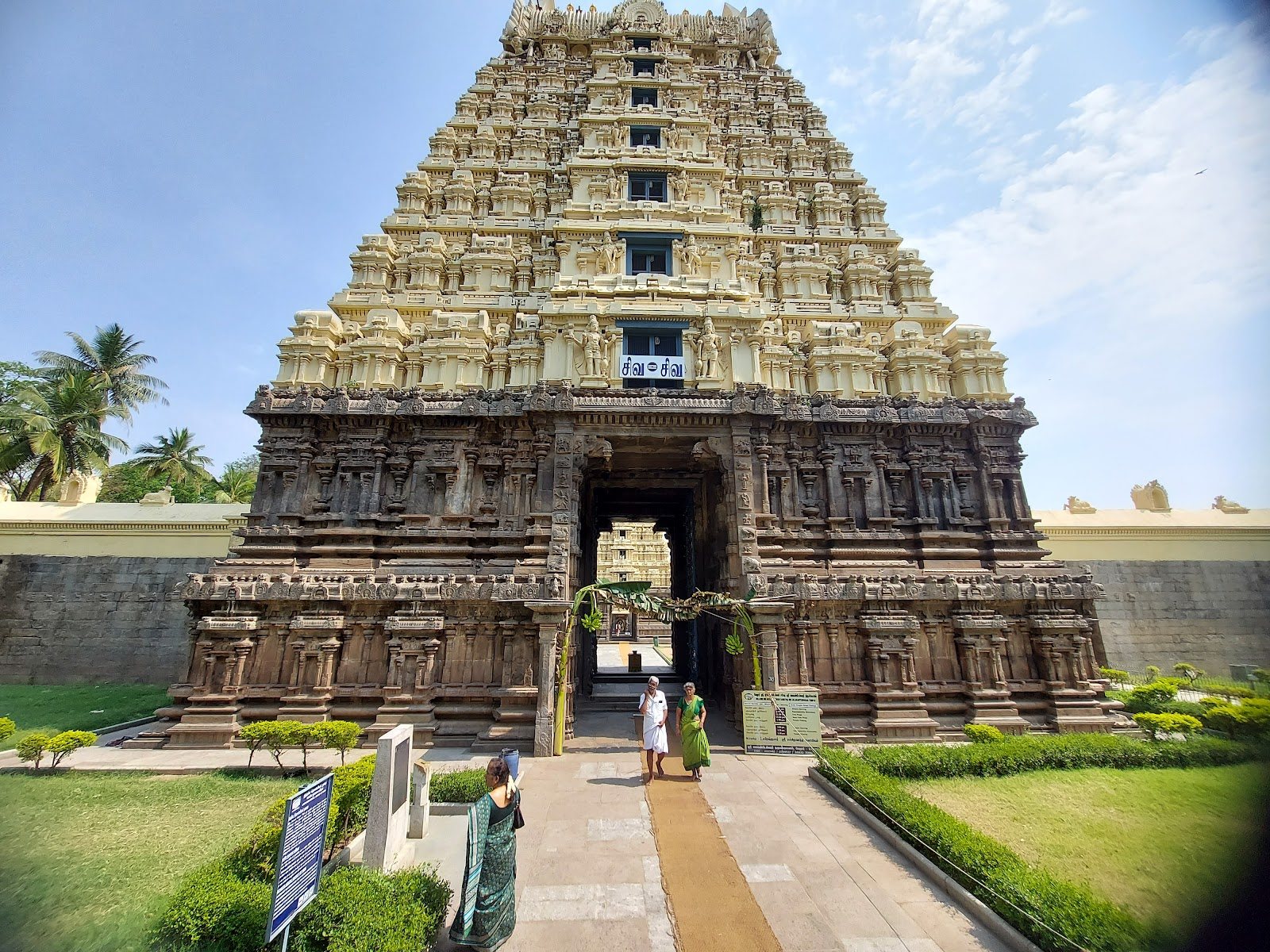
The entrance to the temple is marked by an imposing seven-tiered rajagopuram rising over 100 feet in height. As you pass underneath its vaulted threshold, you step onto broad stone flagstones that lead toward the central shrine and the surrounding courtyards.
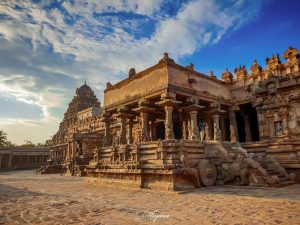
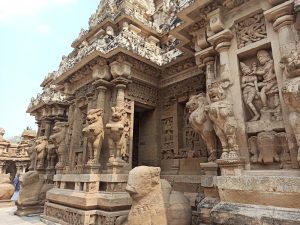
To your right stands the celebrated Kalyana Mandapa, widely regarded as a masterwork of late Vijayanagara stone carving. The monolithic pillars here are carved with astonishing detail. You will see life-sized rearing horses ridden by armed warriors, mythical yalis with leonine bodies and elephant trunks, serpentine dragons, and delicately rendered scenes from Hindu epics. Every angle of each column reveals tiny ornamental details, from flowing scrollwork to miniature musicians.
Within the temple grounds lies a sacred well known as Ganga Gouri Theertham, supplying water for the daily rites. As you walk through the covered corridors, you will also encounter smaller shrines dedicated to Lord Nataraja, Vinayagar, Subramanya, and representations of the Hindu Trinity with their consorts. The cool granite interiors offer a welcome respite from the midday heat outside.
How a visit works and what to expect
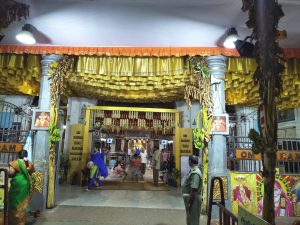
Visiting the temple is straightforward and unhurried. You enter Vellore Fort through its main access road, cross the moat, and approach the temple gopuram on foot. Footwear must be left outside at the attended shoe-keeping stand near the gateway.
Inside, visitors are free to walk the pillared perimeter and admire the stone sculptures. Devotees join the queue leading toward the garbhagriha, or inner sanctum, where the priests perform traditional arati with burning camphor and offer sacred ash to worshippers. You can stand quietly in the hall to observe the proceedings, listening to the resonant chanting of Vedic verses.
Non-Hindu visitors are welcome to enter the courtyards and study the mandapas. While access to the outer halls is open, direct participation in the innermost sanctum ceremonies may have restrictions based on local custom. Temple volunteers and priests are generally welcoming if you maintain a calm demeanour and observe what others do around you.
Local tip: Visit during the morning arati to see the rituals unfold quietly before the heat builds up in the stone corridors.
Etiquette, dress code, and photography rules
Because this is an active place of prayer, strict rules regarding clothing and conduct apply to everyone who enters the complex. Respecting local traditions ensures that the sacred atmosphere remains undisturbed for worshipping devotees and travellers alike. You will need to take off your footwear before entering and ensure that your shoulders and legs are properly covered.
- Attire must be modest and conform to standard Tamil Nadu temple regulations. Men should wear traditional dhotis, pyjamas, or formal trousers with shirts. Women should wear sarees, salwar kameez, or long skirts with tops. Shorts, sleeveless shirts, and mini-skirts are not permitted.
- Shoes, sandals, and socks must be removed before entering the temple compound.
- Photography is permitted in the open courtyards and around the carved pillars of the Kalyana Mandapa, but cameras and mobile phones must be put away before entering the inner sanctum.
- Keep mobile phones on silent mode to protect the quiet atmosphere of the prayer halls.
- Never touch the decorated stone carvings roughly, and avoid sitting on raised plinths meant for ritual items.
Best time to go and festival days
The temple doors generally open from 6:30 AM to 1:00 PM and reopen from 5:00 PM to 8:30 PM. Timings can shift slightly on festival days, so arriving near the start of either session is wise. The stone floor heats up by midday, making early mornings and late afternoons by far the most comfortable times to walk barefoot.
| Session | Typical Hours | Atmosphere |
|---|---|---|
| Morning | 6:30 AM to 1:00 PM | Quiet, cooler stones, fresh flower offerings |
| Evening | 5:00 PM to 8:30 PM | Lit oil lamps, evening prayers, pleasant breeze |
The most significant annual gathering is Maha Shivaratri, celebrated in late winter. During this night, the temple stays open with continuous abhishekams, sacred baths of the lingam, and musical performances. Other festive periods marked by special poojas include Chithra Poornima in spring, Aadi Pooram during midsummer, Navaratri in autumn, and Karthigai Deepam in early winter, when clay lamps line the complex.
Getting there from Pondicherry and practical planning
Vellore lies to the northwest of Pondicherry, roughly 155 km away. The drive takes about 3.5 to 4 hours by private car or taxi, passing through towns such as Tindivanam, Chetpet, and Arani. If you prefer public transport, direct government buses connect Pondicherry with Vellore Central Bus Stand throughout the day.
For rail travellers arriving from other regions, Katpadi Junction is the primary railway hub, situated roughly 6 to 7 km north of the temple, while Vellore Town station is even closer. The nearest domestic airports are Tirupati Airport, about 100 to 110 km away, and Chennai International Airport, located roughly 130 to 140 km to the east.
Admission to the temple itself is completely free. Vellore Fort grounds are accessible to the public, though small entry fees may apply for select museum sections administered separately. For overnight accommodation, Vellore city offers practical modern hotels along the main roads surrounding the fort and near Katpadi.
What to see nearby inside and outside the fort
Since the temple stands directly inside Vellore Fort, you can easily combine your visit with other historical points of interest within the same perimeter. Take time to walk along the granite battlements to admire the wide water-filled moat below.
- Government Museum: Located within the fort, housing local stone sculptures, prehistoric implements, and bronze artefacts.
- St. John’s Church: An English colonial church constructed in the nineteenth century, standing quietly near the inner fort lawns.
- Sri Lakshmi Narayani Golden Temple: Situated in Sripuram, about 9 km southwest of Vellore city, known for its gilded exterior and ornamental star-shaped walkway.
After exploring the fort, step into Vellore town for a classic South Indian filter coffee and fresh tiffin dishes such as crispy dosas or piping hot idlis at one of the traditional vegetarian restaurants along the outer ring road.
What recent visitors say
A quick, honest snapshot from recent Google reviews, so you know what to expect before you go.
What people loved
★★★★★ C · in the last week
“Jalakandeswarar Temple in Vellore is a beautiful and peaceful temple with amazing architecture and a wonderful spiritual atmosphere. The temple looks stunning, especially the detailed stone carvings and traditional Dravidian-style…”
★★★★★ Mayank · in the last week
“It is a great place inside the town where many people come in the evening to free their minds. The temple itself is exquisitely carved and maintained. It leaves the person with a feeling of awe and reverence.”
★★★★★ AMIT · in the last week
“Must visit temple. Clean your mind and medidate here. Improve your focus.”
Reviews via Google Maps. Opinions are those of their authors.
Frequently asked questions
Is photography permitted inside Jalakanteshwara Temple?
You are welcome to take photos of the outer courtyards and the carved pillars of the Kalyana Mandapa. However, photography is strictly prohibited inside the inner sanctum housing the lingam.
Can non-Hindus visit Jalakanteshwara Temple?
Yes, non-Hindu visitors can enter the temple courtyards and examine the Vijayanagara architecture. As in many traditional temples in Tamil Nadu, access to certain innermost sanctum rituals may be reserved for Hindu devotees.
What is the best dress code for visiting the temple?
Visitors should wear modest clothing that covers both shoulders and knees. Men typically wear dhotis, pyjamas, or formal trousers with shirts, while women wear sarees, salwar suits, or long skirts. Shorts and sleeveless tops are not allowed.
How long does a typical visit take?
Plan for roughly 1 to 2 hours to walk through the temple and examine the stone carvings properly. If you also wish to explore the wider Vellore Fort ramparts and the nearby museum, allow half a day.
Find it
Address: Vellore Fort, Fort Round Rd, Balaji Nagar, Vellore, Tamil Nadu 632004, India
You might also like
- Where to stay in Pondicherry
- Churches, temples, mosques and ashrams in Pondicherry
- Things to do in Pondicherry
- Visiting the Vellore Golden Temple: A Complete Guide
- Visiting Arulmigu Vekkaliyamman Kovil in Trichy
- Sri Prathyangira Devi Temple Chennai: Visitor Guide
- Guide to Kanyakumari Bhagavati Amman Temple