A journey to the Vana Badrakali Amman Temple brings you straight to the edge of the Western Ghats, where the Bhavani River flows past the quiet village of Thekkampatti. This venerable shrine honors a forest-dwelling form of Kali, known to millions of devotees across Tamil Nadu as a fierce mother and protector.
Set beneath the Nellimalai foothills near Mettupalayam, the grounds feel grounded, ancient, and deeply rooted in everyday faith. If you are travelling westward across the state from Pondicherry toward the blue hills of the Nilgiris, it makes a serene and memorable spiritual stop.
At a glance
| Best time of day | Early morning around 6:30 AM or late afternoon |
|---|---|
| Allow | 1 to 2 hours |
| Dress | Modest traditional attire; shoulders and knees covered |
| Photography | Strictly prohibited inside shrines and the sanctum |
| From Pondicherry | roughly 380 km by road (about 7 to 8 hours) |
Why this temple matters
The sanctuary honors Goddess Vana Badrakali Amman, a self-manifested or swayambhu forest form of Goddess Kali and Shakthi. Local tradition connects the sacred grounds directly to the epic Mahabharata. According to local lore, Bheema prayed to the goddess here to gain the strength needed to vanquish the demon Pagasuran, also known as Bakasura. Another regional story credits the intervention of the goddess with helping the Pandavas overcome the sorcery of the sisters Aravalli and Sooravalli.
Families travel here from across Tamil Nadu seeking protection against adversity, illness, witchcraft, and the evil eye. The goddess is revered as a vigilant protector who guards her devotees through hardships. Devotees who come praying for the blessing of children take small stones and tie them with cords to the branches of the sacred temple tree, leaving their hopes behind under her watchful care.
What you will see as you explore
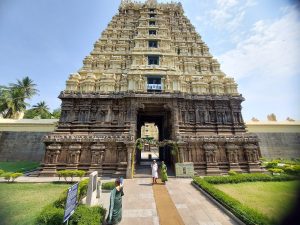
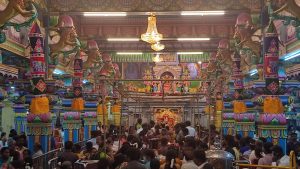
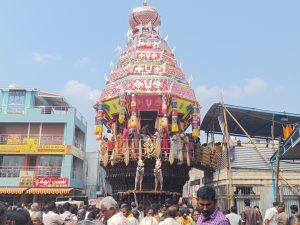
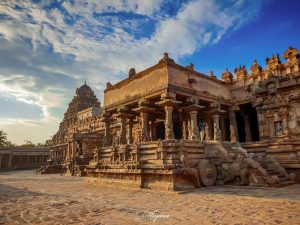
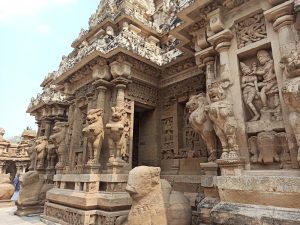
Approaching the complex, you will see the traditional Dravidian rajagopuram rising against the green backdrop of the Nellimalai foothills and the Western Ghats. The entrance tower features detailed sculptural reliefs depicting deities and stories, welcoming worshippers as they cross the threshold into the stone courtyards.
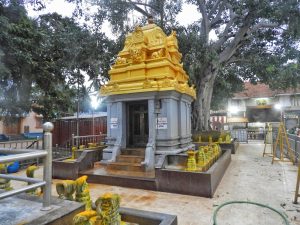
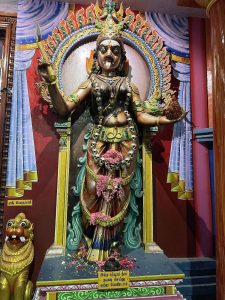
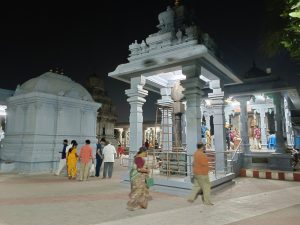
At the heart of the complex lies the garbhagriha, or inner sanctum, which enshrines the principal swayambhu stone form of Vana Badrakali Amman. Her shrine is draped in rich silk fabrics and fresh floral garlands, lit by the warm glow of oil lamps. Surrounding the main shrine, you will find subsidiary sanctums dedicated to Lord Nellaiyappar, who is Shiva, along with Gandhimathi Amman and Ganesha.
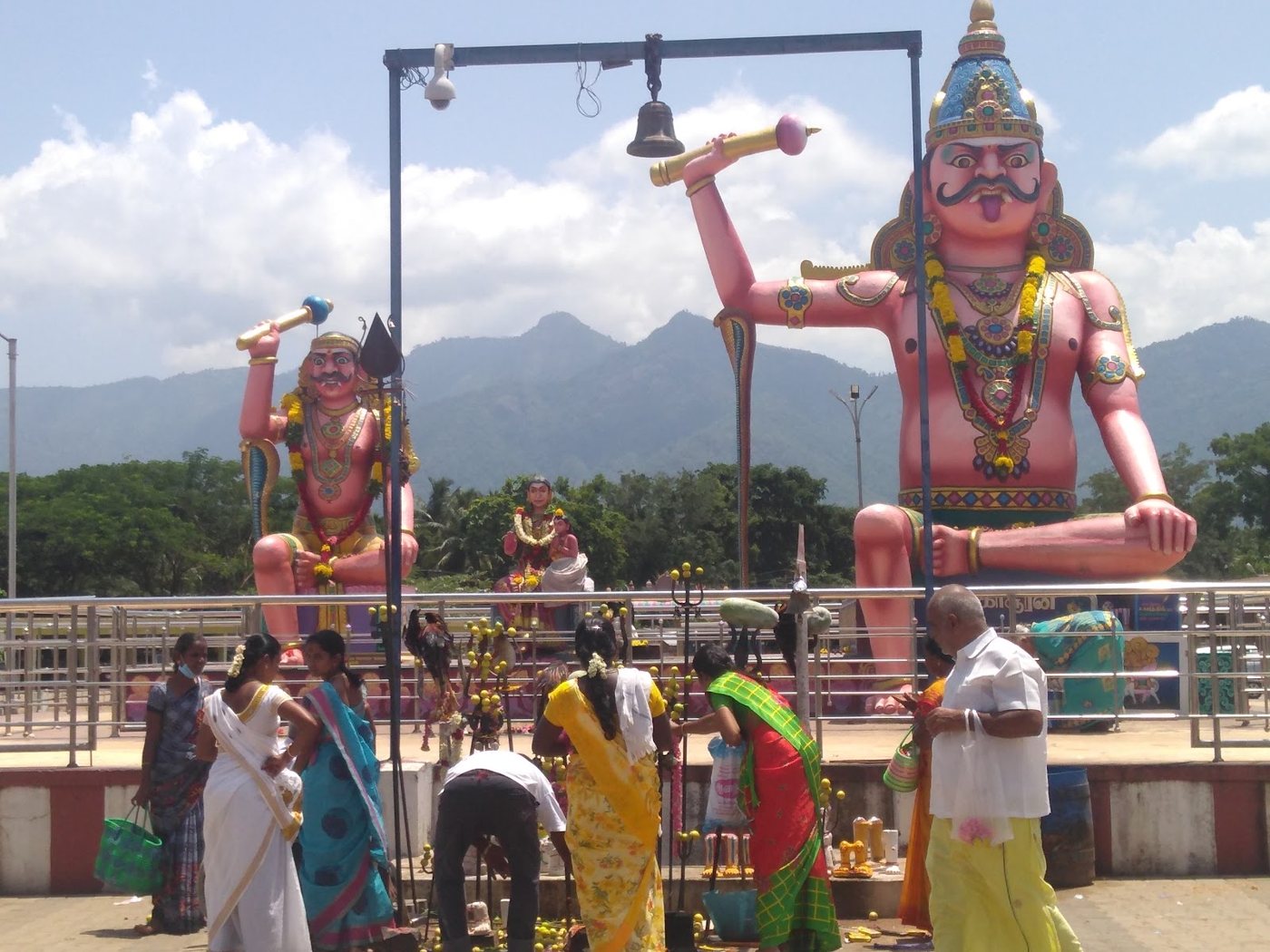
Out in the open courtyards stand striking, oversized painted statues of Bheema, Pagasuran, and Muniyappa. These imposing guardian figures bring the ancient stories to life for pilgrims young and old. Nearby stands the sthala vriksham, the sacred Thothi tree, with hundreds of tiny prayer stones tied securely to its branches. Just beyond the rear walls of the compound sits the Bhavani Theertham, the bathing ghat where devotees step down stone steps to the waters of the Bhavani River.
How a visit works
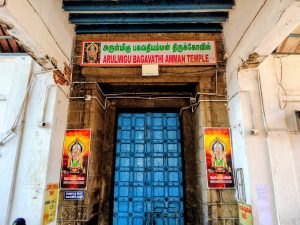
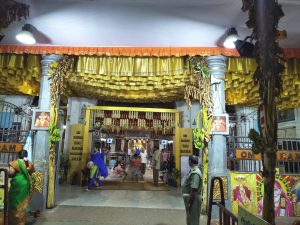
When you arrive, leave your footwear at the designated shoe counters outside the main gateway. You will notice two separate entrance lanes leading into the mandapam. General entry is entirely free, while a paid special darshan counter offers nominal tickets for an expedited queue on busy days. On quiet weekday mornings, the regular line moves smoothly, giving you plenty of time to take in the quiet chanting and temple architecture.
Inside the stone halls, the air is scented with burning camphor, incense, fresh strings of jasmine, and sliced lemons. Priests perform regular pooja ceremonies throughout the day. They wave the arati flame before the goddess and offer sacred ash and kumkum to devotees standing in the queue. You are welcome to pause, receive the blessings, and observe the rituals with quiet respect.
Local tip: If you wish to make a traditional offering, vendors outside the gates sell small woven baskets filled with lemons, fresh coconuts, and flowers. Pick one up before entering the queue so the priest can place it at the altar.
Etiquette, dress code, and local rules
Because this is an active place of heartfelt worship, respectful behavior is expected at all times. Photography and videography are strictly prohibited inside the sanctum sanctorum and all inner shrines. You may photograph the towering rajagopuram and the river views from outside, but your camera and mobile phone should be turned off or stowed away once you enter the enclosed mandapams.
Conservative clothing covering shoulders and knees is mandatory. Men should wear dhotis, kurtas, or trousers with modest shirts. Women should wear sarees, salwar kameez, or churidars with dupattas. Avoid wearing shorts, sleeveless tops, or casual beachwear. Non-Hindu visitors are generally permitted to walk through the outer courtyards and observe the atmosphere if dressed appropriately, though access into the innermost sanctum can be restricted by temple administrators.
Best time to go and planning your day
The temple is generally open daily from 6:00 AM to 11:00 AM and from 4:00 PM to 8:00 PM. On special days such as Tuesdays, Fridays, and monthly new moon or Amavasya days, the temple often stays open throughout the afternoon to accommodate large gatherings. Because daily hours can change slightly according to festival calendars and temple administration, an early morning arrival around 6:30 AM is ideal.
| Day / Occasion | Crowd Level | What to Expect |
|---|---|---|
| Weekday Mornings | Light to moderate | Peaceful darshan, quick queues, quiet river walk |
| Tuesdays & Fridays | High | Continuous daytime opening, special poojas, family groups |
| Amavasya Days | Very high | Sacred bathing at the river ghat, extensive queue lines |
| Aadi Kundam (July-August) | Peak festival crowds | Devotees walking across 36 feet of glowing embers |
Allow roughly 1 to 2 hours for your visit. This gives you adequate time for darshan, a gentle walk around the subsidiary shrines, a pause beside the sacred Thothi tree, and a short walk along the Bhavani riverbank.
Getting there from Pondicherry and where to stay
If you are travelling from Pondicherry, the journey to Thekkampatti covers roughly 380 km across central Tamil Nadu. Driving by car or private taxi via Salem and Coimbatore usually takes about 7 to 8 hours. If you prefer public transportation, you can board an overnight train or bus from Pondicherry to Coimbatore Junction, which sits roughly 45 km from the temple. Coimbatore International Airport is situated about 50 km away.
The nearest town to the temple is Mettupalayam, located approximately 5 to 6 km away. Frequent town buses, auto-rickshaws, and local taxis run between the Mettupalayam bus terminus, the railway station, and the temple gates in Thekkampatti.
For accommodation, Mettupalayam has several clean, modest lodges and basic hotels close to the railway station. If you prefer upscale rooms, business hotels, or extensive dining choices, consider staying in Coimbatore. Many travellers also use the temple as a serene morning stop on their way up the mountain road toward Coonoor or Ooty, both about 45 to 55 km away.
Nice places to combine with your visit
Because the temple sits near the base of the Nilgiri hills, it pairs easily with several interesting nearby attractions:
- Bhavani River Bathing Ghat: Located right next to the temple, where pilgrims wash their hands and feet before entering.
- Nilgiri Mountain Railway: Catch the famous historic toy train starting from Mettupalayam railway station, about 6 km away.
- Black Thunder Theme Park: A popular water park located roughly 6 km from the temple grounds, ideal if you are travelling with children.
- Coonoor and Ooty: Scenic hill towns located about 45 to 55 km uphill along the winding Nilgiri Ghat Road, known for cool breezes and tea gardens.
Before you continue your journey, stop at a local eatery in Mettupalayam for breakfast. A hot plate of steamed idlis with coconut chutney and a warm steel tumbler of South Indian filter coffee will set you up well for the drive.
What recent visitors say
A quick, honest snapshot from recent Google reviews, so you know what to expect before you go.
What people loved
★★★★★ vicky · 3 months ago
“Mettupalayam bus stand to this temple nearly 6.5 km approx. Bus available timing …any time auto available from Mettupalayam to temple.. Beautiful place.. You have to visit frst Go to river near vinayagara temple is there after completing…”
★★★★★ Ravichandran · 4 months ago
“Since my childhood I visited this temple. I have lot of memories–we will pack lunch tamarind rice (puliyotharai), extra dresses (to take bath in Bhavai River) and will go by bus. And for drinking water we carry a silver jug (Gooja) no…”
★★★★★ Vinothe · 11 months ago
“Nice and powerful temple. If you are visiting please visit this temple, also kallar ( water falls ) just 10kms from here. And also at the temple they have parisal( small boat ) for 30 rupees per head to sail for 10 min. It’s interesting.…”
Reviews via Google Maps. Opinions are those of their authors.
Frequently asked questions
Is there an entry fee to visit Arulmigu Vana Badrakali Amman Temple?
General entry to the temple is completely free. If queues are long on Fridays or festival days, you can purchase a nominal special darshan ticket at the counter for expedited entry.
Can non-Hindus enter the temple?
Non-Hindu visitors are generally welcome to walk through the outer courtyards if dressed conservatively. Access directly into the inner sanctum may be restricted according to temple rules and daily pooja schedules.
What is the Pookundam ritual?
Pookundam is the dramatic highlight of the annual 15-day Aadi Kundam festival held in July and August. Devotees fulfilling sacred vows walk barefoot across a 36-foot bed of glowing embers.
How far is the temple from Mettupalayam?
The temple is located roughly 5 to 6 km from Mettupalayam town. You can easily reach it by local town bus, taxi, or auto-rickshaw from the main bus stand or railway station.
Find it
Address: Nellithurai Road, Nellithurai, 7VVV+WW9, Post, Amman Nagar, Thekkampatti, Tamil Nadu 641305, India