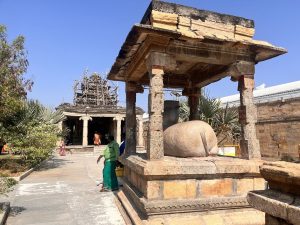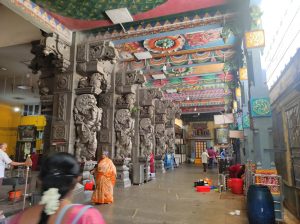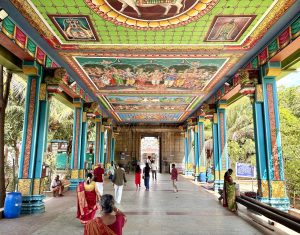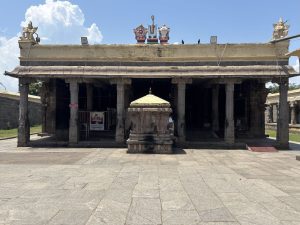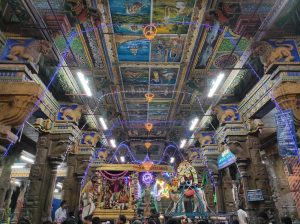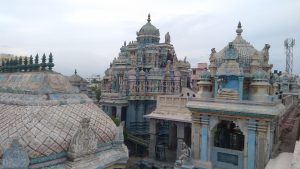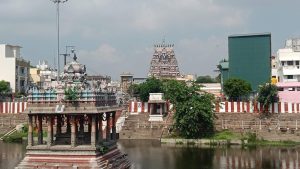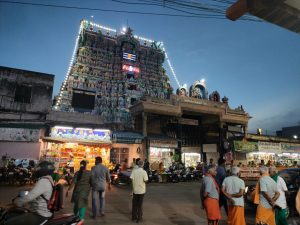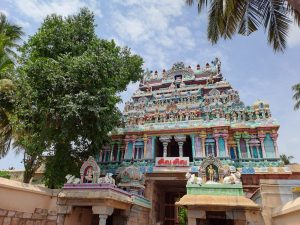
Suchindram Thanumalayan Temple stands in the southern tip of Tamil Nadu as a rare sanctuary where the Hindu Trinity is revered within a single form. Located just a short drive from Kanyakumari and Nagercoil, this historic temple welcomes travellers and pilgrims who wish to experience the quiet grandeur of traditional Dravidian architecture.
If you are travelling south from Pondicherry down through the Tamil heartland, this temple makes for a deeply rewarding stop. Walking through its tall stone gateways reveals centuries of continuous devotion, master craftsmanship, and a welcoming community atmosphere.
At a glance
| Best time of day | Early morning around 5:00 AM or late afternoon at 4:30 PM |
|---|---|
| Allow | 1.5 to 2 hours |
| Dress | Strict traditional attire; men must remove shirts, women in sarees or churidars |
| Photography | Strictly prohibited inside the temple premises and sanctum |
| From Pondicherry | Roughly 580 km by road (about 10 to 11 hours) |
Why this place matters
The main sanctum is dedicated to Thanumalayan, a unified representation of the Hindu Trimurti in a single lingam. The name itself reflects this harmony: Sthanu represents Shiva at the top, Mal represents Vishnu in the middle, and Ayan represents Brahma at the base. Because of this union, the temple serves as an important bridge between Shaivite and Vaishnavite traditions, welcoming followers of both paths under one roof.
Inscriptions discovered on the stone walls date the original structural roots back to the 9th-century Chola dynasty. In later centuries, the complex saw major expansions under the guidance of the 17th-century Nayak rulers as well as the Travancore royal family, leaving a layered architectural legacy.
Local tradition ties the temple to ancient legends. According to lore, Sage Atri and his wife Anasuya lived here, and Lord Indra was purified of a sage’s curse on this ground. The term for purification, suchi, gave the town its name, Suchindram.
What you will see
The temple approaches announce themselves from afar with a grand white eastern gopuram. This seven-tiered gateway tower stands between 134 and 144 feet tall, adorned with intricate sculptures of deities and mythological scenes from bottom to crest.
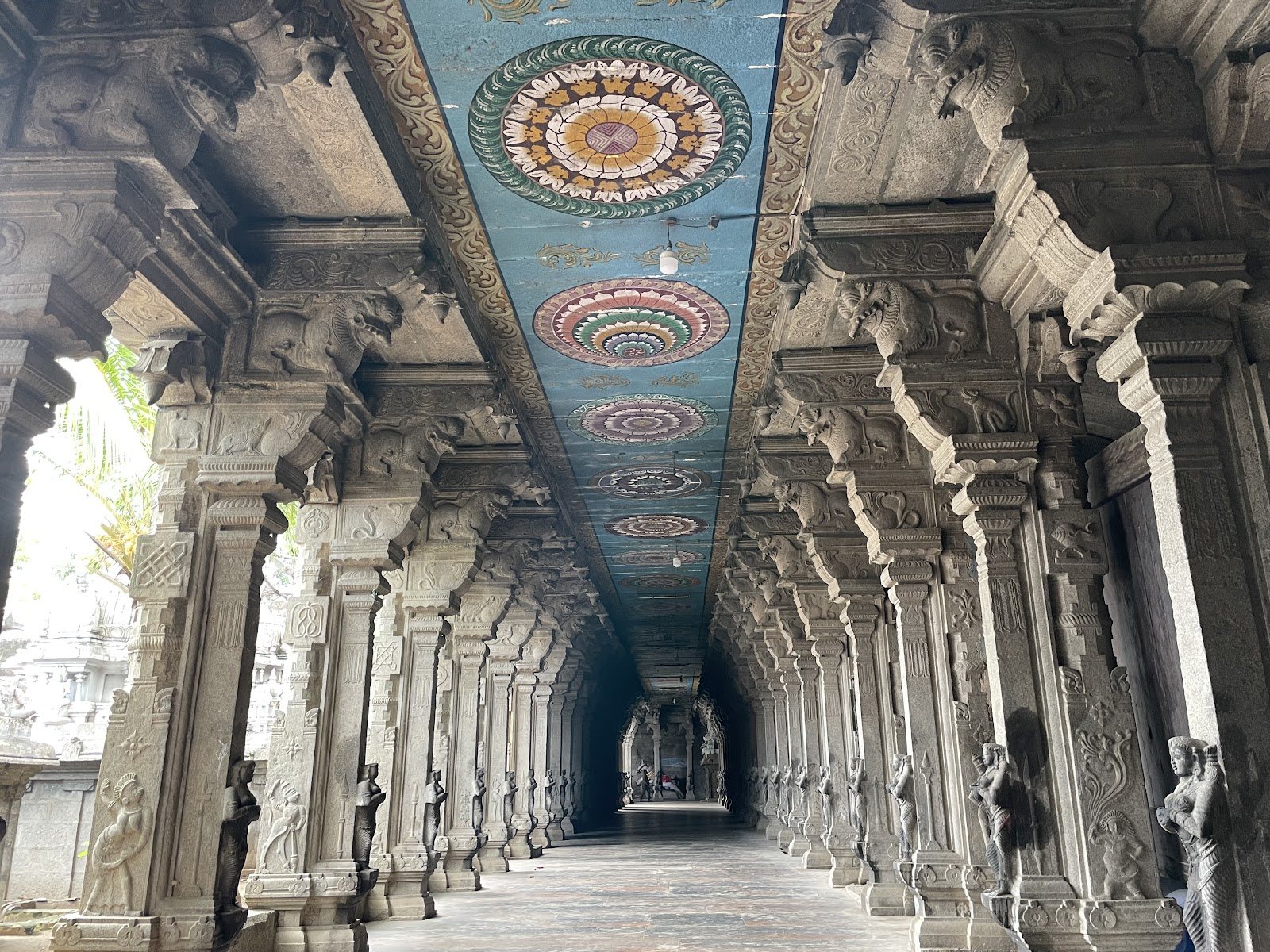
Inside the stone corridors, the craftsmanship shows remarkable variety. One of the most famous highlights is the set of four monolithic musical stone pillars. When gently tapped, these slender granite shafts produce distinct, clear musical notes, reflecting the astonishing acoustic engineering of early stonecutters.
As you walk through the complex, several striking statues and shrines stand out:
Local tip: Look closely at the granite columns in the mandapams. Many depict classical stories and royal patrons from the Nayak and Travancore eras in fine relief.
How a visit works
The daily routine at the temple follows time-honoured traditions. The gates open early in the morning, roughly from 4:30 AM until around 11:30 AM or 12:30 PM. The complex then closes for the midday heat and reopens for evening worship from 4:30 PM until 8:30 PM. These hours can shift during festival seasons, so planning around the core morning and evening windows is wise.
General entry into the complex is free of charge. During busy mornings, auspicious days, or holidays, special paid darshan queues may be arranged near the inner sanctum to help manage the crowd. You can choose whether to join the regular queue or buy a special darshan pass at the entrance counter.
Upon passing through the main gateway, non-Hindus are generally permitted to tour the outer courtyards, view the musical pillars, and admire the stone sculptures. Entry into the inner sanctum sanctorum may be restricted to practicing Hindus. Even from the outer pillared halls, you can hear the ringing of bronze bells and the resonance of Vedic chants.
Etiquette and what to wear
Suchindram maintains a strictly enforced traditional dress code, reflecting the customs of both Tamil Nadu and historic Travancore temples. Visitors should prepare before arriving at the gate to avoid being turned away.
- Men must remove their shirts, vests, and any upper garments before entering the temple corridors. Traditional dhotis or veshtis are preferred, though modest trousers are generally accepted provided the torso remains bare.
- Women are required to wear sarees, half-sarees, or salwar kameez churidars. Western clothing, shorts, sleeveless tops, and short skirts are strictly disallowed.
- All footwear must be left outside. A dedicated shoe counter operates near the main entrance where you can leave your sandals for a nominal fee or gratuity.
- Photography and videography are strictly prohibited inside the entire complex and inside the sanctum. Keep your phone tucked securely in your pocket or bag.
Maintain a calm demeanor as you walk the stone flagstones. This is an active place of daily prayer for the local town, so speaking in quiet tones helps preserve the reverent atmosphere.
Best time to go and how long to stay
The cooler months between November and February offer the most pleasant weather for walking barefoot across the temple courtyards. During these months, the granite paving stays cool underfoot, especially during the early morning hours.
If you wish to see the temple during its grandest cultural celebration, visit during the annual Margazhi Car Festival, which falls between December and January. This ten-day festival features massive chariot processions that draw devotees from all across the region. Maha Shivaratri in February or March and Hanuman Jayanti are also celebrated with deep devotion.
Allow between 1.5 to 2 hours for your visit. That provides ample time to clear the shoe check, admire the monolithic Hanuman and the musical pillars, and spend a quiet period soaking in the temple hall atmosphere.
Getting there from Pondicherry and where to stay
Suchindram is located roughly 580 km south of Pondicherry. Driving by car or hired taxi along the national highway network takes about 10 to 11 hours, making it an ideal journey to break with an overnight stop in Madurai or Tirunelveli.
For public transport, you can board a train from Villupuram Junction (near Pondicherry) down to Nagercoil Junction, which sits approximately 7 km away from Suchindram. Kanyakumari Railway Station is another practical railhead, roughly 13 km to the south. Trivandrum International Airport in Kerala is the closest flight hub, located about 75 to 80 km northwest.
Local buses and auto-rickshaws run continuously between Nagercoil and Kanyakumari along the main road that passes directly through Suchindram. For accommodation, most travellers choose to base themselves either in Nagercoil for quiet town hotels or in Kanyakumari for coastal guesthouses and seaside views.
Nice to combine with
Because Suchindram sits comfortably between the coast and the inland hills, you can easily combine your temple morning with nearby sights in Kanyakumari district.
- Kanyakumari: Just 13 km away, where you can take the short ferry ride to the Vivekananda Rock Memorial, view the colossal Thiruvalluvar Statue, and watch the waters meet at the Triveni Sangam.
- Padmanabhapuram Palace: Located roughly 25 km away, this historic wooden palace of the Travancore kings showcases intricate timber craft and natural ventilation systems.
- Nagaraja Temple in Nagercoil: A revered and serene shrine dedicated to the serpent king, located only 7 km north.
After your visit to Suchindram, stop by one of the small local eateries along the town main street for fresh south Indian filter coffee, warm medu vada, or traditional plantain-leaf breakfast thalis.
What recent visitors say
A quick, honest snapshot from recent Google reviews, so you know what to expect before you go.
What people loved
★★★★★ sandeep · in the last week
“Beautiful Hanuman mandir. Very big statue of Hanuman. Very old but worth visiting.”
★★★★★ Balarama · 2 months ago
“Visiting the Hanuman Temple at Suchindram was a truly divine and peaceful experience. This temple is famous for its magnificent 22-foot-tall idol of Lord Hanuman, which is believed to be one of the tallest Hanuman idols in India. According…”
★★★★★ Arthana · 4 months ago
“Visited the Suchindram Thanumalayan Temple and it was truly a beautiful experience. The temple is vast and impressively spacious, with a calm and peaceful atmosphere that instantly puts you at ease. The architecture and surroundings are a…”
What some found difficult
★☆☆☆☆ Sarang · in the last week
“Worst Experience The Priest Are Extremely Arrogant forcing people to buy garland for lord Hanuman at the entrance. If anyone say something they are literally bursting on them such shame !! Temple Is 10/10 ⭐”
Reviews via Google Maps. Opinions are those of their authors.
Frequently asked questions
Can non-Hindus enter the Suchindram Temple?
Non-Hindus are generally welcome to walk through the outer complex, view the magnificent architecture, and inspect the musical pillars. However, entry into the inner sanctum sanctorum may be restricted to practicing Hindus.
What is the dress code for men at Suchindram?
Men must remove their shirts, t-shirts, and vests before entering the temple corridors. They must wear dhotis, veshtis, or traditional trousers, keeping their upper torso uncovered while inside.
Are cameras and phones allowed inside?
Photography is strictly prohibited throughout the entire temple premises and sanctum. Keep your phone silenced and packed away in your pocket or bag during the visit.
What makes the musical pillars so special?
The four monolithic stone pillars were carved from single granite blocks. When gently tapped by priests or guides, each pillar shaft rings out with distinct, melodic tones.
Find it
Address: North St, Suchindrum, Tamil Nadu 629704, India
You might also like
- Where to stay in Pondicherry
- Churches, temples, mosques and ashrams in Pondicherry
- Saneeswarar Temple
- Sri Aurobindo Ashram
- Sacred Heart of Jesus Church
- Things to do in Pondicherry
- Visiting Azhagar Temple: A Travel and Pilgrim Guide
- Visiting Marundeeswarar Temple in Thiruvanmiyur
- Visiting Kalikambal Temple in Chennai: A Practical Guide
- Guide to Brahmapureeswarar Temple in Thirupattur