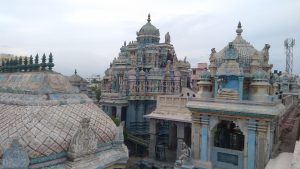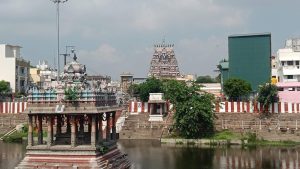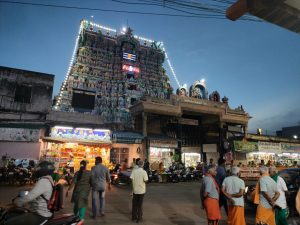
The Brahmapureeswarar Temple in Thirupattur is one of the few ancient sanctuaries in South India dedicated to both Lord Shiva and Lord Brahma. Situated just north of Tiruchirappalli, this sacred site draws people from across Tamil Nadu who come to pause, reflect, and pray for a renewal in their personal lives. The village surroundings remain quiet and agricultural, giving your arrival a gentle, grounded rhythm that feels far removed from big city rush.
For anyone travelling from Pondicherry through the Kaveri heartland, this temple makes a deeply memorable detour. Between the ring of twelve small stone shrines, the ancient water tank, and the cool granite corridors that carry centuries of continuous daily prayer, a walk through the grounds reveals a unique chapter of Tamil temple architecture and devotion.
At a glance
| Best time of day | Early morning or late afternoon |
|---|---|
| Allow | Two to three hours |
| Dress | Strict traditional attire (dhoti or pyjama with shirt; saree or salwar kameez) |
| Photography | Not permitted in inner shrines and sanctum |
| From Pondicherry | roughly 175 km (about 3.5 to 4 hours) by road |
The story of rewritten destinies
According to sacred tradition, Lord Brahma once grew proud of his role as the creator of the universe, believing himself superior to Lord Shiva. To curb this pride, Shiva removed Brahma’s fifth head and stripped him of his creative powers. Seeking redemption, Brahma set out on a long pilgrimage across the subcontinent, worshipping at various Shiva temples before arriving at Thirupattur.
Here, Brahma installed twelve Shiva lingams and undertook deep penance. Moved by his genuine devotion, Shiva and Devi Parvathi appeared to Brahma under a local Magizha tree, lifting the curse and restoring his duties. Shiva then decreed that because Brahma had his own life path renewed in this village, he should offer that same renewal to devotees who come here in earnest prayer. For this reason, the temple is known locally as a Vidhi Maatrum Kovil, a temple where destiny can turn for the better.
The sanctuary holds deep historic roots dating back to the Chola dynasty, with architectural expansions made during the Vijayanagara era. The eighth-century Tamil saint Sundarar celebrated the presiding deity in his Tirupaatu hymns, marking the village as an enduring center of faith through many generations. Today, the complex is administered by the Hindu Religious and Charitable Endowments Department of the Government of Tamil Nadu.
What you will see in the temple complex
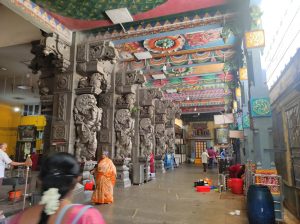
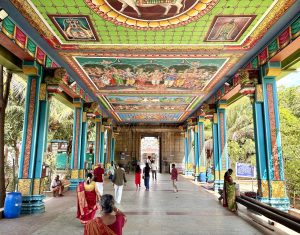
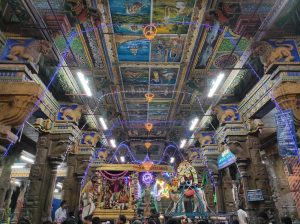
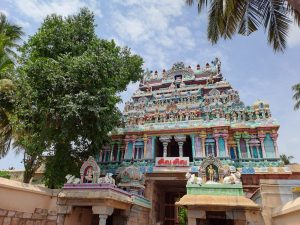
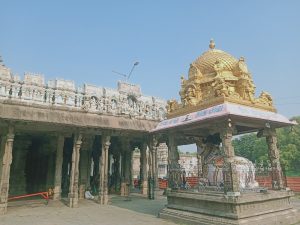
As you arrive at the temple, you are greeted by an east-facing five-tiered Raja Gopuram built in the classic Dravidian style. Stepping past the gateway brings you into quiet stone halls supported by carved pillars, where the scent of camphor and fresh jasmine fills the air.
The main sanctum houses Sri Brahmapureeswarar in the form of a self-manifested Swayambhu Lingam. Directly nearby is the shrine of Goddess Parvati, venerated here as Devi Brahma Sampath Gowri. Notice the quiet devotion of local families gathered around the inner corridors, many holding handwritten prayer notes or traditional offerings of flowers and ghee lamps.
Unlike almost any other temple in Tamil Nadu, you will find a prominent, independent shrine dedicated to Lord Brahma. The stone deity stands roughly six feet tall, seated in the Padmasana posture on an open lotus petal. Devotees line up patiently before this sanctum to seek blessings for family matters, health, and career hurdles.
Several unique architectural features reward a careful walk through the grounds:
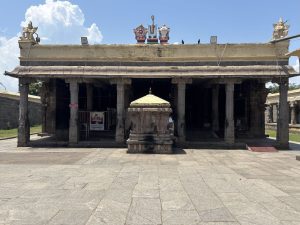
- The twelve independent Shiva shrines installed by Brahma, arranged across the courtyard and temple gardens.
- The sacred Brahma Theertham, the large stone-stepped water tank from which Brahma gathered water for his daily rituals.
- A rare sixteen-faceted Shodasa Lingam resting inside one of the outer mandapams.
- Musical stone pillars carved inside the Nada Mandapam that produce resonant notes when lightly tapped.
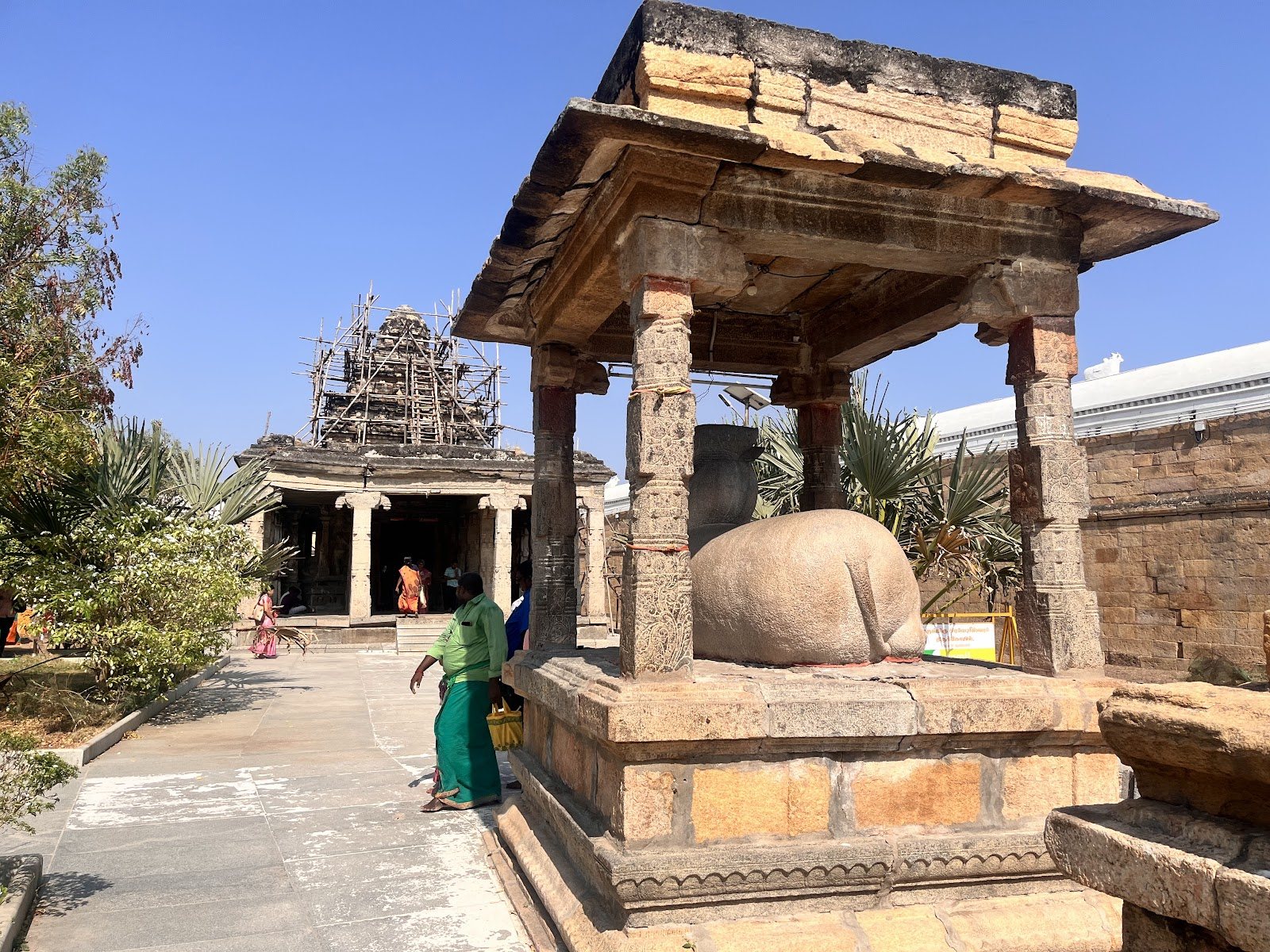
- A sculpted Nandi sheltered beneath a canopy intricately strung with rudraksha beads.
- The enclosed Jeeva Samadhi of Sage Patanjali, author of the Yoga Sutras, which serves as a serene meditation space near the Brahma shrine.
How a visit works
Your visit begins at the perimeter gate, where you will leave your footwear at the designated counter. You can pick up a simple basket of coconuts, bananas, betel leaves, and loose flowers from the small vendors outside if you wish to present an offering. General darshan is free of charge, though special quick-darshan queues are often available for a nominal fee during busy hours.
The traditional sequence is to pay respects first to Lord Ganesha, proceed to the main sanctum of Sri Brahmapureeswarar, visit Devi Brahma Sampath Gowri, and then offer your prayers at the Brahma shrine. After this, take time to circumambulate the twelve surrounding lingams and sit quietly for a few minutes in the meditation hall honoring Sage Patanjali.
The temple conducts daily poojas according to strict Agamic schedules. While exact timings can adjust slightly depending on temple calendar requirements, the four main services occur throughout the day:
| Ritual | Usual Hours |
|---|---|
| Kalashanthi Pooja | 8:30 AM to 9:30 AM |
| Uchikala Pooja | 11:30 AM to 12:00 PM |
| Sayaratchi Pooja | 6:00 PM to 6:30 PM |
| Arthajama Pooja | 7:30 PM to 8:00 PM |
Local tip: If you wish to meditate quietly in the hall of Sage Patanjali, arrive between 7:30 AM and 8:30 AM on a weekday, before the mid-morning crowd builds up.
Etiquette and what to wear
Brahmapureeswarar Temple is a living house of prayer with strict expectations regarding modesty and comportment. Wear traditional clothing that covers the shoulders, chest, and knees. Men should wear a dhoti, veshti, or modest pyjama paired with a shirt or kurta. Women should wear a traditional saree, churidar, or salwar kameez with a pinned dupatta. T-shirts with slogans, shorts, three-quarter pants, and sleeveless tops are not accepted.
Remove your shoes before entering the temple compound and leave them at the shoe stall outside. Wash your feet at the tap before entering the flagstone hall. Keep your phone on silent mode or tucked securely away in your bag. Photography is strictly prohibited inside all inner shrines and sanctums.
Respectful silence is valued throughout the complex. Access to the innermost sanctums where the priests conduct rituals is traditionally reserved for practicing Hindus, but visitors of all backgrounds are welcome to walk through the outer mandapams, observe the stone carvings, and sit in quiet contemplation.
Best time to go and how long to stay
The temple is open every day from 7:00 AM to 12:00 PM (sometimes extending to 12:30 PM) and again from 4:00 PM to 8:00 PM. On Thursdays, which are sacred to Lord Brahma and the planet Guru, the doors open earlier, around 5:30 AM, and stay open until 1:00 PM before reopening for the evening.
Thursdays bring large numbers of pilgrims from all over South India, resulting in lengthy queue times that can stretch past two hours. If you prefer a calm, unhurried visit, plan your journey for a Tuesday, Wednesday, or Friday morning. The cooler months between November and February offer comfortable weather for walking across the outdoor stone pathways around the pond.
Plan to spend between two and three hours on site. This allows plenty of time to wait in the main queue, visit all twelve Shiva shrines, spend moments by the Brahma Theertham, and sit in the meditation chamber.
Getting there from Pondicherry and where to stay
Thirupattur is located in Tiruchirappalli district, roughly 175 km southwest of Pondicherry. The most convenient route by private car or taxi takes you via Villupuram, Ulundurpet, and Perambalur along National Highway 45. About 30 km before Trichy city, you will turn off at the Siruganur junction onto the quiet rural road leading directly to Thirupattur village. The drive takes about three and a half to four hours under normal traffic conditions.
If you are using public transit, you can catch an early express bus or train from Pondicherry or Villupuram to Tiruchirappalli Junction. From the central bus stand or Chathiram bus station in Trichy, regular local buses run north toward Siruganur and Thirupattur, though hiring an auto-rickshaw or taxi from Trichy makes for a much smoother trip.
Thirupattur itself is a small hamlet with very limited lodging, so it is best visited as a day trip from Pondicherry or by booking a room in Tiruchirappalli. Trichy offers dozens of comfortable hotels, guesthouses, and restaurants near the railway station and the central highway.
Nice to combine with
Because Thirupattur lies along the northern approach to Trichy, you can easily pair your visit with several famous pilgrimage and historic landmarks within a short radius:
- Samayapuram Mariamman Temple: Located roughly 15 km south of Thirupattur, this is one of Tamil Nadu’s most revered Goddess temples.
- Sri Ranganathaswamy Temple in Srirangam: Situated about 28 km south on an island between the Kaveri and Kollidam rivers, this vast temple town features monumental gopurams.
- Jambukeshwarar Temple in Thiruvanaikaval: Found roughly 27 km away, this ancient sanctuary celebrates the water element of Lord Shiva.
- Rockfort Ucchi Pillayar Temple: Positioned roughly 32 km away in central Trichy, perched high atop an ancient rock formation overlooking the river plains.
For breakfast or lunch, you will find clean South Indian vegetarian mess halls and highway restaurants near the Siruganur toll plaza and along the Srirangam bypass road, serving hot filter coffee, crisp dosas, and banana-leaf thali meals.
What recent visitors say
A quick, honest snapshot from recent Google reviews, so you know what to expect before you go.
What people loved
★★★★★ 尾﨑祥史 · in the last week
“I received a Parihara prayer here. It was a wonderful experience, and I was on the verge of tears several times. Thank you so much.”
★★★★★ manikandan · 3 months ago
“Ohm Namashivaya Lord Brahma Having temple only here. Lord Siva Named as BrahmaPurisvarar. Sthala virutcham Magizham. Brahma Theertham. Ample parking space. From Vriduchalam to Trichy route , before Samayapuram Right side off 5kms Temple is…”
★★★★★ Selva · 4 months ago
“Very strict about prayer timings. The temple remains open until 12:00 PM and reopens only at 4:00 PM, so make sure to arrive on time. The Annadhanam is good, but you need to collect a token before entering. If you are visiting for…”
Reviews via Google Maps. Opinions are those of their authors.
Frequently asked questions
Why is Lord Brahma worshipped at this temple when he has so few shrines?
According to temple tradition, Lord Shiva absolved Brahma from his curse at this exact spot and instructed him to establish a shrine here. Devotees believe that because Brahma’s own destiny was restored at Thirupattur, praying here can help change one’s personal fate for the better.
Is there an entry fee to visit Brahmapureeswarar Temple?
General entry to the temple grounds and sanctum is free of charge. The temple administration occasionally maintains paid special darshan queues during busy festival days or peak Thursday mornings to help manage the crowd.
Can I take photographs inside the temple?
Photography is strictly prohibited inside the inner sanctums and before the shrines of Lord Shiva and Lord Brahma. You can take general photos of the outer courtyard architecture and temple tower if permitted, but always check with temple staff first.
What should I wear when visiting the temple?
You must wear conservative traditional Indian attire. Men should wear a dhoti, veshti, or pyjama with a shirt, while women should wear a saree, salwar suit, or churidar with a dupatta. Western casuals like shorts and sleeveless tops are not allowed.
Find it
Address: Thirupattur, Tamil Nadu 621105, India
You might also like
- Where to stay in Pondicherry
- Churches, temples, mosques and ashrams in Pondicherry
- Saneeswarar Temple
- Sri Aurobindo Ashram
- Sacred Heart of Jesus Church
- Things to do in Pondicherry
- Visiting Nithya Kalyana Perumal Temple: A Practical Guide
- Visiting Marundeeswarar Temple in Thiruvanmiyur
- Visiting Kalikambal Temple in Chennai: A Practical Guide