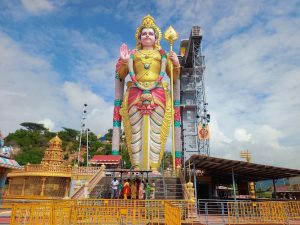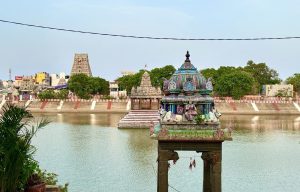
Solaimalai Murugan Temple sits high in the wooded slopes of the Alagar Hills, about twenty-five kilometres north of Madurai. Known widely as Pazhamudircholai, this peaceful hill shrine is revered across Tamil Nadu as the sixth and final abode among the sacred Arupadaiveedu of Lord Murugan.
A journey up the winding road brings you away from the heat of the plains and into fresh forest air. If you are travelling down from Pondicherry to explore the southern districts of Tamil Nadu, spending a quiet morning here offers a direct connection to centuries of Tamil poetry, devotion, and hillside tradition.
At a glance
| Best time of day | Early morning or late afternoon |
|---|---|
| Allow | 1 to 2 hours |
| Dress | Modest traditional attire; shoulders and knees covered |
| Photography | Prohibited inside the inner shrines |
| From Pondicherry | roughly 6 to 7 hours by road (about 320 km) |
Why Solaimalai Murugan Temple matters
For devotees of Murugan, this hilltop shrine holds a unique place. It is celebrated as the sixth and last of the Arupadaiveedu, the six canonical abodes of the deity in Tamil Nadu. The temple is administered and cared for by the Hindu Religious and Charitable Endowments Department of the Government of Tamil Nadu, maintaining traditions that stretch back through many generations.
According to the Kanda Puranam, the sage Narada once visited Lord Shiva at Mount Kailasha to present him with the fruit of knowledge, the gnana-palam. A contest was held between Murugan and his brother Ganesha to decide who would receive it. Murugan set off around the world, but Ganesha simply circled his parents, claiming the fruit through his wisdom. Feeling aggrieved, Murugan left Mount Kailasha to stay in the Palani Hills as a hermit.
The legend tells that the revered Tamil poet Avvaiyar travelled to pacify him. Murugan took the disguise of a young shepherd boy and sat high up in a naaval tree. When Avvaiyar passed underneath, he asked her if she wanted some fruits, offering either cooked or uncooked fruit. Amused and puzzled by the idea of cooked fruit on a tree, the poet asked for them. Murugan shook the branches, and as the dark purple fruits fell into the dust, Avvaiyar blew upon them to clear the sand. The boy laughed and explained that her blowing showed the fruits were indeed hot and cooked. Recognizing the divine play behind the riddle, Avvaiyar was humbled by his wisdom.
The name Pazhamudircholai reflects this event: in Tamil, pazham means fruit, udir means to disperse or fall, and cholai means an orchard. Ancient Sangam literature mentions this sacred site, most notably in the second-century poetic work Tirumurukaatruppatai by Nakkeerar, as well as in the epic Cilappatikaram by Ilango Adigal. Centuries later, the saint Arunagirinathar composed songs in praise of this temple in his beloved Tiruppugazh hymns.
What you will see at the temple
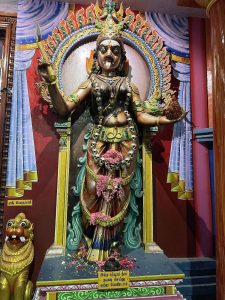
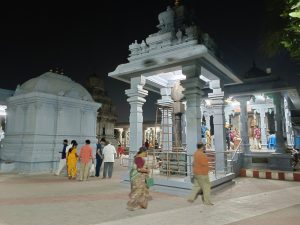
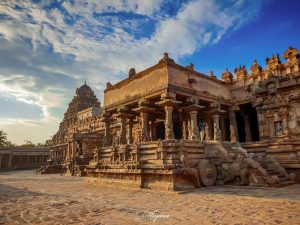
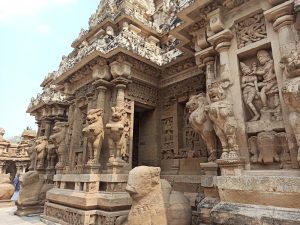
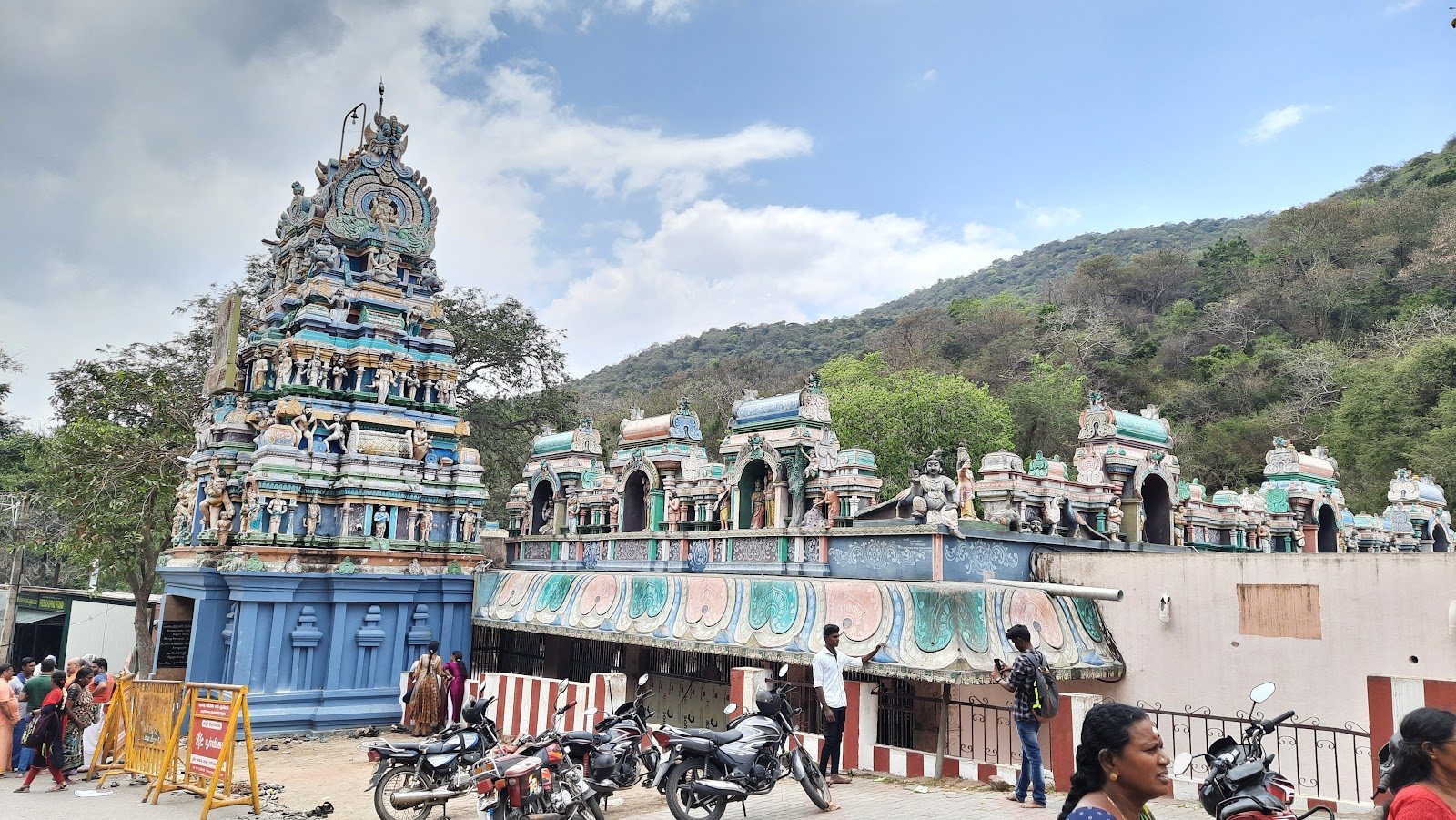
The temple stands surrounded by the quiet woodland of the Alagar Hills Reserve Forest. As you arrive at the hilltop, you are met by a traditional Dravidian gopuram that rises against the hillside trees. The architecture showcases classic stonework, carved pillars, and a tranquil courtyard suited to quiet reflection.
Historically, worship at this site centered solely on the vel, the divine spear of Murugan. Over time, shrines were established for other deities as well. In the main sanctum, Murugan is depicted alongside both his divine consorts, Goddess Valli and Goddess Deivanai. This presence of both consorts is a distinctive feature among the six major abodes.
- The main sanctum housing Lord Murugan with Goddess Valli and Goddess Deivanai
- A dedicated shrine honoring Lord Vinayaka (Ganesha)
- The venerated Naaval tree, preserved within the grounds in memory of the Avvaiyar legend
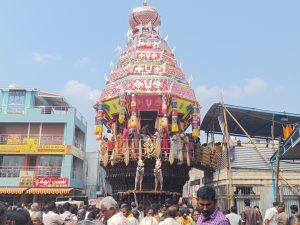
- The golden chariot (Thanga Ratham), which is taken in procession on special occasions
Local tip: Take a moment to sit quietly near the sacred naaval tree after your darshan. The mountain breeze through the branches brings a soothing pause to a busy travel itinerary.
How a visit works
Your visit begins at the foot of the hill near Alagar Kovil. Private cars, taxis, and local buses use the motorable ghat road that winds up the hillside. A nominal toll and vehicle parking fee is collected as you make your way into the reserve forest area.
At the summit, visitors deposit their footwear at the designated counters near the entrance before walking up to the temple tower. General entry to the temple is free, allowing anyone to join the queue for worship. If lines are long, particularly on weekends or special days, the temple administration offers special darshan tickets for a nominal fee, which allows for a quicker passage to the inner sanctum.
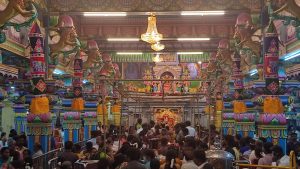
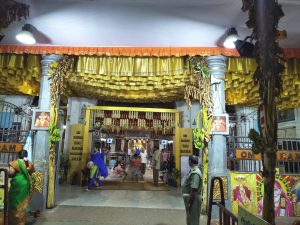
Inside the complex, you will move through pillared corridors toward the central shrine. The scent of camphor, crushed flower garlands, and fresh oil lamps fills the stone halls. Daily worship services are held throughout the day, and during auspicious evenings, you may witness the golden chariot procession within the complex.
Etiquette and what to wear
Solaimalai Murugan Temple is an active place of prayer. Visitors should dress conservatively out of respect for local customs and temple regulations. Men should wear a dhoti or traditional formal trousers with a neat shirt. Women should wear a saree, a salwar kameez, or a churidar set with a dupatta. Shorts, sleeveless tops, and revealing clothes are strictly prohibited at the entry gates.
Footwear must come off before you step inside the temple perimeter. Shelves and managed shoe counters are available just outside the main gate for a small token fee.
Photography is strictly prohibited inside the inner shrines and the sanctum sanctorum. Please keep your camera or phone tucked away inside your bag while moving through the interior corridors. In accordance with Tamil Nadu HR&CE rules and state court directives, non-Hindu visitors are generally restricted from proceeding beyond the kodimaram (the temple flag mast). You can always check with temple staff at the threshold if you have any questions.
Best time to go and how long to stay
The temple doors generally open daily from 6:00 AM until 6:00 PM, with evening darshan extending until 8:00 PM on select days. The morning hours between 7:00 AM and 9:30 AM are particularly pleasant, as the mountain air remains cool and the queues are usually manageable.
Allow roughly one to two hours for your visit. This gives you sufficient time to ascend the ghat road, complete your darshan, visit the Ganesha shrine, and walk around the temple premises without rushing.
| Temple Aspect | Visitor Information |
|---|---|
| General Opening Hours | 6:00 AM to 6:00 PM (extended to 8:00 PM on select days) |
| Entry Fee | Free general entry; nominal fee for special darshan tickets |
| Vehicle Access | Motorable ghat road; nominal toll and parking charges apply |
| Footwear | Strictly prohibited inside; drop counters available outside |
Major festivals draw thousands of pilgrims from across south India. Key festival periods include Skanda Sashti, Vaikasi Visakam, Panguni Uthiram, Thirukarthigai (Karthigai Deepam), Aadi Krithigai, and the Tamil New Year. If you visit during these celebrations, expect extensive queues and plan for extra travel time on the ghat road.
Getting there from Pondicherry and where to stay
Solaimalai Murugan Temple lies roughly 320 kilometres southwest of Pondicherry. By road, the journey takes about six to seven hours in a private car or hired taxi, travelling down through Ulundurpet, Tiruchirappalli, and onward toward Madurai. Starting early in the morning lets you clear the city roads before midday traffic builds.
If you prefer public transit, you can board an express train from Villupuram Junction or Pondicherry to Madurai Junction, which sits approximately 25 kilometres south of the hill. Madurai Airport is around 35 to 40 kilometres from the temple. From Madurai city, frequent local buses, auto-rickshaws, and taxis run to Alagar Kovil at the foot of the hill, where connecting hillside transport takes you up to the shrine.
For accommodation, it is best to base yourself in Madurai city. The town provides a broad range of clean hotels, classic lodge properties, and family-run guesthouses. Staying in the city also makes it convenient to explore other historic landmarks before taking a half-day excursion up into the Alagar Hills.
Nice to combine with
A visit to the hilltop temple is naturally paired with the places located along the same hillside. At the foot of the mountain sits the ancient Kallalagar Temple, also known as Alagar Kovil. This historic Vishnu temple is celebrated as one of the 108 Divya Desams and features grand granite gateways, broad courtyards, and detailed stone sculptures.
Further up the hill past Pazhamudircholai lies Noopura Gangai (Silambaru), a sacred natural mountain spring. Pilgrims often stop here to collect or bathe in the cool spring water before descending back to the plains.
On your way back into Madurai, look out for small traditional vegetarian mess outlets and tiffin spots along the highway. A plate of soft steamed idlis paired with fresh coconut chutney and hot filter coffee makes for a classic and satisfying end to a morning in the hills.
What recent visitors say
A quick, honest snapshot from recent Google reviews, so you know what to expect before you go.
What people loved
★★★★★ Dr · a month ago
“Beautiful compact peaceful temple…… About significance: the temple is one of the 6 padai veedu temple of Murugar the six great abodes…..here he played with avvaiyar ….. About architecture: it is one of the most heavily renovated…”
★★★★★ Vijay · 2 months ago
“Great Darshan at the temple! Parking can be done at top of the hill. Buy 100rs tickets for quick Darshan. Temple opens from 6AM to 6:30PM. No closure in between. 50rs for car toll. Some people like trekking 3.5km hill and public transport…”
★★★★★ Kattrali_by_Ram · 4 months ago
“Pazhamudircholai: The Forest Abode Located 25 km north of Madurai atop the Alagar Hills, Pazhamudircholai is the sixth and final sacred abode (Arupadaiveedu) of Lord Murugan. 1. Mythological Legacy The Name: Translates to “the orchard…”
Reviews via Google Maps. Opinions are those of their authors.
Frequently asked questions
What is the significance of the naaval tree at the temple?
The naaval tree is associated with the famous legend of the Tamil poet Avvaiyar and Lord Murugan. Murugan tested her understanding from the branches of the tree by asking whether she wanted cooked or uncooked fruit, teaching her humility.
Can I reach the temple top by private car?
Yes, a motorable ghat road leads directly from Alagar Kovil up to the hilltop entrance of Solaimalai Murugan Temple. A nominal vehicle toll and parking fee is collected on the route.
Are non-Hindus allowed inside the temple?
Under Tamil Nadu HR&CE rules and court directives, non-Hindu visitors are generally restricted from entering past the flag mast (kodimaram). You are welcome to view the outer temple architecture and surrounding forest grounds.
Is photography allowed inside Solaimalai Murugan Temple?
Photography is strictly forbidden within the inner temple corridors and the main sanctum. You should keep cameras and mobile phones stored away inside your bag while walking through the prayer areas.
Find it
Address: 36VF+P87, Alagar Koil Rd, Alagar Hills R.F, Tamil Nadu 625301, India
You might also like
- Hotels in Alagar Hills, Madurai
- Churches, temples, mosques and ashrams in Pondicherry
- Saneeswarar Temple
- Sri Aurobindo Ashram
- Sacred Heart of Jesus Church
- Things to do in Pondicherry
- Vadapalani Murugan Temple: Practical Guide for Visitors
- Tirupparankundram Murugan Temple: Visiting Guide
- Visiting Muthumalai Murugan Temple in Yethappur